





Marco Rose‘s first match in English football ended in heartbreak.
After leading Manchester City for over an hour, Bournemouth conceded twice late on to leave the Etihad empty-handed. It was a sign of things to come.
The Cherries led Everton for more than 50 minutes before James Tarkowski‘s stoppage-time equaliser, squandered leads against Newcastle United and Brentford, and suffered a narrow 1–0 defeat to Liverpool.
Apart from a 4–0 thrashing of Championship side Lincoln City in the Carabao Cup and a 2–1 victory at Real Sociedad in Bournemouth’s first-ever European match, Rose had little to celebrate heading into mid-October.
And after a humiliating 5–1 defeat at Chelsea, questions were already being raised about whether he could become the Premier League‘s first managerial casualty of the season.
Strong underlying numbers
But Bournemouth had no intention of abandoning the Rose project so quickly. After all, they had handpicked the German as Andoni Iraola‘s successor back in April, shortly after the Spaniard announced his impending departure.
More importantly, the underlying numbers painted a far more encouraging picture than the results suggested.
Bournemouth had collected just three points from their opening six Premier League matches despite accumulating 8.4 Expected Points. As it turned out, the Stamford Bridge demolition proved to be the catalyst for a remarkable turnaround.
Having conceded five goals in west London, Bournemouth went nearly a month without conceding another. They brushed aside Sturm Graz 3–0 and defeated Sunderland 2–0 before recording three consecutive 3–0 victories against former Champions League winners AC Milan, Manchester United and Aston Villa.
A 2–0 win over Leeds United followed, while Thursday’s comeback 3-1 victory at Slavia Prague maintained their perfect start to European competition. In doing so, Bournemouth became the first team since Liverpool in 1964 to win their opening four European matches.
More of the same
Rose has retained the high-octane philosophy that defined Iraola’s tenure. After five matches, the Cherries already led the Premier League for high-speed running distance and ranked fourth for sprinting distance.
Their tenacity was particularly evident against Milan. Before the Rossoneri were reduced to 10 men, Bournemouth had already established their superiority, registering 7.9 passes per defensive action and generating considerably more attacking threat than their illustrious opponents.
Bournemouth continued to dominate territory and create dangerous situations throughout the contest. Their most sustained spell of pressure came midway through the second half, when they repeatedly advanced into Milan’s defensive third and prevented the visitors from establishing a foothold.
It was an enlightening example of Rose’s tactical philosophy. Bournemouth weren’t simply waiting to exploit Milan on the counterattack. They were making the ball stick in advanced areas, recycling attacks and maintaining territorial dominance.
Bournemouth’s tireless midfield
That aggressive approach has been underpinned by the tireless work of Bournemouth’s midfielders. Ryan Christie has been particularly important in harrying opponents and covering ground to prevent the Cherries from becoming stretched in transition, while Tyler Adams and Lewis Cook have provided the defensive discipline and ball-winning ability required to sustain their counterpress.
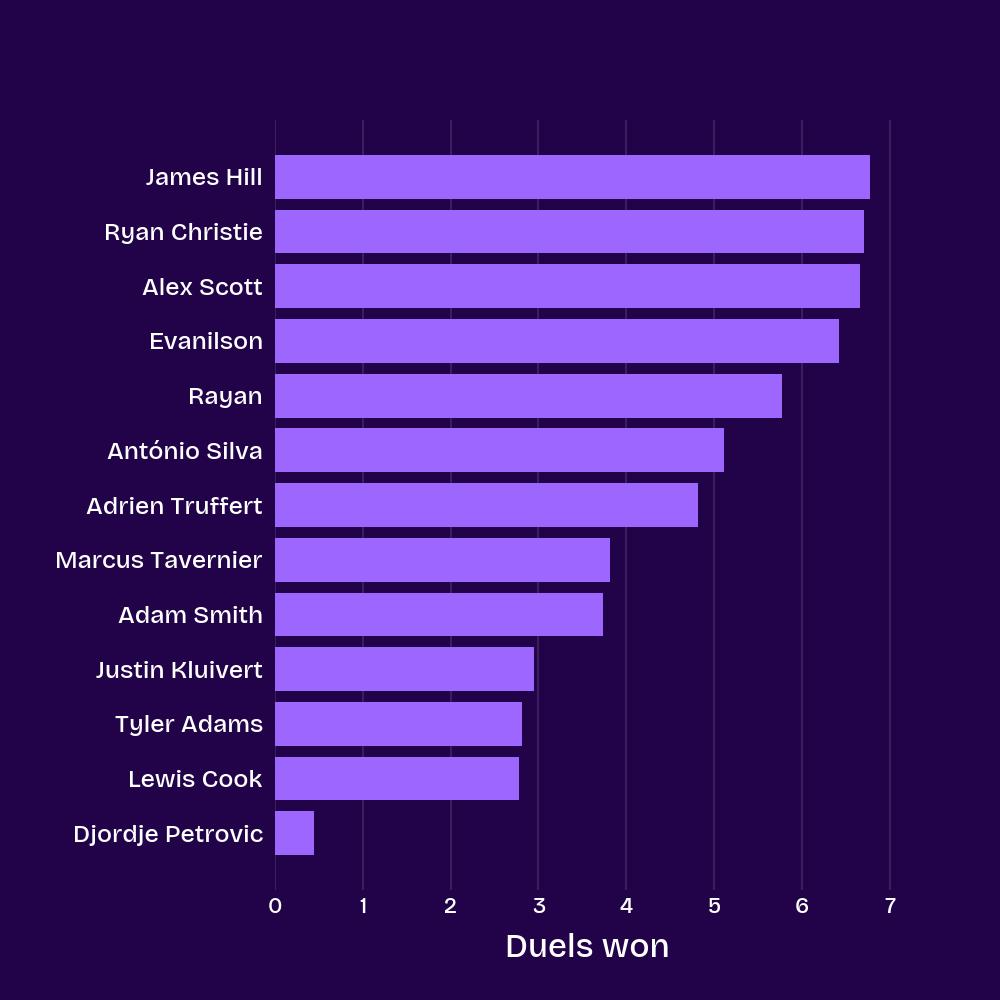
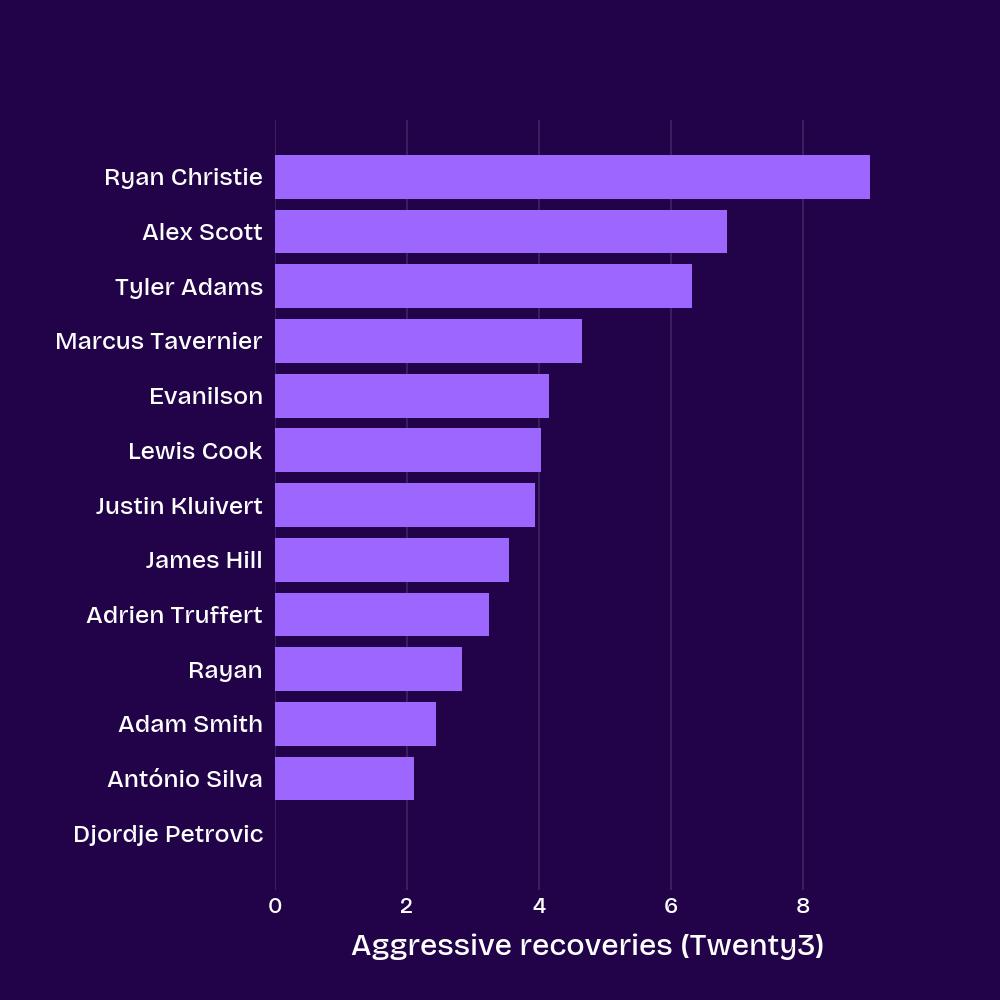
When Bournemouth appointed Rose, it seemed to be evolution rather than revolution. Both Rose and Iraola favour aggressive pressing, rapid transitions and high-intensity football. Indeed, Iraola had previously identified Rose’s Borussia Monchengladbach as one of his favourite teams to watch, underlining the philosophical similarities between the two managers.
Rather than tearing up the blueprint, Rose has built upon it. Bournemouth remain committed to winning possession high up the pitch and attacking with speed, while their average accurate long balls has increased from 16.2 to 19.7 per 90 compared with last season. Yet their verticality hasn’t prevented them from exercising greater control in certain phases of matches.
As their performance against Milan demonstrated, Bournemouth can combine rapid transitions with sustained spells of territorial pressure, keeping opponents pinned back without sacrificing their counterpressing intensity.
Rose’s key figures
Rose has also benefited from a level of squad continuity that Iraola rarely enjoyed. After losing key figures such as Dean Huijsen, Illia Zabarnyi, Antoine Semenyo and Dango Ouattara ahead of the 2025/26 campaign, Bournemouth have avoided another major exodus.
The German manager inherited a squad already familiar with the Premier League and accustomed to the physical demands of an aggressive pressing system. Adam Smith and Adrien Truffert have continued to provide energy and attacking impetus from the fullback positions. And Djordje Petrovic has remained a dependable presence between the posts.
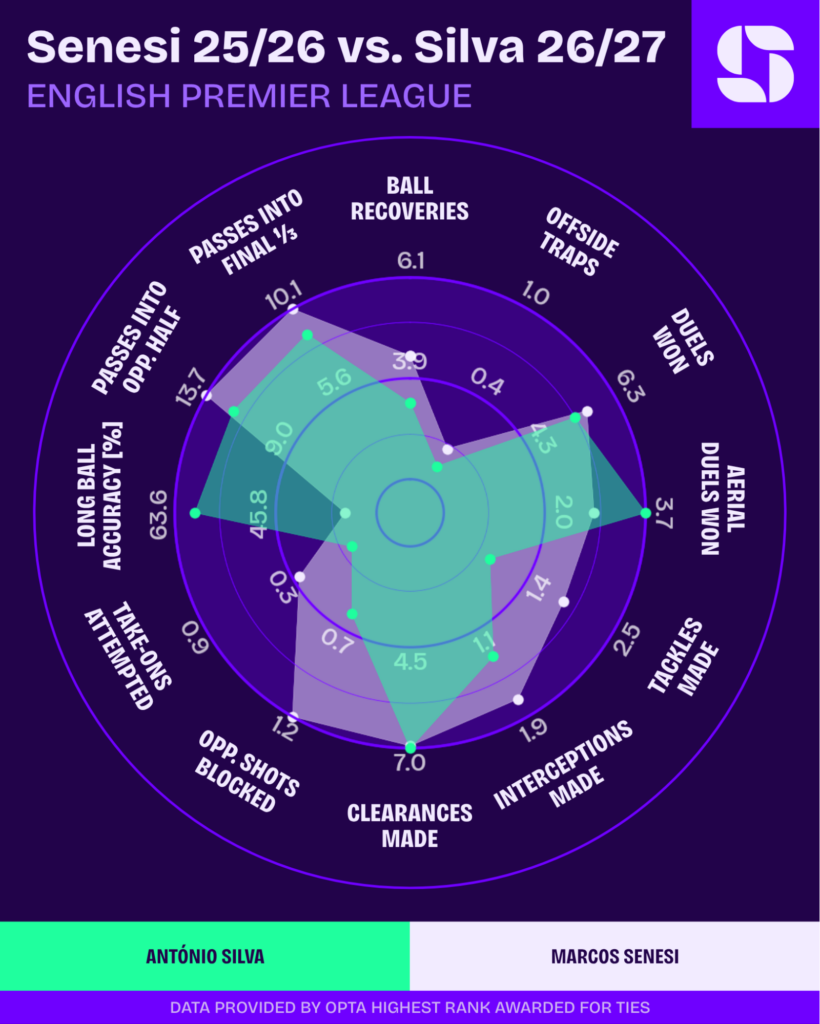
James Hill has established himself as an increasingly important figure in central defence, where the arrival of António Silva has provided a notable upgrade alongside him following Marcos Senesi’s departure. The Portuguese defender has adapted quickly following his move from Benfica, offering greater accuracy with his long-range distribution and a commanding presence in aerial duels.
Tighter at the back
The numbers underline just how dramatically Bournemouth have tightened up defensively. Across their opening six Premier League matches, the Cherries conceded 8.05 Expected Goals, an average of 1.34 per match, while enabling opponents to create 13 big chances. In their subsequent three league fixtures, however, those figures have plummeted to just 1.95 xGC and two big chances conceded. That’s a 52% reduction in xGC per match and a staggering 69% decline in big chances allowed.
Rather than merely benefiting from more profligate opposition finishing, Bournemouth are preventing their opponents from getting into dangerous positions in the first place. Rose’s side have maintained their relentless intensity while developing the defensive solidity needed to turn promising performances into victories; indeed, only Paris Saint-Germain have a longer winning streak amongst teams in Europe’s top five leagues.
Evanilson leading impressive attack
Further forward, Bournemouth’s attacking quartet has flourished. Justin Kluivert, Marcus Tavernier and Rayan have formed a formidable creative unit behind Evanilson, whose movement, linkup play and finishing have made him the focal point of Rose’s attack.
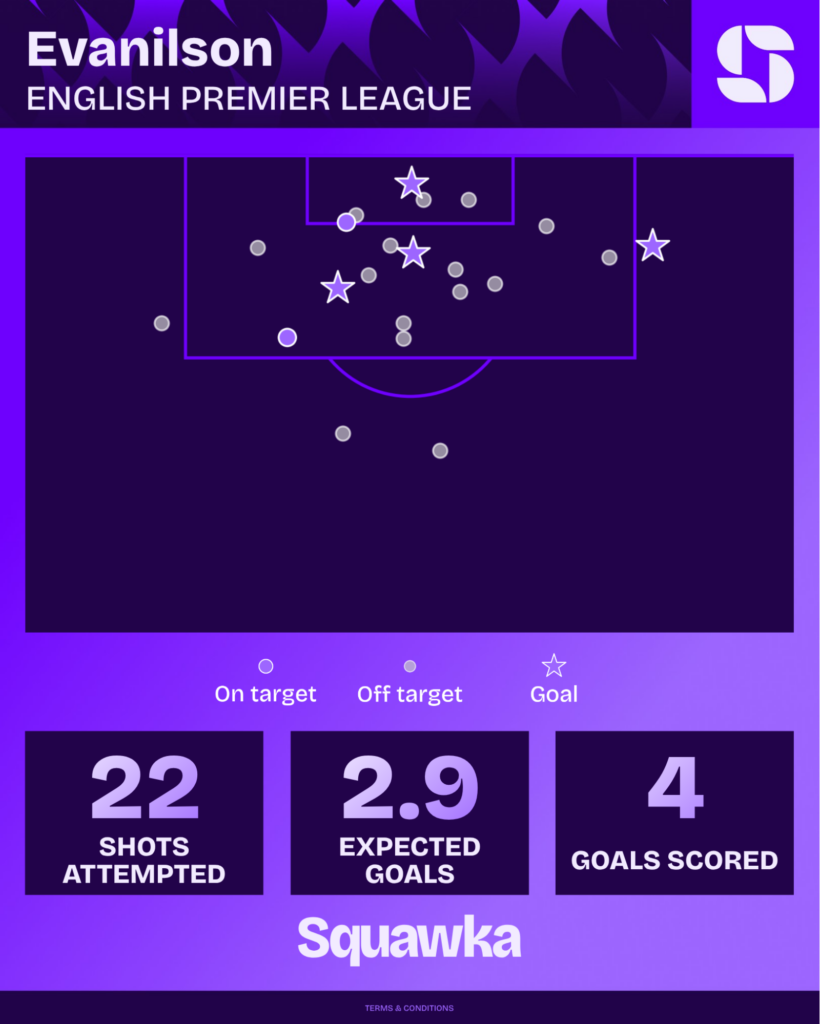
The Brazilian has been particularly impressive, scoring in six of his last seven appearances and playing with a confidence rarely seen during his previous campaign. After registering 10 goal contributions in 38 appearances last season, Evanilson has already amassed six goals and five assists in just 13 matches this term.
Bournemouth’s resurgence, then, isn’t the product of a complete tactical overhaul. Rose has preserved the principles that made Iraola’s side so formidable while finding ways to turn their relentless energy into greater efficiency at both ends of the pitch. The Cherries are no longer simply playing well enough to win matches; they’re finding ways to win them.