






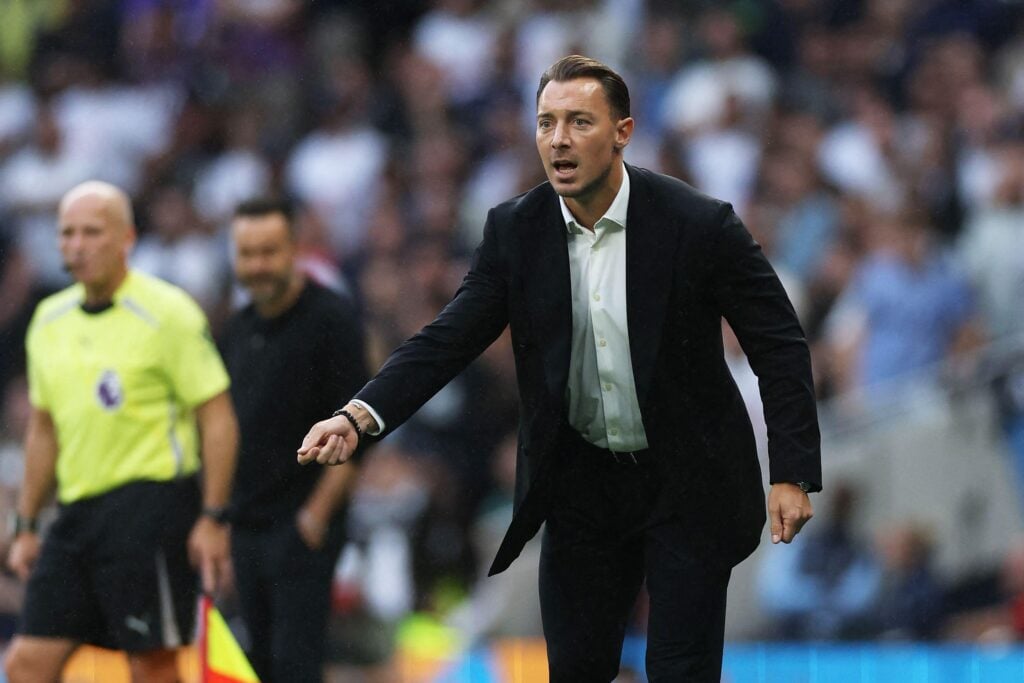
Newcastle United have got off to an unbeaten start under Matthias Jaissle.
The Magpies have drawn with Liverpool and beat Tottenham Hotspur in the Premier League, while seeing off West Bromwich Albion in the Carabao Cup.
Jaissle was expected to have a tough job after taking over in the summer. Eddie Howe had left Newcastle, and the club also lost three of their best players.
Instead, Newcastle have been presented with the perfect opportunity for refreshmen — both in the transfer market and their tactical ideas.
In this article, we’ll cover
Newcastle’s summer window
As mentioned, there were some big outgoings at Newcastle this summer. Anthony Gordon, Bruno Guimaraes and Sandro Tonali were sold to Barcelona, Arsenal and Tottenham, respectively. Kieran Trippier also left on a free transfer, having been an important part of the squad since joining in 2022.
The squad was in need of reinforcements, especially after their 12th-placed finish last season. To do this, Newcastle spend around £270million over the summer to bring in eight new players. All were between 18 and 24 years old.
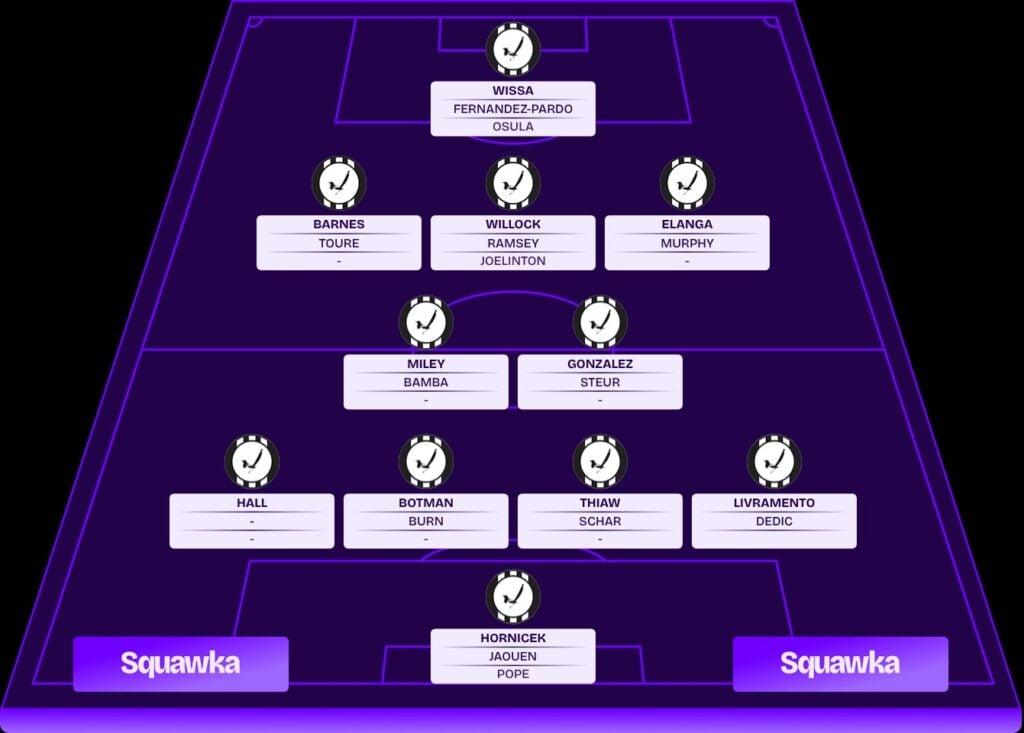
Newcastle’s midfield will now be build around Nico Gonzalez, who joined from Manchester City for around £52m. Sean Steur and Aladji Bamba also arrived this summer as young midfiled options. And Lewis Miley could see a significant increase in minutes this season.
Amar Dedic arrived to replace Trippier at right-back, with Tino Livramento continuing to struggle with injuries. He’s able to cover to cover at left-back too. Newcastle added two new goalkeepers this summer. Lukas Hornicek is their new No.1, while Ewen Jaouen is an exciting prospect to battle for the spot.
Bazoumana Toure arrived as a left-wing option, replacing Gordon and looking to compete with Harvey Barnes for a starting spot. There was room for one more attacker on Deadline Day. Matias Fernandez-Pardo arrived from Lille for around £55m, becoming an option at both centre-forward or off the left.
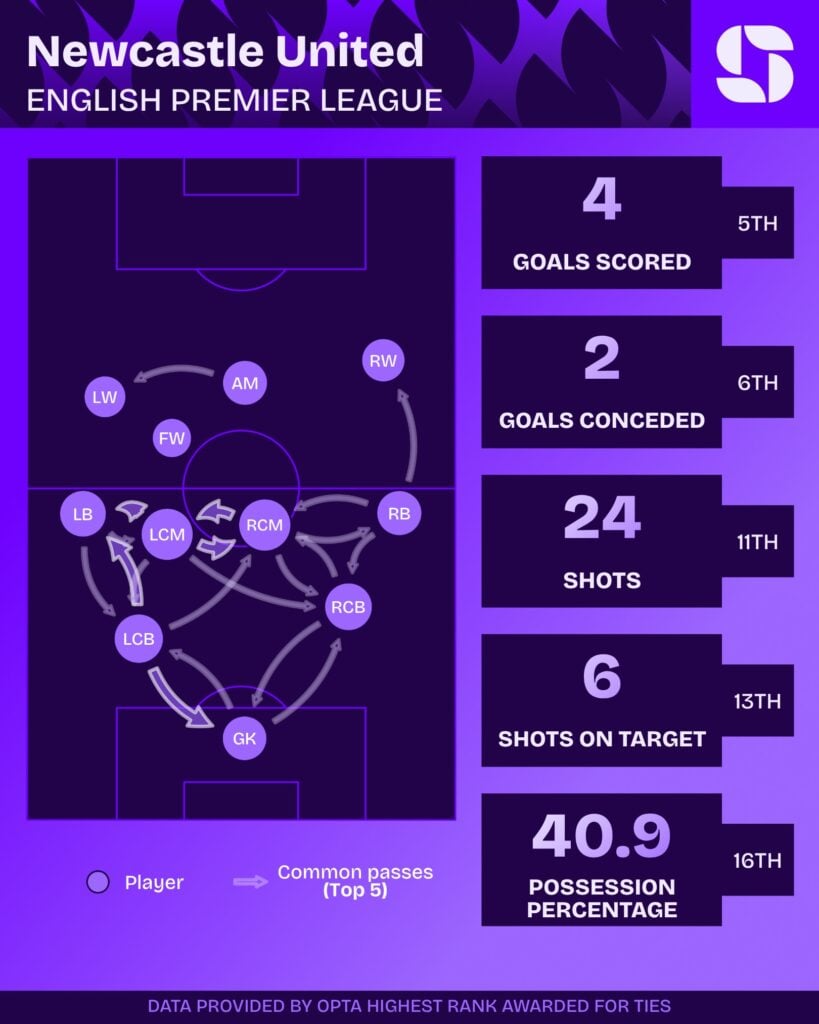
In-possession
The squad isn’t the only thing that has changed this summer. Jaissle is already showing how his new ideas can have a positive effect as Newcastle look to find their spark for their new era. Midfield rotations and dynamic full-back moments have been at the heart of refreshed in-possession ideas.
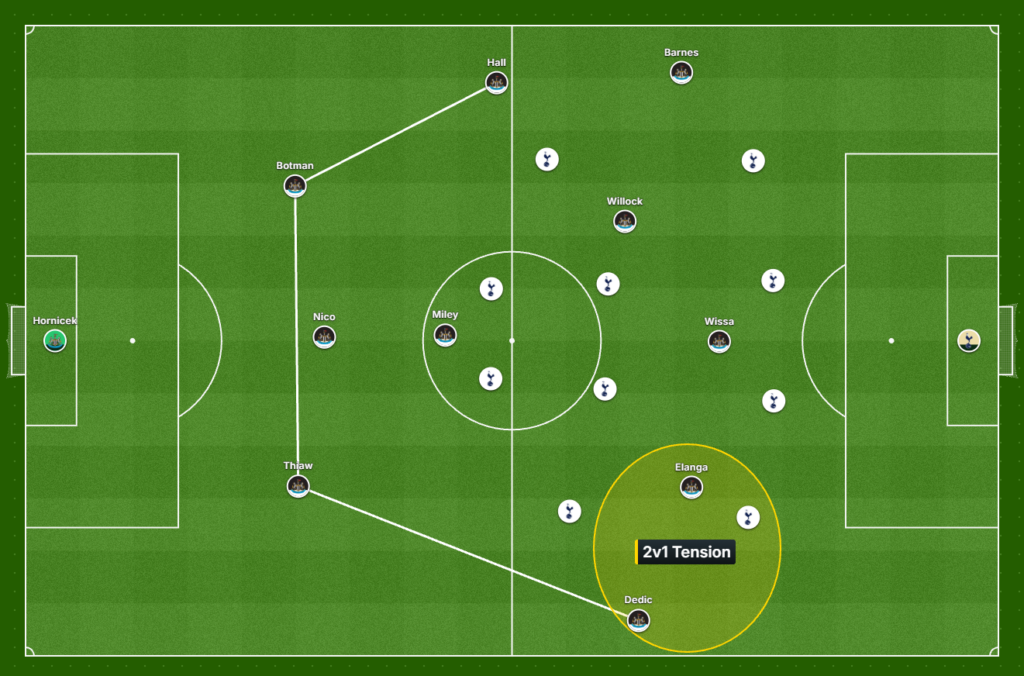
Gonzalez was the deepest midfielder against Tottenham, either acting as a solo pivot or dropping into the backline to form a temporary back three, and release the full-backs.
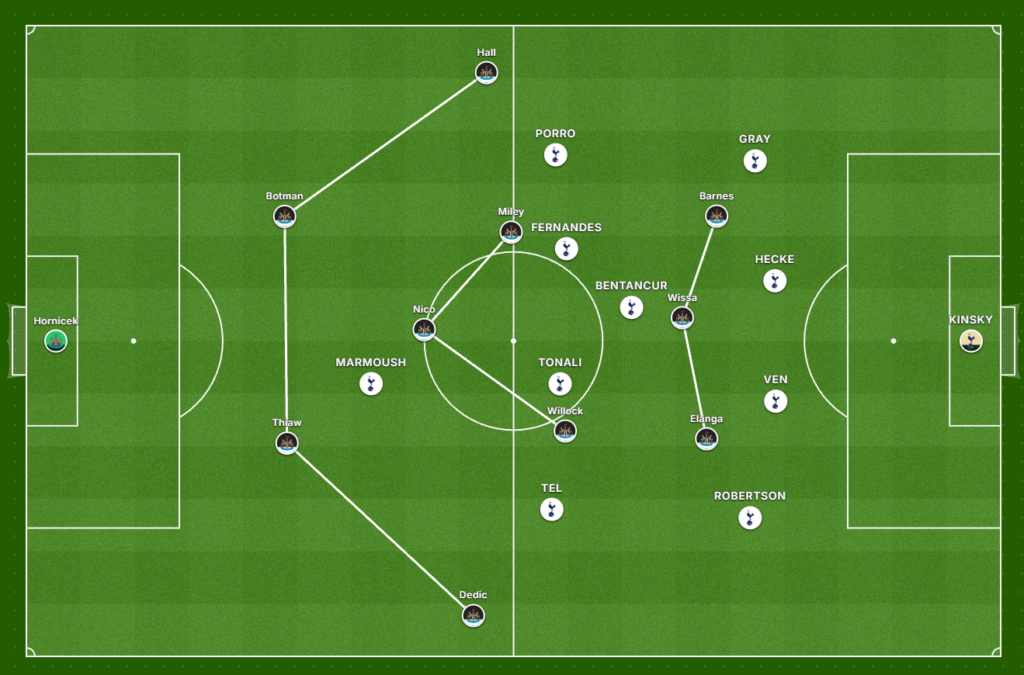
With narrow wide men, the full-backs held maximum width from a deeper starting position, ready to arrive dynamically in the last line.
Miley acted as a No.6/No.8 in central midfield, becoming the solo pivot when Gonzalez dropped him. But he also joined him in the pivot to form a 4-2 buildup at times. Joe Willock was the most advanced midfielder, acting as more of a No.8/No.10. But he had the freedom to drop and form a 3-2 base alongside Miley when Gonzalez moved into the backline.
With Gonzalez dropping into the last line, Newcastle were able to create conditions for vertical play. Either spreading play with switches into wide areas or looking to accelerate play through the middle.
Attacking movements
The wide men’s more narrow position pinned the opposition full-backs inside, allowing Newcastle’s men to arrive with runs off the ball of their markers, creating wide two-on-one tensions.
Newcastle’s first goal against Tottenham was a perfect example of this. Dedic made his run off the back of Mathys Tel, while Anthony Elanga pinned Andy Robertson inside.
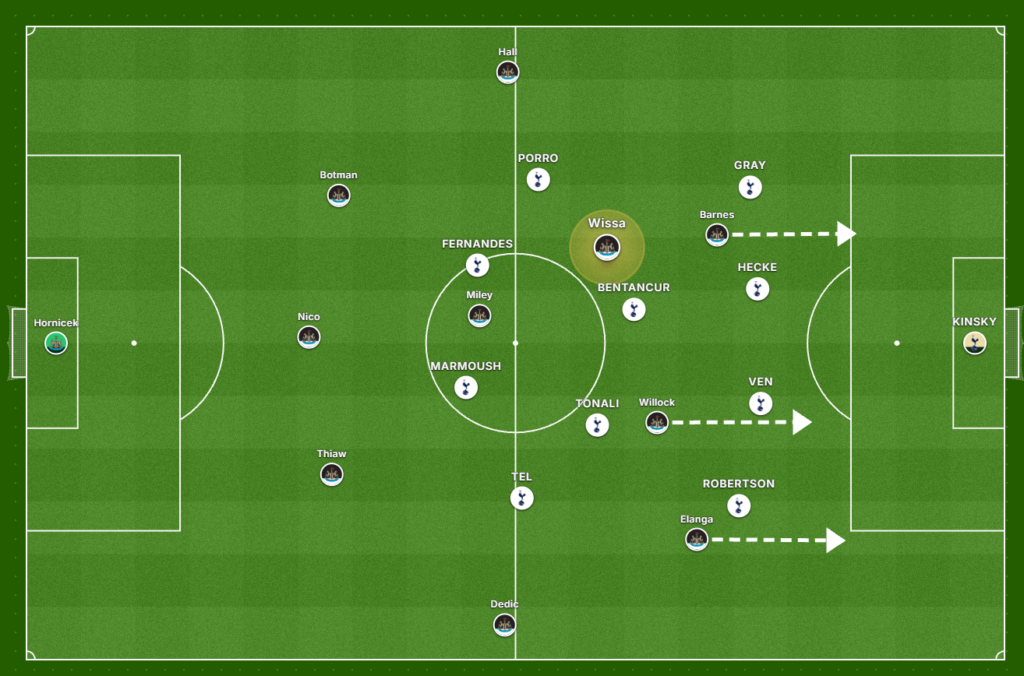
In the season opener against Liverpool, Yoane Wissa was more of a second striker, playing off of William Osula.
Against Tottenham, Wissa played as the No.9. But he had the freedom to drop into midfield areas to create an overload. The likes of Willock, Elanga and Barnes all looked to run beyond.
Out-of-possession
But the tactical refreshment isn’t just in-possession. Jaissle has already shown two different defensive schemes in Newcastle’s first two Premier League games.
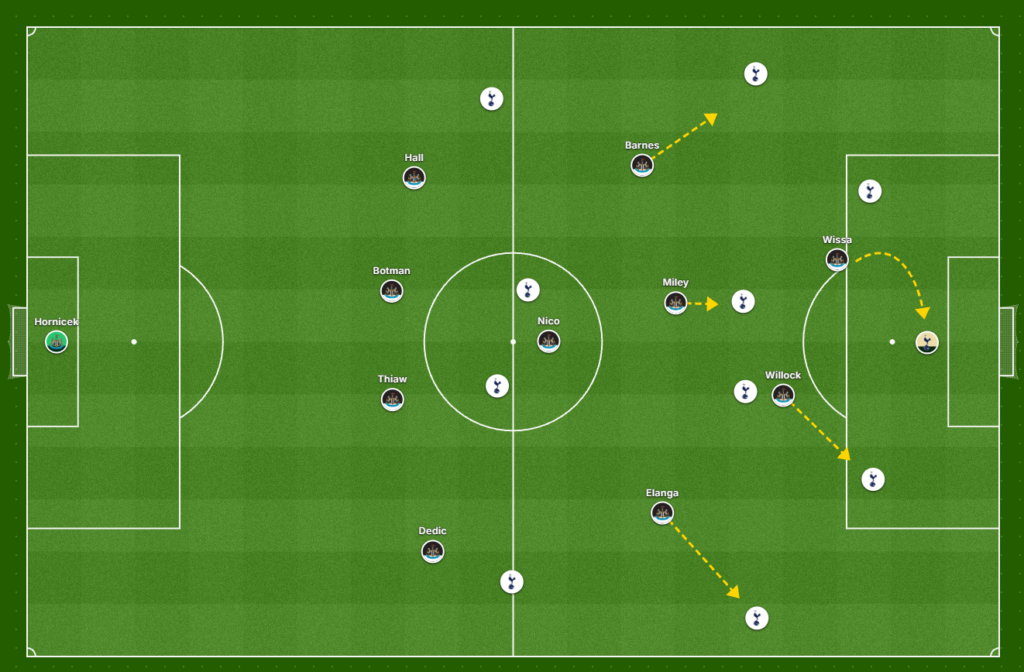
Against Liverpool, Newcastle pressed from goal kicks with their left-winger stepping onto the right centre-back. The centre-forward then pressed the left centre-back. This triggered jumps down Newcastle’s left in the press. Lewis Hall jumped onto the right-back and Sven Botman shuffled over to cover the left-winger.
The midfield three were them man-to-man with their Liverpool counterparts. Wissa shadow-marked Ryan Gravenberch, Miley jumped onto Dominik Szoboszlai and Steur stayed deeper on Florian Wirtz.
This changed against Tottenham. Newcastle looked to pressure with more of a 4-1-3-2 diamond shape.
The wide men managed the full-backs, Joe Willock shadow-marked Tonali before jumping to Micky van de Ven, while Wissa would manage Jan Paul van Hecke before arcing his run to pressure the goalkeeper.
Miley jumped up more aggressively onto Rodrigo Bentancur, while Gonzalez started deeper acting as a +1 for the last line, having a hybrid position where he would jump to pressure Tonali if he received inside Newcastle’s pressing shape.
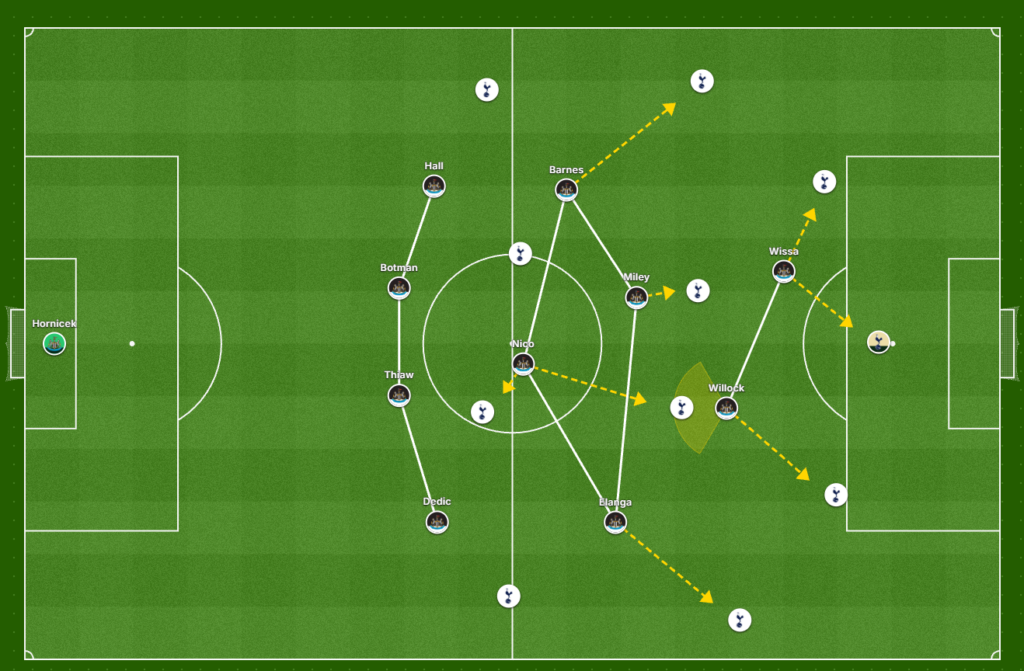
This was also the case for settled possession phases when Tottenham were building out.
If Gonzalez had to jump onto Tonali, the centre-backs were attentive to space left by the midfielder, aggressively stepping up to close the space and attach to any free man.
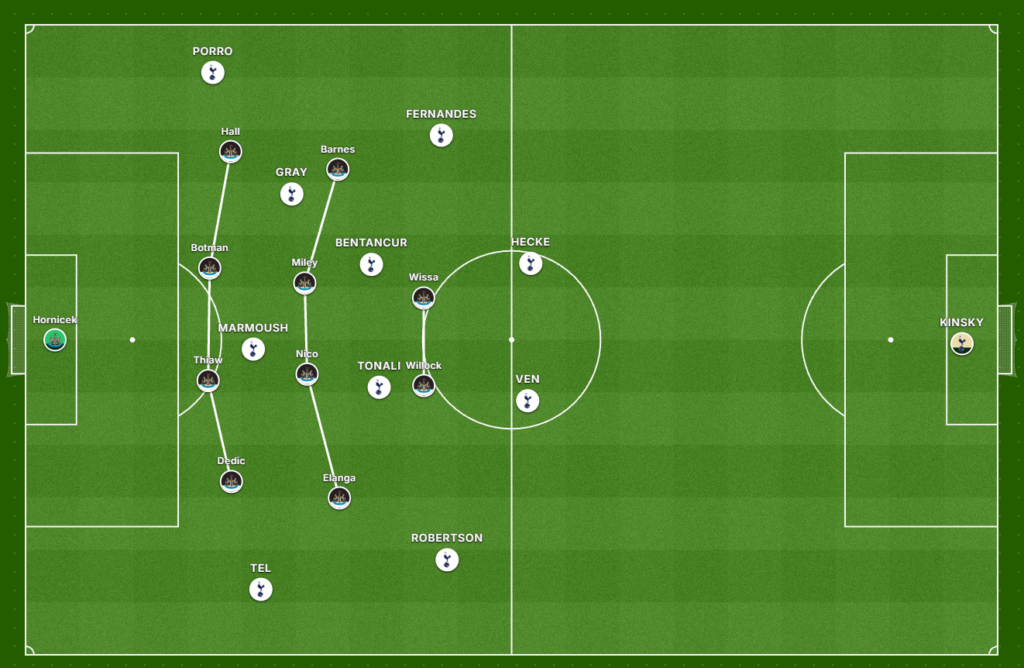
As Tottenham progressed play into Newcastle’s half, the Magpies would settle into a more passive 4-4-2 defensive block.
Mateus Fernandes helped to gain control in these moments for Tottenham, making rotations from high to low with Archie Gray to help disengage Newcastle’s press by confusing pressing references.
Jaissle has already shown a willingness to tweak his defensive approach against different opposition, so it will be interesting to see how many other schemes he has in the playbook throughout the season.