





Xabi Alonso‘s Chelsea tenure has already been a rollercoaster of emotions and it’s only been four months!
After nine games played in the Premier League, Chelsea have won five, drawn one and lost three, with big wins against Bournemouth and Brighton but also devastating losses against Brentford and Tottenham.
Despite being one of the leakiest defensive units so far this season, conceding 15 goals in their nine games, Chelsea have also been one of the most exciting attacking outfits, scoring 19 goals, with only Manchester City and Brighton scoring more.
But no team has scored more goals than Alonso’s Blues in the opening five minutes of either half, scoring nine of their goals in this timeframe.
In this article, we’ll cover
The Rogers affect
Of the nine goals in the opening five minutes of halves, summer signing, Morgan Rogers, has scored three of them.
The addition of Rogers has already been a huge success, with the 23-year-old becoming a decisive figure in the Chelsea attack under Alonso.
In the past few seasons, aside from Cole Palmer‘s huge season under Mauricio Pochettino, Chelsea have lacked a truly decisive player in the final third, contributing with goals and assists in big moments.
With Chelsea struggling to find stability in their performances pretty much since their new owners arrived, it has often led to players with low confidence.
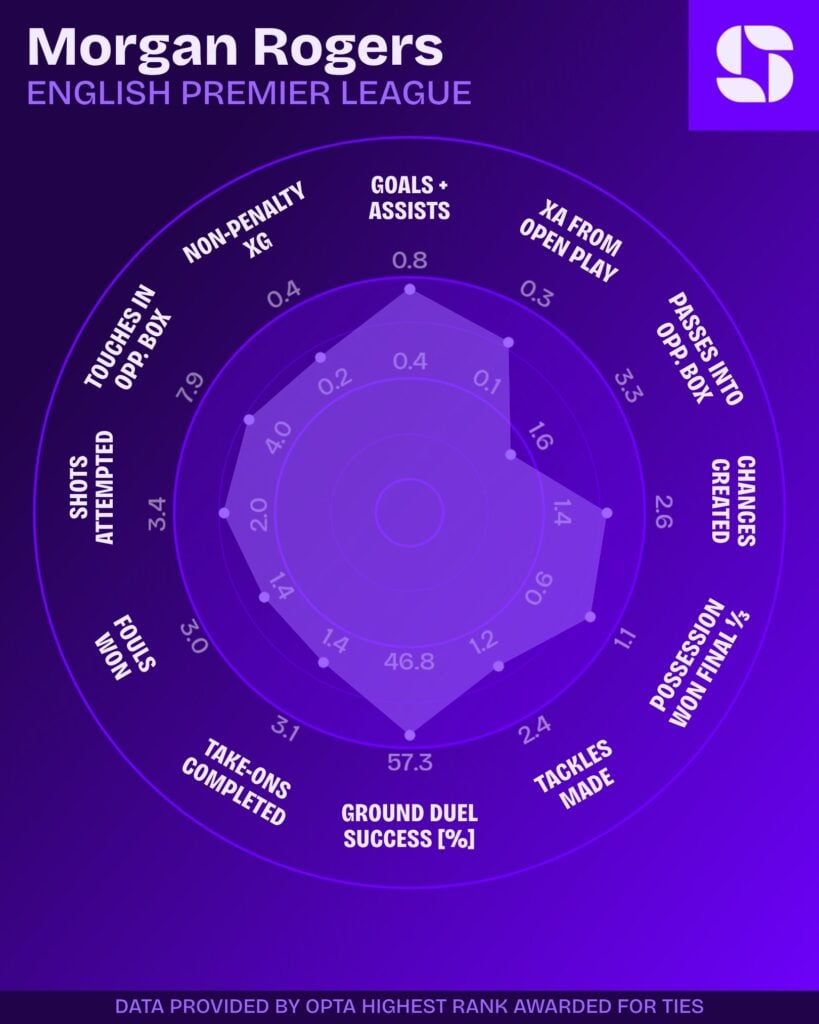
This is perhaps where Rogers’ profile is the most impactful for Chelsea in attack.
A forward who has the qualities of a game changer, who doesn’t need to be having a good game to produce a moment of quality and the mentality to continue being direct and forceful with his actions irrespective of the outcome.
In his first “big” game at the club, facing Arsenal in the Premier League just three games into the season, Rogers struck the opener after just one minute, having the confidence and initiative to take the first shot of the game, hitting it on the volley and beating David Raya to make it 1-0.
But Rogers arrival and Alonso’s tactics have platformed these qualities to the highest level, helping Chelsea to score early in halves and change the state of play.
Midfield regains
A key component of Chelsea’s fast starts has been the tenacity they look to begin with, whether that be in the press, the counterpress or even defending in a block, it can help to platform the types of attacks which get the best from Chelsea’s front line.
This was evident against Manchester United, after going in at half-time 0-0, Chelsea came out aggressive in the second half, with both Moises Caicedo and Romeo Lavia looking to be proactive in midfield, engage in duels and force turnovers to release Chelsea’s front four against a destabilised Manchester United defence.
After Palmer lost possession trying to progress in the final third, Caicedo pounced in midfield to track Bryan Mbeumo, forcing him to turn back, where he was then met with Lavia arriving to double up and force the turnover in the counterpress.
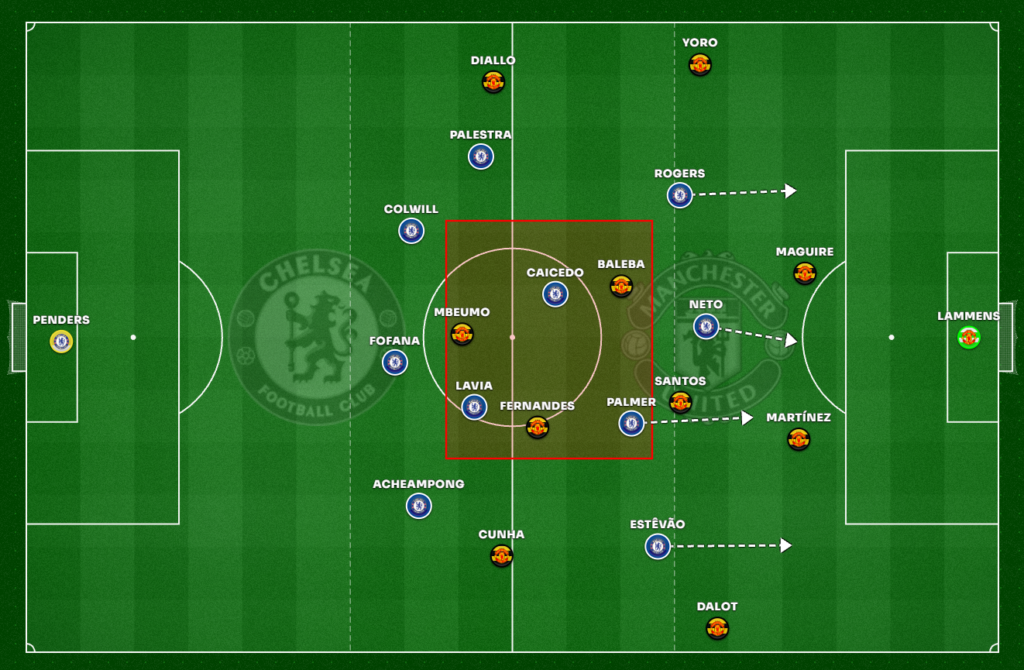
Lavia not only won the first duel, but then beat Carlos Baleba to the loose ball, poking it forward into Rogers’ path, who could now drive at the heart of the Manchester United defence.
With all four of Chelsea’s frontline running towards goal, Rogers was able to continue his run centrally, as Estevao’s run to Rogers’ left dragged Harry Maguire slightly out of position.
Instead of rushing the decision and wasting the opportunity, Rogers continued his run and waited for the defenders to make his decision for him, but with no one stopping in to stop his run, the England international just kept going, before lifting it over Senne Lammens between the sticks, making it 1-0 and changing the game for the Blues.
Directness
At the start of halves, there is a sense of directness from Alonso’s side, whether that be going direct from goal kicks, looking to put the opposition defence under pressure by getting shots away or even applying the pressure from set-pieces.
Two examples of Chelsea benefitting from their direct play from goal kicks to score early in halves came against Fulham and Everton, with both goals coming early in the second half.
This has been a real weapon for the Blues this season, as having a duo such as Joao Pedro and Rogers in the frontline gives Chelsea good targets to hit going long, with both players being good at physically imposing themselves against the opposition defenders to make it stick and take advantage.
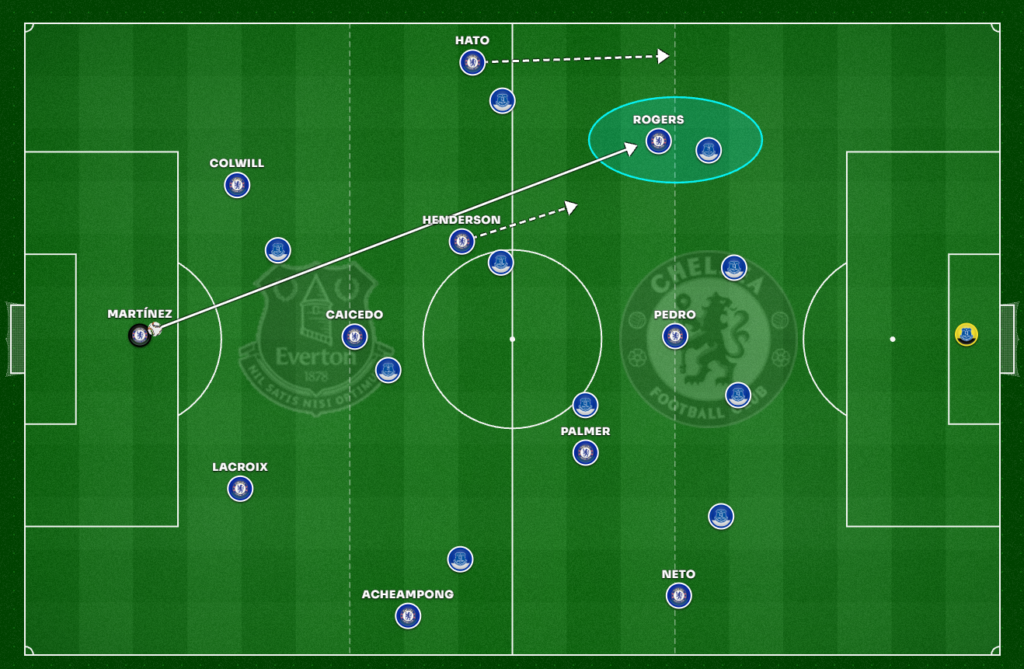
Against Everton, after a goalless first half, Chelsea found the breakthrough, with Emiliano Martinez going long towards Rogers, as both Jorrel Hato and Jordan Henderson arrived to contest the second ball around him.
Rogers did well to get his body in between himself and Ainsley Maitland-Niles at right-back, making contact and allowing Hato to gather the second ball to gain territory further forward.
Hato then went back into the feet of Rogers, who used his body brilliantly to protect the ball and wait for support, which Hato provided by following his pass and making an overlapping run, which Rogers then found with a nicely weighted backheel.
From here, Hato used his power to burst past Maitland-Niles, before providing a cutback which was initially attacked by Palmer, making it almost impossible for Jarrad Branthwaite to clear, before Pedro Neto arrived unmarked to guide it home and make it 1-0.
Not only did this goal demonstrate the directness that Chelsea have utilised from the goalkeeper this season by going long, but also the commitment to get bodies attacking the box, which again feels very focused at the beginning of halves, to get off to a fast start and catch teams off guard.
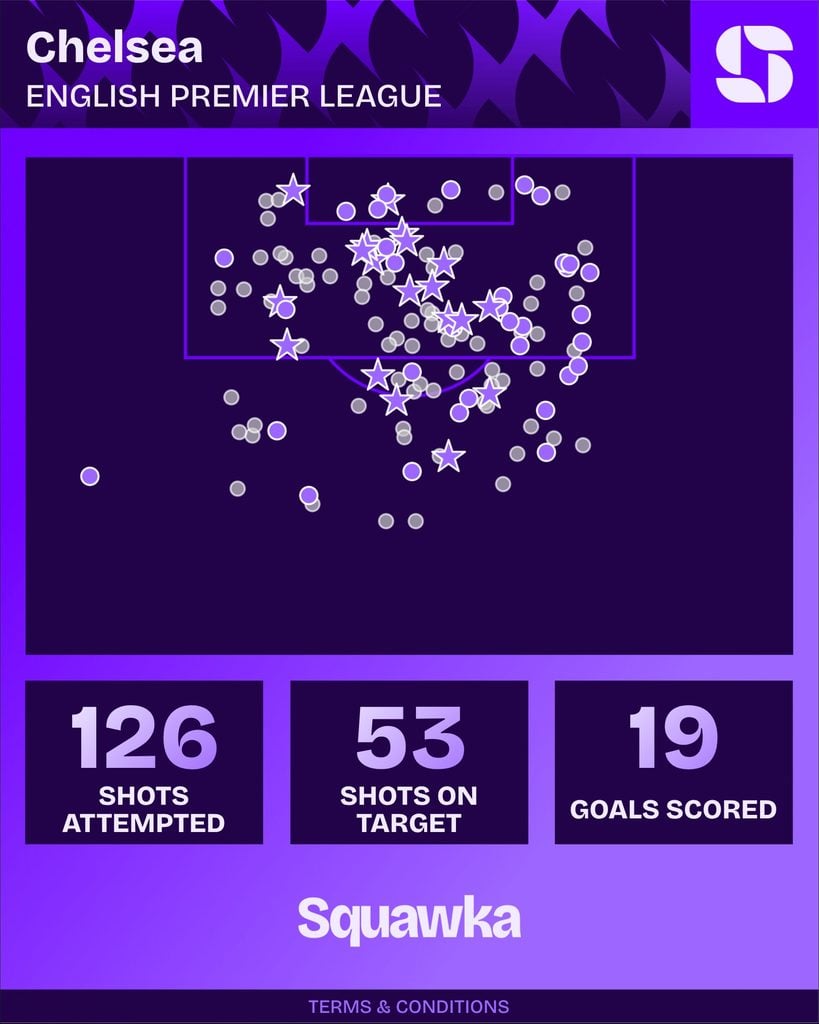
This also applies to the willingness to get shots off which was mentioned earlier, speaking about Rogers and his impact.
Chelsea have shown a willingness to get shots off from outside the box this season, testing keepers early and looking to apply pressure as soon as they can.
In some instances, these shots will provide goals, just as Henderson and Rogers did early against Bournemouth, scoring twice from outside the box in the opening four minutes.
And sometimes, those shots/pressure on goal will generate corners/set-pieces, giving Chelsea and their new set-piece specialist, Austin McPhee, the chance to cook something up that way.
Either way, the Blues have been effective at the start of halves in a number of different ways this season, and it will be interesting to see how it changes across the course of the season.