







The optimism surrounding Hull’s return to the Premier League has been replaced with a quiet unease.
The Tigers kicked off the campaign with back-to-back wins over Manchester United and Coventry City without conceding a goal. Since then, however, they’ve gone three without victory.
Results still haven’t been terrible, with a goalless draw at home to Aston Villa and a 2-2 away at Chelsea proving to be valuable points, while they only narrowly went down 2-1 at Newcastle, despite being two goals behind within seven minutes.
But it means the true test of Hull’s ability to compete at this level will come in the next five vital games between the two international breaks: Everton (h), Fulham (a), Brentford (h), Ipswich (h), Arsenal (a).
There are some genuine chances for points during this run, and other opportunities to show Sergej Jakirovic‘s men aren’t here to make up the numbers. Here, we’ve taken a look at how Hull’s change in form is reflected statistically and where they could stand by mid-November.
Winless in three but plenty of optimism and evolution
Attack
Though they fired a blank against Villa, Hull scored just as many goals in their three-game winless run (3) as they did in their two victories at the start of the season. In fact, their level of domination within matches dramatically increased, with their shots more than doubling from 7.0 per match to 15.67. Hull also brought their big chances created up to 1.33 from 1.0, while their overall chances created spiked to 11.33 from 4.5, and take-ons completed to 8.0 from 3.5.
The crucial difference has been their output in the box, with Hull missing 1.67 chances per game across their last three matches, compared to 0.5 in the opening two. Consequently, their big chances scored have also dropped from 1.5 to 0.33.
Hull were particularly guilty at Chelsea, missing three of their four big chances. They also attempted 22 shots at Newcastle compared to just 12 from their hosts, but came out 2-1 losers at St. James’ Park.
There are reasons to worry here. For example, Oli McBurnie has missed all 10 of his shots in the Premier League so far this season, including three big chances. Only Evanilson has missed more big chances without converting one (4) in the top flight this season. The 30-year-old has also fired a blank in two starts for Scotland during the international break, with doubts remaining regarding his ability to lead the line at Premier League level.
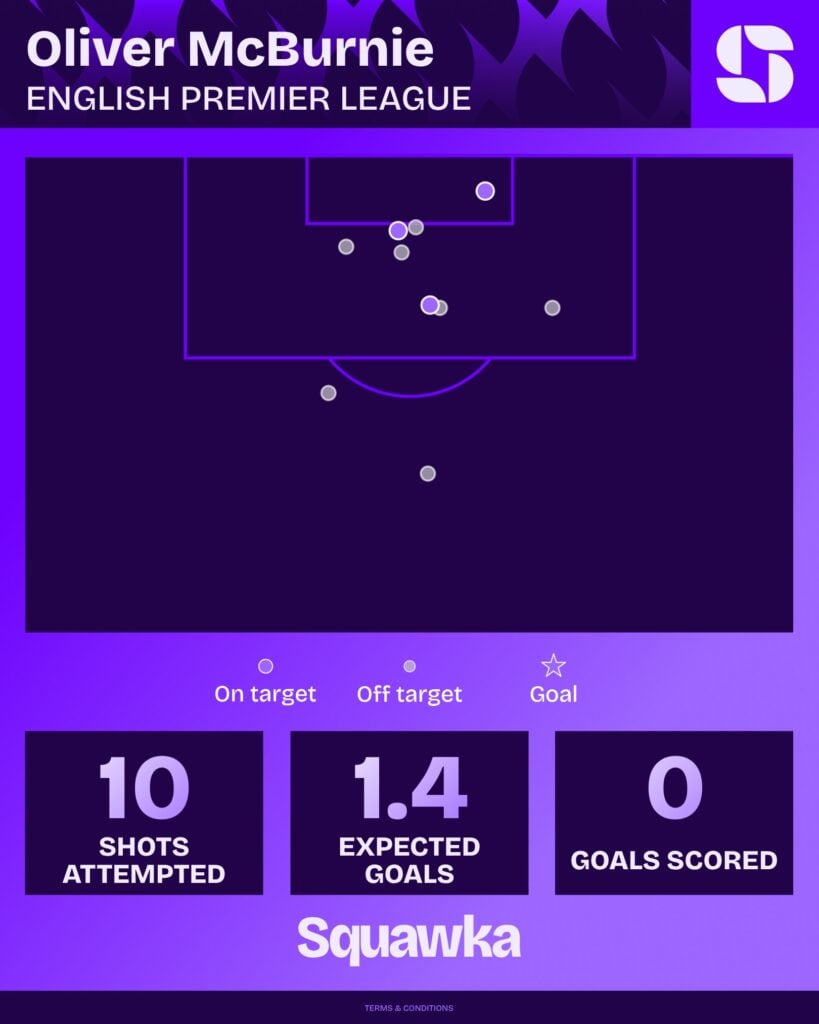
But Jakirovic is more likely to walk away massively optimistic. His side’s attacking metrics are only getting better, as is their overall dominance in matches, with Hull’s touches and final-third passes attempted rising to 474.33 and 102.33 per match, respectively, in the last three games, up from 451 and 76 in the opening two.
The Tigers may be three without a win, but they’ve seriously tested a trio of the Premier League’s most competitive sides during that run and appear to be a clinical striker away from being a considerable force.
Defence and goalkeeper
The extra dominance Hull have enjoyed has seen them adapt the way they’ve defended.
In their opening two games, the Tigers soaked up pressure and hit Man Utd and Coventry on the break, defending their own box rather than going hunting for possession.
The last three games have been a different story. Jakirovic has seen his side increase their possessions won in the attacking and middle thirds from 1.5 and 11.5, respectively, to 4.0 and 15.33. Subsequently, their possessions won in the defensive third have dropped from 21.5 per match to 13.67.
Hull’s tackles and interceptions per match have risen from 16.0 and 6.5, respectively, to 17.67 and 10.0, while their clearances per match have more than halved to 20.33, down from 42.5.
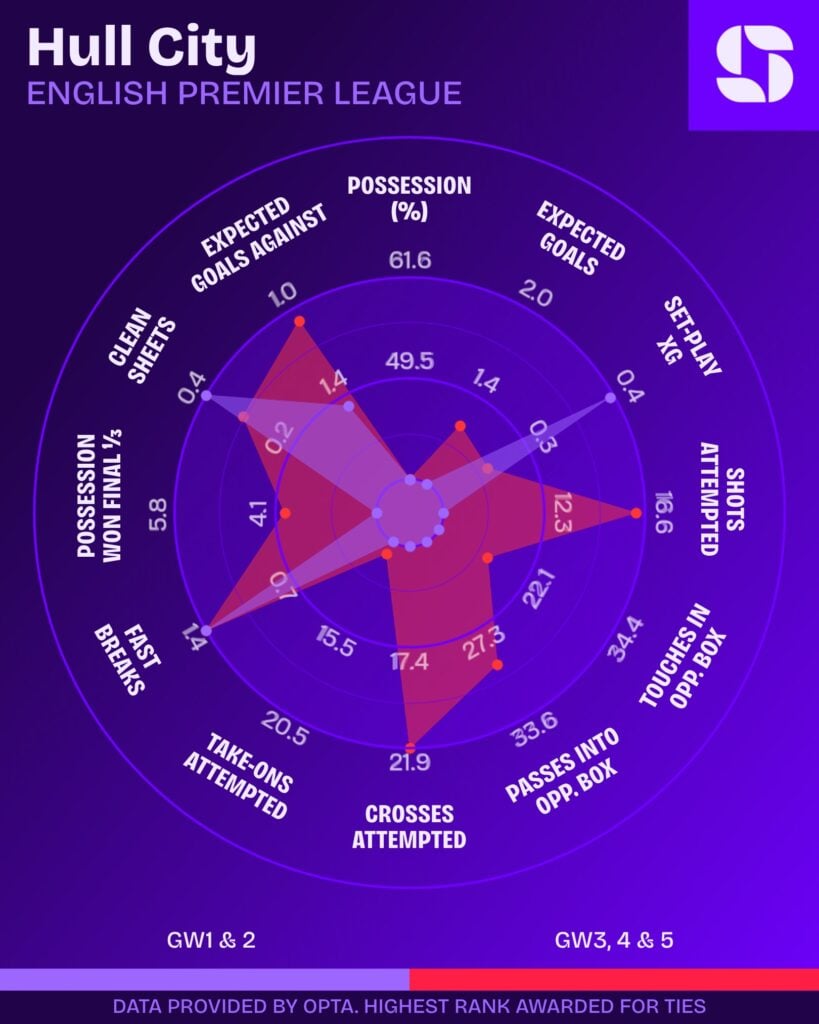
Defending with this sort of bravery and intensity has been a remarkable achievement from Hull, considering the standard of opposition they’ve faced. But it has come at a cost. Hull have conceded three goals in their last two games, compared to none in their opening three.
Goalkeeper Konstantinos Tzolakis was the hero of the opening two fixtures, making eight saves against Man Utd and Coventry combined, to the tune of 1.93 goals prevented. However, across the last three fixtures, Hull’s saves per match have dropped from 4.0 to 3.0, while they’ve also made two errors leading to goals.
As with the attack, Hull’s defensive numbers are incredibly promising, but it might well be a personnel issue as they continue to adjust to the increased intensity and ruthless nature of the Premier League.
Critical next five games
All of this comes together to make Hull’s next five matches between the two international breaks vital. What the Tigers do here could define their season. Will they bravely pick up more points and keep the relegation battle at arm’s length, or will they take some punches to the face and be dragged into trouble, leaking confidence along the way?
There are opportunities to be had. The run kicks off at home to Everton, and Hull are yet to lose on their own patch this season, while the Toffees have only managed draws in their two away games.
And while Hull then have to travel to Fulham, they’ve lost just one of three on the road so far, while the Cottagers are one of just three teams who remain without a win.
Even at home, Brentford is an undoubtedly tough fixture, with Keith Andrews‘ side yet to taste defeat this season. But Jakirovic will still be eyeing points there. Ipswich at home is perhaps the most important fixture of this run, with a chance for Hull to sweep aside their fellow newly-promoted club and add another vital win to the tally.
Hull’s final fixture before the November international break is Arsenal away. What comes before the trip to the Emirates will provide vital context. If the Tigers maximise their opportunities, playing the champions away can be seen as a free hit, where any points are a bonus. If they’re on the slide, Jakirovic’s men will need to overcome the odds to avoid going into the break under a dark cloud.