




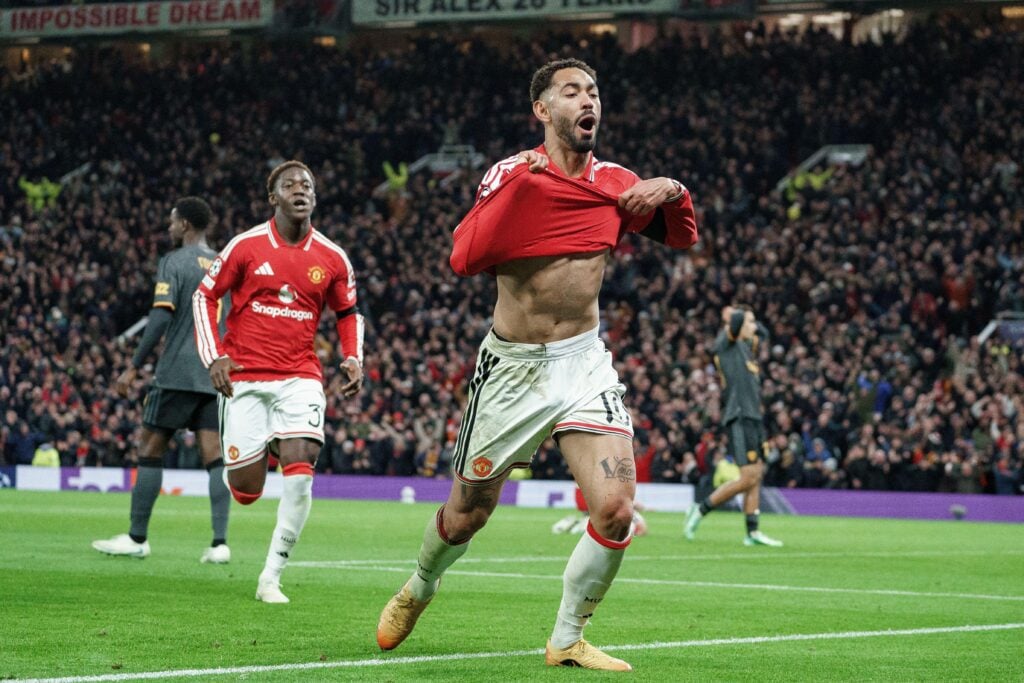
Manchester United have finally gone back to winning ways after coming from 0-2 down to beat Roma 3-2 at Old Trafford.
This result stopped their worst winless run across all competitions since 1988, ending it at nine games (D3 L6).
Matheus Cunha was involved in seemingly every important moment of the match. The Brazilian scored the two decisive goals to bring the Red Devils level and then put them ahead, later being sent off. He also won the penalty and put Bryan Mbeumo through on goal moments after Bruno Fernandes converted his second attempt from the spot.
But while they celebrated after a crazy second half, we must address how things got as bad as they did in the first.
What went wrong for Man United against Roma and how did they fix things?
Roma’s left-to-right switches of play
Roma, a typical Gian Piero Gasperini-coached side, like to attack fast and direct. Man United offered them plenty of opportunities to do just that and an even first 10 minutes quickly turned into a 2-0 lead for the Italians.
The mistakes that stand out the most in their first goal are Kobbie Mainoo losing possession in the middle of the park and Diogo Dalot nowhere to be seen. However, Carlos Baleba taking the ball from the left, where he had Dalot running forward plus Bruno Fernandes and Cunha well set, to the right, may have been as impactful of an error.
Mainoo did poorly by giving the ball away, but his midfield partner put him in a tough spot to add continuity to the play. That passing sequence had no future there, while on the left they would have been able to keep it going.
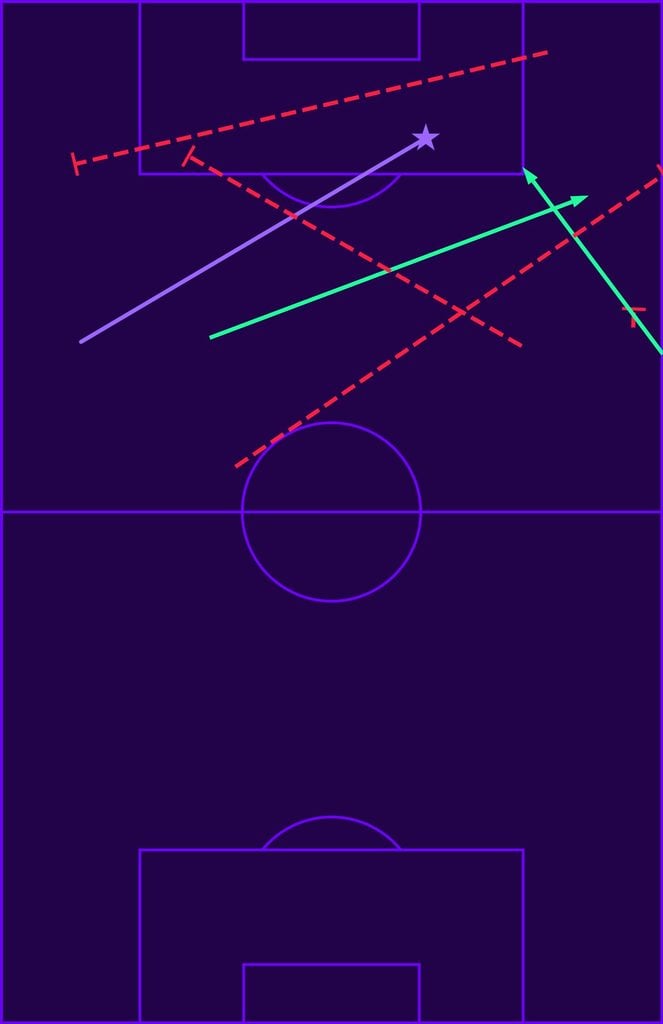
As a result, the United defence collapsed down the right-hand side and Ayden Heaven had to tuck inside to track Marten de Roon. The youngster might have just done overdone it a little bit, giving Matias Soule too much space. Rodrigo Mora picked out what would not be the last of a beautiful diagonal long ball to find the Argentine who slotted it past Senne Lammens.
Less than five minutes later, he did it again for the same teammate, in the sequence that ended with the Heaven handball and subsequent penalty.
The quick 0-2 deficit destroyed Man United’s confidence. They had no energy to either survive Roma’s aggressive press while on the ball, nor to impose one of their own.
In fact, the lead-up to the second goal was basically why Michael Carrick is reluctant to adopt a full man-to-man high press. The Giallorossi escaped it and found acres of space to run into in the final third.
The Red Devils also started to give the ball away in dangerous zones and nearly conceded a third. Donyell Malen could have gone through on goal but couldn’t get a decent first touch after Dalot gave it away.
For perspective, six of Roma’s eight high turnovers forced against Man United happened in the first half. Which brings us to the next topic.
Sticking to the game plan
Carrick didn’t really make big tactical adjustments in the second half. Whatever team talk he had in the locker room probably looked to engage his players and motivate them psychologically rather than change the team’s structure or anything like that. But it worked.
Their final 45 minutes were relatively similar to the first 10 before conceding the opener. There were clear and well defined ideas there – they just went out the window as soon as the first inconvenience came. As it often happens to teams in crisis.
The Red Devils focused on moving more without the ball to manipulate Roma’s man-to-man press all across the pitch. At times, we often saw Bruno and Cunha picking up the ball close to Lammens, with Gianluca Mancini chasing them all the way.
There seemed to be much more intent in their actions as well. As we mentioned before, they conceded just two high turnovers in the second half compared to six in the first.
They still looked for more long balls than the fans probably would have wanted to see. But they did win a few second balls early on in the second half, so there was a reason for them to look for them later on as well. And it’s exactly what got them the penalty.
Despite the lead-up to it coming from a combination in the left-hand side, Man United looked to attack more down the right. It’s where they generated the most danger against Chelsea on the weekend and they carried it over to the Roma game as well.
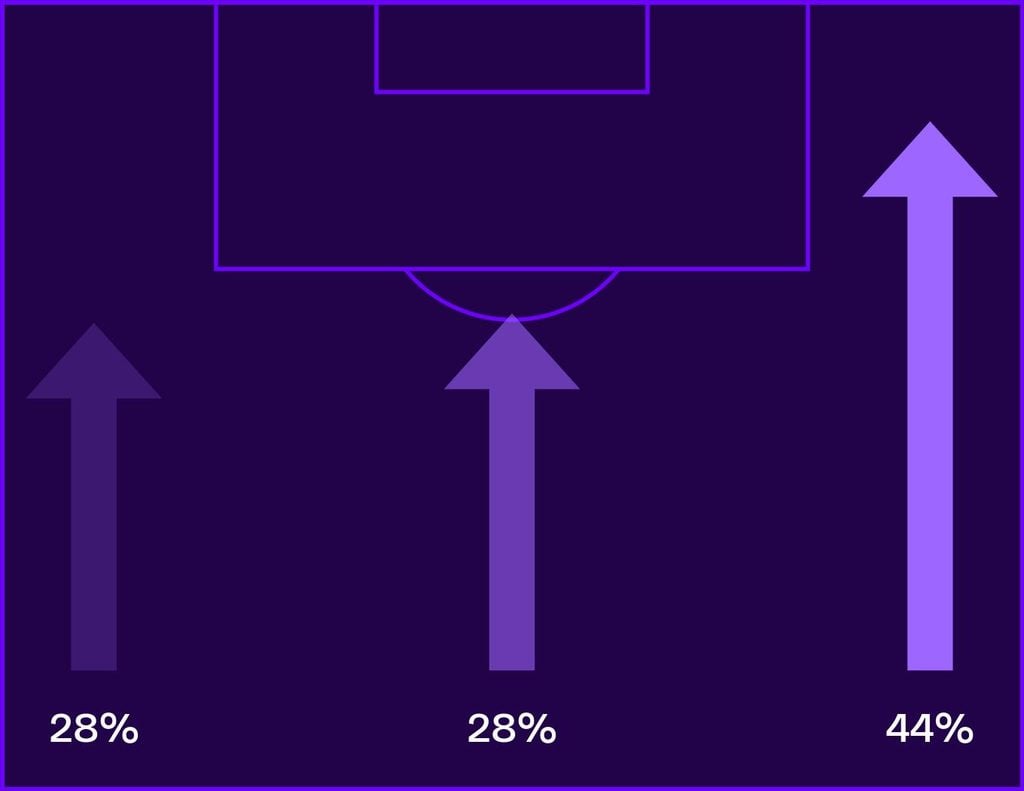
Baleba did almost go through on goal down the right touchline in the early second half, but picked up an apparent hamstring injury and couldn’t even finish the play off. Though it was a positive sign straight out of the gates.
Granted, Roma did take their foot off the gas a little bit. They actually had more possession in the second half (49%) than in the first (46%). But they looked happy to just pass it around hoping the Red Devils and the fans at Old Trafford would cool off after pulling one back.
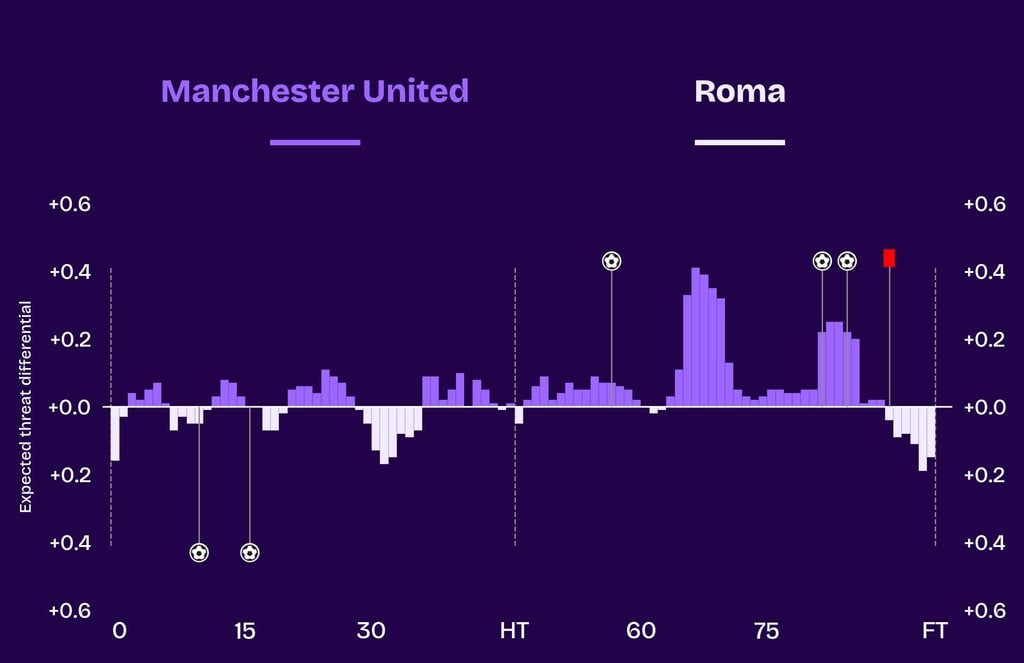
In the end, what happened is that they failed to take a single shot in the final 45 minutes. They did well to take United’s momentum away in parts – and it was a huge error from Leonardo Balerdi that allowed Cunha to bring them level.
Shea Lacey’s impact
But it took more than that to give Man United the win. As we mentioned in the previous section, they looked to concentrate their attacking actions in the right flank. Amad Diallo had an eventful game at Stamford Bridge and, despite missing good chances, managed to create them for himself – and teammates as well – in the first place.
However, he did not have the same impact tonight against Roma. Brazilian wing-back Wesley completely dominated this match-up and nullified the Ivorian. In addition to winning 4/7 statistical duels, he outmuscled United’s No.16 quite often and didn’t allow him any space whatsoever.
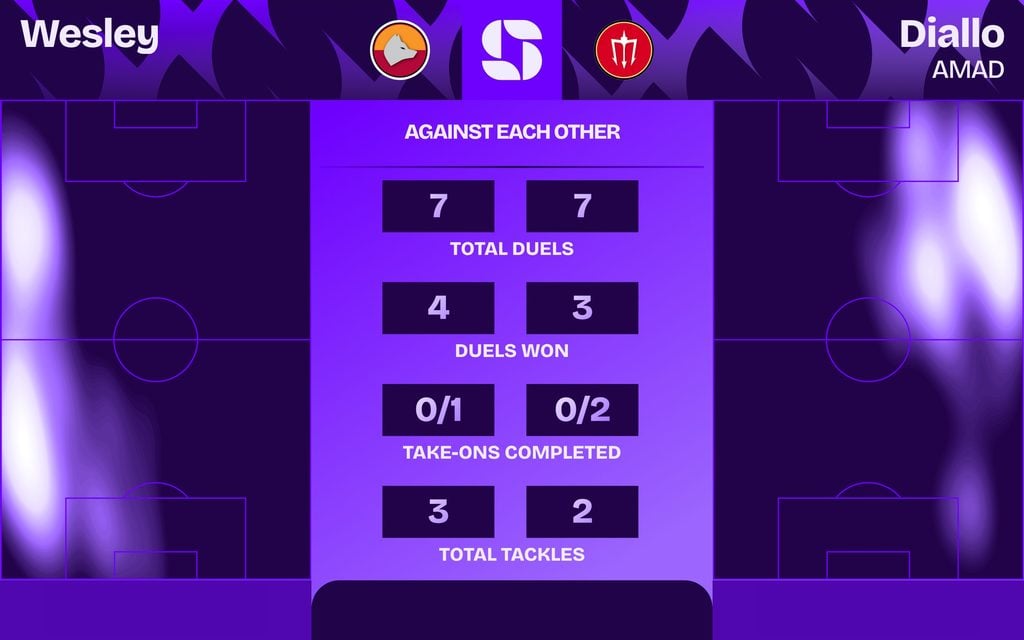
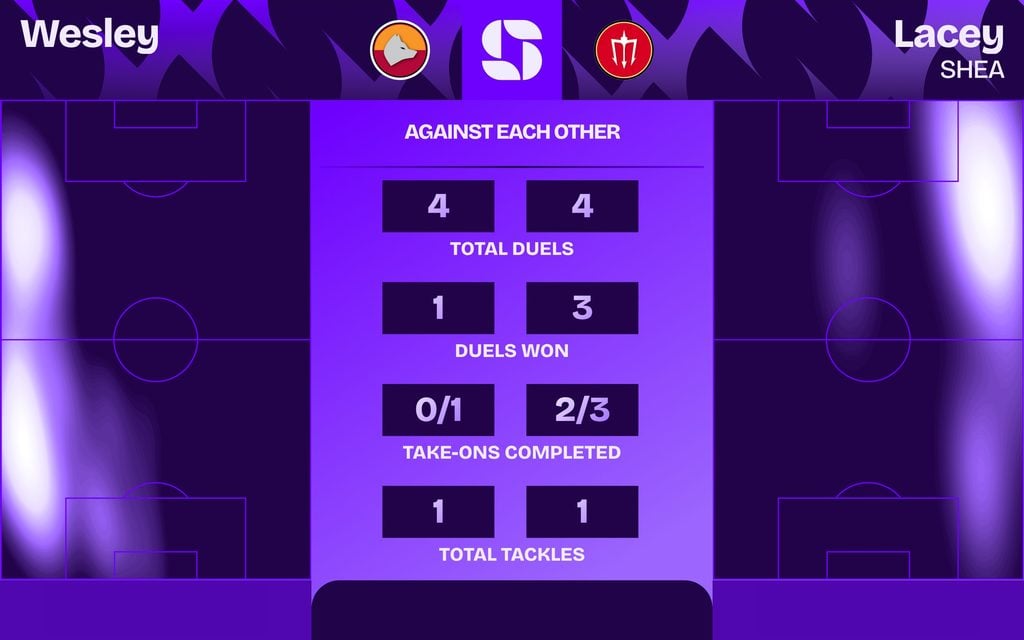
Shea Lacey, however, quickly flipped this dynamic after coming on. Of course, it was a more favourable scenario. He was rested and faced a more tired version of Wesley, who had been playing and battling for 75 minutes. But the English youngster was able to do a lot more in 15 minutes than Diallo in 75.
The 19-year-old assisted Cunha’s winner with a beautiful pass that threaded the needle and removed three Roma players from the play. And he got the best out of Wesley in those individual duels.
At this point, Michael Carrick’s job safety is being evaluated in a game-to-game basis. Who knows whether he’ll remain as manager long enough to see if tonight’s match could be a turning point for him.
But the second half did not show a group of players that has quit on their manager – quite the opposite. And he might have gotten a valuable rotation piece in Lacey for when Diallo doesn’t have it or isn’t available.
He opted to go with the likes of Mbeumo and even Bruno out wide before the Ivorian’s return in the draw against Tottenham Hotspur.