








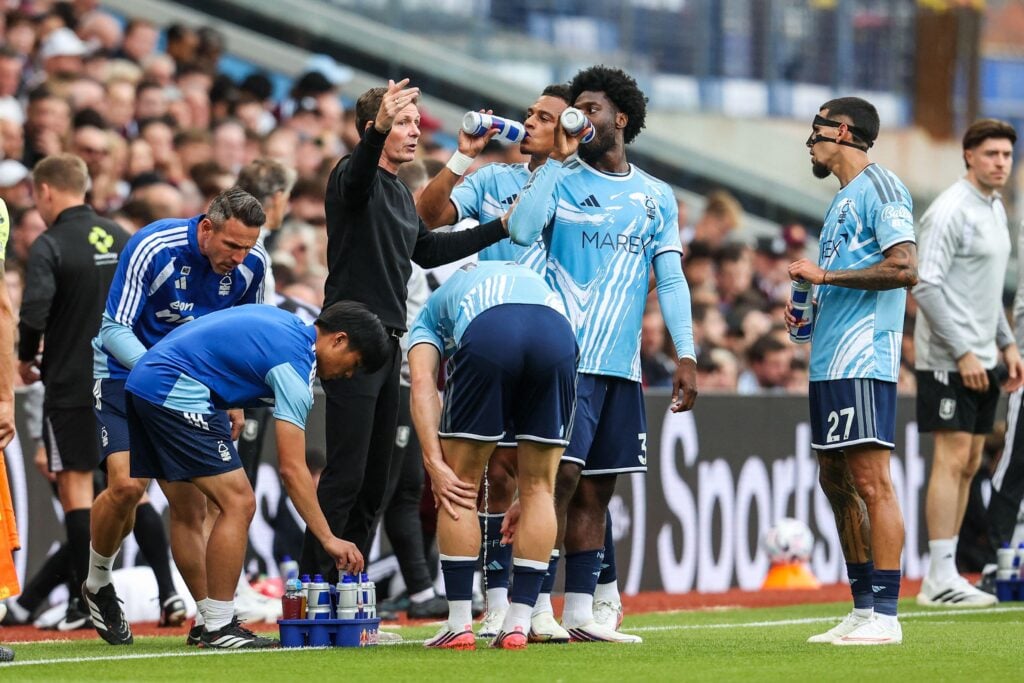
Oliver Glasner is slowly turning things around at Nottingham Forest.
The Tricky Trees lost their Premier League opener against Leeds United but are now unbeaten in their past three matches. This includes a 2-2 draw against Liverpool and a stalemate with Tottenham Hotsur they were unlucky not to win.
Then there was the first win of the season last weekend, beating Aston Villa 2-1 at Villa Park.
But what exactly is Glasner doing, as looks to restore success at the City Ground?
How Oliver Glasner is restoring Nottingham Forest
Glasner’s early print
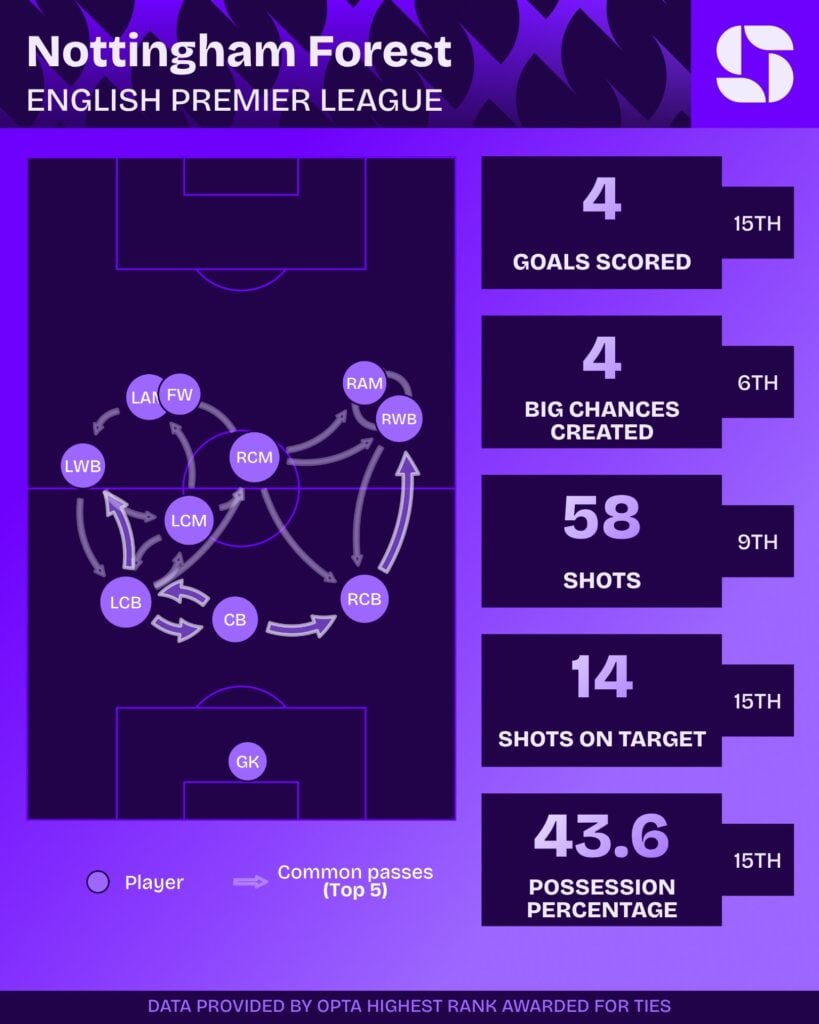
Glasner has made an early print on this Forest team, and it’s already evident. The Tricky Trees have averaged just 43.1% possession in the Premier League this season. Their foundations have been their defensive resolve, with Forest only conceding 4.12 Expected Goals across the season so far. Only Arsenal and Manchester City have lower xGC.
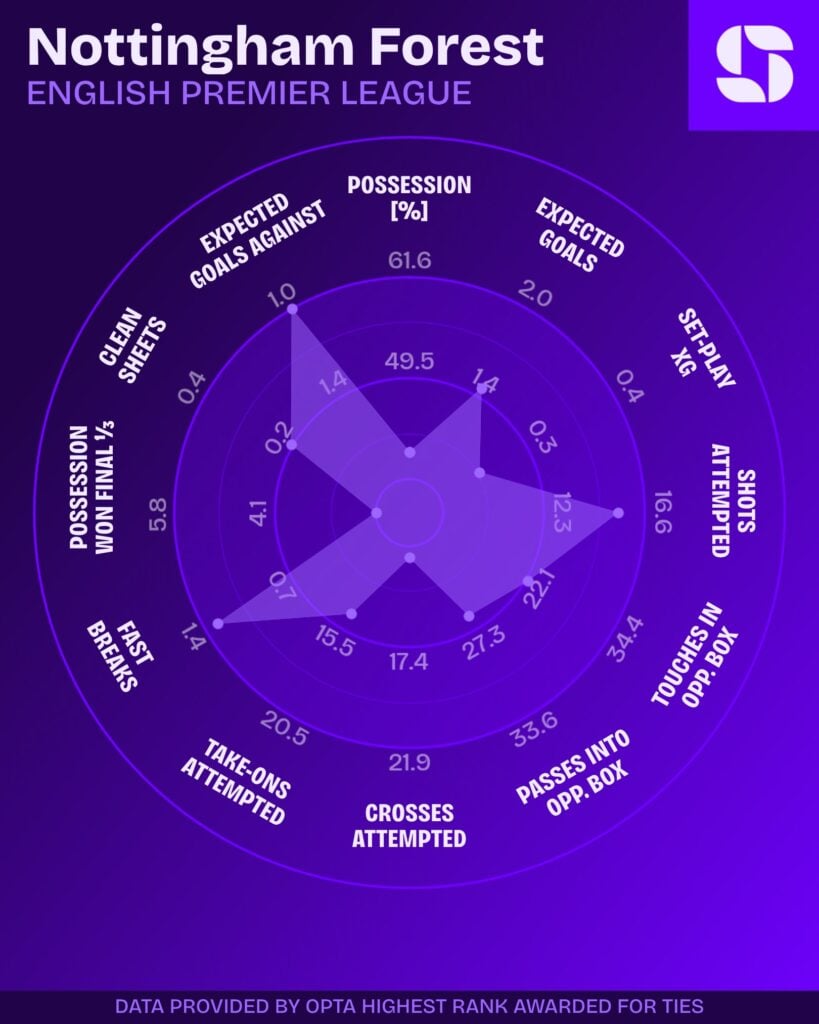
Being able to absorb this much pressure through a solid defensive structure allows Forest to get out quickly in transition. They can then cause problems for the opposition that way. It’s something they did at their best to a devastating effect under Nuno Espirito Santo in 2024/25, qualifying for European football.
Forest average the lowest sequence time per possession this season, with 7.15 seconds. And they also have the second-fewest passes per sequence at 2.76. However, they do have a direct speed of 1.91, ranking seventh in the Premier League.
At the other end of the pitch, Forest have generated 6.13 xG, scoring four goals — an underperformance of -2.13 so far. But they rank fourth in the league for xG difference (between xG and xGC) at +1.97.
Out-of-possession approach
As he did at Crystal Palace, Glasner has set his Forest side up in a 5-2-3 shape off the ball, not looking to apply immediate pressure to the opposition buildup.
Instead, the aim is to sit in a more zonal mid-block structure. By doing this, Forest look to force the opposition down the sides and block central access.
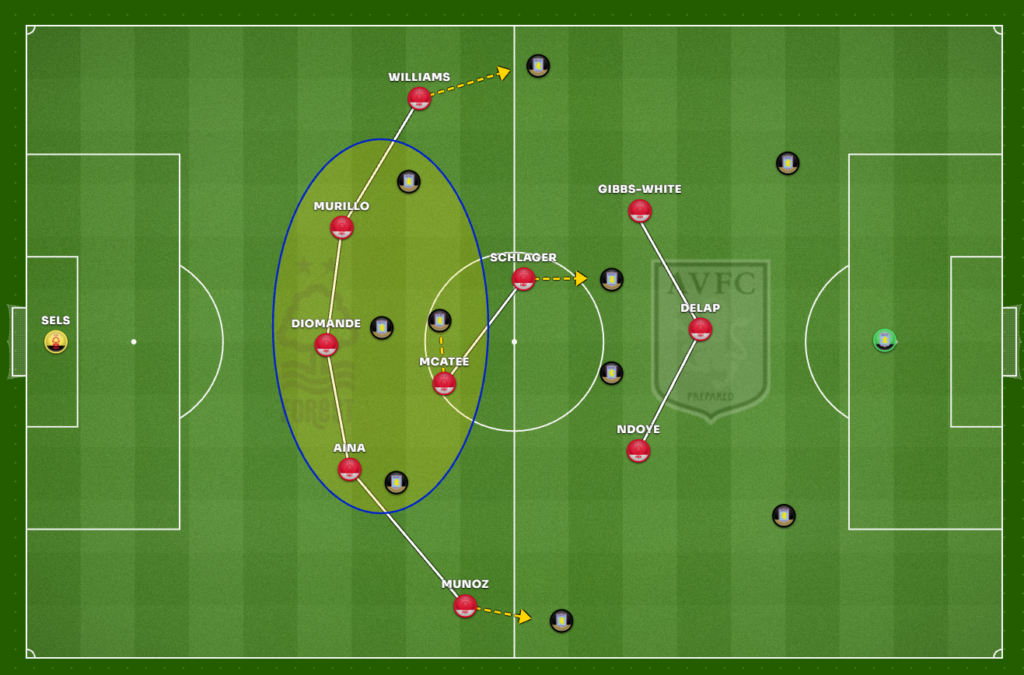
This is done with the front three blocking access to the pivot sat narrow, with one (or on occasions both) central midfielders ready to jump if the opposition find access to their pivot. The centre-backs are also ready to jump and protect the gap behind the jumping midfielder(s) to keep the units as compact as possible.
When the ball is worked wide, the two inside forwards are expected to work hard to help trap them down the sides. The wing-backs are hthen active to jump out and apply pressure. And the rest of the backline are ready to shuffle across accordingly.
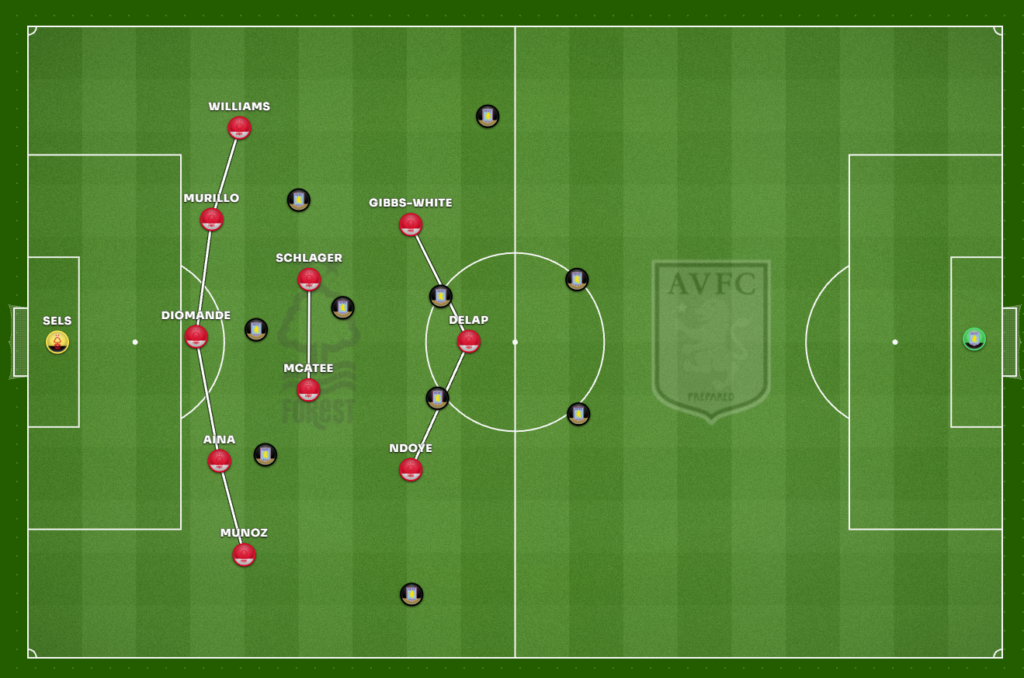
When Forest are pushed deeper, the shape can begin to resemble more of a 5-4-1. Here, the inside forwards look to support against the opposition full-back and winger combinations. Forest’s communication to make sure there is compactness between the lines and fewer gaps has been very good in these situations.
Mix that with the desire to stop crosses in wide areas and the three central defenders dealing with anything that does make it in, and Forest have a good blend of traits to absorb pressure when sitting in a lower block. Which can then subsequently fuel their offence.
Transition threat
In basketball, it’s often said that defence fuels offence. By defending well, the ball is still alive and you can use it to attack quicky before the opponents can get set defensively.
It’s a similar case in football. Teams that defend well in a lower defensive unit and absord pressure will naturally get opportunities to break quickly in transition. Forest were experts at this at their best in 2024/25. The Tricky Trees absorbed pressure and had some of the better carriers in the league to then drive attacks going the other way when they did regain the ball.
Glasner’s Palace side were also brilliant at this. Adam Wharton was often able to release long balls forward from deeper areas once possession was won to get out quickly and turn defence into attack in minimal actions.
With additions such as Liam Delap who excels running in transition and battling defenders, alongside players like Morgan Gibbs-White, Dan Ndoye and James McAtee who can carry the ball forwards and the wing-backs ready to stretch their legs into space, Glasner has already created a team that can excel in this department.
They can also produce these moments through their counterpress. Forest look to sustain pressure inside the opposition half to force turnovers and attack against a destabilised defensive block.
The roles of Schlager and McAtee
Perhaps the most interesting attacking role has been that of McAtee. The Englishman plays in a double pivot alongside new signing Xaver Schlager, but has much more freedom to roam and combine further forwards.
Schlager is the more defensive option, often staying more fixed centrally behind the ball to break up transitions and protect the defensive line. But McAtee will often look for give and goes and make runs beyond the opposition defensive line.
This also allows Gibbs-White to drop into spaces that McAtee vacates in deeper zones. He offers a level of fluidity between the two inside forwards and McAtee to disorganise the opposition press and find solutions in attack.
Forest face Coventry City this weekend and have a good chance of heading into the international break with eight points from their opening five league games. Not to mention a four-game unbeaten streak to maintain after the break.