



The path to the World Cup trophy is often more of a rollercoaster ride than anticipated and on no fewer than five occasions have the eventual winners of the tournament lost a game on their way to lifting football’s most prized possession.
Take a look at the games where eventual winners were beaten, sometimes by relative minnows, on their way to immortal glory.
1954 – Hungary 8-3 West Germany
It seems strange to say it now, but in 1954 Hungary were perhaps the dominant force in world football and going into this version of the tournament in Switzerland they were considered favourites to lift the Jules Rimet trophy.
Powered by the great Ferenc Puskas, the so-called ‘Golden Team’ had won gold at the 1952 Olympic games in Helsinki and just months before the 1954 World Cup kicked off they became the first team to beat England on home soil (if you discount the FAI Ireland team of 1949) when they won 3-6 at Wembley Stadium in a game that was later dubbed the ‘Match of the Century’.
So, when Gusztav Sebes took his team to Basel on the back of a 9-0 mauling of South Korea to face West Germany, it actually came as little surprise that the Hungarians came out on top – although the margin of victory is still eye-catching even by the more attacking, high-scoring nature of the period.
Sandor Kocsis, who averaged more than one goal every game during his spell with Honved between 1950 and 1956, scoring no fewer than four times as Hungary ran out 8-3 winners – with further goals from Puskas, Jozsef Toth and two from Nandor Hidegkuti.
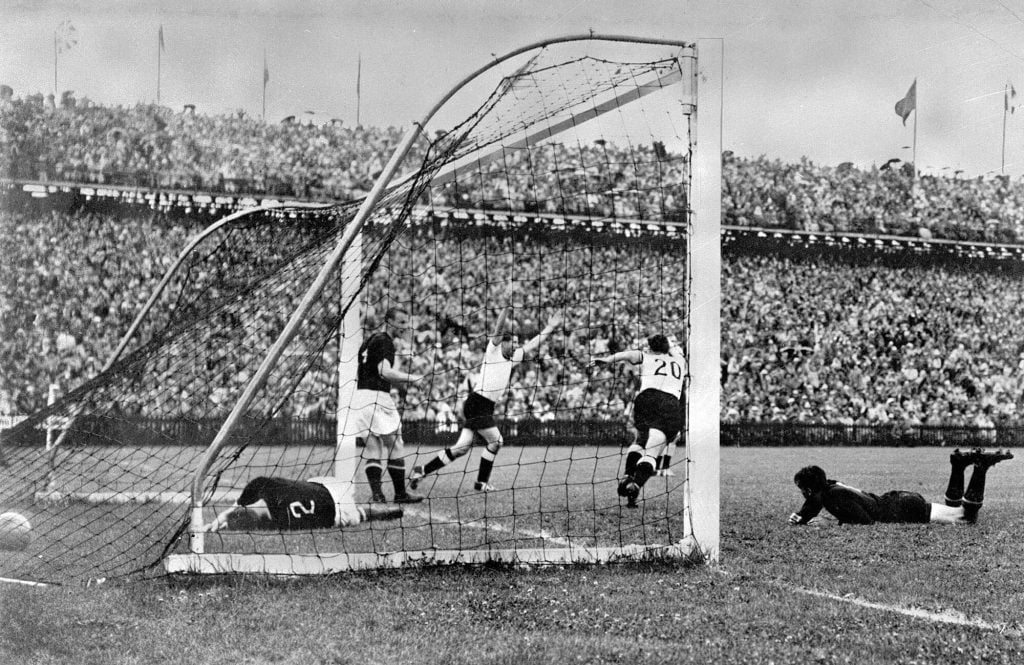
Goals from Alfred Pfaff, Helmut Rahn and Richard Hermann were mere consolations for West Germany – who knew that this defeat would mean they’d have to play a play-off fixture against Turkey, who they had already beaten 4-1 in their opening game, to progress to the knock-out stages. They duly won the return match too by a 7-2 scoreline in Zurich.
From there, the German side went from strength to strength, beating Yugoslavia in the Quarter-final and Austria in the Semi-final, while Hungary won by the same 4-2 scoreline against both Brazil and Uruguay to set up a replay of the group stage game in Bern, with the Magyars unsurprisingly heavy favourites to lift the trophy given the outcome of that first match.
Instead, what later became known as the ‘Miracle of Bern’ unfolded. Despite Hungary taking a two-goal lead within eight minutes thanks to Zoltan Czibor and that man Puskas again, West Germany pulled level by the 20th minute through Max Morlock and Helmut Rahn, who later scored an 84th minute to complete the astonishing comeback and stun the footballing world.
1974 – West Germany – Lost 1-0 to East Germany in first group stage
The 1974 meeting between West Germany and East Germany is perhaps one of the most famous World Cup group stage games of all-time, producing one of the most noted upsets, even more famous due to the politically charged nature of any meeting between the two countries.
To gain full context of the mismatch between the two nations at the time, West Germany were not only the hosts of the tournament, but were considered pre-tournament favourites while this tournament proved to be the first, and indeed last, major tournament that the DDR ever qualified for.
Going into the game, both teams had actually already secured their qualification from the first group stage. The East German side had played out a 1-1 draw with Chile after beating Australia 2-0, while West Germany had beaten both of those teams without conceding a goal – but that didn’t take anything away from the importance of this fixture given the global interest in the political situation in Germany.
Despite the host nation dominating possession and chances, it was the unfancied men in blue shirts who scored the only goal of the game through Jurgen Sparwasser, who latched onto a long ball and fired into the toof of the net to secure one of the biggest shock results in World Cup history and top spot in the group in the process.
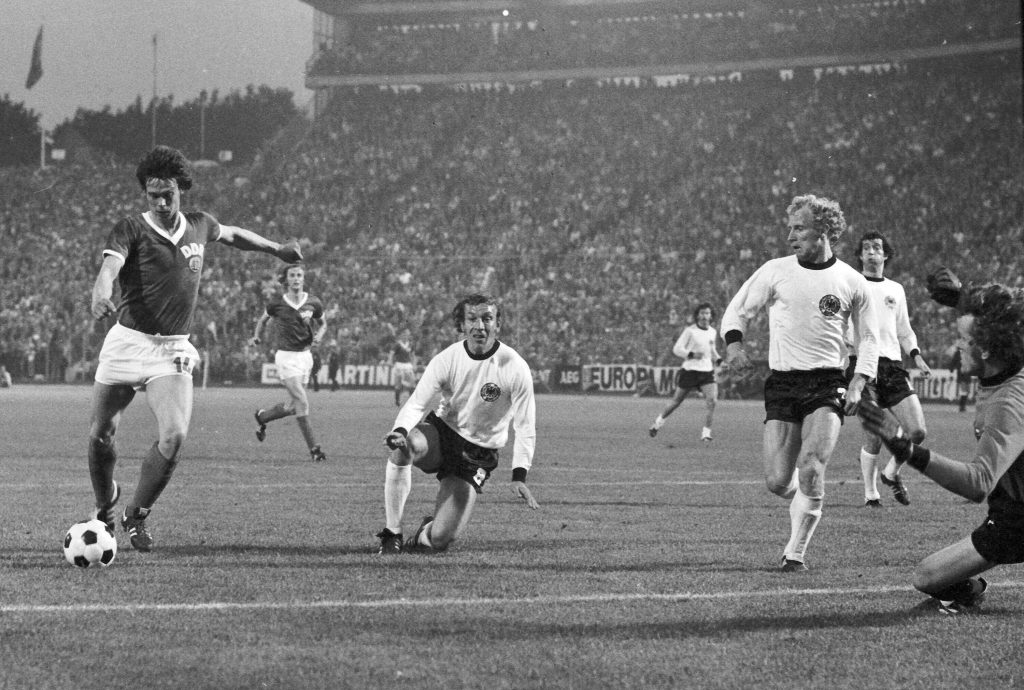
While this result had wide-ranging implications outside the realm of the tournament, in hindsight West Germany perhaps got the better end of the deal. The defeat meant that they entered a second group stage group involving Poland, Sweden and Yugoslavia – where they won all three games to finish top and advance to the final.
East Germany on the other hand entered a much more difficult group with the Netherlands, Brazil and Argentina. After losing to the Selecao and the Oranje, the 1-1 draw they earned versus Argentina in Gelsenkirchen was nothing more than a consolation – particularly as the West prepared to face Johan Cruyff’s Netherlands in the final.
A penalty for either side in the early stages of the final had the game poised at 1-1 before Gerd Muller’s 43rd minute strike eventually won the game for West Germany. That would be the great striker’s final ever goal for his nation as he retired a World Cup winner with 68 goals from just 62 caps.
1978 – Argentina – Lost 0-1 to Italy in first group stage
Much like West Germany four years earlier, Argentina had already secured their route through to the second round after two games in Group 1 of the 1978 World Cup as 2-1 wins over Hungary and France earned them a six point cushion from third place before they took on Italy in Buenos Aires.
The Azzurri had also won their opening two games, coming from behind to beat France before cruising to a 3-1 win over Hungary in Mar del Plata. Both of these teams were well-fancied going into the tournament and while the outcome didn’t matter too much on paper, the psychological blow of beating a potential rival for the trophy was the prize on offer in the capital.
Roberto Bettega’s emphatic finish to a flowing team move ended up being the difference between the two teams on the night, with Italy holding firm under Enzo Bearzot and showing their trademark game management skills to secure a 0-1 victory and with it, top spot in the group.
In the second group stage, the Italians were held to a 0-0 draw by West Germany before beating Austria 1-0 to set up a crunch match with the Netherlands at Estadio Monumental. Despite an early own goal giving the Azzurri the lead, the Dutch came from behind through Ernie Brandts and Arie Haan to reach their second consecutive final.
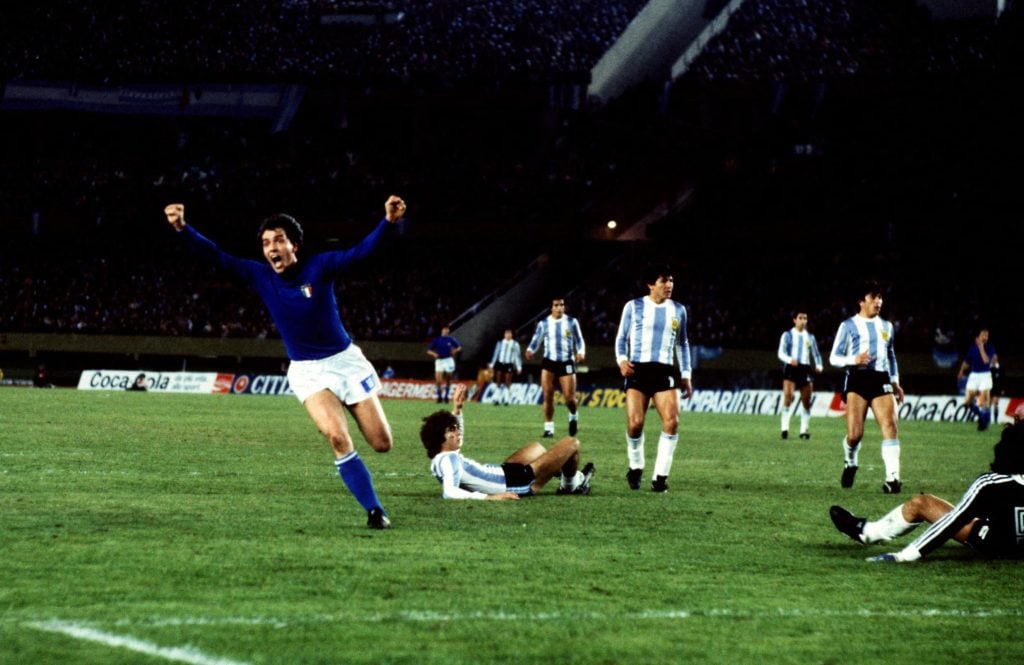
Argentina meanwhile, won their group in controversial circumstances. Both they and Brazil had won their opening games before drawing 0-0 in Rosario. The Selecao then beat Poland 3-1, meaning Argentina had to win by four or more goals against Peru to progress. They duly beat their fellow South Americans 6-0, leading to years of speculation and controversy around the match.
Despite that controversy, the result meant that Argentina would progress to the final where they were to meet the perennial bridesmaids, the Netherlands. Mario Kempes gave the hosts the lead, but the game went to extra-time after Dic Nanninga’s equaliser. A further goal from Kempes, followed by Daniel Bertoni’s 115th minute strike, made Argentina World Champions for the first time in their history.
2010 – Spain – Lost 0-1 to Switzerland in the group stage
Heading into the 2010 World Cup in South Africa, it was hard to look beyond Spain as a favourite for the tournament. La Roja had won Euro 2008 two years previously and their squad included the stars of Pep Guardiola’s all-conquering Barcelona team, with Real Madrid favourites like Iker Casillas and Sergio Ramos added in for good measure.
As such, it came as a huge shock when they lost their opening game to Switzerland in Durban with former Manchester City midfielder Gelson Fernandes scoring the only goal of the game – but the scoreline doesn’t really tell the full story of this match.
Spain were absolutely dominant throughout, dominating the ball with 72.9% of the possession and attempting no fewer than 25 shots to Switzerland’s nine. And what’s more, the goal couldn’t have been much more fortunate – ricocheting kindly for the Swiss attackers several times before Fernandes was finally able to bundle it home.
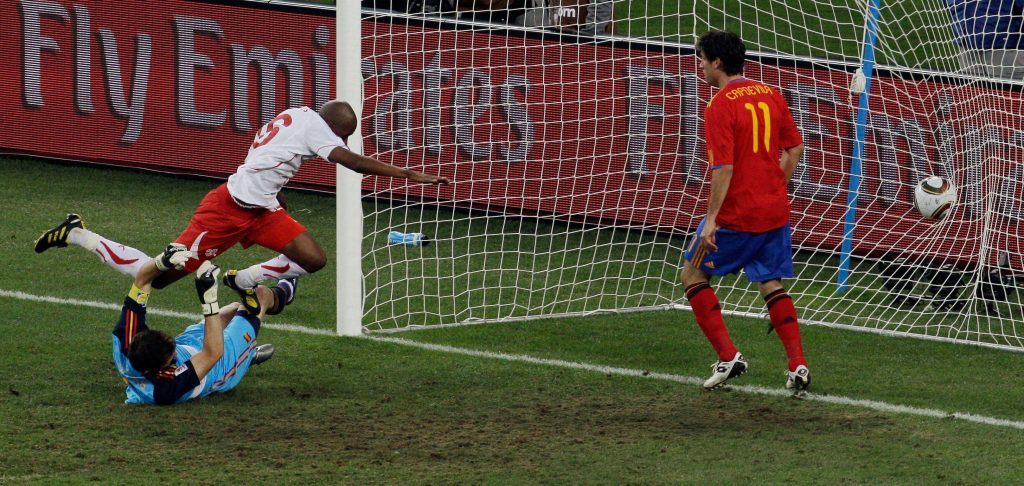
Panic didn’t set in despite the shock of the defeat and normal service was able to resume for Spain against Honduras a few days later with David Villa’s brace securing a 2-0 win, before a 1-2 win over Chile in Pretoria secured their route through to the knock-out stages.
Switzerland meanwhile, fluffed their lines. Having beaten the tournament favourites, they contrived to lose 1-0 to Chile in their next game after an early red card for Valon Behrami before a disappointing 0-0 draw with Honduras meant they finished the group stage in third place and were heading for an early exit.
The knock-out stages followed a remarkable pattern for Spain as they beat Portugal in the Round of 16, Paraguay in the Quarter-final and Germany in the Semi-final by a 1-0 scoreline to set up a final against – you guessed it – the Netherlands.
Yet again the Dutch were defeat at the final hurdle and yet again la Roja needed just one goal to earn the win. Andres Iniesta’s strike in extra-time made Spain champions of the world for the first time – a feat the bookmakers make them favourites to repeat in 2026.
2022 – Argentina – Lost 2-1 to Saudi Arabia in group stage
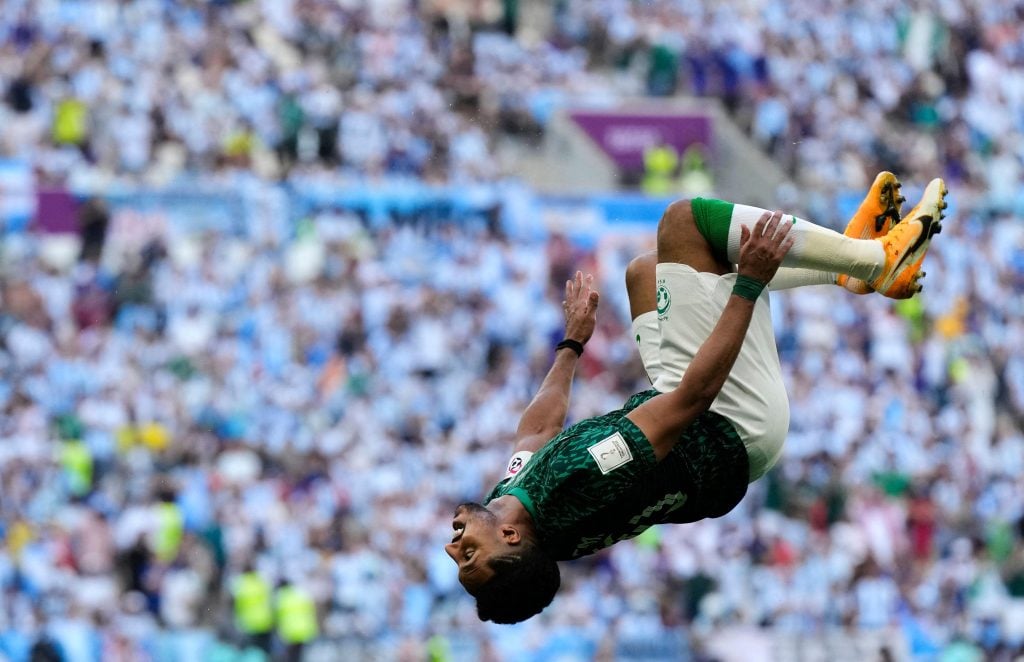
Beating the eventual World Cup champions is a difficult task at the best of times but to do it from behind after conceding a controversial penalty in the opening stages is even more impressive. Yet that’s exactly what Saudi Arabia did at the 2022 World Cup in Qatar.
Lionel Messi converted from the spot in the tenth minute and Argentina had plenty of opportunities to increase their lead before half-time, only for a combination of some great goalkeeping from Mohammed Al-Owais and some marginal offside calls going in Saudi Arabia’s favour to keep the score to 1-0.
Three minutes into the second half, Saleh Al-Shehri got away from the Argentinian defence and fired a low effort into the bottom corner to draw the Asian side level, before a stunning curled effort from Salem Al-Dawsari put them ahead and they somehow clung on for one of the biggest upsets in World Cup history.
Every member of the Saudi Arabia squad at the 2022 World Cup played in the domestic league but they weren’t able to follow up on the famous win as they were beaten 2-0 by Poland and 1-2 by Mexico in their next two games to finish bottom of Group C despite their heroics in Lusail.
Argentina on the other hand, tipped by many before the tournament but now being questioned by fans and pundits alike, finally found their groove. They beat both Mexico and Poland by 2-0 scorelines to top the group and swatted aside Australia with a 2-1 win in the Round of 16.
They needed penalties to beat the Netherlands in a dramatic Quarter-final where tensions spilled over before a more comfortable Semi-final against Croatia saw them progress 3-0 thanks in no small part to a brace from striker Julian Alvarez.
In arguably the most entertaining final of all-time, Lionel Scaloni’s men were eventually able to overcome France on penalties despite Kylian Mbappe’s hat-trick for Les Bleus, earning the South American country it’s third World Cup and completing a remarkable turnaround from the humiliation of that opening game defeat to Saudi Arabia.
Read more: