






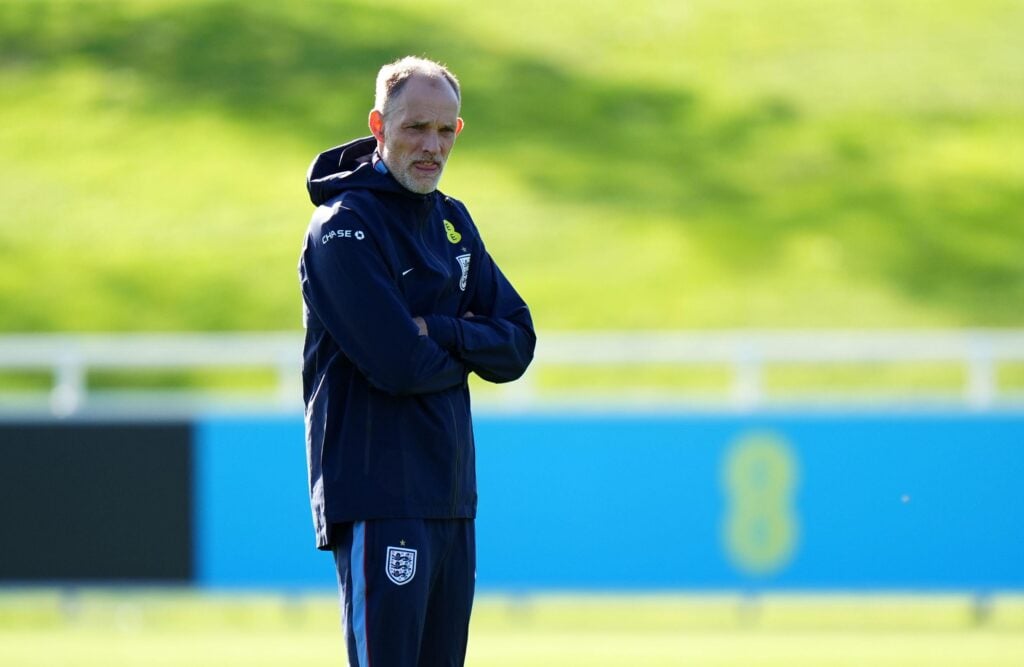
Thomas Tuchel’s England return to action this weekend after their third-placed finish at the World Cup.
Despite securing their best finish at the competition since lifting the trophy in 1966, many Three Lions fans will still have their minds on the heartbreaking semi-final defeat to Argentina.
But that must be put in the past. England now face four games in two weeks to start the Uefa Nations League, in the new extended international break. World champions Spain are up first, with England also facing Czech Republic twice, and Croatia.
This is a chance for England to test themselves against the best in the world. But those who missed out on the World Cup will get a chance to stake their claim and refresh the dynamics.
How Tuchel can refresh England tactics
Tuchel’s approach
When Tuchel first took charge as England manager, the German spoke about a need for his team to be direct.
“[The team] needs to reflect the Premier League,” he said.
“The Premier League is a very physically demanding league, it’s a very direct league. I think we need to be brave enough to play like an England squad.”
This was very clear at the World Cup — excluding the bizarre 6-4 win over France in the third-placed playoff. England had a high number of fast breaks, take-ons attempted and overall action in the final third. Then there was the level of Expected Goals from set-pieces — following the Premier League’s recent trend.
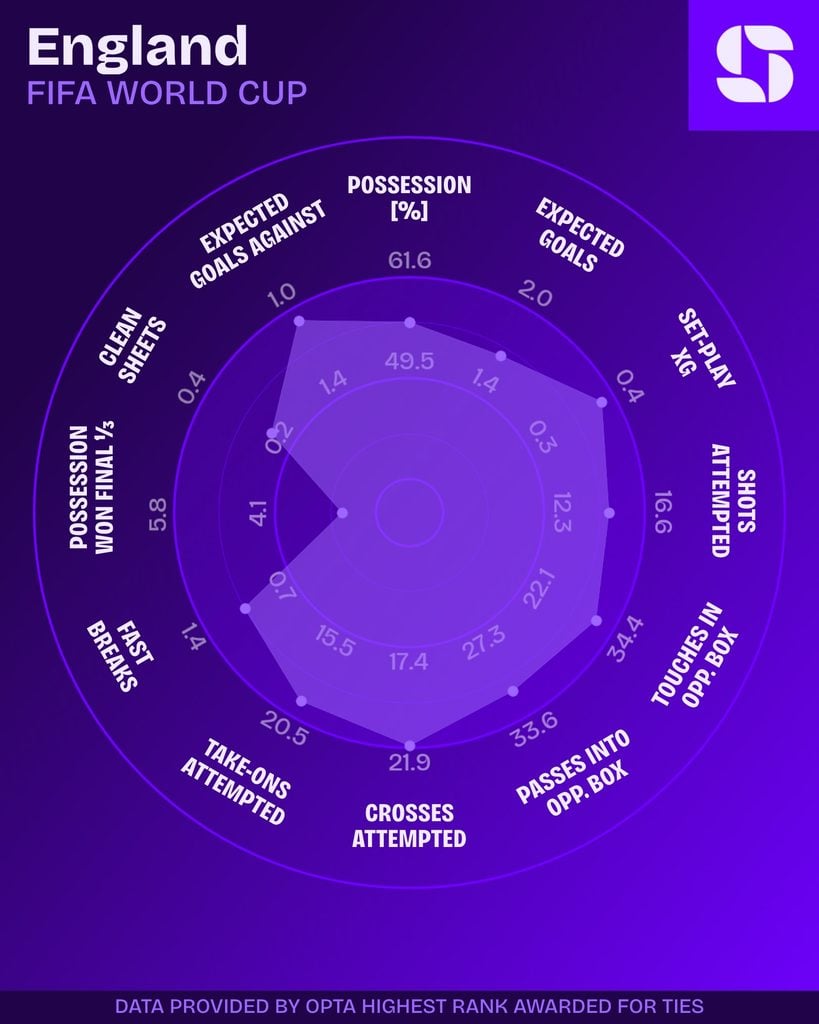
England also had one of the best defensive records in the tournament. Despite conceding eight goals in their seven games (prior to the France match), Tuchel’s side only conceded just over 1.00 xG per game. The Three Lions ranked as one of the best in this metric.
However, there was a clear weakness — whether through players or a tactical choice. England lacked pressing intensity, rarely winning possession in the final third compared to other sides at the World Cup.
Building attacking connections
Tuchel made a lot of like-for-like changes in his attack, often lacking a variety of profiles to provide a different dynamic. In fact, Tuchel’s most influential change to his attacking organisation at the World Cup came in the wide triangles. When England faced DR Congo in the last-32, Declan Rice was shifted to right-back, forming a triangle on that flank with Bukayo Saka and Eberechi Eze.
Of course, the trio had already developed synergy at club level, going into the World Cup having won the Premier League with Arsenal. They understand each other’s strengths and weaknesses, the movements they make, and know how to connect.
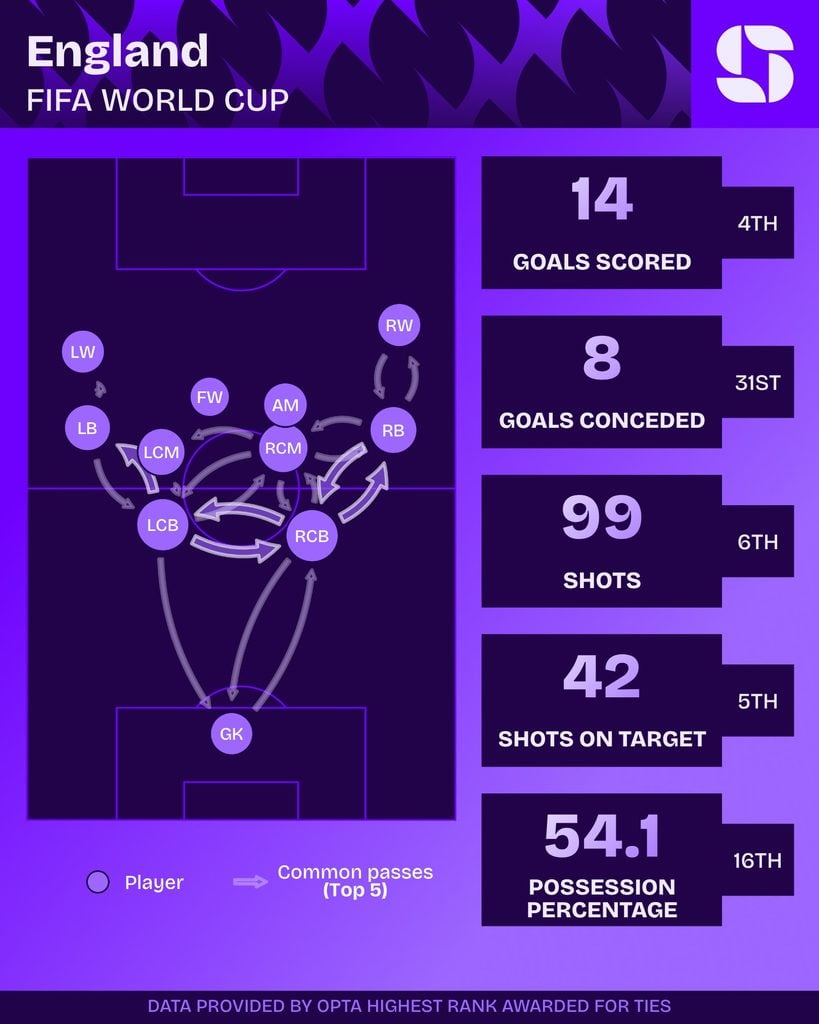
Tuchel tried a number of different full-back and winger combinations at the World Cup. Anthony Gordon and Marcus Rashford often swapped on the left, with Noni Madueke and Saka rotating on the right. A variety of Reece James, Jarell Quansah, Djed Spence and Nico O’Reilly started as the full-backs.
The German also left the opportunity for the Newcastle United linkup between Gordon and Lewis Hall at home.
Lack of profiles
But it wasn’t just about synergies in attack. Tuchel also lacked a variety of creative profiles, with the majority of the attacking unit picked to provide runners to Harry Kane, who the system was clearly built around.
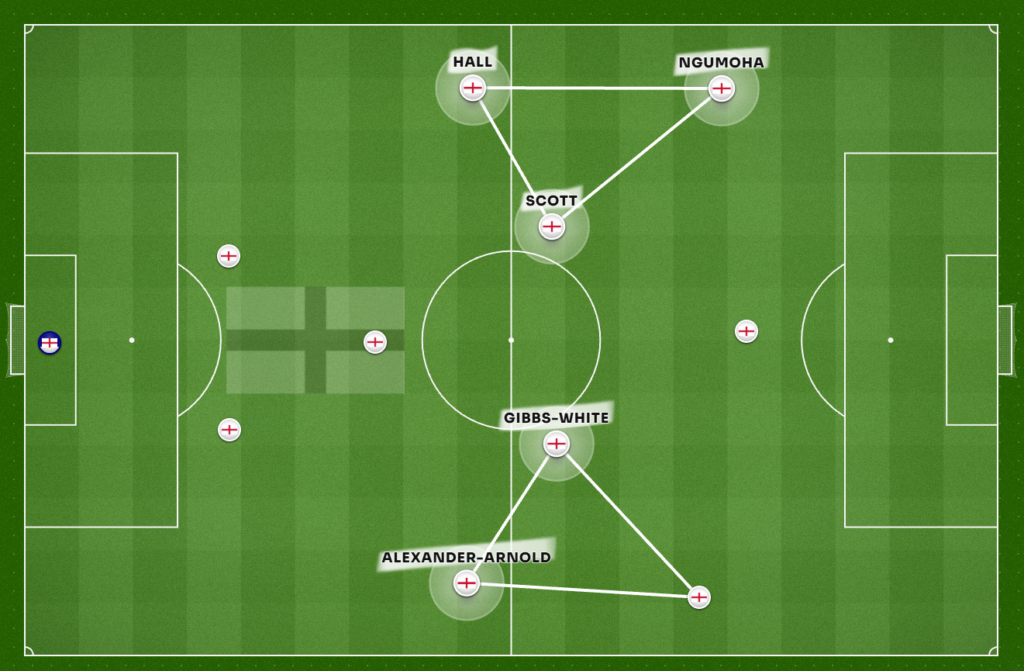
Tuchel has called up a number of new players to his latest squad, who can offer different qualities on either side.
Trent Alexander-Arnold adds a much-needed creative passer. Not just from deep areas but also when driving high and wide to deliver high-quality crosses. That could be vital against teams defending low. Hall’s return brings good options on the left too, having a carry-first full-back who knows how to play with Gordon.
Cole Palmer could be a brilliant long-term option for the right-sided No.8/No.10 position. The Chelsea man was called up with the hopes of adding confidence to make things happen in tighter spaces. But he has withdrawn from the squad due to load management, after being heavily involved for Chelsea. Morgan Gibbs-White has been brought in to replace him, and offers good traits himself after a strong start for Nottingham Forest.
Alex Scott offers brilliant versatility and tight space quality on the ball, especially if playing as one of the No.8s who can also drop low to support the pivot. Rio Ngumoha would perhaps become England’s best one-on-one winger, offering the ability to go both inside and outside, beating his man and looking to be positive in those scenarios.
Shifting defensive intentions
Tuchel’s toughest job in the two years before Euro 2028 is shifting the intentions within the squad. Not only with regards to different defensive structures, but also the overall culture and clarity with which each is carried out.
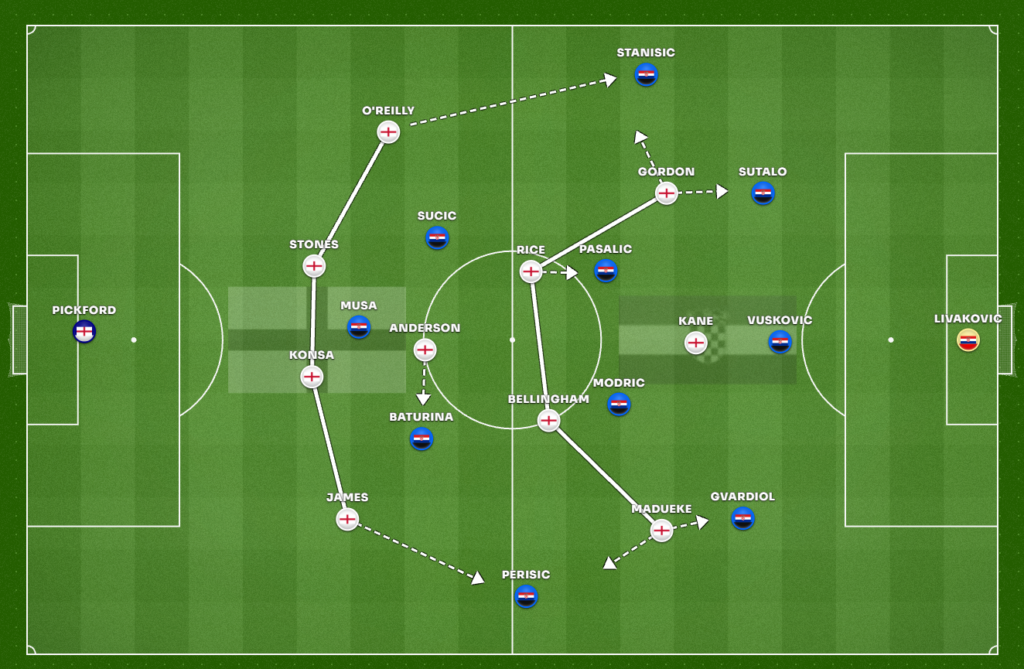
England utilised a number of different out-of-possession ideas during the World Cup. They were often more passive in the front press, looking to start zonal and block space, before having those man-to-man references to jump and apply pressure.
With the more passive press and a direct style of play, England often found themselves being pushed deeper.
The downsides of success
The context of each game matters. England’s win over Mexico saw the Three Lions drop into a low defensive block when they went down to 10 men
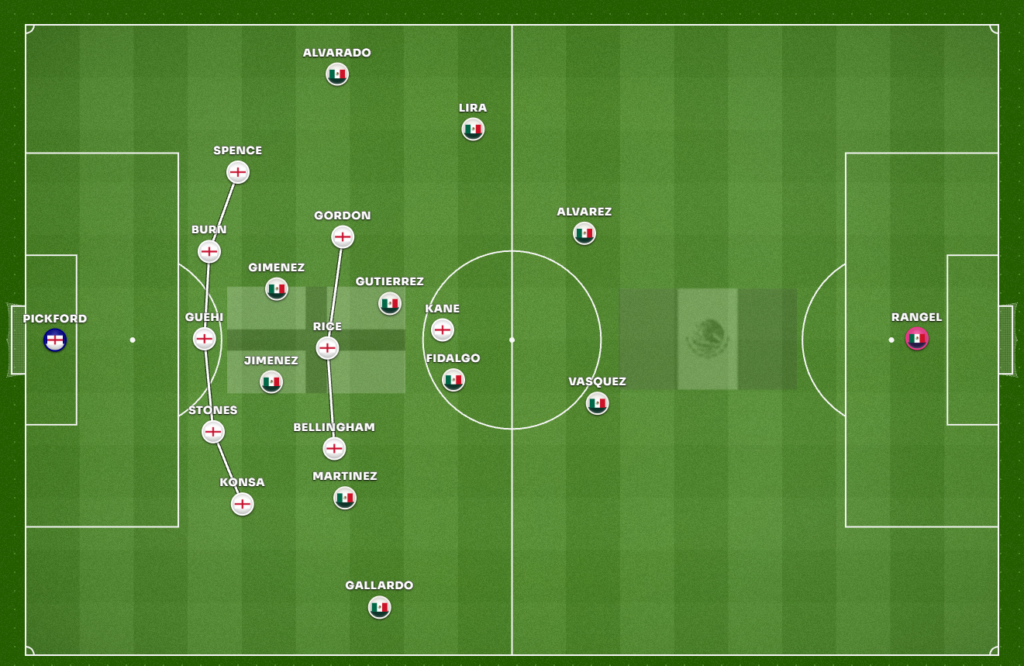
It worked, and England had similar success when defending lotagainst Norway. But this meant England started to trust their deeper block defensive strategy much more than their struggling press.
That brings us to the semi-final. England initially tried to press from the front, with Gordon and Morgan Rogers jumping onto Argentina’s centre-backs. Kane marked Leandro Paredes in the No.6, and England’s three central midfielders man-marked Argentina’s rotating centre pieces.
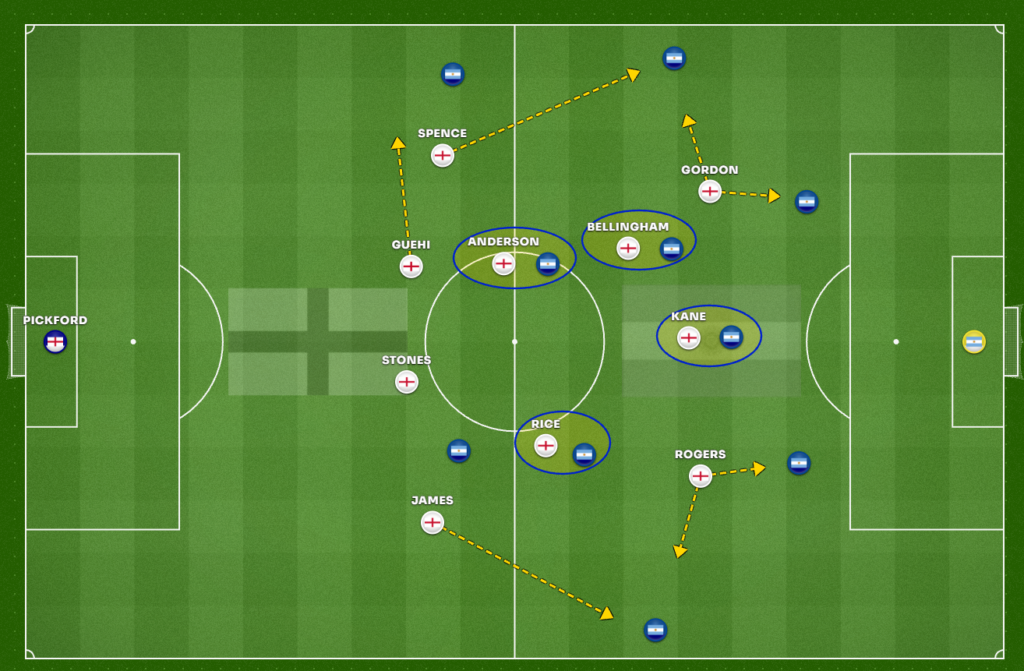
The full-backs were ready to jump onto their counterparts in the press, with the centre-backs then able to shuffle across and plug the gaps. England successfully limited Argentina to scrappy possession phases through their approach.
Negative football
But after England scored in the 55th minute, things shifted. And that’s where Tuchel has a big task on his hands to enforce the correct approach and culture in any given moment.
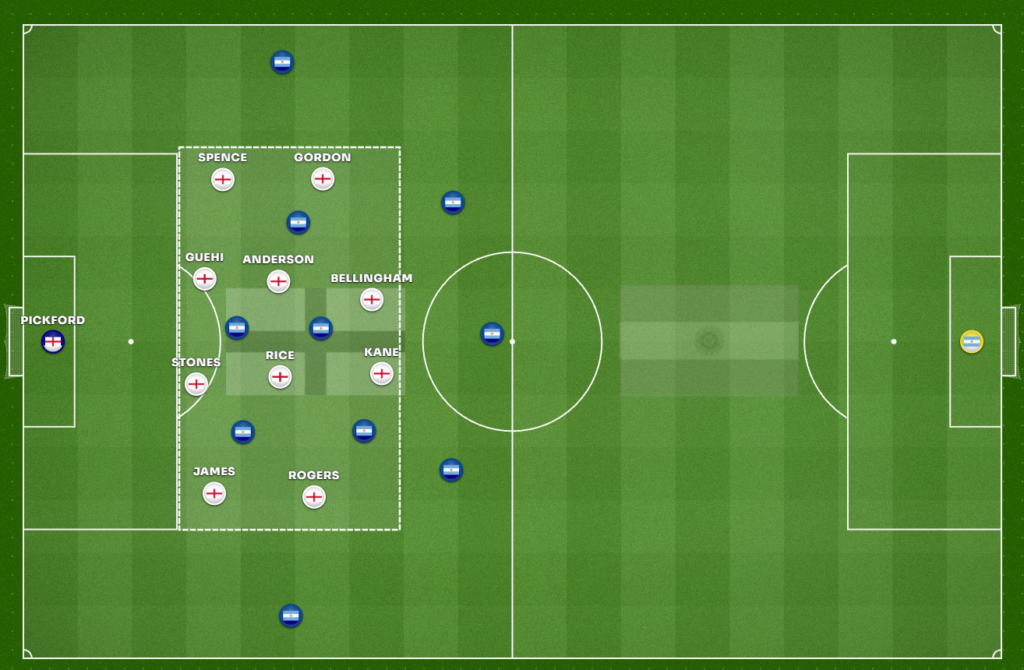
England’s immediate reaction was to drop off after going ahead, gradually collapsing into their own half, sitting in a more zonal 4-4-2 deep block.
You could argue this is due to the success of their low block defending in prior games, their worries in the press. Or even a cultural issue that bleeds through the squad which leads to negativity and doubt rather than positivity and fire.
Tuchel’s decision to make defensive changes fed into this approach, despite him mentioning he wanted his England side to be more active when defending rather than passive. Irrespective of the formation change, the seed of doubt was already planted and growing.
Over the next two years, starting now, Tuchel’s biggest challenge will be to create a culture of confidence in every phase of defending, create clarity with their ideas and start to shift how England deal with big moments, ready for Euro 2028 should they find themselves in another semi-final or final against one of the top nations.
Read more: