






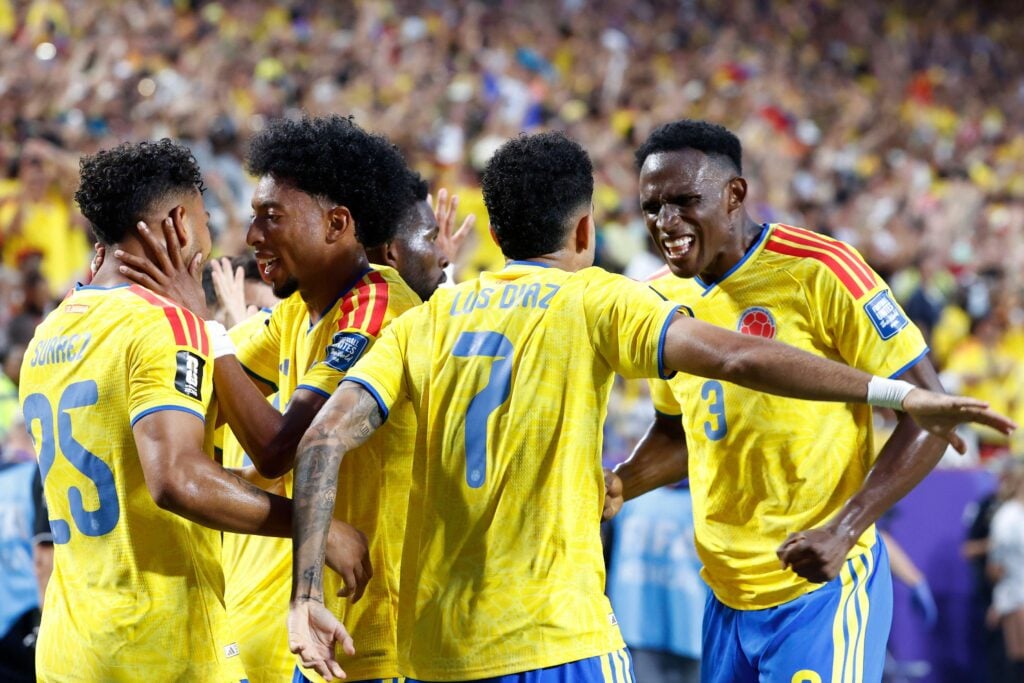
Colombia might be one of the best-performing national team in the 2026 World Cup so far.
Los Cafeteros are yet to lose a game. Only France (five wins from five), Argentina, Mexico, Norway and England (four wins) better their campaign of three wins and a draw.
And with the way they have been playing, one could think it’s 2014 all over again. James Rodriguez is still in the scene and can still find ways to be impactful. And that’s despite already announcing he will retire from football as soon as the tournament ends for him.
What has made Colombia so impressive in the 2026 World Cup?
Controlling games with possession
Colombia are averaging just over 60% possession in the 2026 World Cup. While it’s certainly a large number that in longer tournaments would be around the top, it’s only good enough to rank them 10th.
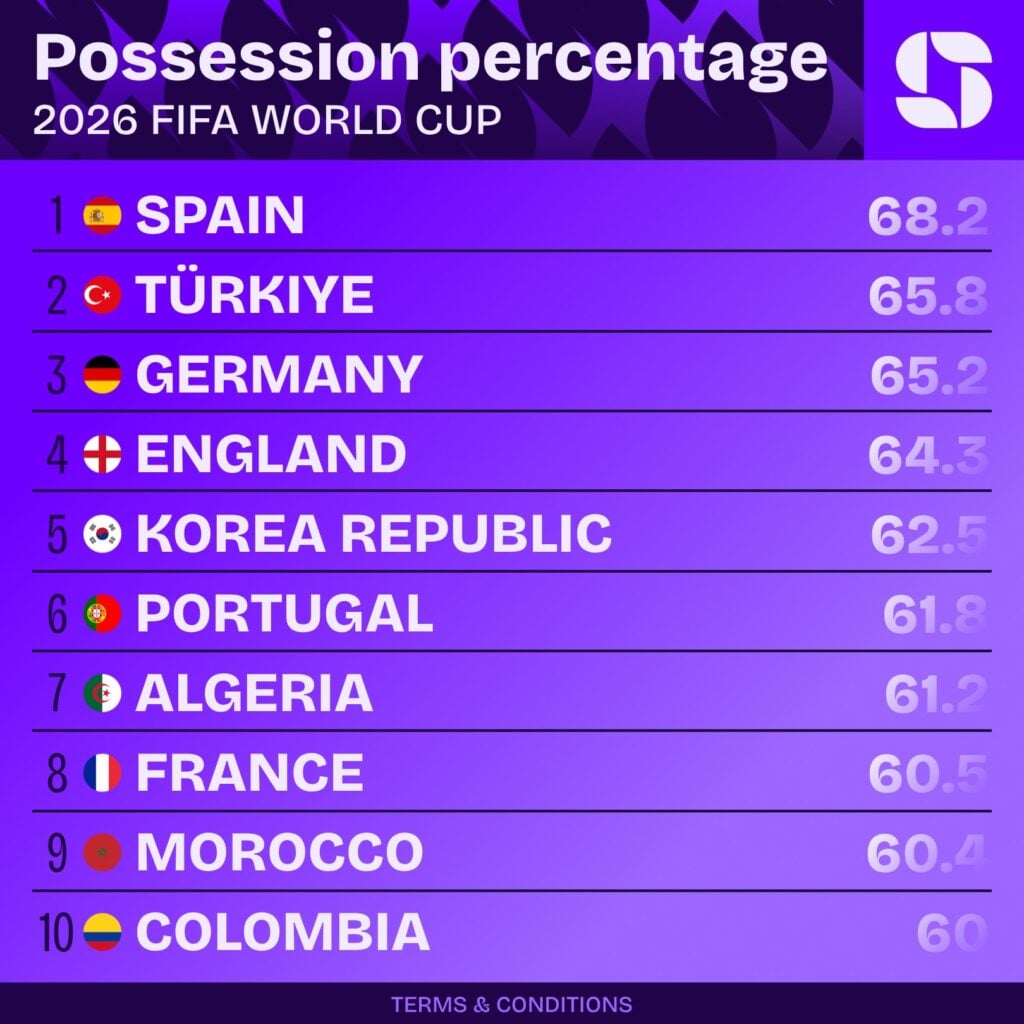
Still, it works for them as they are able to dictate the terms of matches and carry the ball into the opposing penalty area.
Not only are Los Cafeteros third in shots attempted per game (19.8), but also fourth in chances created (15.0). It’s a testament to their collective all-around play in the attacking half.
Having the ball most of the time also helps them avoid tricky situations at the back. Colombia rank in the 75th percentile for fewest shots faced in the World Cup (12th out of 48). Additionally, they rank second overall in fewest big chances conceded (0.8).
Attacking versatility
Nestor Lorenzo started the tournament heavily focused on keeping possession. Of course, opponents’ strategies also factored in, with them facing Uzbekistan and DR Congo to start the campaign. But even Portugal opted to sit back rather than challenge them for the higher share of the ball.
Ironically, their performances have improved as well as the opponent level throughout the World Cup. And so have their tactics.
Lorenzo has become increasingly more adaptable to spending more time in back-and-forth scenarios. James Rodriguez and Juan Fernando Quintero apart, the physical profile of the squad is highly suited to intense exchanges.
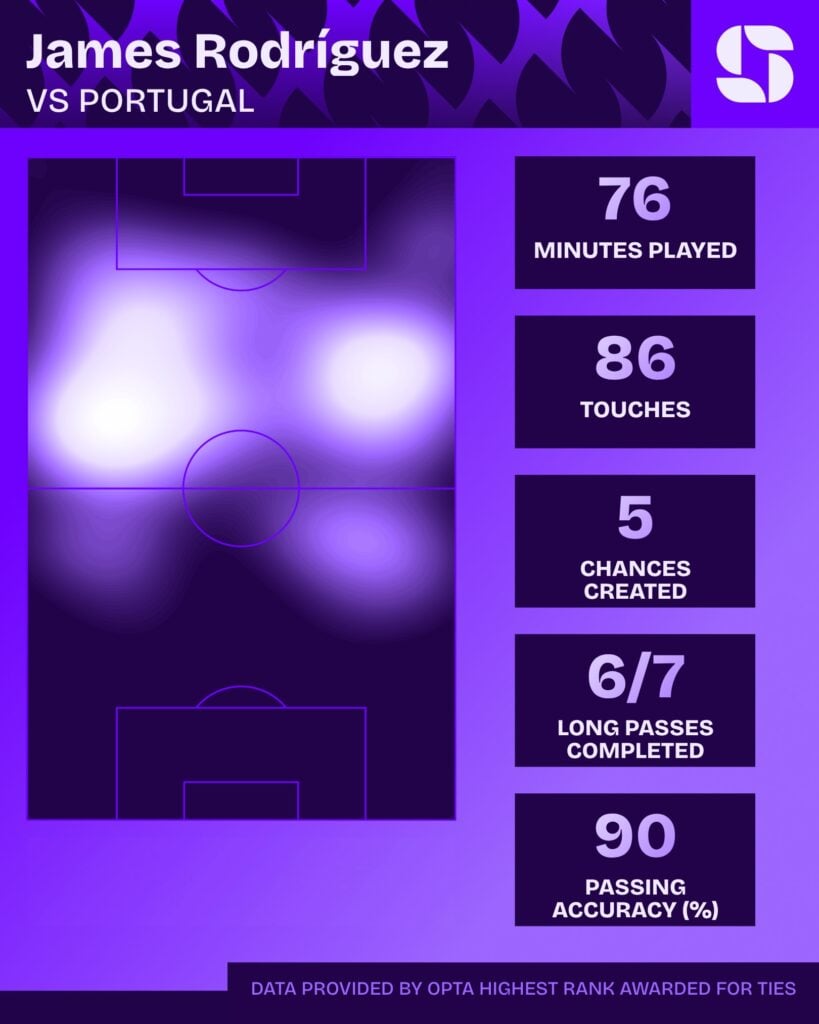
But even the creative pair seem to be able to fit in. Rodriguez had his best performance against Portugal, the toughest opponent they’ve faced so far. And it was precisely in an open game in which both sides had dominant periods.
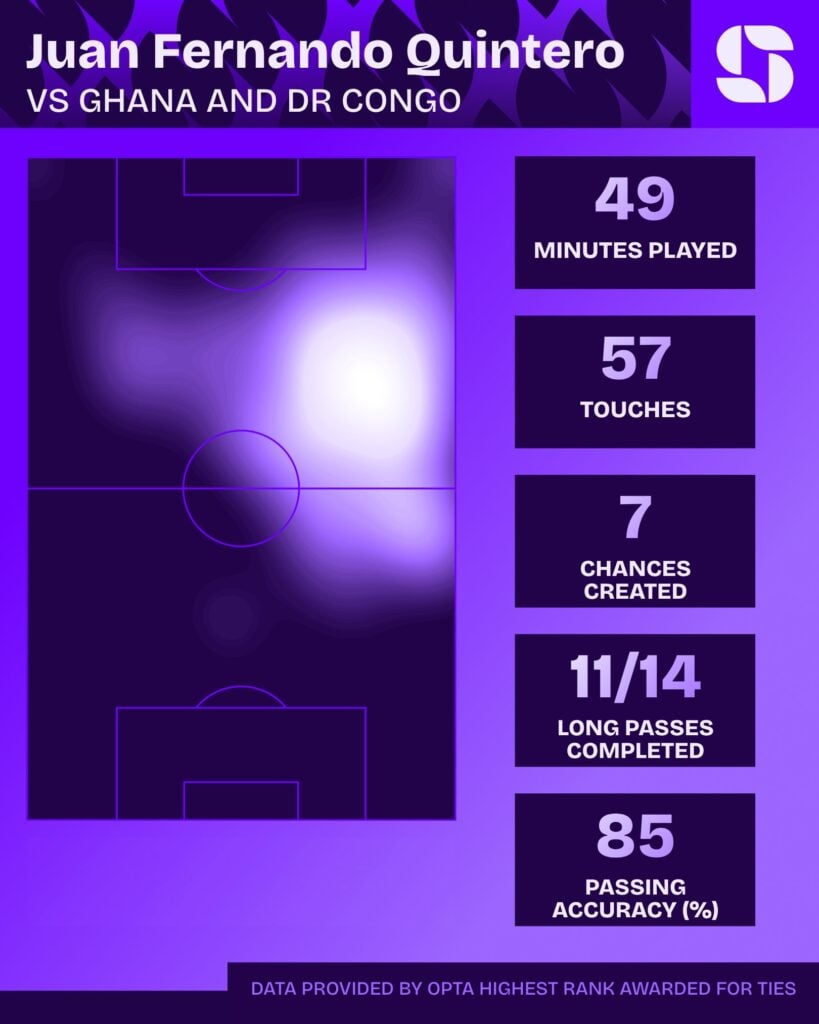
When that was also the case in the second halves against DR Congo and Ghana, Quintero carried the load. Precise distribution with long passes, daring and incisive attempts to break the opposing defence led to an assist for Daniel Munoz’s winner and five other shots last time out.
So now it feels like Colombia are a more versatile side up front. Having the likes of James and Quintero to set up deep runs from Luis Diaz – who currently leads the World Cup in offsides – is a good fit.
And it may ease the loss of recently-injured target man Jhon Cordoba. Having Luis Suarez constantly playing on the last shoulder could be the key to breaking down higher-level defences going forward in the tournament.
And, of course, giving up on James as a starter is also an option. He came off at half-time against Ghana and there is margin for playing Jhon Arias on the wing and having an extra hard-working midfielder alongside Jefferson Lerma and Gustavo Puerta.
Switzerland also like to play with the ball – despite also showing a different side to their approach in the win vs Algeria in the round of 32. Should the Cafeteros advance, it would only get tougher from there. But it does look like they are ready for those types of in-game scenarios.
Read more: