




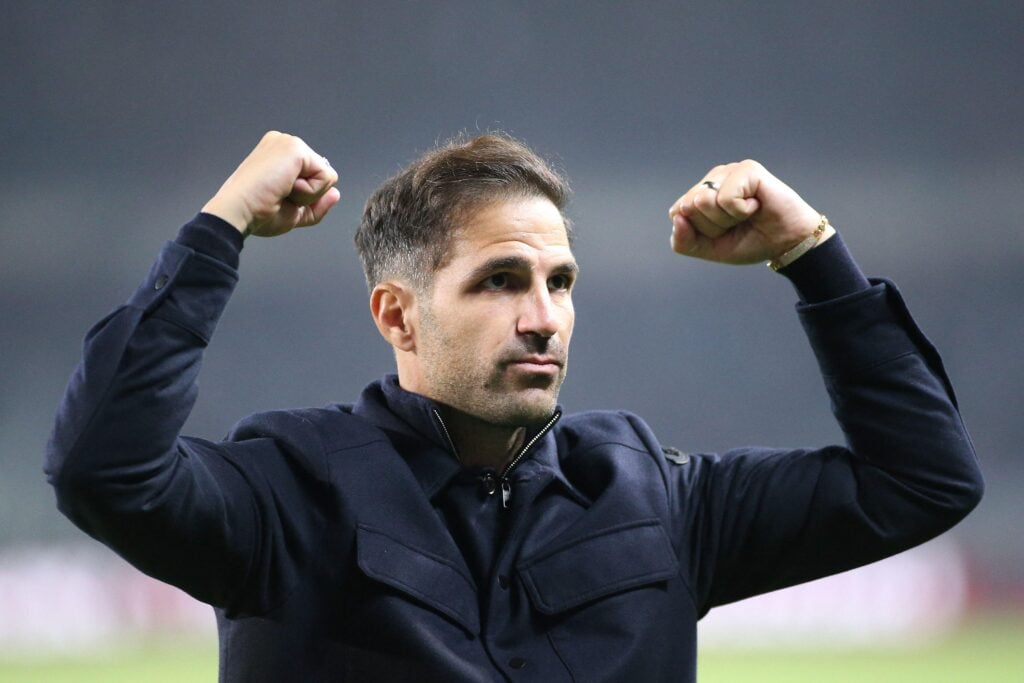
Cesc Fabregas’ Como sit 4th in Serie A after nine games played, five points off Inter in top spot.
Como have been catapulted into the limelight this season, competing in the Champions League for the first time in their history, recently hosting Manchester United and thumping them 4-1.

After finishing 4th in Serie A last season, Fabregas will be hoping to improve on that finish, while also looking to compete and manage the demands of European football this campaign.
Just nine games in, Como look to be managing pretty well, having only lost once in the league this season, while also winning two of their three Champions League matches so far.
In this article, we’ll cover
Rotations and connections
When asked about why every player had options on the ball against Manchester United, Fabregas’ response was clear… “relationships”.
Throughout his interview, Fabregas continued to allude to the fact that the future of football is relationships between players, referencing the distances between players being important to playing the type of football he wants his Como side to play.
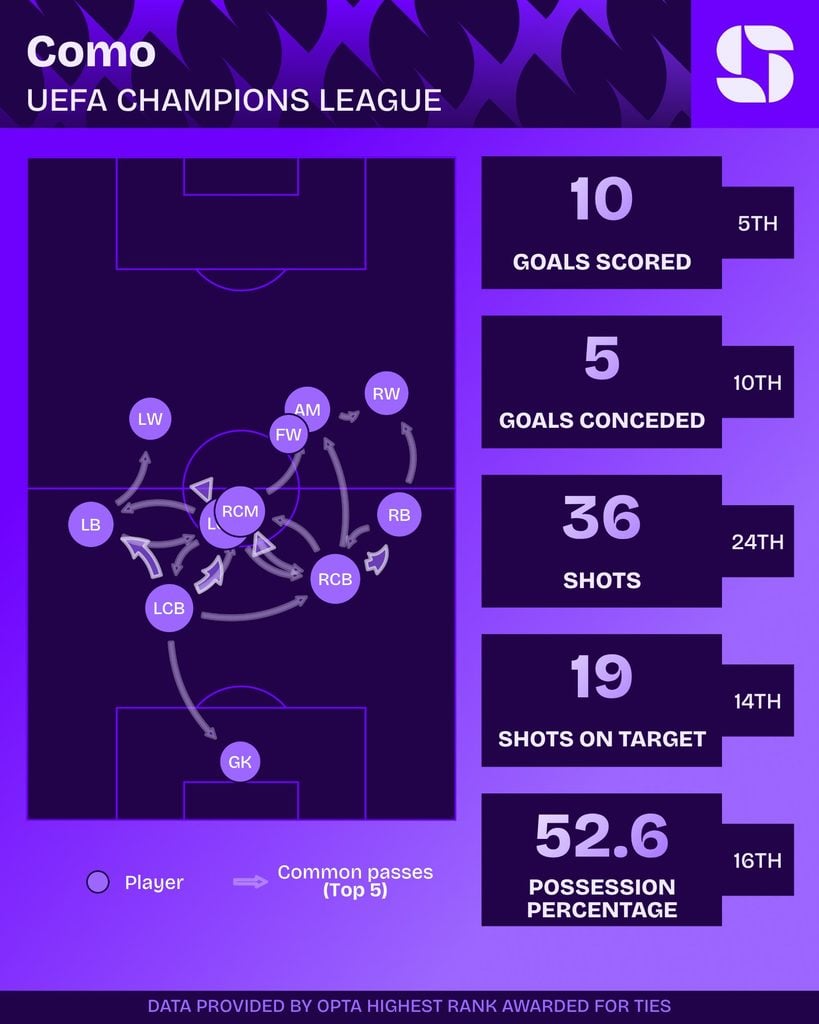
Fabregas also mentioned in the same interview that the positional game can become “mobile” in the right moments, which is exactly what his Como side have shown this season.
This can be seen in the number of rotations Como are comfortable making, whether it’s Lucas Da Cunha and Martin Baturina coming inside to overload the centre, the full-backs pushing forward to provide width or Luis Milla dropping into left-back zones to release the left-back forwards and draw the opposition press. Each of these rotations forces the opposition to make a decision.
When Como initially build with the full-backs low, they are looking to stretch the block horizontally to open spaces to progress through the centre, but once these rotations start to take place, the aim is to drag the opposition markers into uncomfortable positions, baiting pressure and creating space.
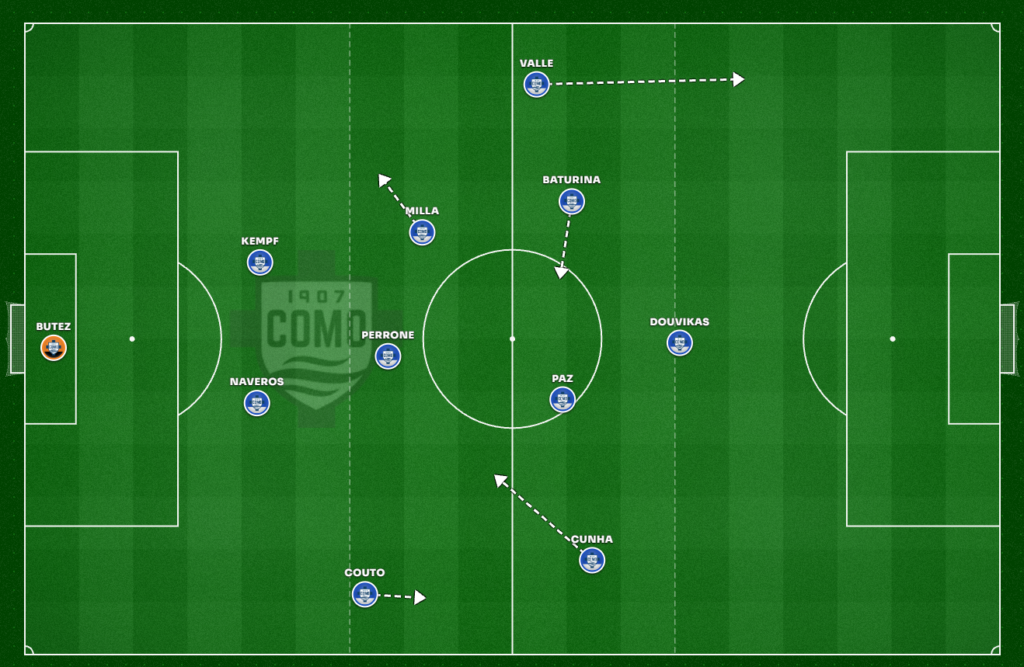
Fabregas’ side look to drop midfielders to create an overload in the build-up and take control of games, but also to open space to eventually arrive into, with the Spanish coach wanting his side to move with purpose, not holding the ball for long periods without reason.
But it is the network between players that Fabregas has built over the past few seasons at Como which allows them to play in this way with such ease, utilising third man combinations, creating overloads in all different areas of the pitch and using mobility to destabilise the opposition’s defensive plan.
Hive mind
Fabregas’ principles of play are clearly ingrained within the Como squad, with clear emphasis on proximity around the ball and the connections as mentioned in the previous section.
This is now Fabregas’ third season in charge as the permanent head coach of Como, which is evident when watching the Italian outfit.
Much like Luis Enrique at PSG, who took charge a year before Fabregas did, Como have got progressively better over time, with the first season much more about laying the foundations.
By building over time with a manager with specific principles of play, you are able to build synergies and connections throughout the pitch, an understanding of each player’s role and a collective understanding of certain details.
You can see this when watching Como: the distances between players, the timing of their movements to ensure each player has multiple passing options, the clarity with which they jump from a zonal defensive scheme into a man-oriented press. All of these details have been built through a clear style of play being ingrained into a group of players to form the collective approach.
Out-of-possession principles
When it comes to how Como look to set up without the ball, they largely look to either sit in a 4-4-2 midblock or press from a 4-4-2 base shape.
From opposition goal kicks, Fabregas’ side will press in a man-oriented fashion, with the two midfielders jumping up onto the opposition pivot and a central defender following a number 10 as they drop to find space between the lines.
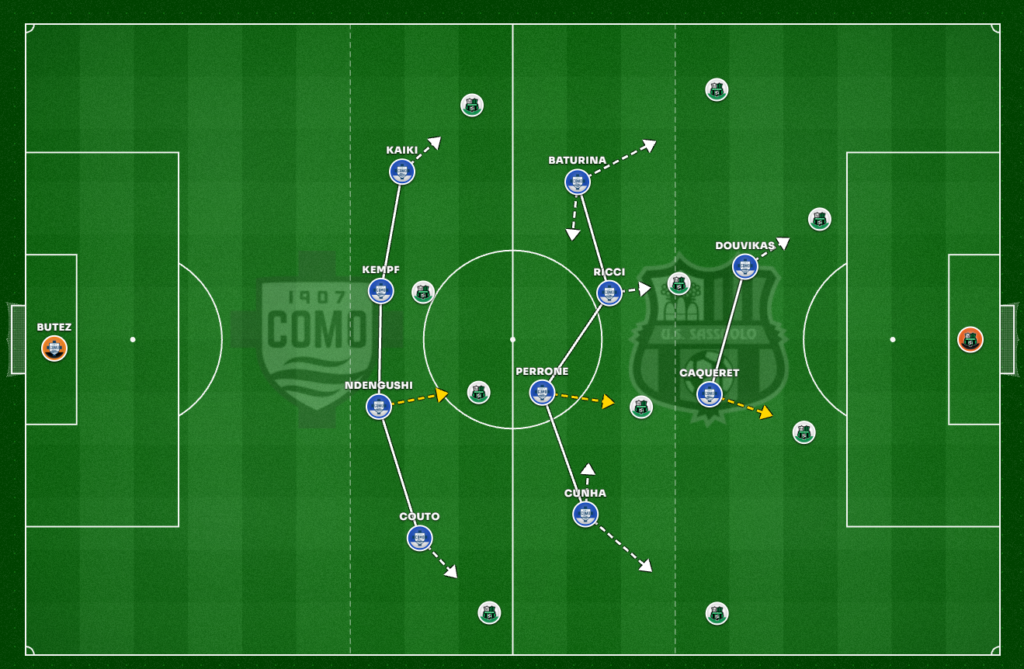
Once the opposition have the ball in more settled phases of possession, Como will initially take up their 4-4-2 shape, looking to prevent easy central access.
If the ball is passed backwards, the press can jump into a more man-oriented press, with the strikers jumping to the opposition centre-backs, both midfielders then backing up the press following the opposition’s deeper midfielder and a centre-back stepping out to match up and make sure no one is free between the lines.
But Fabregas’ side also look to transition into their man-oriented approach when trapping teams down one side of the pitch.
If they can successfully force play down one side, Como are happy to leave the “free” player on the opposite side of the pitch, which is often the far-sided full-back, with the far-side winger coming across as Como jump to the ball side.
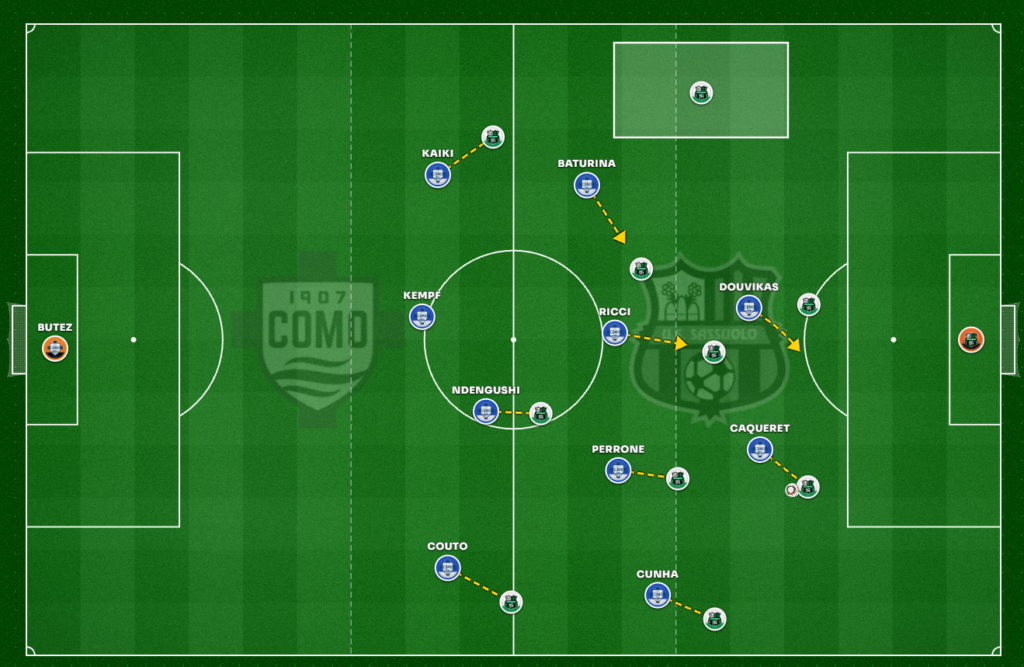
Their success largely comes down to a nice blend between their in-possession and out-of-possession ideas, having a good amount of control with the ball in order to limit their off-ball work, but also having the clarity in their decision making of when to go and when to stay.
Exciting recruitment
Along with an exciting manager, Como have been executing a transfer strategy which has seen them acquire a host of young talents, with clever squad additions mixed in.
Two of the most talented players at Como are Nico Paz and Baturina, the former having signed on a permanent transfer this summer (despite Real Madrid retaining a buy-back clause for the talented Argentine), and the latter having signed last season from Dinamo Zagreb for a fee of around £17m.
But that is only the start of their endless pool of talent, with Jacobo Ramon also being signed from Real Madrid last season, Assane Diao and Jesus Rodriguez signing from Real Betis, Jayden Addai from AZ Alkmaar, Maximo Perrone from Manchester City, Alex Valle from Barcelona… the list goes on.
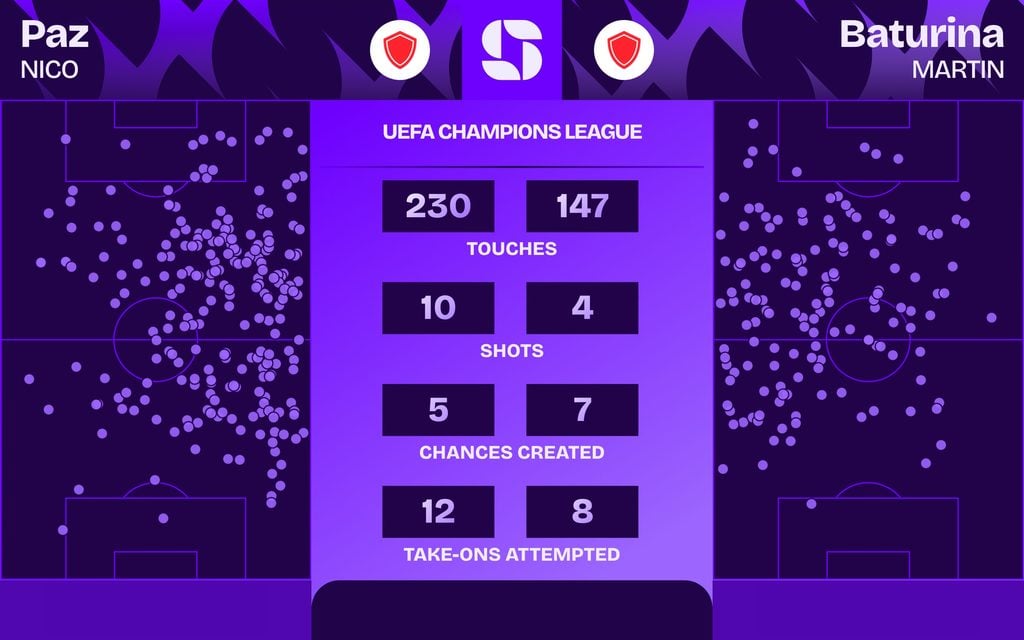
This summer, with their first year of European football awaiting them, Como had to be savvy with their business, looking to add squad depth to their ranks while also trusting the young talent they had already acquired to step up.
A few more experienced signings were made this summer, with Milla joining from Getafe, who has proven to be an excellent addition so far, while Trevoh Chalobah was also acquired from Chelsea and Alvaro Morata was signed on a permanent deal from AC Milan.
Other business included some clever loan deals, with Moise Kean, Yan Couto, Samuele Ricci, Robert Sanchez, Kaiki and Willy Kambwala all joining on initial loan deals with either options or obligations to buy next summer.
How next summer looks in the recruitment department will likely depend on whether they qualify for the Champions League again, and with how they have started the season, many would expect that to be the case.