





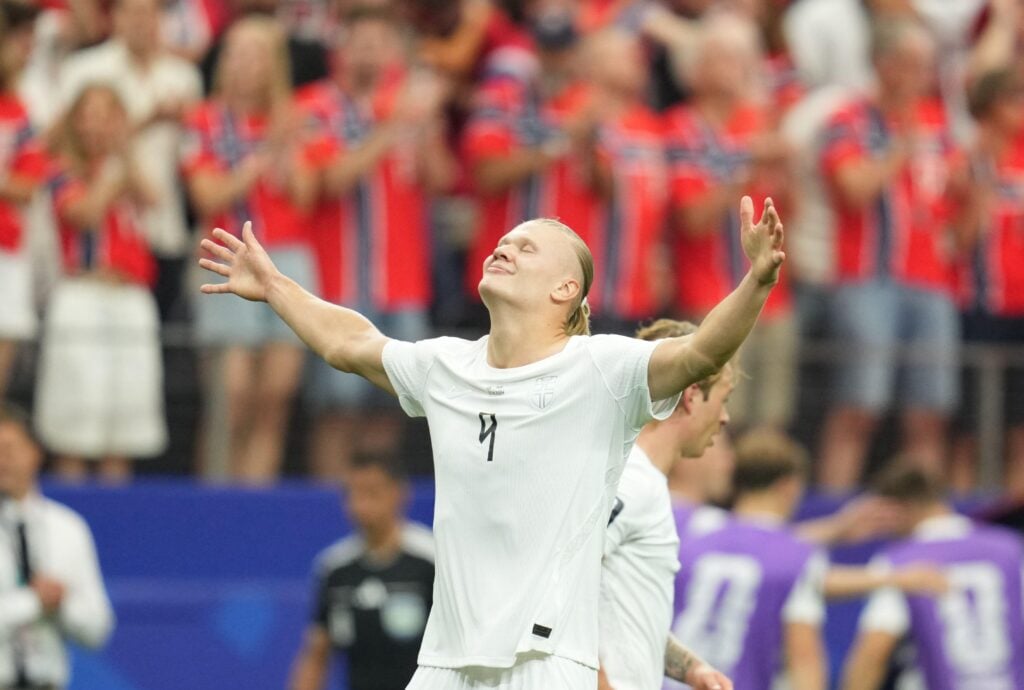
A late Erling Haaland goal secured Norway’s passage through to the round of 16 at the 2026 World Cup as they earned a 2-1 win over an unfortunate Ivory Coast side. Get the full Squawka Ivory Coast vs Norway stats and analysis here.
Antonio Nusa’s delightful first-half goal was cancelled out by substitute Amad Diallo’s solo strike in the second-half.
Despite being kept relatively quiet throughout by the Ivorian defence, it was of course Erling Haaland who cropped up in the dying embers of normal time to bundle a winning goal over the line and send the Scandinavians through to the next stage.
In this article we’ll cover:
Norway abandon attacking variety
When you have a striker with all the natural tools that of Erling Haaland, it gives you opportunities. His ability to score all types of goals means a team should not be limited to one plan or style. He has pace in behind, monstrous aerial ability and a poacher’s instinct, giving you freedom to build play in several ways without
In the early stages of this game though, that variety almost left Landslaget with too many options. In possession they looked listless and Haaland was barely involved whatsoever.
The Scandinavians clearly decided to focus on balls into the box and that was where the momentum shifted. Suddenly, Haaland had two headed attempts at goal – one blocked and one saved – before he had another volley blocked after a knock-down from Alexander Sorloth.
In the second half, the Manchester City man was again almost anonymous – but finally was on hand to tap home Patrick Berg’s low cross as we entered the final few minutes of normal time. Next up for Norway is Brazil. Expect Stale Solbakken’s men to continue the trend of putting crosses into the box and hoping Haaland gets the better of his Premier League rival Gabriel Magalhaes.
Wide battles the key
This game always felt like it would be won and lost in the wide areas. While Norway possess attack-minded full-backs on either side, Ivory Coast’s main attacking threats are their wide players. Indeed in a slow first half-hour, the stand-out players were Nicolas Pepe and Yan Diomande.
However, Pepe’s lack of defensive ability played a part in the opening goal – itself coming from one of Norway’s wide players. David Moller Wolfe was dragged inside to following the run of the the underlapping Guela Doue and Pepe’s lack of defensive instinct left Antonio Nusa in enough space to receive a Martin Odegaard pass, advance into the box and curl home a glorious goal.
And likewise, Ivory Coast’s equaliser came from quality wide play. Amad Diallo repeated his trick of coming off the bench to score at a vital moment as he played a delightful one-two with Pepe and showed perfect footwork and composure to bring his side level.
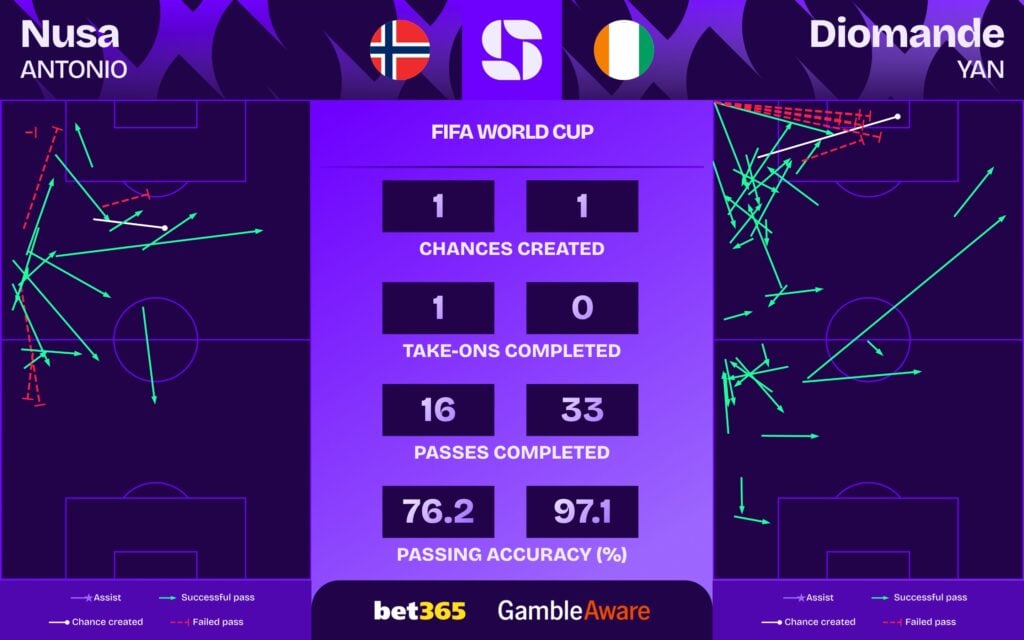
Nusa showed more desire to be more ambitious in possession than his RB Leipzig teammate Diomande who, after a fine start to the tournament, looked out of ideas in this game – failing to complete a insgle take-on and creating only one chance.
As the game stretched on, the reliance on both side’s wingers became more evident. Only last night’s Germany vs Paraguay game in which the South Americans sat in a frustrating low block has seen more crosses attempted throughout the tournament.
While Haaland grabbed the headlines by becoming the first player in 72 years to score in his first three World Cup appearances, the truth is he was largely anonymous and it was in the wide areas where this game was won and lost.
Landslaget’s improved defensive structure
While Norway were always looking to cross the ball from open play, they always looked comfortable defending similar positions from the Ivory Coast.
Norway were one of only three teams in the group stages to concede seven goals and still progress alongside Algeria and Sweden and with more difficult opponents to come, they knew that an improvement defensively was going to be needed here.
Although they knew that the Ivorians would look to get the ball into their talented widemen, playing to the strengths of centre-backs Kristoffer Ajer and Torbjorn Heggem Norway tried to keep those players wide and force them into high crosses from deep positions and backed their ability against Ange-Yoan Bonny.
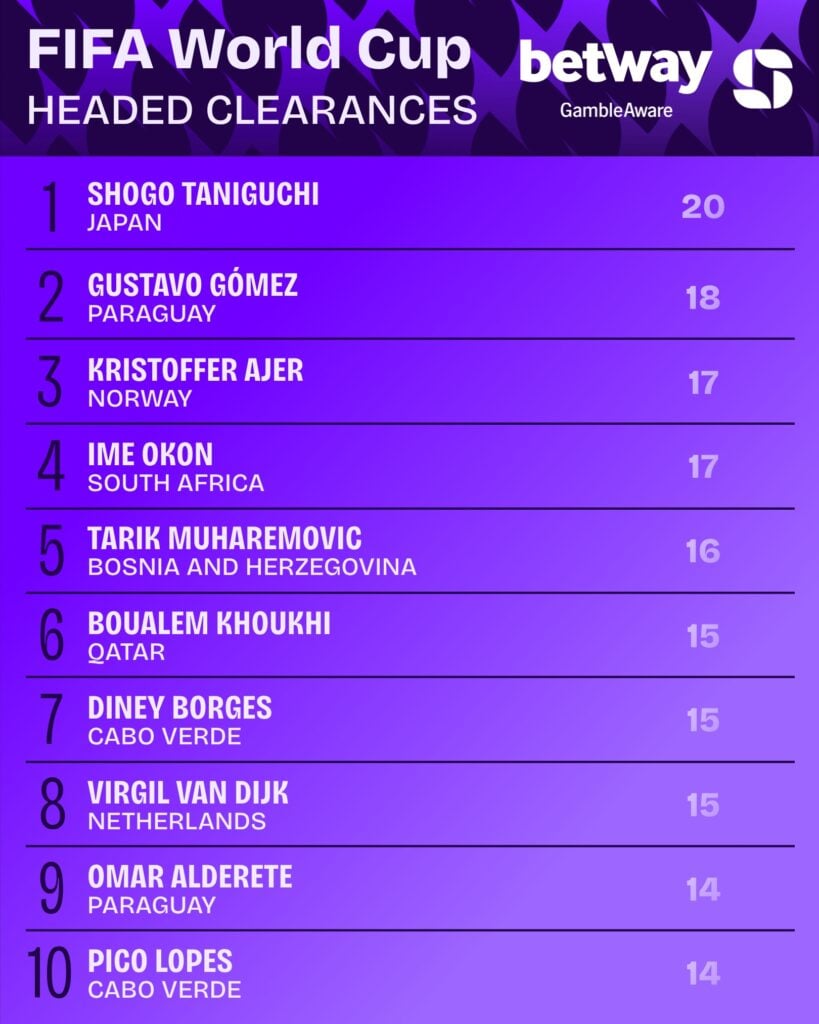
They were right to as well – Bonny failed to win a single aerial duel while Ajer completed no fewer than eight headed clearances, dealing well with almost everything Ivory Coast launched at them from these positions.
That solidity even stretched to set-pieces – Ivory Coast took no fewer than 14 corners but created just one chance as a result of those.
It’ll be a completely different challenge for Norway to defend against Brazil who possess yet more quality in those wide areas. Whether they can force Vinicius Junior to remain in wide areas as they did with Yan Diomande remains to be seen.
Read more:
Latest World Cup stories