






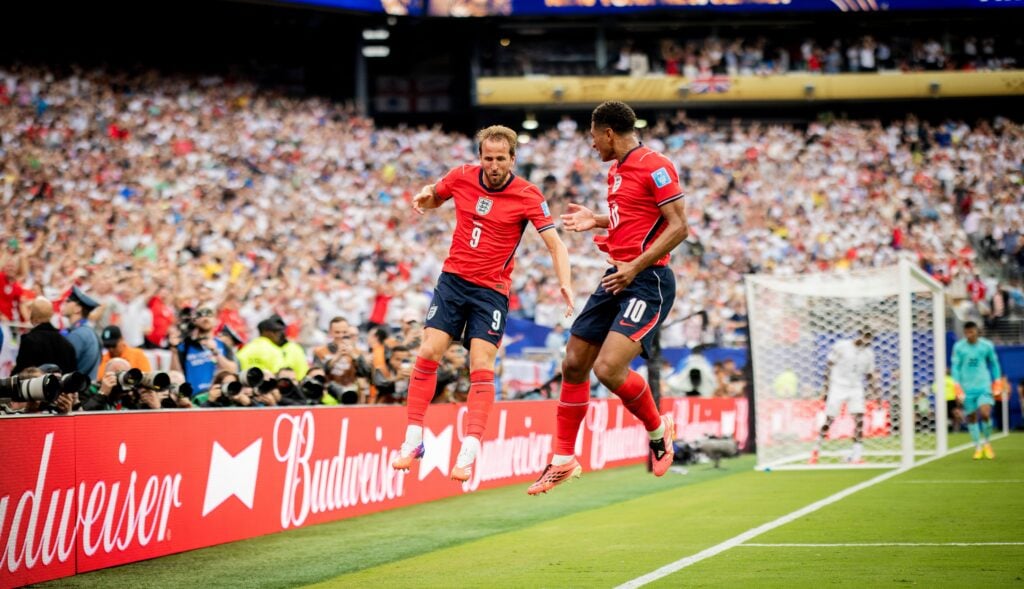
England topped their World Cup 2026 group, picking up seven points from their three games.
While Thomas Tuchel’s side progressed to the knockout stages with relative ease, there has been plenty of criticism for England in their recent two games.
England struggled for three halves of football, facing a low block in their goalless draw with Ghana, followed by a slightly more aggressive but back five of Panama. A 4-2 opening win over Croatia seems so far in the past.
However, both games provided good moments for Tuchel to learn about his squad. And, more importantly, how to deal with these stubborn but different types of defensive units.
England tactical analysis:
Double width patterns
Tuchel used similar patterns in the games against Ghana and Panama. He looked to utilise double-width to isolate the wingers one-on-one.
Both full-backs started slightly lower and more narrow, pinning Panama’s wide midfielders in their 5-4-1 shape infield. This did two things.
First, it opened up an easier pass into the winger in a wide area. But it also made it harder for the helping defender to arrive and double-up on the winger.
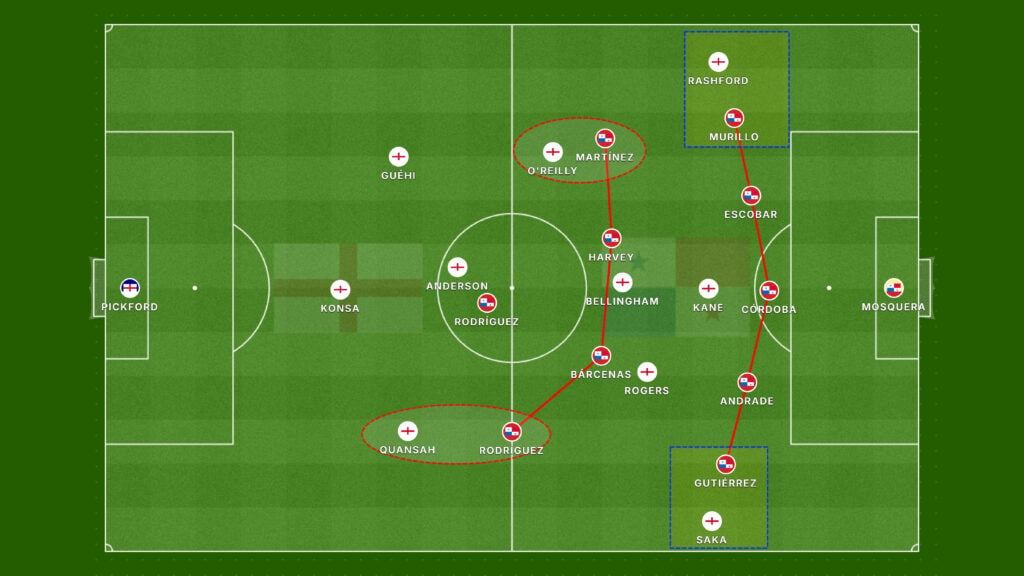
It wasn’t only the full-backs creating these moments of double width to improve conditions for the one-on-one winger. Morgan Rogers also often drifted outside the block.
Jarrell Quansah played at right-back in a more passive manner, which created space on the axis between him and Bukayo Saka to receive. Saka would pin the Panama left wing-back, while Quansah baited pressure from the left midfielder, creating the space in between.
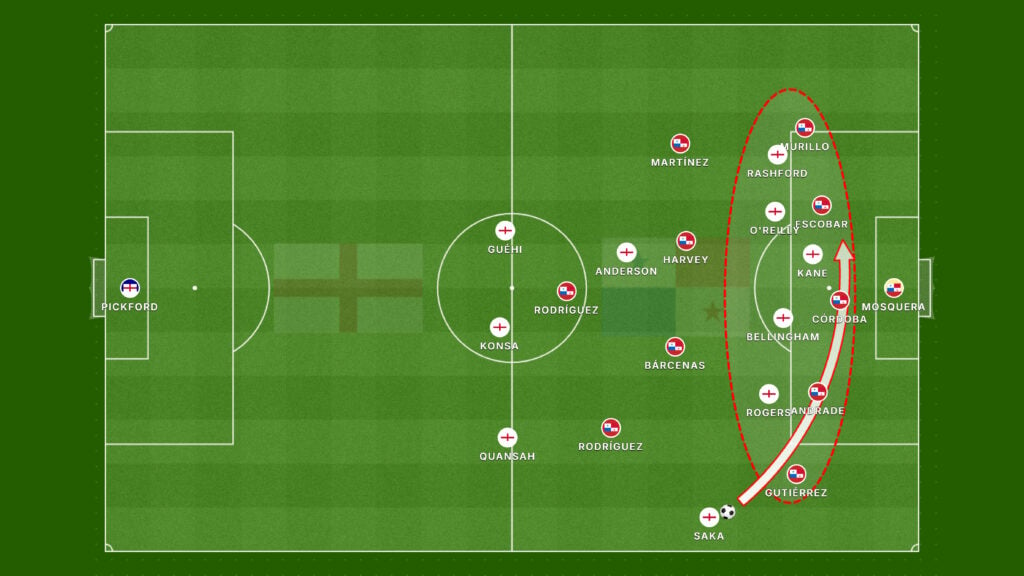
Patterns to exploit wide areas are clearly an emphasis for Tuchel and his England side, looking to avoid central turnovers.
This makes sense when you consider the profiles of the squad, not taking those more intricate between-the-line operators, but instead having width holders and height in the box.
Bukayo Saka and Marcus Rashford put in 11 crosses between them against Panama, having Nico O’Reilly, Harry Kane, Jude Bellingham and Rogers all looking to attack the box.
Dabble sign-up offer: Bet £10+ & Receive £10 In Free Bets
Not signed up to Dabble yet? Here's how to claim the Bet £10+ & Receive £10 In Free Bets welcome offer:
- Sign up to Dabble through this link
- Register your account with accurate personal details
- Place your first bet of £10 or more
- Receive your £10 in free bets when your qualifying bet has setted
- Use your Free Bet on any eligible sportsbook market within 7 days

#AD 18+ 7-day free bet expiry. Stake not returned. Promotional Terms Apply. GambleAware.org
Added depth runs
Now another principle on show against Panama was one which wasn’t really seen against Ghana. But that is largely down to the defensive scheme differences.
While Ghana sat low and retreated into a low block in their 4-5-1 shape quickly, Panama would sit in their 5-4-1 midblock for longer periods in the match.
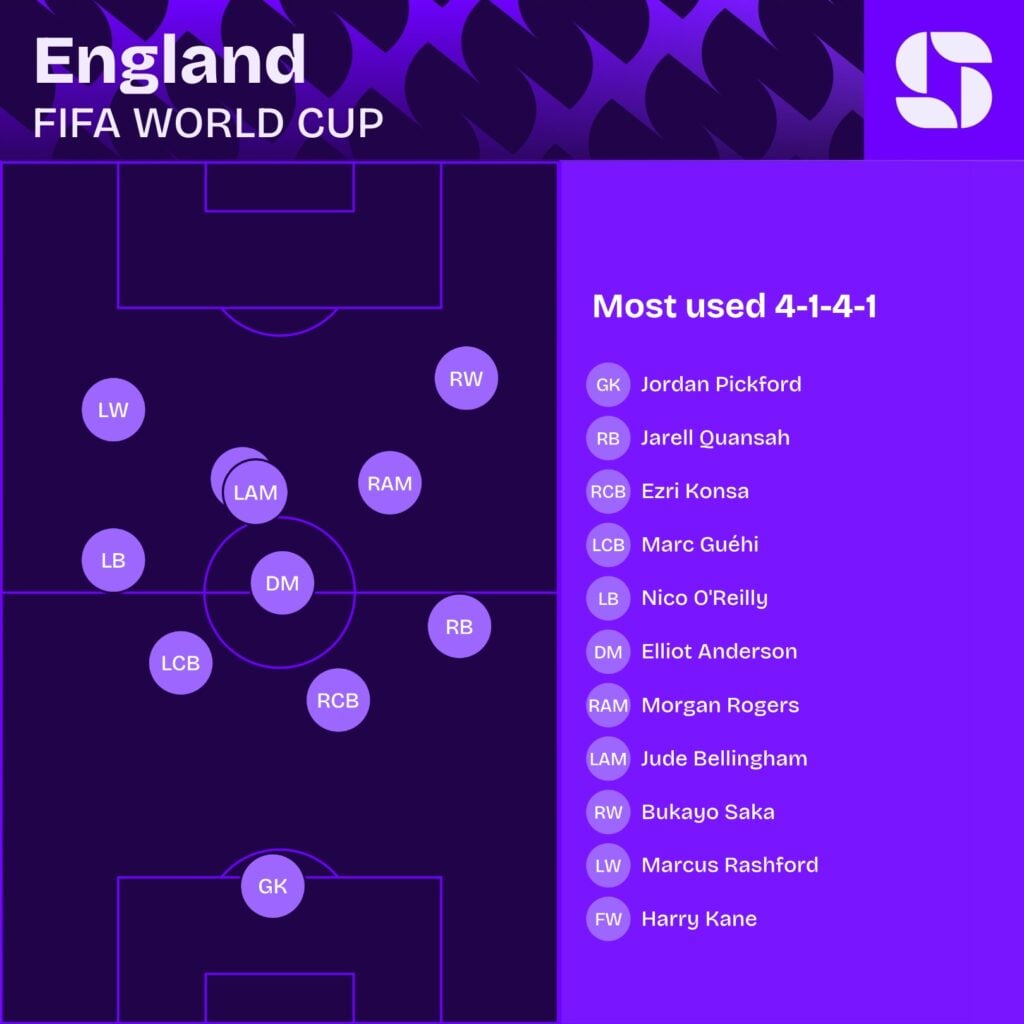
This left space behind Panama’s defensive line to exploit, something Tuchel built this England squad to thrive on, with plenty of runners around Kane in attacking areas.
Whether it was Rogers looking to run beyond when Kane dropped, Bellingham timing his run after dropping deep first or one of the wingers looking to make an out to in run.
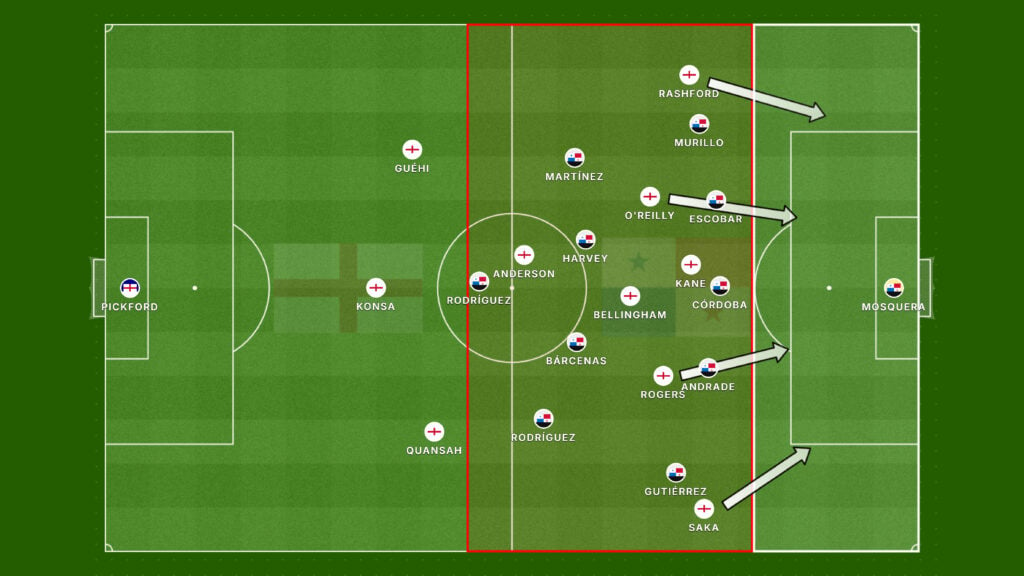
England have the pace to exploit these scenarios. But they perhaps struggle with the execution due to the quality of deep-passers in the squad.
If Kane isn’t dropping deep to release those passes, the burden is heavily on Elliot Anderson, with Reece James out injured and the likes of Adam Wharton and Trent Alexander-Arnold not in the squad.
Jude’s “new” role
Bellingham’s role was crucial in many ways against Panama, technically replacing Declan Rice as the box to box eight, while Rogers became the No.10.
The Real Madrid star had more freedom in this all phase midfield role, allowing the shape to shift between a 3-2-5 and a 3-1-6.
At times, Bellingham would drop alongside Anderson to help the build up and attract another body to jump from their midfield line.
On other occasions, Bellingham would drift to either side to overload play, making runs beyond and looking to recieve between the lines.
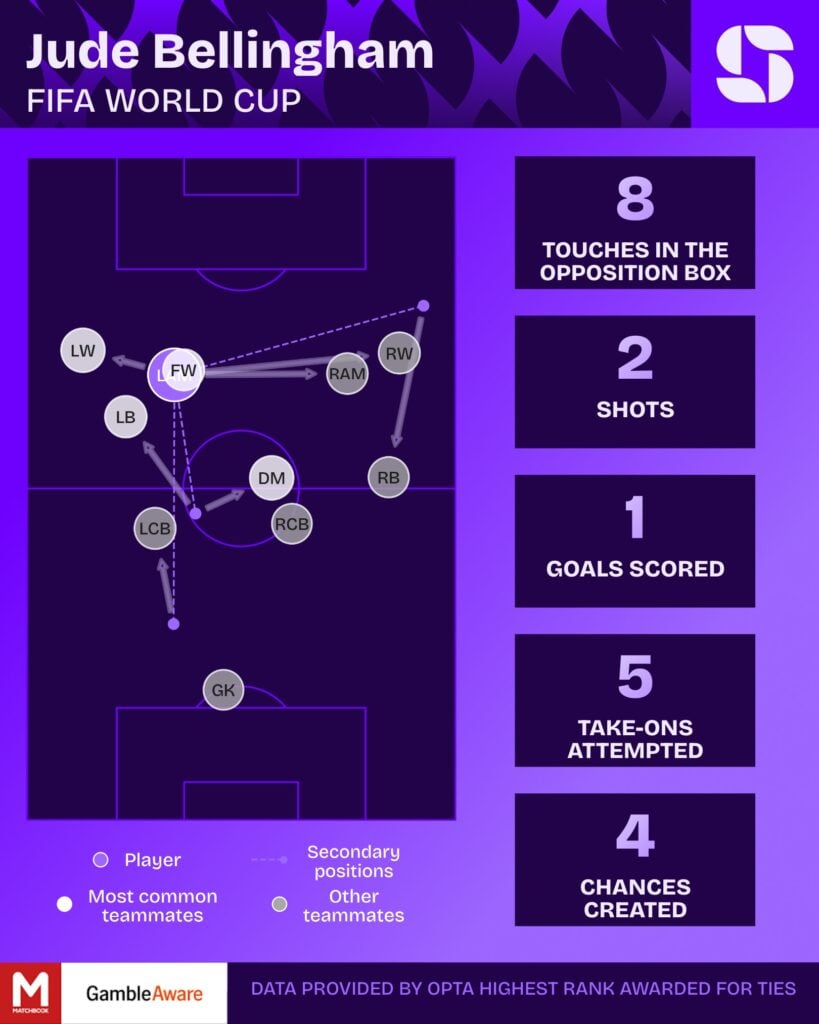
The constant movement from Bellingham made it tough for Panama to pick him up, as they often wanted to protect space in front of the defensive line.
Bellingham was also effective in this role when it comes to his impact on the game, scoring the opener, providing an assist for the second and putting in a shift defensively.
The 22-year-old midfielder won four out of four tackles, won 11 of his 15 ground duels and made seven ball recoveries in the match.
Moving forward?
England are set to face DR Congo in the round-of-32, which will pose similar puzzle for them to solve, setting up in a 5-3-2 off the ball.
Their back five sit fairly narrow inside their own half, leaving space for the wide men and opening up those switches of play.
Crosses into the box will likely be key once again, as Portugal found their opener against DR Congo in the same way.
One big difference could be the two strikers for DR Congo on the break, meaning England likely leave another player with their two centre-backs to manage transitions.
Either way, Tuchel will be hoping to overcome any challenges and progress to the next round, so let’s see how England get on against another back five test on Wednesday.
Read more: