




The Premier League has once again seen an international break overhaul of managers, with Michael Carrick ousted from Manchester United and Pierre Sage sacked by Crystal Palace.
Top-flight clubs often see this time of year as the best to roll the dice, giving a new manager valuable time on the training ground with his squad before their first match and offering everyone a bit of breathing space.
It’s a tactic that has worked for many down the years, but other gambles have failed to disastrous degrees. Here, we’ve taken a look at five of each outcome.
Five Premier League international break changes that worked
1. Joe Royle to Everton – November 1994
Context: Former midfielder Joe Royle was appointed by his boyhood club just two days after Mike Walker was sacked. The Toffees were bottom of the 22-team Premier League table with just eight points and one win from 14 games, looking well on their way to a first relegation since 1951.
What happened next: Royle used the international break to assemble his famous “Dogs of War” trio of Barry Horne, Joe Parkinson and John Ebbrell around formidable striker Duncan Ferguson. Inspired by legendary goalkeeper Neville Southall, Royle delivered a 2-0 win over Merseyside rivals Liverpool in his first match and helped Everton to 42 points from their remaining 28 games, climbing to a comfortable 15th. He then pulled off an incredible shock as Everton beat Manchester United 1-0 in the FA Cup final — still the club’s last major trophy.
2. Tony Pulis to Crystal Palace – November 2013
Context: Tony Pulis was brought in towards the end of the November 2013 international break after Ian Holloway had overseen a slump to the bottom of the table, with just four points from their opening 11 games.
What happened next: Pulis drilled Palace into a defensive juggernaut in their 4-5-1 formation, while the likes of Jason Puncheon and Dwight Gayle started scoring vital goals. The Eagles took 41 points from their final 27 games to climb to 11th, while along the way, Palace had a huge hand in denying Liverpool and Chelsea the title, and stopping Everton from qualifying for the Champions League. Things went sour with the club the following summer, but the fact that he was named Manager of the Season as he dragged Palace to safety speaks volumes.
3. Jurgen Klopp to Liverpool – October 2015
Context: Jurgen Klopp was hired by Liverpool just days after Brendan Rodgers was sacked in the wake of a 1-1 Merseyside derby draw at Goodison Park, leaving the Reds 10th with one win in nine across all competitions. Expectations were high after Klopp had led Borussia Dortmund to back-to-back Bundesliga titles and a Champions League final.
What happened next: The rest is history. Liverpool reached two cup finals in Klopp’s first season and swiftly became the most entertaining side in Europe. By the time of his departure in 2024, the German had delivered Liverpool’s first league title in 30 years and a sixth Champions League, as well as FA Cup and EFL Cup titles, among other trophies.
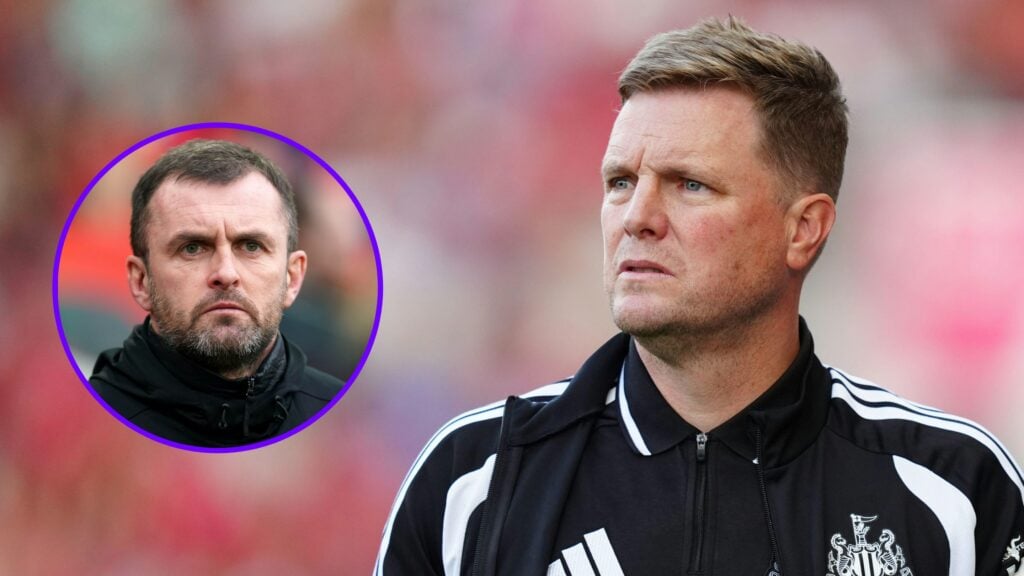
4. Eddie Howe to Newcastle United – November 2021
Context: Eddie Howe replaced Steve Bruce and caretaker Graeme Jones in early November 2021, taking over a Newcastle side sitting 19th and with the unwanted mantle of the Premier League’s only remaining winless team after 11 games.
What happened next: Howe used the international break wisely, overhauling fitness levels at St. James’ Park and converting Joelinton into a box-to-box midfielder. The result was Newcastle upping their points per game from 0.45 to 1.63 over the final 27 games, climbing all the way up to 11th. Heavy Saudi investment soon followed, and Howe spearheaded Newcastle twice qualifying for the Champions League and ending their long trophy drought by beating Liverpool in the 2025 EFL Cup. A club transformed.
5. Roberto De Zerbi to Tottenham Hotspur – March 2026
Context: Roberto De Zerbi was named Spurs manager on 31st March, on the same day Japan beat England 1-0 at Wembley and two days after interim boss Igor Tudor‘s disastrous stint was ended. The Italian inherited a Tottenham side sitting 17th, just a point above the relegation zone with seven games to go.
What happened next: Spurs took 11 points from their final seven games, steering away from a cataclysmic relegation by just two points on the final day of the season. The Italian is still searching for consistency in north London, but did win the Manager of the Month award in October, a month that started with a 1-1 comeback draw at Manchester United, before a three-game winning streak against Coventry (3-1), Chelsea (2-0) and Crystal Palace (2-0).
Five Premier League international break changes that failed
1. Bob Bradley to Swansea City – October 2016
Context: Bob Bradley was appointed during the October international break to replace Francesco Guidolin, who left Swansea 17th in the Premier League on goal difference.
What happened next: Bradley was the Premier League’s first American manager and received some rough treatment from sections of the media and fanbase because of his accent and mannerisms. Unfortunately, Bradley couldn’t let results speak for themselves, with Swansea conceding three or more goals in eight of his 11 league games, picking up just two wins and eight points before being sacked after 85 days.
2. Claudio Ranieri to Fulham – November 2018
Context: Claudio Ranieri had famously saved Leicester from relegation and turned them into title winners. Fulham looked to repeat the formula by hiring the Italian as Slavisa Jokanovic’s replacement in November 2018, with the Cottagers bottom on five points from 12 games, despite a summer of lavish spending.
What happened next: Ranieri attempted to bring defensive solidity and pragmatism to Craven Cottage, but couldn’t get his ideas across to a squad built for possession and attacking football. Fulham won just three of his 16 league games in charge and continued to leak goals at an alarming rate, leading to him being sacked on the final day of February.
3. Steven Gerrard to Aston Villa – November 2021
Context: Steven Gerrard joined Aston Villa just three days after Newcastle hired Howe, replacing Dean Smith with the Villans 16th in the table and on a run of five straight league defeats.
What happened next: Gerrard couldn’t repeat his Rangers success, going in the opposite direction to Howe. He briefly dragged them up to 14th, but his narrow system was quickly sussed out, and Villa won just two of their opening 11 league games of the 2022/23 campaign. Gerrard was sacked in October and replaced by Unai Emery, who has gone on to bring Europa League glory to Villa Park.
4. Nathan Jones to Southampton – November 2022
Context: Nathan Jones arrived at Southampton at the start of the winter break for the 2022 World Cup. He replaced Ralph Hasenhuttl, who had left the Saints 18th with just 12 points from 14 games.
What happened next: Jones had far more time to get his squad ready than other mid-season appointments. However, things couldn’t have gone much worse, with Southampton losing seven of his eight games in charge as they utterly failed to adjust to his high-tempo system. Jones was sacked in February, but Southampton still went on to finish bottom.
5. Ange Postecoglou to Nottingham Forest – September 2025
Context: Forest dismissed Nuno Espirito Santo during the September 2025 international break after a fallout between manager and club. A Europa League winner with Spurs, Ange Postecoglou was the man to replace Nuno.
What happened next: Postecoglou inherited a side that had taken four points from the opening three games of the Premier League season. What followed was a disastrous run of two draws, six defeats and zero wins from eight across all competitions, including just one point from five Premier League outings. The Australian was swiftly ousted and replaced by Sean Dyche, who certainly improved things, but didn’t last until the end of the season either.