




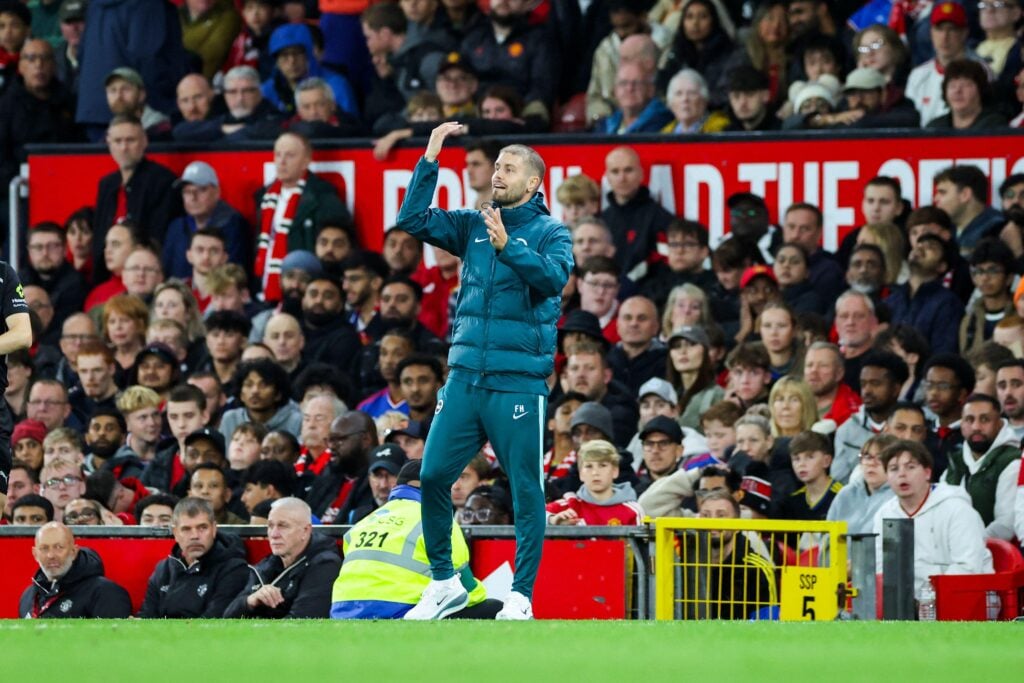
Brighton and Hove Albion have started the new Premier League season well, sitting third after five games.
The Seagulls have picked up 10 points from their opening five matches, beating Aston Villa, Coventry City and Arsenal. They’ve also drawn against Leeds United and only lost a 4-3 thriller to Chelsea. It leaves them only behind Arsenal and Manchester City in the table.
After their win over Arsenal heading into the international break, many will be wondering how far Brighton can go this season.
Fabian Hurzeler’s side are also competing in the Uefa Conference League this season. So could a European trophy be obtainable alongside qualification for the Champions League?
Are Brighton European contenders?
Fluid buildup
One of the strongest parts of Hurzeler’s Brighton is their buildup. The Seagulls adhere to a set of principles that makes them extremely difficult to stop.
When looking to build out from the back, Hurzeler encourages his side to find solutions by utilising the +1 advantage of their goalkeeper. The centre-backs play with the confidence of midfielders, looking to get on the ball deep. They also vacate their natural positions to offer passing options and always make sure the play on the ball has multiple choices.
Mobility is a key component of Hurzeler’s ideas, as he seeks to find these solutions across the pitch.
Similarities to PSG
There are similarities between Brighton and the way Paris Saint-Germain play. The Seagulls are happy to rotate within a structure, making it difficult for the opponent to press them, causing disruption for the opposition’s defensive scheme.
Midfielders, full-backs and wingers are all comfortable in multiple roles at various heights and depths. The combination between the latter specifically allows the pair to operate on different vertical lines and interchange.
Difficult to press
This does a number of things. Firstly, it makes it extremely difficult for teams to transition from a zonal to a man-to-man pressing scheme. It’s something many teams try to do in the modern era, pressing with a hybrid scheme. This can lead to more control of the ball as teams struggle to apply pressure, which partly explains Brighton’s high possession numbers this season.
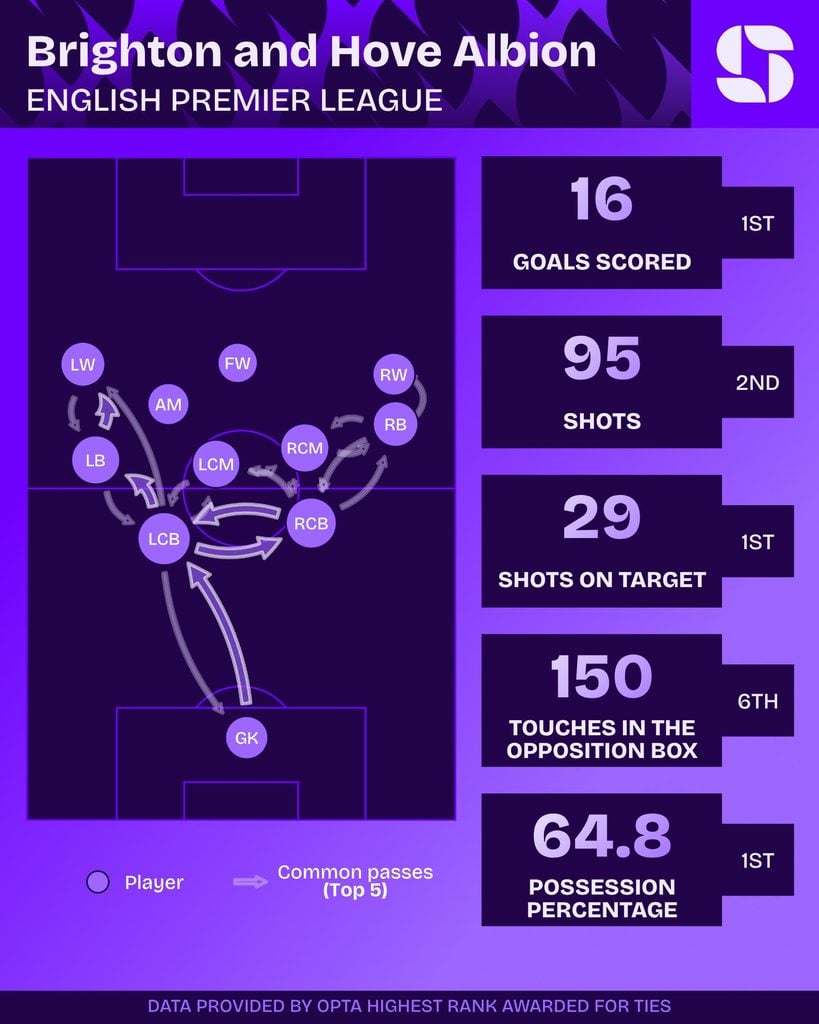
The Seagulls lead the Premier League in possession this season, averaging 64.8% across the campaign so far. Man City — who are renowned for this style of play — trail Brighton with 63.1% possession.
This does a number of things, firstly, it makes it extremely difficult for teams to transition from a zonal to a man-to-man pressing scheme, something many teams attempt to do in the modern era, pressing with a hybrid scheme. This can lead to more control of the ball as teams struggle to apply pressure, which partly explains Brighton’s high possession numbers this season.
Defensive block manipulation
Second, it allows Brighton to manipulate the opposition’s defensive block, stretching it both vertically and horizontally.
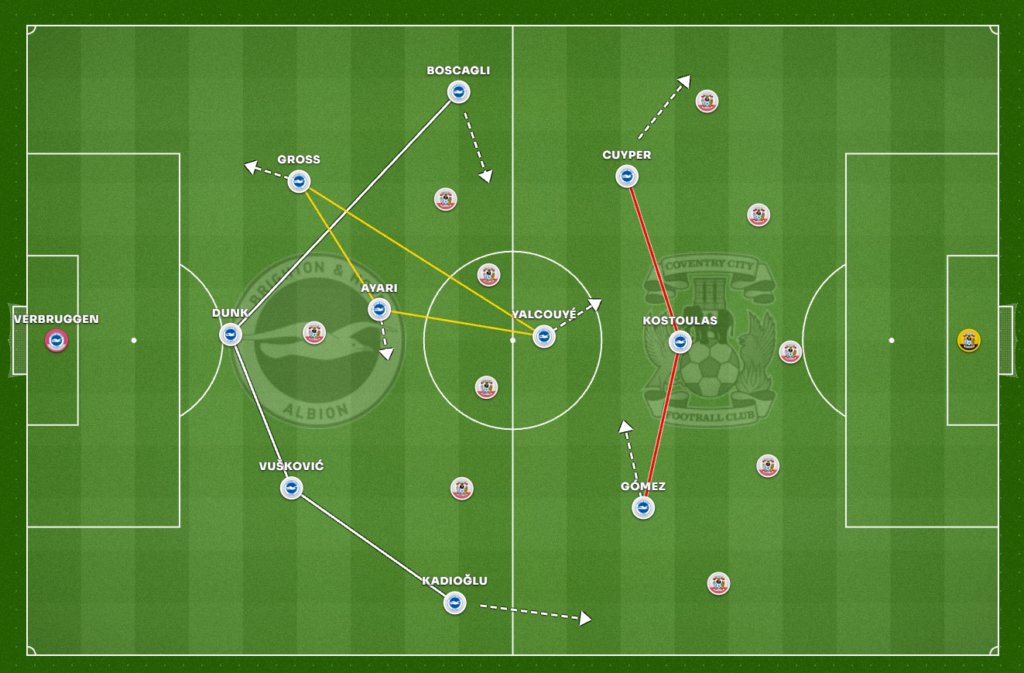
This is where another similarity between Brighton and PSG appears — activity on the last line and the concept of counter-movements.
Brighton are brilliant when it comes to their movement and activity, with players comfortable in a range of positions. But they also understand why they are taking up the positions they do.
If a winger drops deep and comes inside, the full-backs understand the run into depth they must make to stretch the pitch and create tensions for the opposition defensive scheme. This is the same for the midfield unit, if one drops from a high start position into a low position looking to drag a defender with him, the other midfielders can make dynamic movements to provide solutions and access the space created.
A mixture of runs into depth and movements towards the ball creates a good blend of push and pull dynamics, which constantly asks questions of the opposition defensive scheme.
Attacking threat
Brighton have been scintillating going forward this season. The Seagulls have scored the most goals in the Premier League (16) and have generated a league-high 11.49 Expected Goals. They also rank second for shots (95) and top for efforts on target (29).
Hurzeler’s side have also been effective from set-pieces — which continues to be an important factor in the Premier league. The Seagulls have scored four goals from set-pieces, the joint-most in the league. And they sit fifth for their 2.28 xG from set-pieces.
There are a few main concepts at play when it coems to Brighton’s attacking threat, resulting in high-quality chances and access to dangerous areas on a frequent basis.
Regress to progress
The first is “regress to progess”. Brighton are happy to play the ball backwards to decompress the opposition block, eventually progressing to find gaps between the lines. But Hurzeler also wants his side to find solutions by playing against the opposition’s momentum, both vertically and horizontally.
When it comes to Brighton’s attacking threat, there are a few mains concepts at play which result in high quality chances and access to dangerous areas on a frequent basis.
Diagonal entry passes
Brighton are also brilliant at looking for diagonal entry passes into or through a defensive block. Typically speaking teams will be lopsided when applying pressure on the ball side, leaving the opposite flank slightly deeper and offering space to access in front of them.
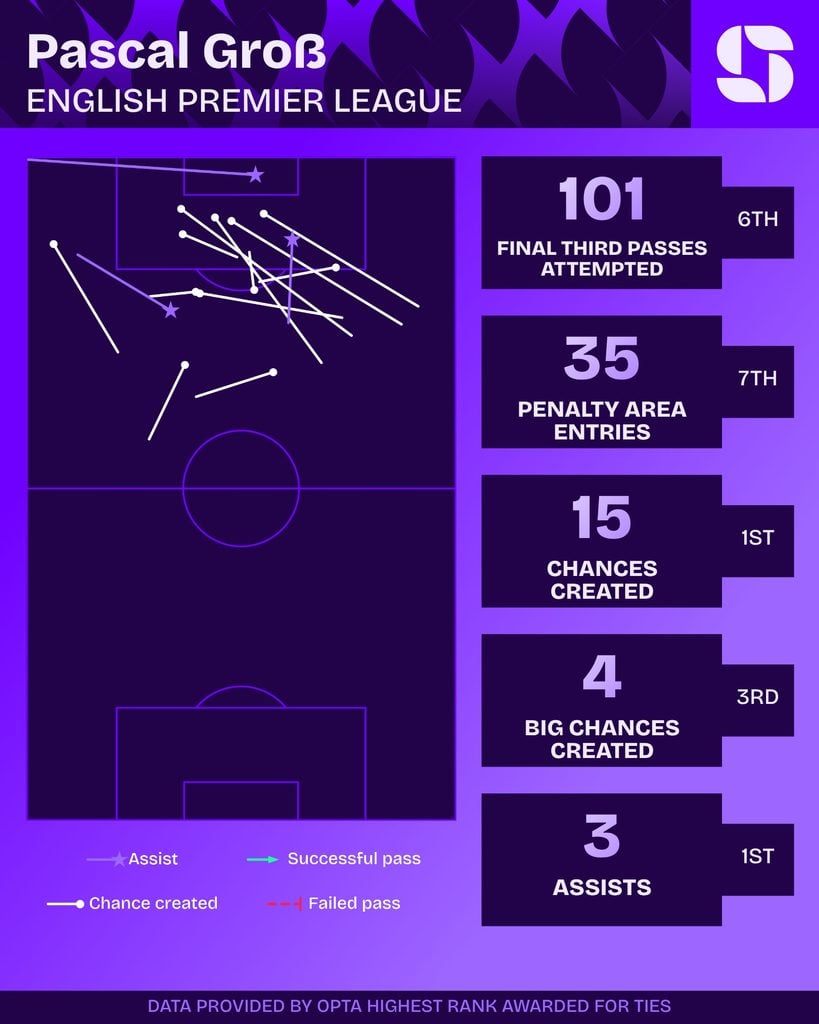
A big part of Brightons success in the final third this season has been Pascal Gross. Despite being 35, the German midfielder is showing no signs of a drop off in his ability.
Gross has created 15 chances so far this season, more than any other player in the Premier League. The German often finds himself in good areas to get balls into the box fro mthat right half-space.
Quick turnover
Lastly, Hurzeler wants his side to regain possession as quickly as possible, with counter-pressing being one of his key principles. This can create good opportunities to attack against a destabilised defensive unit, turning defence to offence as quickly as possible and looking to get a shot away in as few actions as possible.
Brighton have forced the most high turnovers in the Premier League this season, with 56. Eight of those (14.29%) have ended in a shot.
Intense press
The final key component of Hurzeler’s Brighton side is their intense press. The Seagulls look to stop the opposition from getting into their settled possession phase and become comfortable in the game.
Brighton have the lowest passes per defensive actions (PPDA) in the Premier League this season, with 7.4. So they allow the fewest passes to the opposition before winning the ball back.
When you take into account the high possession numbers and this defensive approach, the two approaches clearly marry well together.
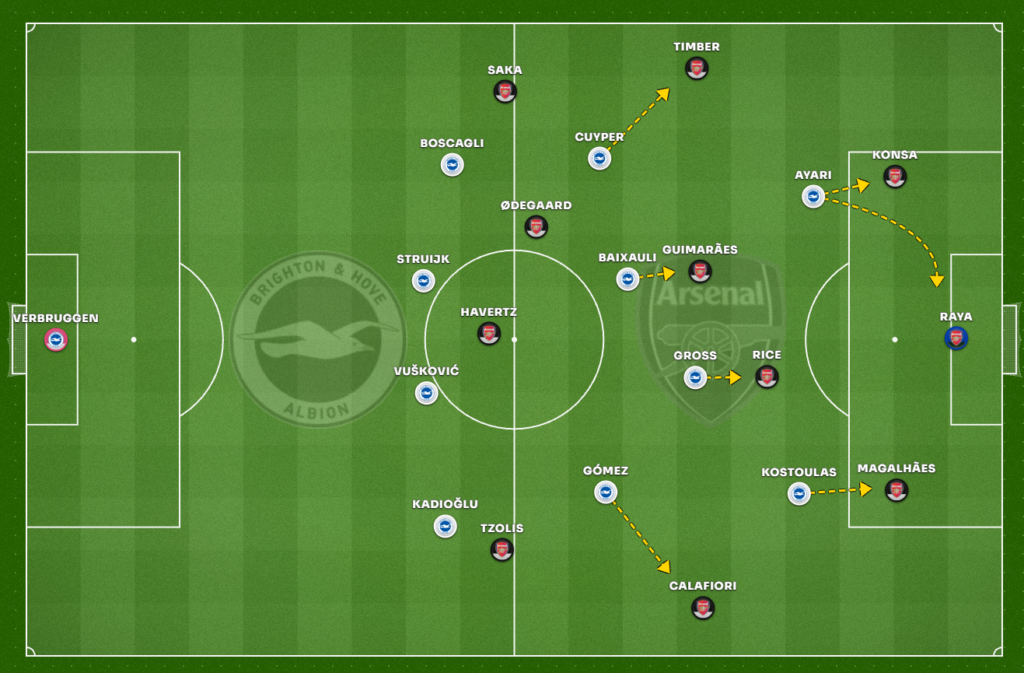
Man-oriented pressing
Brighton pressed in a very man-oriented approach from restarts and goal kicks against Arsenal.
Yasin Ayari was often the man pressing alongside Charalampos Kostoulas in the front two. Both Gross and Chema Andres would then press aggressively on Arsenal’s double pivot, while Diego Gomez and Maxim De Cuyper say in half-and-hal positions. The latter duo stayed narrow but were ready to jump to the opposition full-back.
The clarity in which Brighton execute their intense high press is key. They’re never hesitant to jump, are always aggressive and apply pressure at full speed to put the opponent under the maximum amount of pressure possible.
This is a collective approach. When the midfielders are going man-for-man with the opposition midfielders, the centre-backs will step up to attach to their man between the lines, sticking with them even if they drop deep into their own half. They remain in that pressing mentality with complete clarity, avoiding any hesitation which can lead to gaps.
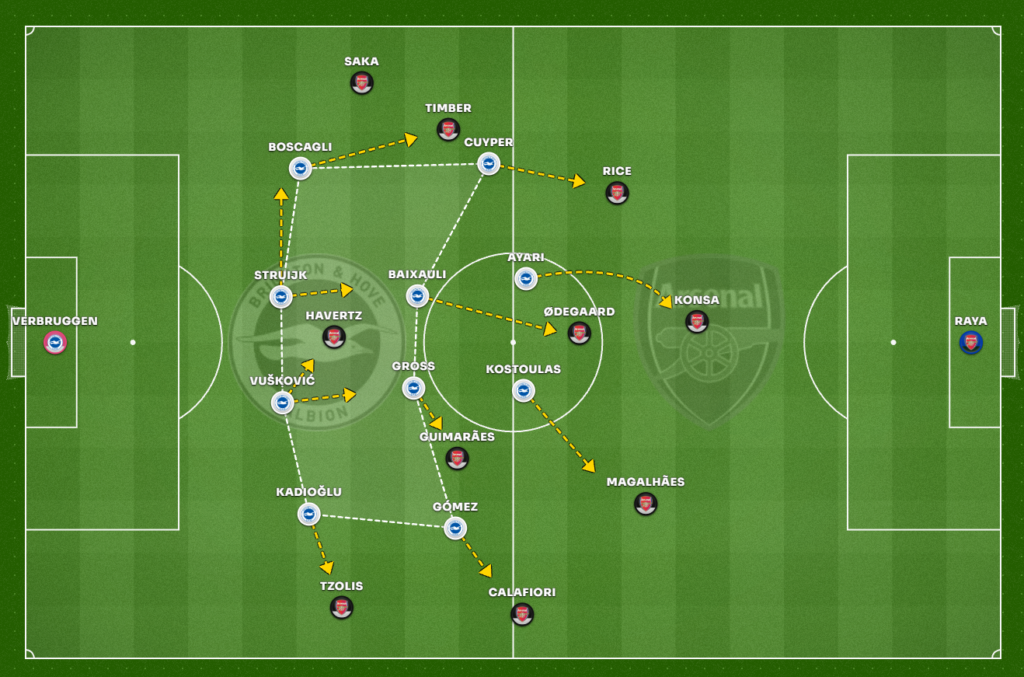
This is also true when Brighton are defending in the middle third. The Seagulls initially take more of a zonal midblock shape, keeping things compact and waiting to pounce. Because when the ball goes backwards or a midfielder jumps to press, Hurzeler’s side transition from this zonal structure into a man-oriented press once again.
Once again, this is done with complete clarity. The defensive line jumps up with their references to close the gaps behind the pressing unit.
Brighton continue to cause problems for a range of different sides in the Premier League this season, and given their strong start, a push for Champions League qualification should not be overlooked.