







Leeds United are currently one of four teams still unbeaten in the Premier League, sitting third after four games.
Daniel Farke’s side have won two and drawn two, with victories over Nottingham Forest and Newcastle United. Brentford and Brighton and Hove Albion have held leads to draws, in back-to-back matches.
Leeds invested £85million on some important players in the summer, with James Trafford, Tarik Muharemovic, Nico Elvedi and Harry Wilson just some names arriving. So they’ll be hoping they can push on from their 14th-plced finish last season into the top half.
However, after their start to the season, some fans will be dreaming of a European charge. And there are plenty of encouraging signs to suggest they could be there or thereabouts.
In this article, we’ll cover
Top tier absorbers
Leeds look to initially press from goal kicks in a more man-oriented fashion. They try to force their opponent long, where they are well equipped to deal with it. Once Leeds drop into more of a 5-2-3 mid-block shape, they are still extremely active.
While being slightly more passive with pressure from the front, Leeds are aggressive inside their defensive block. The midfield step onto the opposition pivot and the defenders then step out to fill those gaps between the lines.
However, one of Leeds’ biggest strengths has been the ability to absorb pressure when defending inside their own half. Particularly with the signings in the defensive unit and a new goalkeeper.
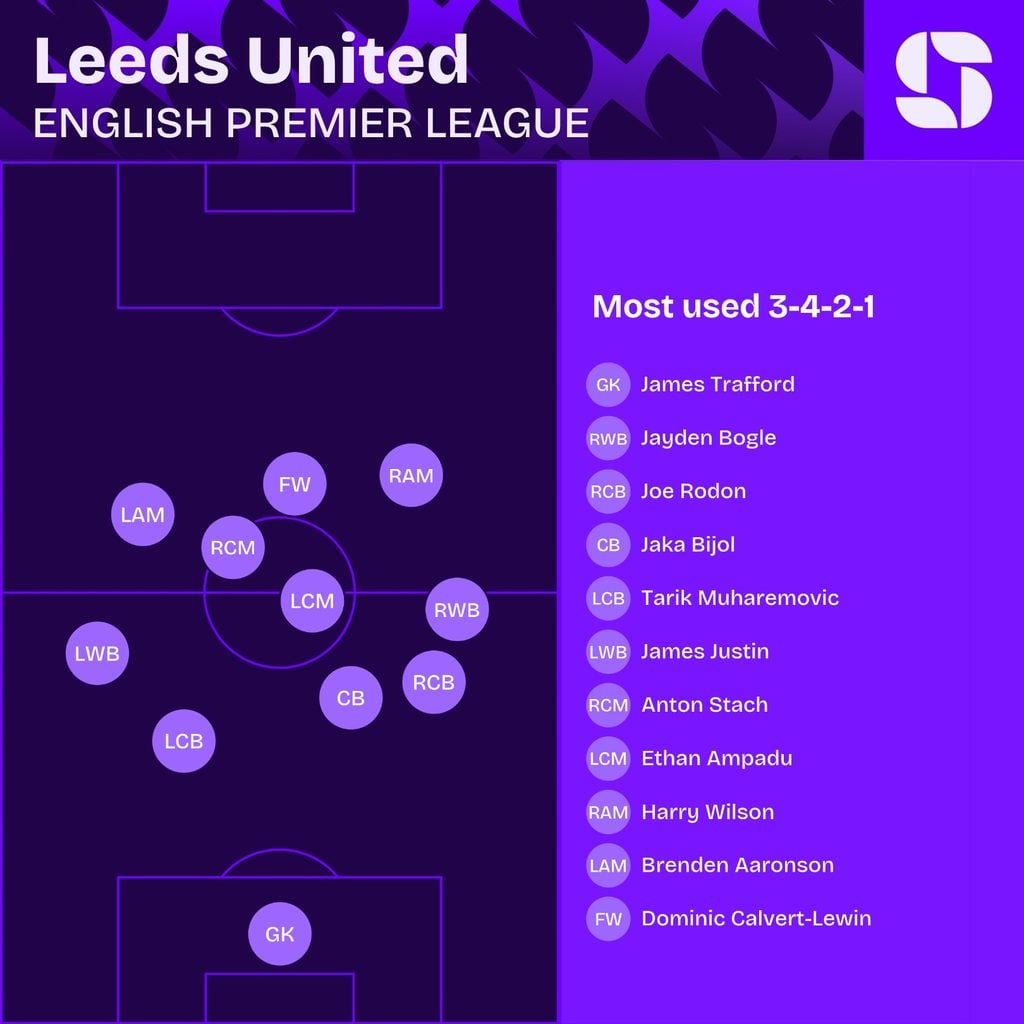
When defending low, Leeds tend to drop into a 5-3-2/5-4-1 shape. This gives them good central protection with the wing-backs ready to apply pressure out wide and stop crosses. But their ability to absorb that perssure comes from their new additions.
Muharemovic has made second-most clearances in the Premier League this season on 33, only bettered by John Egan (38). Trafford is also second for saves with 15, behind Lukas Hornicek’s 16.
As a unit, Leeds conceded 5.40 Expected Goals so far this season, but have only actually let in three. Only Hull City, Manchester City and Arsenal have conceded fewer than Farke’s side.
Attacking methods
At the other end of the pitch, Leeds have produced 6.41 xG, with an average of 0.14 xG per shot. Only Man City (0.15 xG per shot) are faring better in the Premier League right now.
Leeds’ possession phases often start with Trafford splitting the two centre-backs. James Justin then pushes on to drag the opposition away, Jayden Bogle pushes high into the attacking line and Gabriel Gudmundsson starts slightly lower before arriving high.
If the opposition is pressing in a more man-oriented fashion, Leeds are happy to go long through Trafford. The goalkeeper looks to hit the frontline and contest second balls to gain territory that way.
However, if there is less pressure on their build up, Leeds will look to build out down the flanks. Here, they can utilise clever counter-movements in the front line to clear space and open passing lanes.
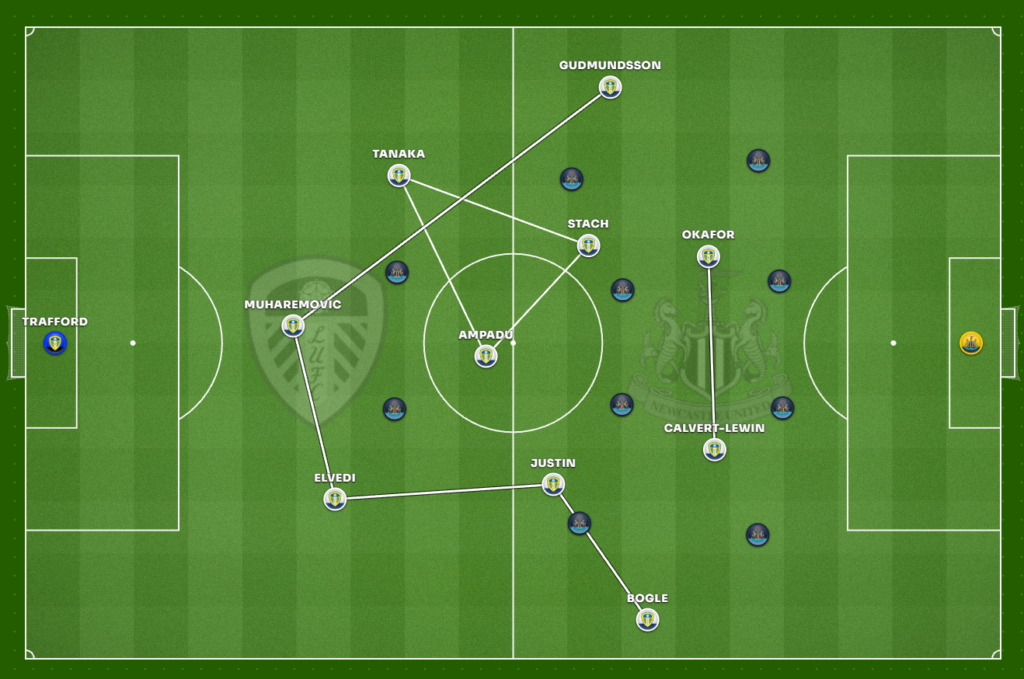
As Leeds advance, one midfield — often Ao Tanaka — will often drop into centre-back zones to get on the ball. Again, this allows both Justin and Bogle to advance down the right side, while Anton Stach can drift higher to support Noah Okafor and Gudmundsson down the left.
These rotations can open spaces for quick vertical progressions through the lines, as well as spaces for players to dynamically arrive into via carries/dribbles.
Due to the sheer number of bodies Leeds are willing to push forward when building out with the ball, it not only gives them good numbers to surround the ball and contest second balls as previously mentioned, but also means they have a good number of players ready to crash the box.
Benefits at both ends of the pitch
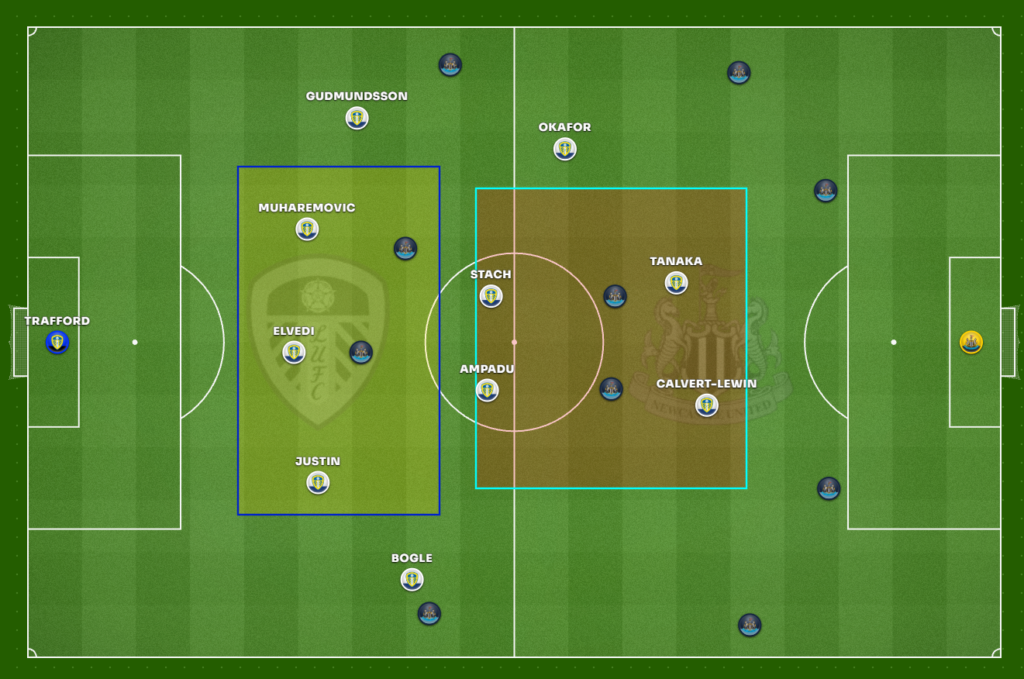
But perhaps one of the most interesting links between their defensive and attacking system this season is how Leeds’ new-found absorbing power is creating advantages for them going the other way.
When forcing teams long, Leeds now have the likes of Muharemovic, Elvedi and Justin ready to contest long balls, which creates another opportunity for those ahead of them to pounce on second balls.
The red zone in the image is often the area these headed clearances will land, which Leeds are then well set to contest with their three midfielders.
This can once again create opportunities for quick attacks against unsettled defensive units, where Leeds can look to turn defence to attack in as few actions as possible.
But the offensive weapons don’t even stop there…
Set-piece threat
Lastly, Leeds have shown a clear strength when it comes to set-pieces, generating 2.47 xG from them, more than any other team in the league this season.
This is due to the dual threat Leeds possess, not only from corners and free kicks, but also from long throws with Ethan Ampadu possessing one of the best long throw deliveries in the league.
Leeds’ recruitment since being promoted back to the Premier League last season has been heavily built around physicality and height, giving them a brilliant foundation for success from set-pieces.
Due to how strong Farke’s side are in this department, it’s another nightmare for opposition teams planning when facing Leeds, as their direct style can create good opportunities to win corners and throw-ins in advanced areas.
By having the added incentive to win set-pieces which you know is an effective method of chance creation, it can empower players to take more risks in these areas, either looking to beat their man 1v1 against the touchline or get shots off from the edge of the box more often.