






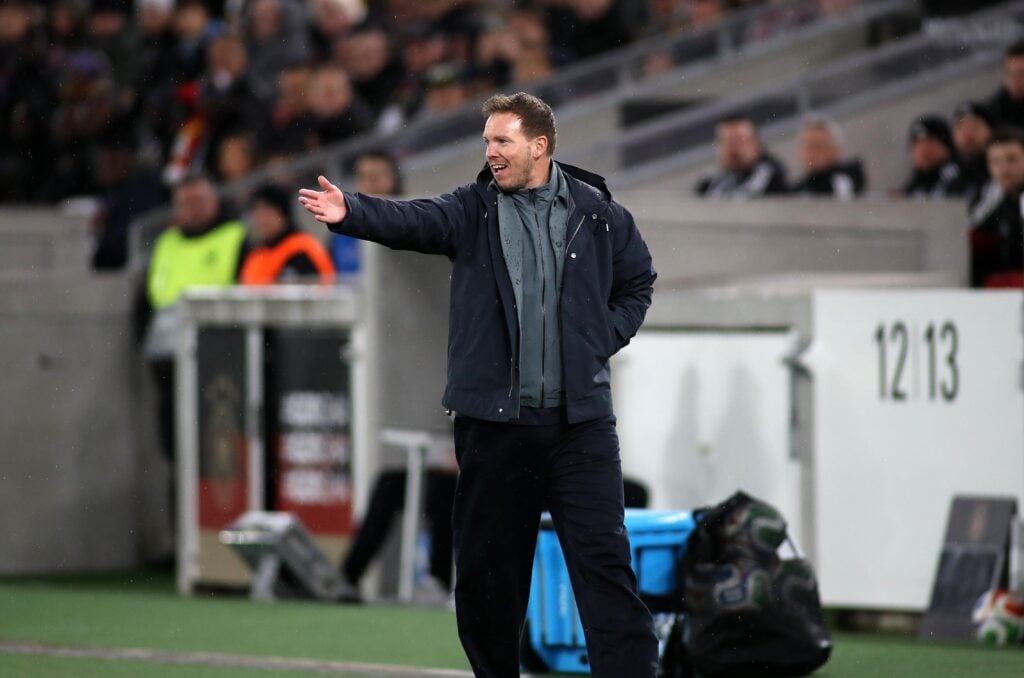
Germany have won their last seven games, beating Switzerland and Ghana during this last international break ahead of the FIFA World Cup starting in June.
Julian Nagelsmann’s side made it to the quarter-final of EURO 2024, losing 2-1 to Spain who went on to win the competition, beating England in the final 2-1.
Heading into EURO 2024, Germany were up there as favourites for the competition, having hired Nagelsmann to work with their exciting attack-minded group, but it wasn’t to be in their first competitive tournament under his mentorship.
But the German coach will be hoping to go all the way at the World Cup, having had the past few years to continue developing his tactical ideas with the national team.
In this article, we’ll cover
The base diamond
Starting with the four players at the base, responsible for the build up in the first phase and rest defence structure in more settled possession further forward.
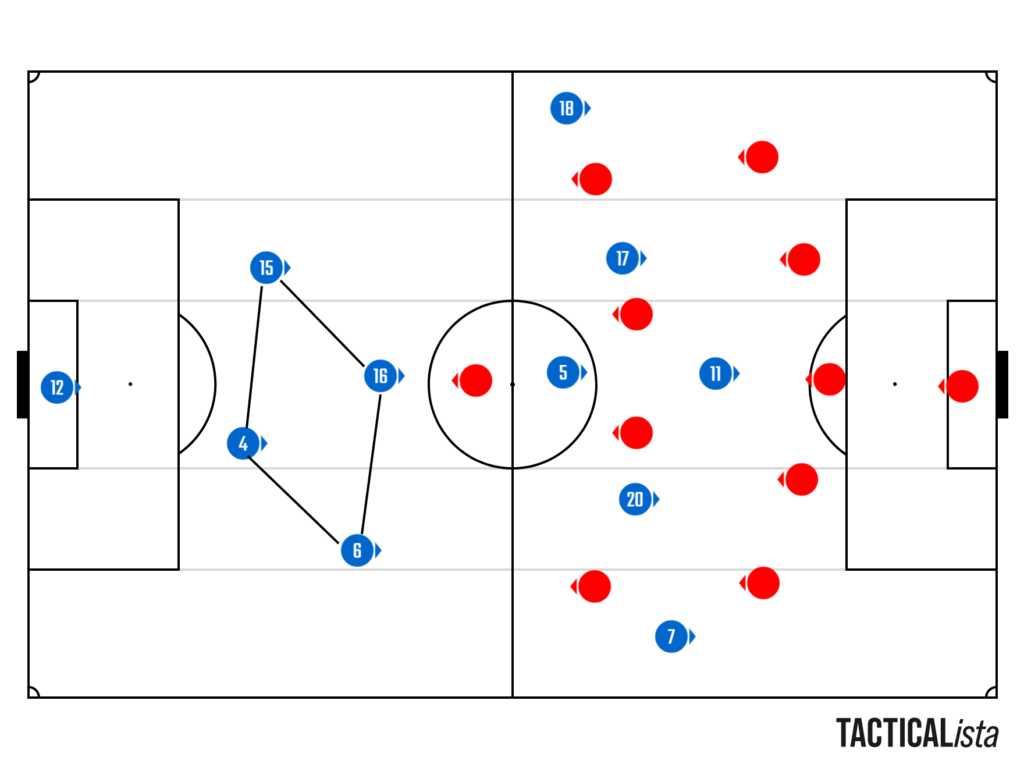
The base diamond is configured of the two central defenders (Jonathan Tah and Nico Schlotterbeck), the right-back (Joshua Kimmich) and the number six (Angelo Stiller).
Kimmich and Stiller keep things ticking with the two central defenders, looking to shift the tempo and continuously progress play with diagonal or vertical activation passes into the front unit.
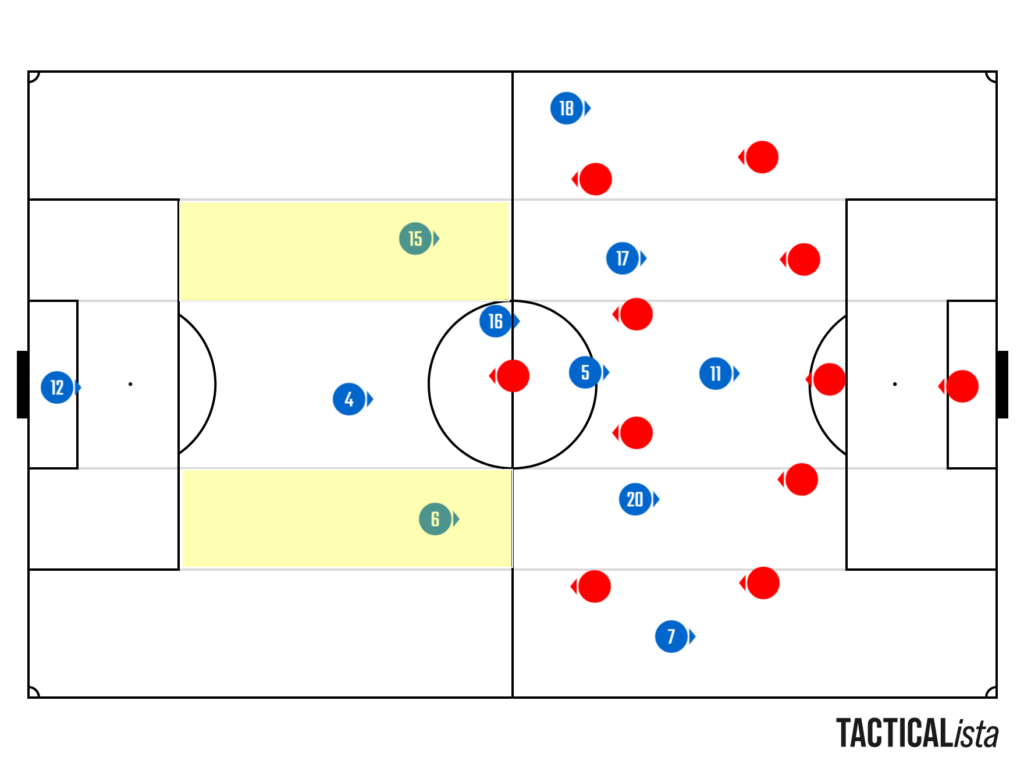
The second key role aside from their build up responsibility is providing the rest defence structure to protect against transitions.
One issue Germany could face is against transitions, as their four-man base lacks the level of physicality and ground covering needed.
Dabble sign-up offer: Bet £10+ & Receive £10 In Free Bets
Not signed up to Dabble yet? Here's how to claim the Bet £10+ & Receive £10 In Free Bets welcome offer:
- Sign up to Dabble through this link
- Register your account with accurate personal details
- Place your first bet of £10 or more
- Receive your £10 in free bets when your qualifying bet has setted
- Use your Free Bet on any eligible sportsbook market within 7 days

#AD 18+ 7-day free bet expiry. Stake not returned. Promotional Terms Apply. GambleAware.org
The attacking diamond
The attacking diamond is constantly open to diagonal and vertical perception, as Nagelsmann wants his side to consistently activate the oppositions defensive behaviours, by finding the weak spot/middle of the defensive block.
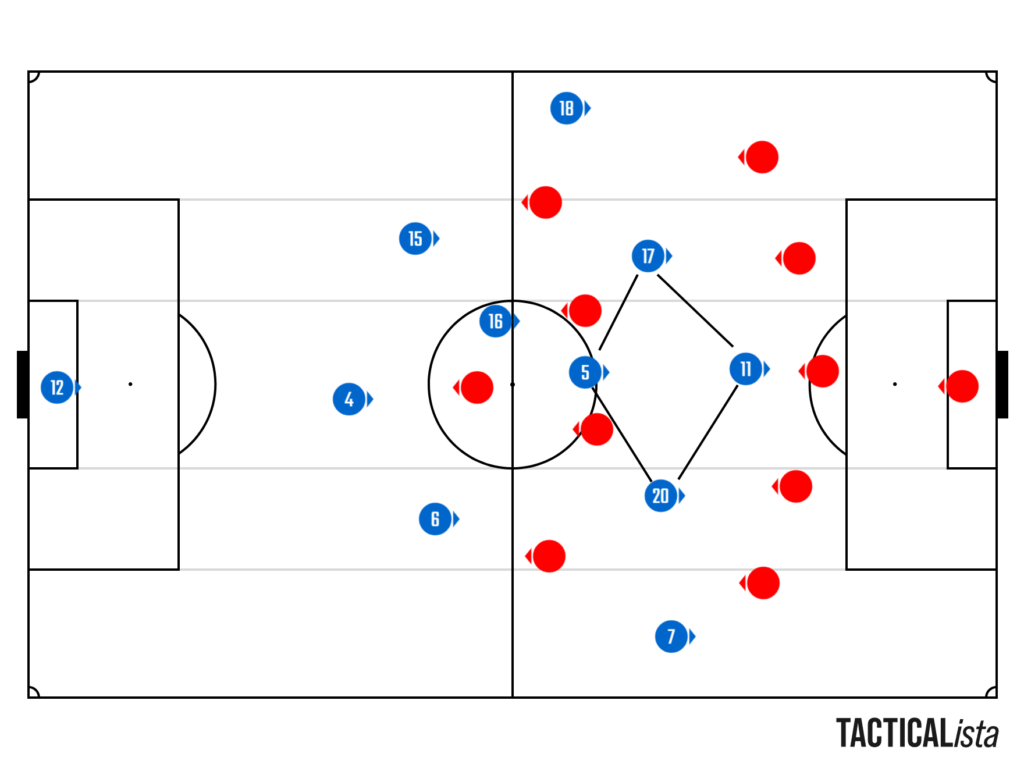
By consistently looking to receive the ball between the oppositions defensive units, it causes a reaction from the players closest to the ball, often collapsing the block and creating space elsewhere.
These yo-yo movements (in-out-in-out), instead of moving the defensive block from side to side, you are constantly asking questions for the block to move vertically, effecting the distances between each line of engagement (e.g. the defensive line and midfield line).
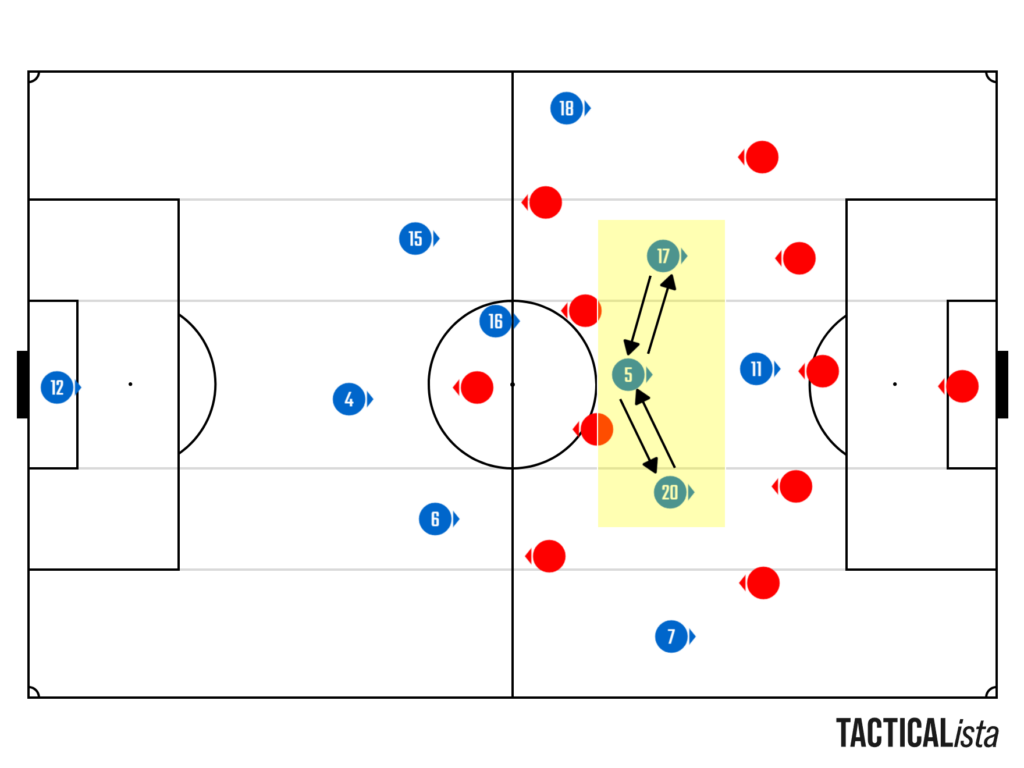
Nagelsmann wants these central players to operate with maximum mobility, making it even more difficult for the opposition to mark their man.
As the players cross each other’s paths and combine in close proximity, the opposition defensive scheme find it harder to keep their references, leading to indecision and extra time and space for your game deciding stars.
The width providers
The width providers within this system are a full-back (left-back, while Kimmich tucks in to the back line from right-back) and an outright winger on the right.
Both width providers are there to offer balance to the team, provide options when dropping deep or arriving high, stretching the pitch both horizontally and vertically, while making support runs to benefit the attacking diamond with extra options.
The width providers look to arrive on the last line up against the opposition full-backs, creating a tension for them between the width holder and the pocket player.
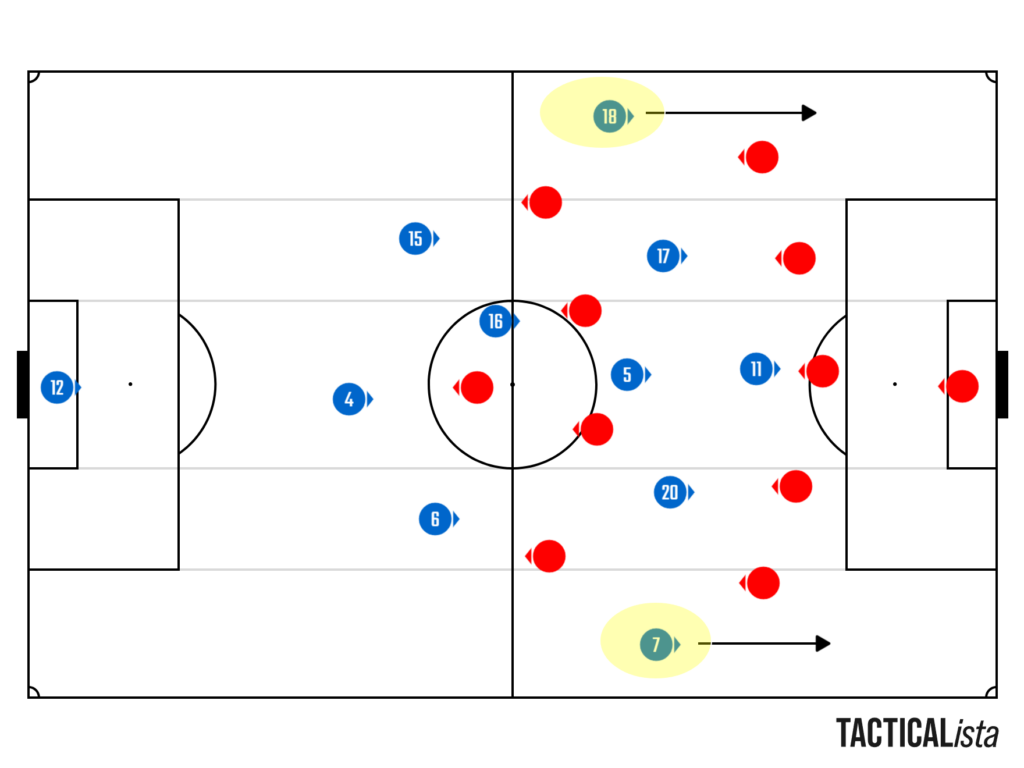
During the build up phase, these width holders can drop off deep to provide an extra passing option on the outside of the opposition block, aiding progression and creating wide triangles to progress play.
This depth also means if the ball is lost in the first phase, Germany have an extra two players in closer distance to the turnover, ready to defend the transition and counter press.
Key men
In the first phase, Kimmich is the key man for Nagelsmann’s Germany, dictating the tempo, looking to find progressive solutions and break the lines to activate the opposition’s defensive unit.
In terms of between the lines as part of that front four, Florian Wirtz is the key man, looking to drift into pockets of space to receive the ball, combine with those around him and make things happen in dangerous areas.
The width holders provide the balance for those ball to feet archetypes such as Wirtz between the lines, so someone like Leroy Sane is important to add pace and power in beyond, stretching the backline and creating space for others.
Another option for this could be Brentford’s Kevin Schade, who is another off-ball runner type who doesn’t need a high volume of touches to be effective.
The focal point of the team is another key area to carve space for the attacking midfielders to arrive and combine, so having a centre-forward with good link qualities is vital.
Both Kai Havertz and Nick Woltemade offer these qualities, sealing off space in the middle, having the ball control and shadowplay to bring others into play and combine with other attackers in close proximity.
Read more: