




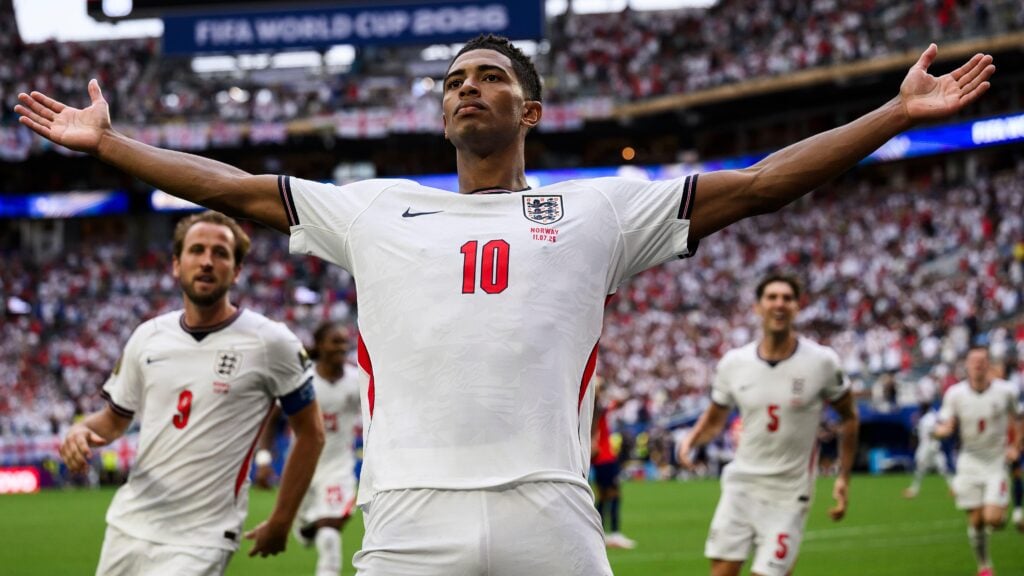
England beat Norway after extra time and secured a spot in the final four of the 2026 World Cup.
It has become the pattern in the knockout stages and the Three Lions once again had to dig deep to run out winners.
An Andreas Schjelderup wonder strike put the Vikings up 1-0 in the 36th minute. Jude Bellingham, however, managed to equalise just before half-time and gave England the win early on in extra-time. But a lot went down in-between those key moments, so let’s get through all of it.
Dabble sign-up offer: Bet £10+ & Receive £10 In Free Bets
Not signed up to Dabble yet? Here's how to claim the Bet £10+ & Receive £10 In Free Bets welcome offer:
- Sign up to Dabble through this link
- Register your account with accurate personal details
- Place your first bet of £10 or more
- Receive your £10 in free bets when your qualifying bet has setted
- Use your Free Bet on any eligible sportsbook market within 7 days

#AD 18+ 7-day free bet expiry. Stake not returned. Promotional Terms Apply. GambleAware.org
How did England persevere through Norway?
Jude Bellingham’s attacking presence
It doesn’t take a genius to realise what made the difference in England’s win over Norway. Bellingham once again saved the day with his attacking instincts, which perfectly complements Harry Kane’s desire to drop deep.
Though it took a while for him to charge forward from behind and attack spaces, the first time he did led to the equaliser. He had previously spent too much time dropping deep or waiting for passes with his back turned to the goal.
For perspective, the Real Madrid star finished the game with five shot attempts. But the first one only came in the 45th minute.
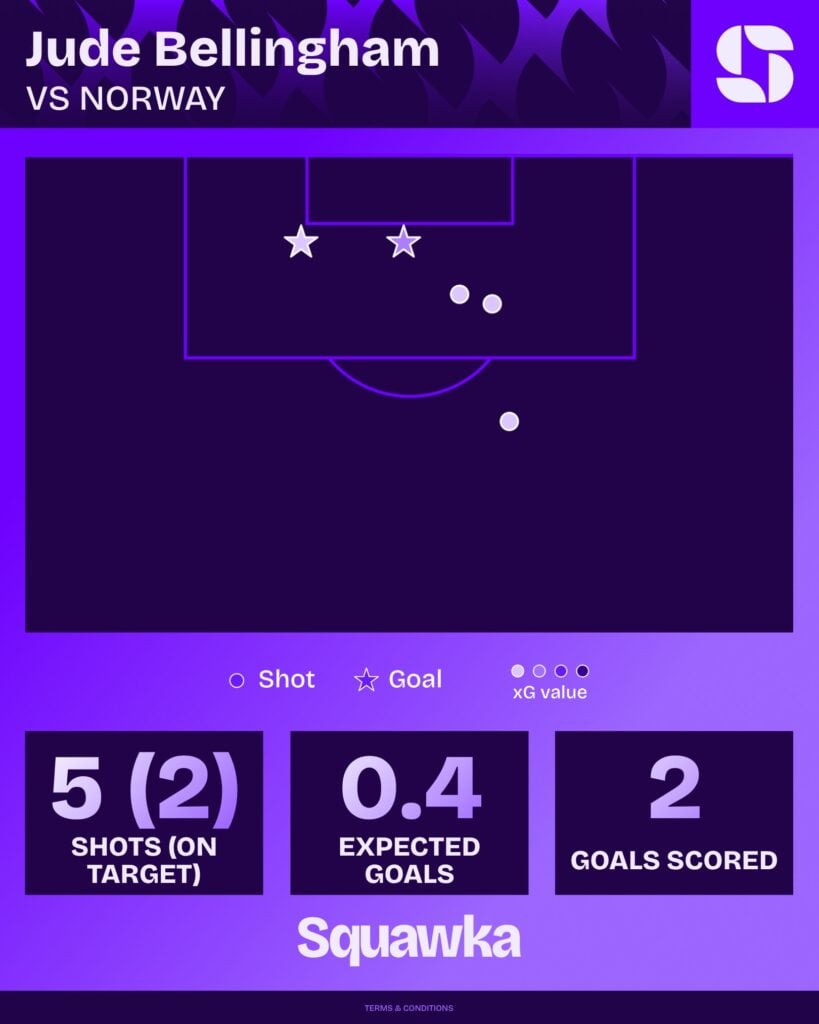
He was arguably already England’s most important player due to the number of roles he can (and often does) perform throughout 90-120 minutes. Thomas Tuchel asks a lot of him but only because he executes everything to perfection.
But the shadow of Harry Kane as the Three Lions’ best player in the tournament may not be there anymore.
Not only has the Bayern Munich striker made crucial errors at the back, like giving away a penalty against Mexico and losing the ball in the lead-up to Norway’s goal, but has seen Bellingham ‘steal’ the protagonism up front.
BetMGM sign-up offer: Get £40 in bonuses when you bet £10
Not signed up to BetMGM yet? Here's how eligible readers* can take advantage of their welcome offer:
- Open an account at BetMGM using this link.
- Select the Sports Welcome Offer.
- Get the offer from the ‘My Offers’ page.
- Deposit and place a £10 bet at odds of 1/1 (2.0) or greater.
- When it settles, unlock £40 in bonuses

New customers only. 7 days to place qualifying bet of £10 at 1/1 (2.0) to receive 4 x £10 Free Bets. 7 day expiry. Exclusions apply. Stake not returned. 18+. Full T&Cs apply. 18+ GambleAware.org
Thomas Tuchel saves himself late on
England have gone through three straight dramatic wins, which are great for uniting not only the team as a whole but connecting them even more with the fans. So it would be natural for many to hail Thomas Tuchel for leading the Three Lions into the 2026 World Cup semifinal.
However, he has switched back-and-forth- between formations and strategies that often left his side weakened in a few scenarios. Tonight’s match was probably the loudest example of that.
Tactics-wise, he managed to retake the control that lacked against DR Congo and Mexico. England dominated the first half and pushed Norway into their own third quite often. But still had Anthony Gordon and Noni Madueke in the starting XI, not the best pairing of wingers for the scenario.
Gordon still managed to make an impact in one of the only times the Three Lions caught the Vikings off-guard. And a deflection on a camera may have played a part on creating a fast-break in the first place.
For the second half, the German manager blew his midfield wide open looking to have more attacking presence with Eberechi Eze replacing Arsenal teammate Declan Rice, turning the 4-2-3-1 into a 4-1-2-3 of sorts.
The substitution made sense on one end, to increase their dominance. But it had a negative effect with how much space it left for Norway to exploit. Bellingham had dropped deeper alongside Elliot Anderson but still looked to charge forward whenever he could. Which made sense, considering it’s exactly what got them back into the game in the first half and what would get them through to the semis later on.
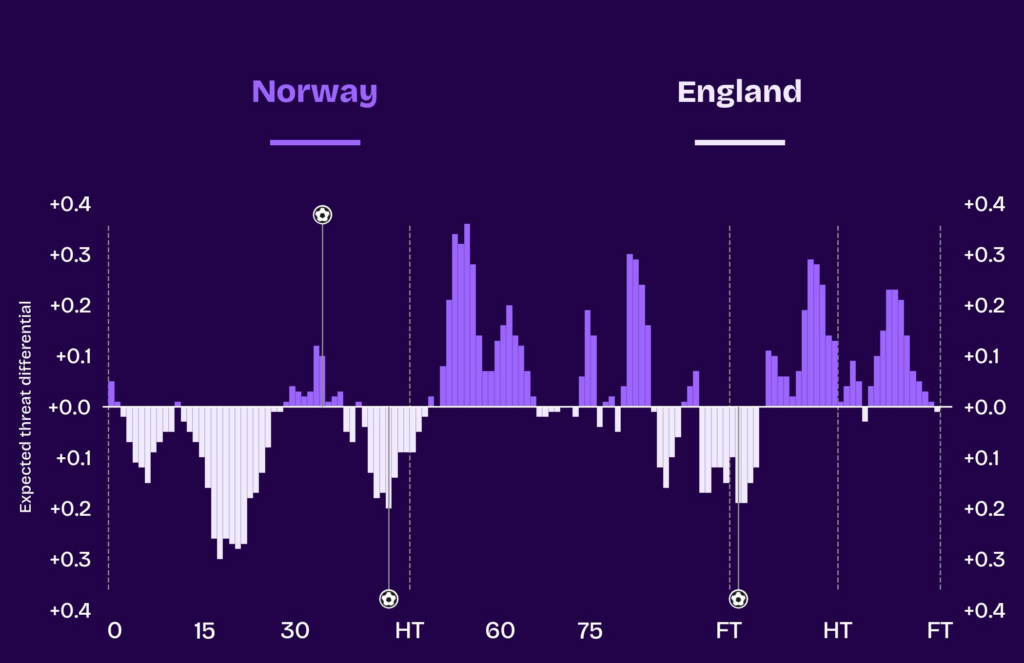
What should have been an even more dominant period than the first half turned into Norway having 63% possession from the 45th to the 71st minute. Tuchel then replaced Gordon with Reece James to go back to the original 4-2-3-1 and regain control of the midfield.
Though, once again, it didn’t work. So he went back to a more attacking look, leaving Anderson once again alone in the base of a trio with Bellingham and now Morgan Rogers ahead of him. This was finally the configuration that made them dominant once again (for around 15 minutes) and led to them making it 2-1.
It wasn’t the most comfortable final 27 minutes – so much so that Rogers had to cover for Bellingham in their 4-4-2 out of possession. But work-rate and heart can disguise defensive shortcomings much more than attacking ones, and they pushed through in the end.
In a sense, it felt like Tuchel was always one step behind what the game required. But, in fairness to him, the versatility he valued so much in the call-up played a big part in them coming back to win. Eze and James, for example, were integral to him toggling between systems throughout the second half.
So as much as he looked unconvinced by his own tactical choices tonight, his squad selection helped him out in the end.
Read more: