






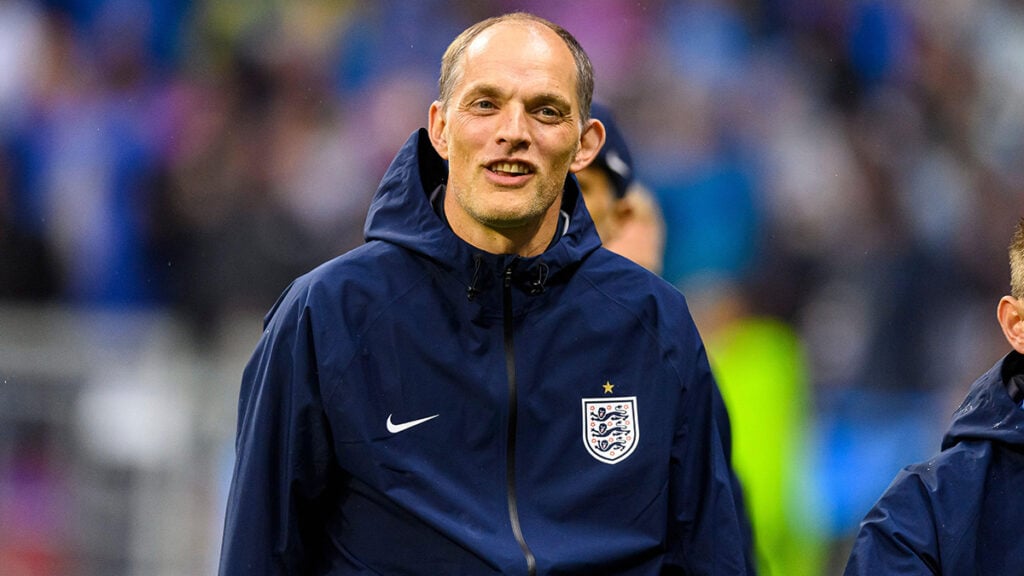
England beat Czech Republic 2-0 to secure their first victory in the UEFA Nations League and put three points on the board.
The Three Lions started with the intent to press high and play out from the back once again, leading to a fairly back and forth nature in the opening 25 minutes of the game.
However, it was a 25th minute sending off from Czech Republic’s Pavel Sulc which changed the game, as England took control in the game, despite going in 0-0 at half-time.
It didn’t take long for Thomas Tuchel’s side to break the deadlock in the second half, with Anthony Gordon scoring in the 47th minute to make it 1-0.
Harry Kane added a second in the 69th minute to make it 2-0, giving England a nice cushion and allowing Tuchel to make a flurry of subs including Alex Scott, Rio Ngumoha and Morgan Gibbs-White.
In this article, we’ll cover
11v11 state of play
Despite only seeing 25 minutes of England’s intentions 11v11, there were some positives to be drawn from the early patterns and principles.
Starting with the build up and in-possession ideas, England were looking to manage the build up with their two central defenders and the double pivot, often creating a 4v3 overload against Czech Republic.
In their 4-4-2 defensive shape, one midfielder would look to jump out and apply pressure to the pivot, but with one of Elliot Anderson or Myles Lewis-Skelly dropping into the backline to create a 3-1 base shape, this extended the pressing distances and gave Tuchel’s side the advantage in the build.
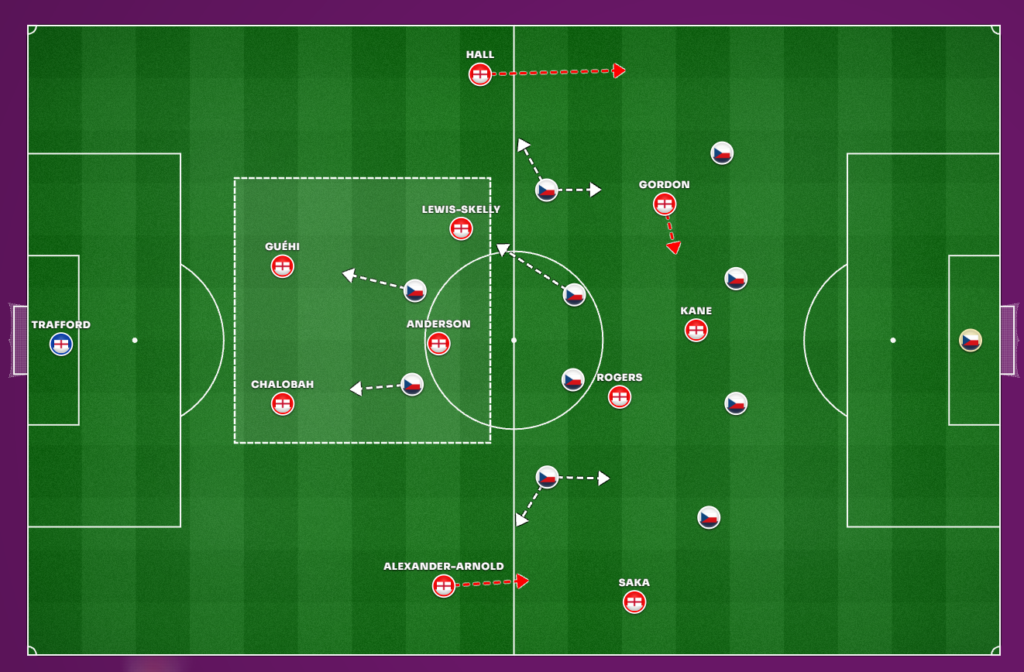
With the build up being managed by the 3-1/2-2 base, both full-backs had license to advance, operating on different lines to their respective winger.
For example, Gordon often found himself drifting inside to operate in the left pocket of space close to Kane, which would see Lewis Hall progress to provide width.
On the other side, Trent Alexander-Arnold would push up to support Bukayo Saka, who shifted between floating inside and holding the width to get into 1v1 situations out on the flank.
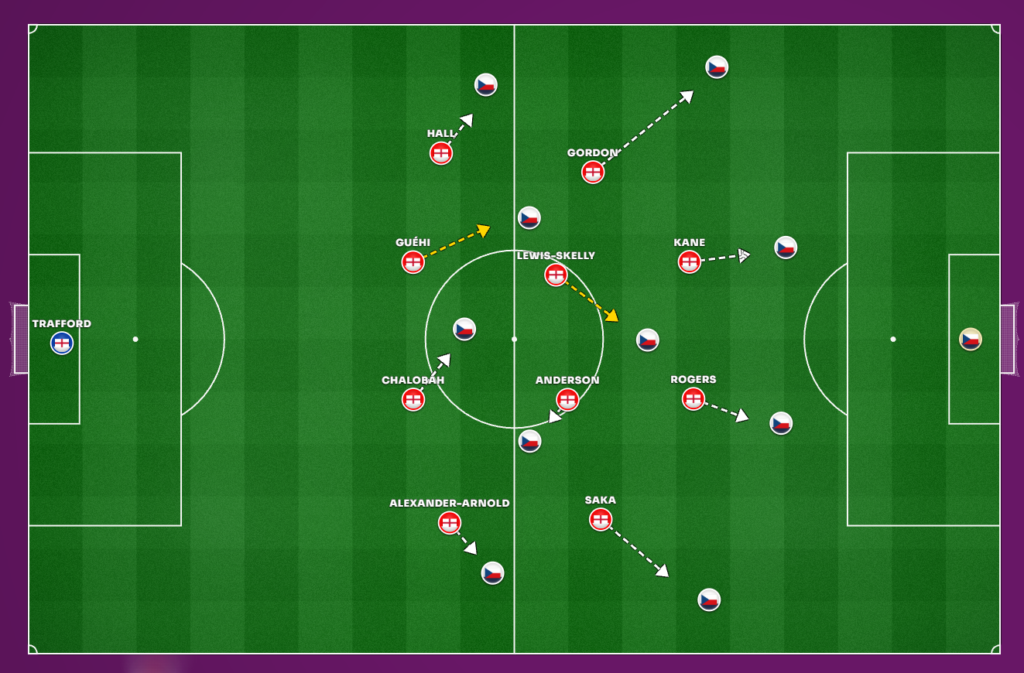
Out-of-possession, England were aggressive, looking to press man to man from goal kicks and force Czech Republic long, but also jumping from their 4-4-2 shape into a man-oriented press, with one of the midfielders jumping onto the pivot and a centre-back (often Marc Guehi) then stepping into midfield to attach to the spare man between the lines.
However, after 25 minutes, the game changed, not entirely, but still significantly.
Red card changes the game
As previously explained, England started the game in a more aggressive manner looking to build out from the back and lure Czech Republic into a press before playing through them.
But the challenge from Sulc in the 25th minute, arriving late as Anderson got there ahead of him, was a clear red card, which changed the dynamics of the game at hand.
While Czech Republic were sinking into their 4-4-2 shape and often ending up with five on the last line to defend against England when inside their own half even before the red card, after the red card this was even more frequent.
This was due to the fact that England found it easier to build out with less pressure on the ball from the opposition, arriving in the opposition half and sustaining pressure for larger periods of time.
Czech Republic didn’t look like changing their approach after going down to 10-men, rarely looking to latch onto a press and instead trying their best to keep the spaces between the lines compact.
Picking the lock
England had a different situation to handle than they did in the Spain game, as Czech Republic were sinking deeper and the onus was on Tuchel’s side to find a way through.
However, scoring so quickly after the restart was key to the game opening up once again, as Gordon converted a lovely delivery from Alexander-Arnold on the break to open the scoring.
The pair could prove to be a key solution for Tuchel in both transitional and more compact game states, especially considering the usage of both in this game.
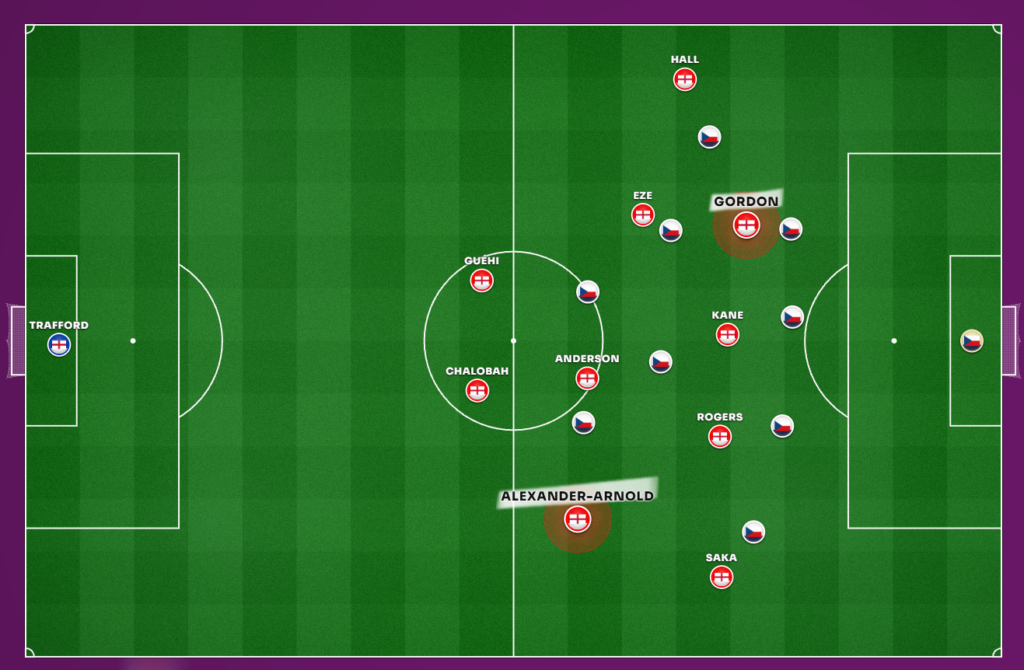
Gordon was often drifting inside to operate close to Kane as more of a second striker at times, allowing Hall to provide width down the left. Meanwhile, Alexander-Arnold had the license to roam deep to get on the ball and pick passes forwards with his range of passing, but also make dynamic runs to arrive in the final third and deliver crosses into the box, just as he did for England’s opener.
Combine the passing ability and creativity of Alexander-Arnold with the relentless nature of Gordon and clever movement, this is bound to cause problems for any defensive unit, stretching the lines and creating advantages either for themselves or their teammates with their qualities.
England have plenty of talent at their disposal and by having a variety of different profiles who offer a range of skill sets, Tuchel’s side are much more likely to find solutions against all different types of opposition, making the Three Lions much more difficult to stop.
Read more: