




Spain have cruised through the 2026 World Cup and find themselves waiting for Argentina in the final.
Before we go any further, it’s important to mention that no game is ever won before the ball has been kicked. La Roja were correctly favoured even before their final opponent was confirmed.
But the Albiceleste did their part in getting there in the first place. It’s just that circumstances and tactical fit will likely give the 2010 champions a certain advantage.
So while we must not rule out any outcome before kick off, we also should acknowledge that Spain will have technical and/or tactical leverage either way. Not to mention fitness, considering what Argentina have gone through so far. Extra time in that semi-final would have been a Spanish dream.

- Enhanced Offers
- Exceptional Mobile App
- Uniquely Designed Sportsbook
AD 18+ New UK customers only, Place a £10 fixed odds bet at minimum odds of 1/2 and get 3 x £10 free fixed odds bets, 3 x £5 Total Goals football spread bets and 3 x £5 Winning Favourites spread bets on consecutive days and a £1 racing Race Index spread bet. The promotion will run from 11th March 2025 until discontinued by Spreadex Ltd. using its reasonable discretion, (“Promotion Period”). Offer can only be used once per customer. Full T&Cs apply.
Why are Spain favourites to win the 2026 World Cup?
Numbers game
Spain are famous for playing ‘tiki-taka’, one-touch, quick-passing football. But it’s not just the aesthetics of it that fuel their style, as much as the advantages they generate that way.
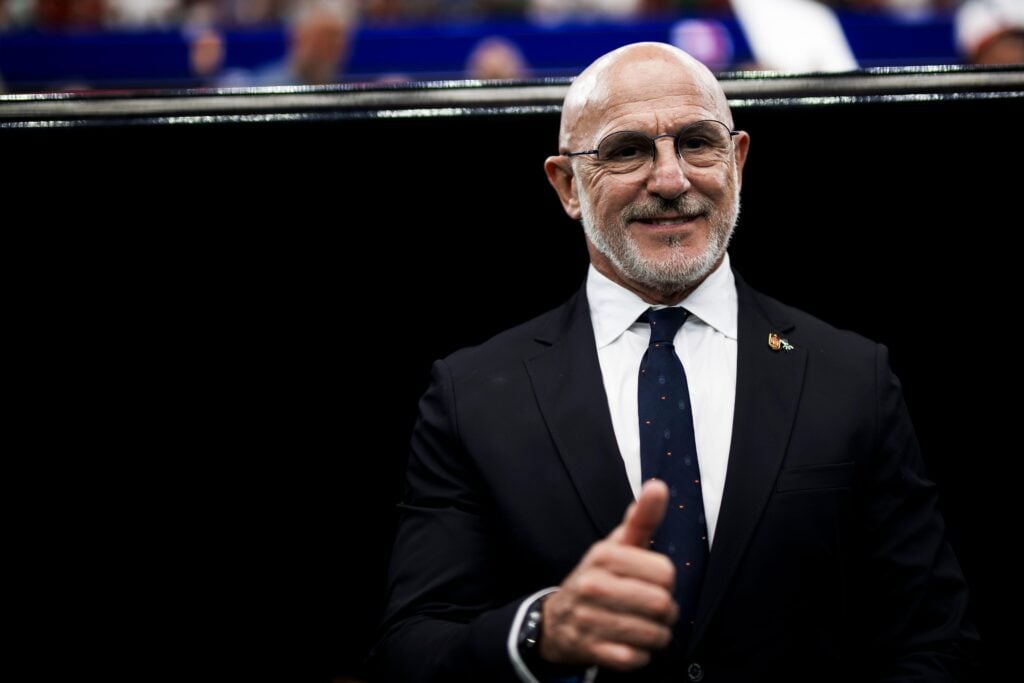
Luis de la Fuente sets his side up in a 3-2-5/2-3-5 in possession. The idea of having five men (who can vary from time to time) stretching the width of the pitch up front is simple.
By doing that, it either gives Spain numerical superiority against back fours or forces the opponent to counter it with five defenders of their own — which consequently gives them territorial dominance.
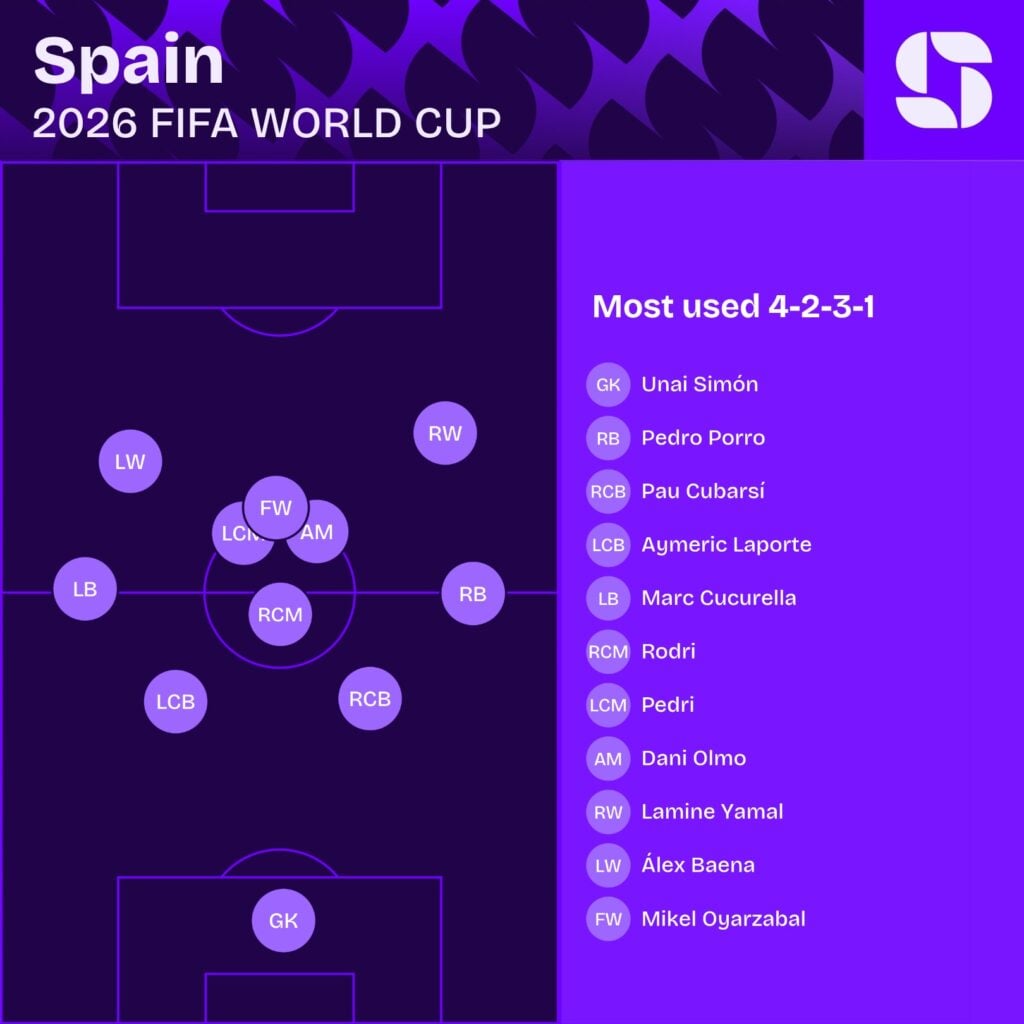
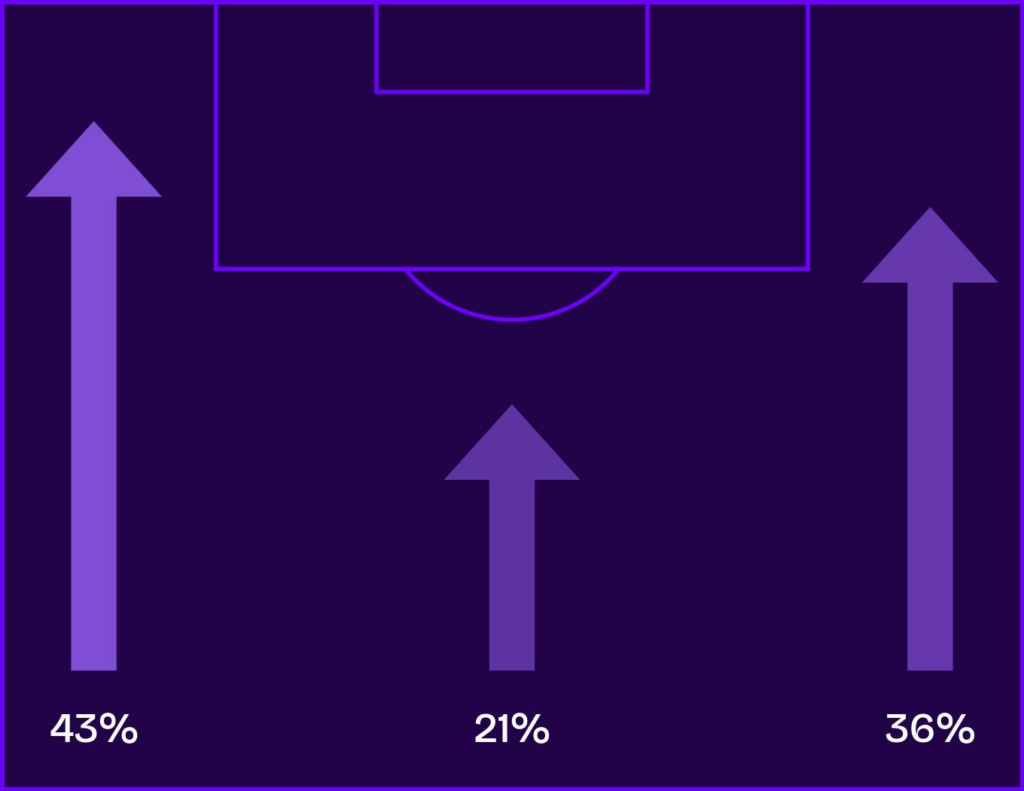
France, for example, refused to defend in a back-five, instead going for a narrow 4-4-2/4-4-1-1. Didier Deschamps’ choice, alongside their defensive shortcomings especially in the right flank with Michael Olise and Ousmane Dembele meant that Spain had no trouble generating advantages down that side.
They did in astonishingly simple ways. Easy movements and rotations to get runners in front of defenders, being more attentive and getting a head start. Whenever one of Les Bleus‘ wingers hadn’t tracked back yet, Spanish centre-backs would accelerate play and take advantage of space in front of them.
Jules Kounde probably felt completely on an island with how often he found himself alone against two Spanish attackers. Whether it was due to easily involving Olise and Dembele in actions or quickly going from right to left while France tried to press high, the Barcelona defender faced Marc Cucurella and Dani Olmo/Alex Baena one-on-two many different times.
Granted, France had never been a defensive force this World Cup. But neither are Argentina. They struggled and conceded not only chances, but long periods of dominance to weaker opposition such as Egypt, Cape Verde and Switzerland.
Passes and movements sufficed for Spain to roll over France – Pedro Porro’s goal was a prime example of that. There were three Spanish players against four French defenders. But two of them (Manu Kone and Desire Doue) let the Tottenham Hotspur right-back charge into the box completely unmarked.
For perspective, La Roja managed to generate advantage after advantage against Les Bleus while completing a combined two take-ons the whole match.
Lamine Yamal’s main (and only?) contribution was anticipating Lucas Digne and winning a penalty. On the ball, however, the youngster provided almost nothing. Which is fine, because they simply didn’t need it.
SpreadEx Sign-Up Offer:
SpreadEx are offering new customers the chance to get £60 in free bets when they join and place £10 in qualifying bets.
To claim this offer, follow these steps:
- Create your account by clicking this link or the image below.
- Register for your account by adding your details. It only takes a few minutes.
- Make your first deposit then place a £10 single or £10 each-way fixed odds bet at minimum odds of 1/2
- Get 3 x £10 free fixed odds bets, 3 x £5 Total Goals football spread bets and 3 x £5 Winning Favourites spread bets on consecutive days and a £1 racing Race Index spread bet

Spread betting losses can exceed deposit. 18+ www.gambleaware.org. Place a £10 fixed odds single or £10 each-way bet at minimum odds of 1/2 and get 3 x £10 free fixed odds bets, 3 x £5 Total Goals football spread bets and 3 x £5 Winning Favourites spread bets and a £1 racing Race Index spread bet.
Weakness untested?
Spain play a very safe brand of football. By commiting a certain number of bodies forward, they force the opposition to retract while having technical enough players to keep possession and using it as a defensive weapon.
But they are human and make mistakes. Ironically, the team that exposed this the most so far were Uruguay in the group stage. Marcelo Bielsa’s men recorded the lowest passes per defensive action (PPDA) of any opponent Spain has faced this tournament – and it was still rather high.
| Spain opponent | PPDA |
|---|---|
| France | 16.4 |
| Belgium | 14.5 |
| Portugal | 21.1 |
| Austria | 13.1 |
| Uruguay | 12.0 |
| Saudi Arabia | 34.7 |
| Cape Verde | 96.3 |
Of course, showing more intent to recover the ball in itself means nothing. But it was precisely the Celeste who forced the most high turnovers (18) and possessions given away in their defensive third (11) from Spain in any game in the 2026 World Cup.
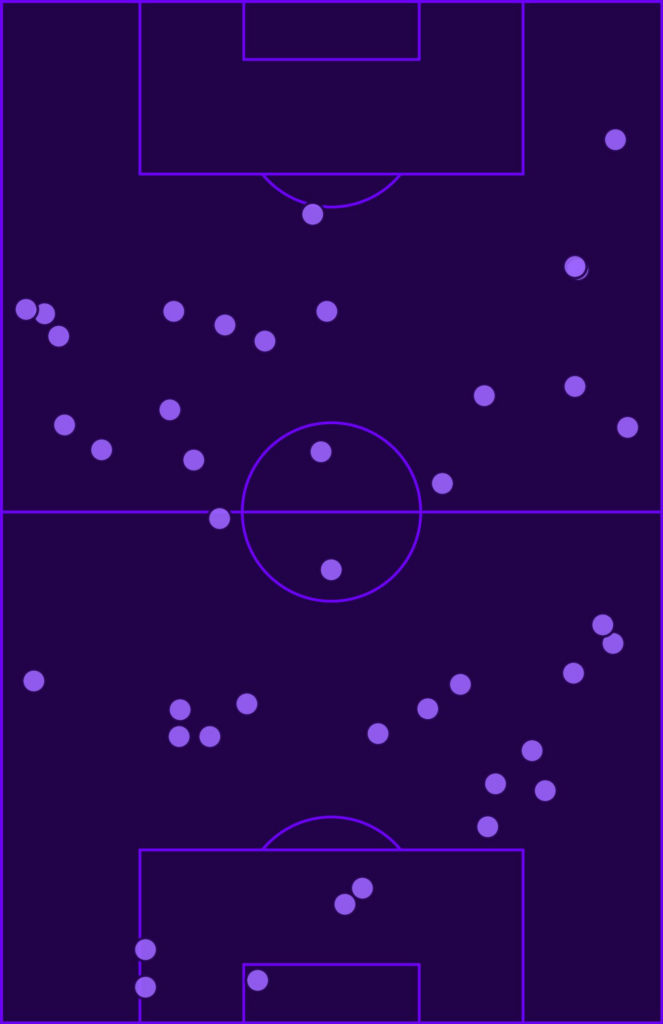
And yet, they alternated moments of high press with mid and even low blocks at times. Which is why the PPDA tally stands at ‘just’ 12.0. For perspective, Germany currently have the lowest PPDA in the tournament, with 7.6.
Spain are yet to face a team truly willing to force them to go long or disrupt their preferred style. Of course, the threat of Lamine Yamal and other in-behind runners they have on the bench (Nico Williams, Ferran Torres) makes it so they have a counter to that.
And Luis de la Fuente looks flexible enough to have a more vertical version of his team. Against France, 10.2% of La Roja‘s passes were long. And that number was at 7.1% while the game was level, already an uptick to their tournament average of 5.7%.
Of course, even their long passes are worked, rehearsed and properly targeted, rather than hoofs. But it’s something their manager has as a back-up plan.
But even in the preferred short pass style, Spain can be vulnerable. When Uruguay pressed, they often gave the ball away. That also happened against Portugal despite Roberto Martinez giving them all the time and space to play out from the back.
However, they made it to the final without ever truly getting tested on that front. And it may be too late now. There were two possible opponents for them in the final: England might have the right profile of players to try and do that in ideal circumstances, but not the legs and energy. Argentina, in fact, probably lack both.
The Portugal game showed Spain don’t need to face a high press in order to give away possession in dangerous areas. And even when they did, Uruguay failed to create clear-cut opportunities out of those recoveries.
But La Roja may win it all without ever getting out of their comfort zone. Which is a testament to their philosophy that starts all the way in the youth systems – that De la Fuente coached himself earlier in his career.
Of course, Argentina are coming off four straight rounds doing the unthinkable. Late extra time win over Cape Verde, late comeback win against Egypt, late win vs Switzerland and late comeback win over England. Spain might have logic on their side, but what the Albiceleste have proven so far is that does not come into play.
Read more: