






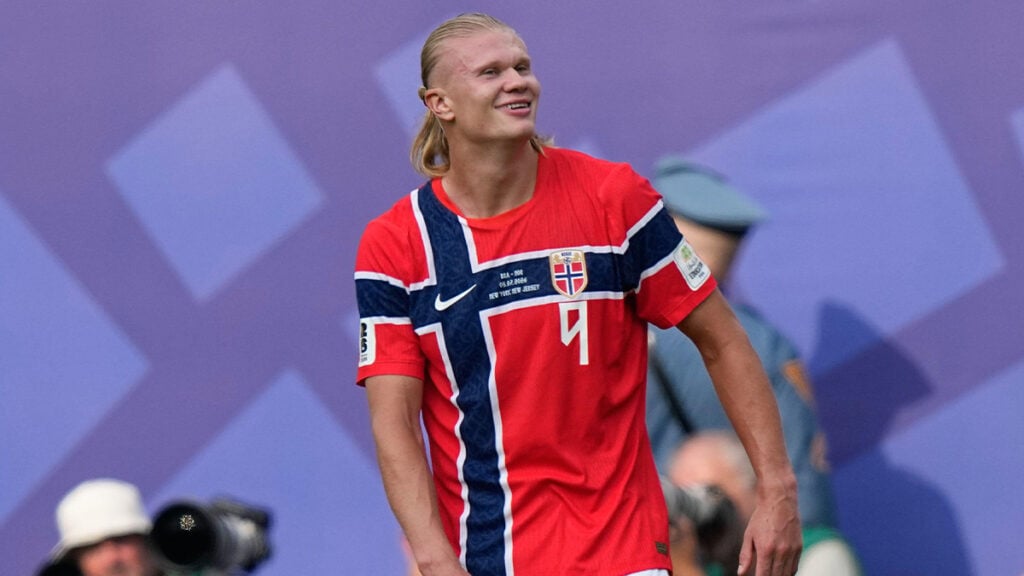
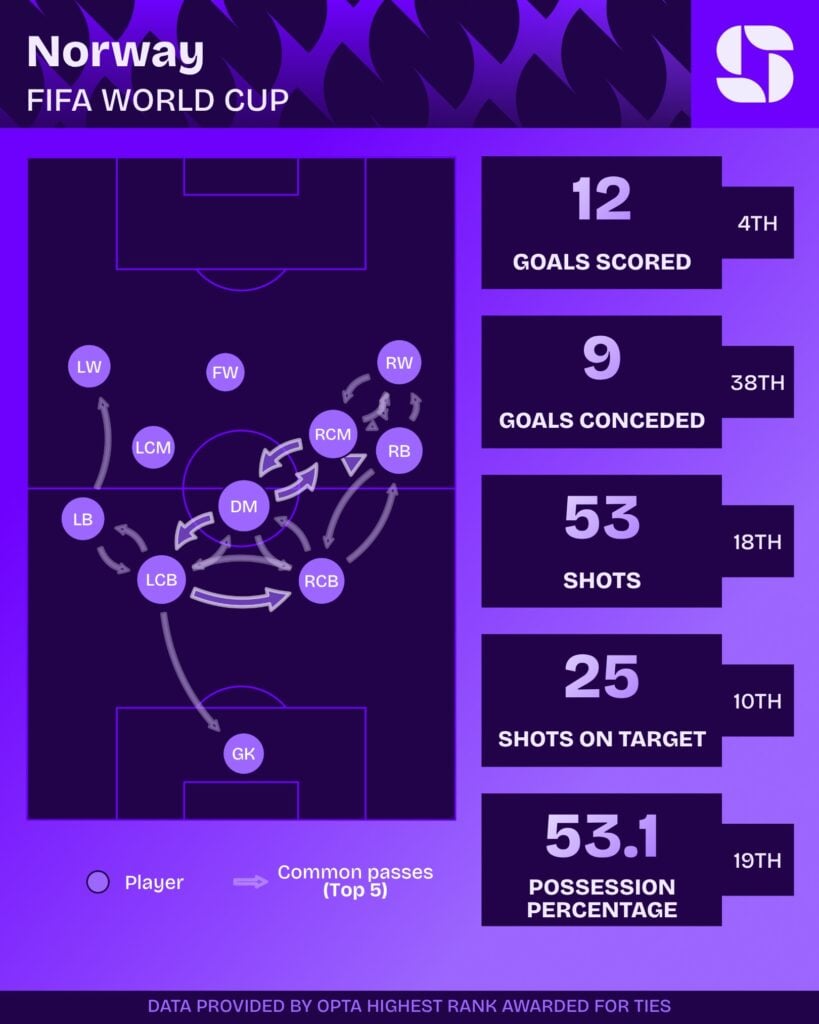
Norway are in the World Cup quarter-finals, where they will face England for a spot in the final four.
Stale Solbakken’s side made it to the knockout stages having finished second in their group, winning two of their three games. The only defeat came in their final match against France, but Solbakken had heavily rotated with qualification already secured.
That put Norway against Ivory Coast in the last-32, with Erling Haaland scoring an 86th-minute winner to send his side through. They then face Brazil and Haaland was the hero again, scoring twice to knock out the five-time world champions.
Norway are once again slight underdogs for their World Cup quarter-final against England. But can they cause another upset?
In this article, we’ll cover
In-possession rotations
Norway want to control possession in their matches. They aim to manipulate the opponents’ pressing schemes and find solutions to control the game.
It was a tactic that surprised Brazil in their last-16 victory, with Vinicius Junior asked whether their plan was to allow Norway to dominate the ball.
“No, that wasn’t our plan at all. Norway surprised us,” he said.
“They moved very well, they controlled the game, as (Martin) Odegaard always does.”
Odegaard is pivotal to the way Norway play. His role as an all-phase midfielder allows Norway to manipulate opposition pressing schemes.
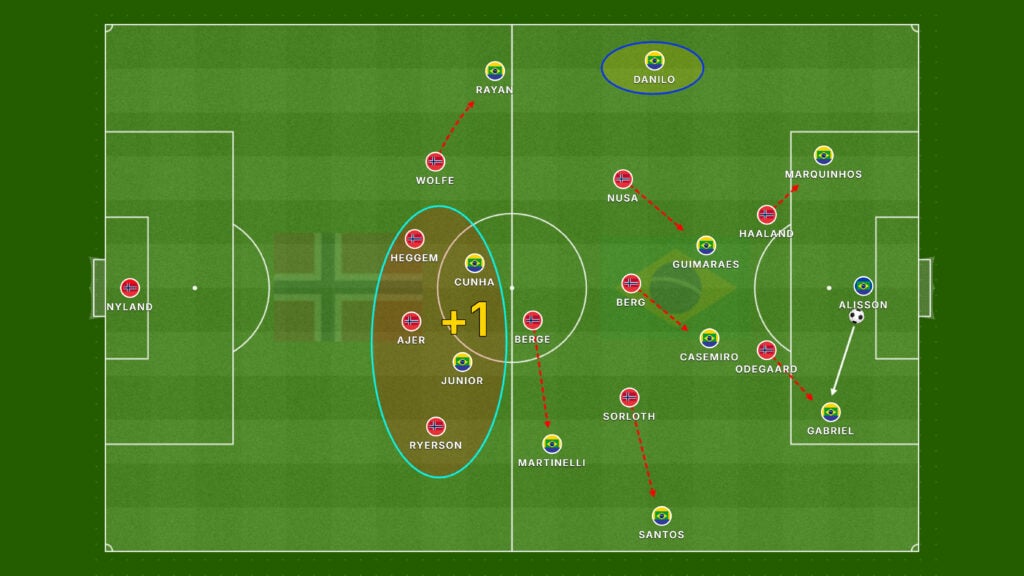
The Arsenal midfielder — who is often seen as a more attacking player — drops deep to test the opposition press, giving Norway a +1 in the buildup. This poses a question for the opponents.
Do they follow Odegaard and press man for man? Or do they let Norway have the extra man in the buildup?
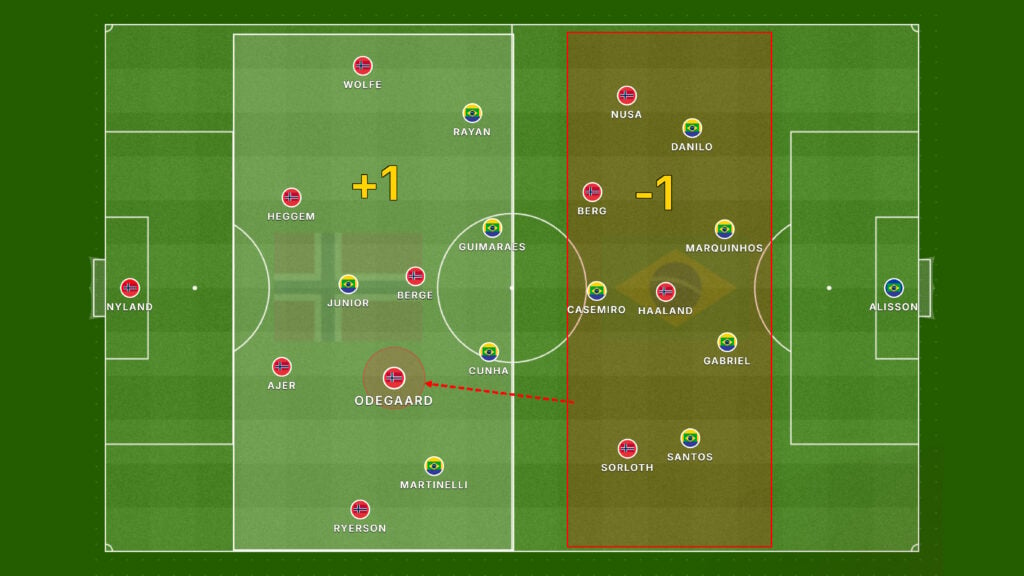
If the opponents don’t follow Odegaard, Norway find it easier to dominate the ball with the extra player — +2 if you include the goalkeeper in deep buildup — with often deactivates the opposition press. This happened against Brazil. The Selecao couldn’t lock on in the pres due to Odegaard dropping.
Norway are a nightmare to press against. If you don’t follow, you allow them to have the +1 in the buildup, but a -1 in the front line. But if you do try and lock on to press and reagin possession, they have Haaland free. And almost every manager in the world would refuse to leave Haaland one-on-one, preferring to have a +1 in the last line to double up on the striker.
Haaland’s dominance
Even without touching the ball, Haaland’s presence in the last line can stop teams pressing with intent. When teams do look to lock on and follow Odegaard more aggresively, Norway know they have a four-on-four against the opposition backline. So they opt to play more direct and over the press.
On the few occasions Brazil tried to press agressively, Norway found a direct ball into Haaland. It caused chaos and allowed Norway to generate attacks from nothing.
For the same reasons, Haaland is one of the biggest transition threats in the world. Defenders can’t double up on him as easily.
This was seen for Haaland’s first goal against Senegal in the group stage. He ran out in transition and received a through ball, leaving him one-on-one with the goalkeeper to slot it home.
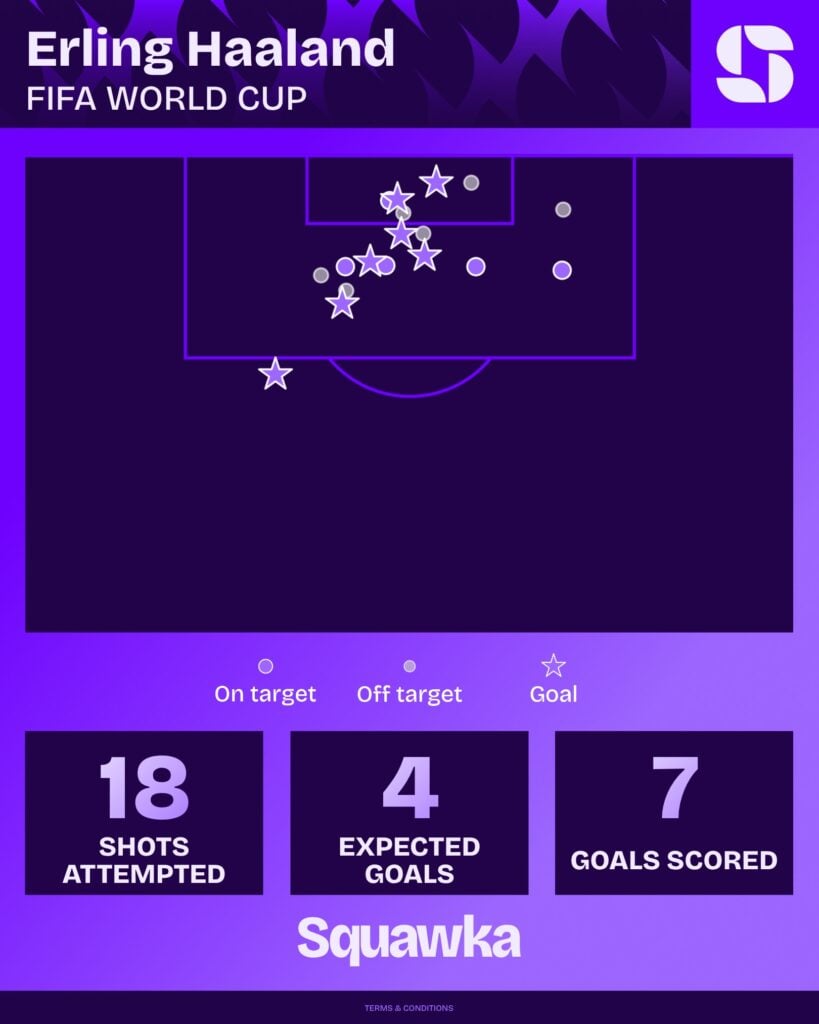
But perhaps what makes Haaland the most devastating scorer in football, is his box presence.
The 25-year-old’s movement is elite, with a world-class understanding of space and timing. Haaland’s first goal against Brazil was a perfect representation of this, firstly keeping separation from Gabriel just outside the box.
Bt almost switching off and taking slow, small steps towards the area, Haaland lured Gabriel into a false sense of security.
The moment Gabriel looked away to check on the player delivering the cross, Haaland had already struck. He made his move to arrive with momentum across the defender, rising above him and nodding it home to put Norway ahead.
Press and rest defence
Off the ball, Norway look to press from goal kicks with a 4-1-3-2 diamond shape. They’re aggressive, but they keep a +1 in their defensive line.
As they force the ball to one side, the advanced three shuffle across to mark the double pivot and ball-side full-back. This allows the holding midfielder to cover the defensive line. But it also allows him to follow a central player if they rotate outside the pressing shape.
Norway’s back four is then able to stay intact, giving them a +1 and leaving fewer gaps for the opposition to exploit with through balls.
Once Norway drop lower, they take shape in a 4-1-4-1/4-5-1 midblock. Odegaard is able to jump out to make it a 4-4-2, depending on the opposition shape.
This allows Norway to protect the centre, forcing teams to go around their shape in wide areas. There, they are met with a double-up from the ball-side winger and full-back.
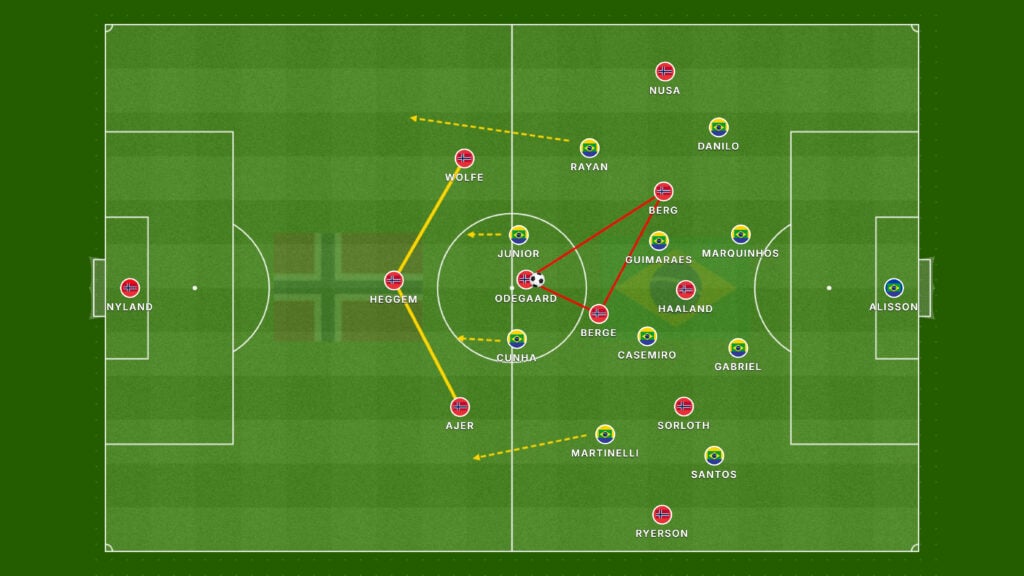
However, Norway are slightly shaky in their rest defence structure, as their rotations in midfield can leave them exposed.
With the full-backs often pushing forward (especially Julian Ryerson down the right), if the midfielders are caught on the ball during rotations, the three remaining Norway defenders can be open to transitions.
This was seen on a number of occasions against Brazil, which fortunately Carlo Ancelotti’s side were unable to take advantage of.
Norway are bound to be a tough test for England, with Tuchel having the task of devising a game plan to mitigate the threat Norway carry, while also having the chance to potentially exploit their pressing/rest defence weaknesses.
Read more: