




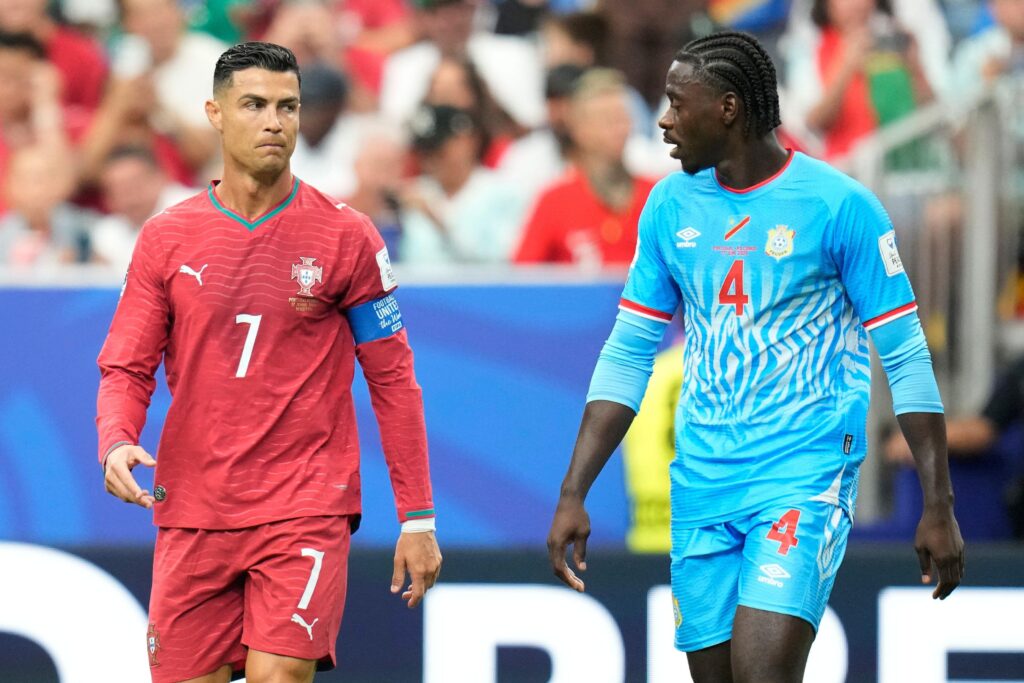
Portugal were held to a 1-1 draw by DR Congo, despite dominating large periods of their opening match at the 2026 World Cup.
Roberto Martinez’s side, one of the favourites to go all the way in North America, were made to pay for not capitalising on a bright start in Houston.
Just six minutes had elapsed when Joao Neves nodded in from Pedro Neto’s cross, but DR Congo levelled the Group K clash in first-half stoppage time through a well-taken Yoane Wissa header.
Though they controlled possession, Portugal were unable to convert it into a winning goal, and they had to settle for a share of the spoils.
In this article, we’ll cover:
Houston, Portugal have a problem
Despite being heavy favourites, this was never going to be a walkover for Portugal, who have now only won one of their last five opening matches at the World Cup.
Roberto Martinez had overseen seven victories in his 10 previous games at the finals, and his side were quickly on the front foot in Houston.
After completing 84 passes – the most by any team on record after the opening five minutes and 32 seconds of a World Cup match – they broke the deadlock courtesy of a player who has not even born when Ronaldo played in his first major international tournament at Euro 2004.
Indeed, Neves met Neto’s cross to continue his impressive form on the international front, with his fourth goal in as many appearances. At that point, a rout looked a real possibility.
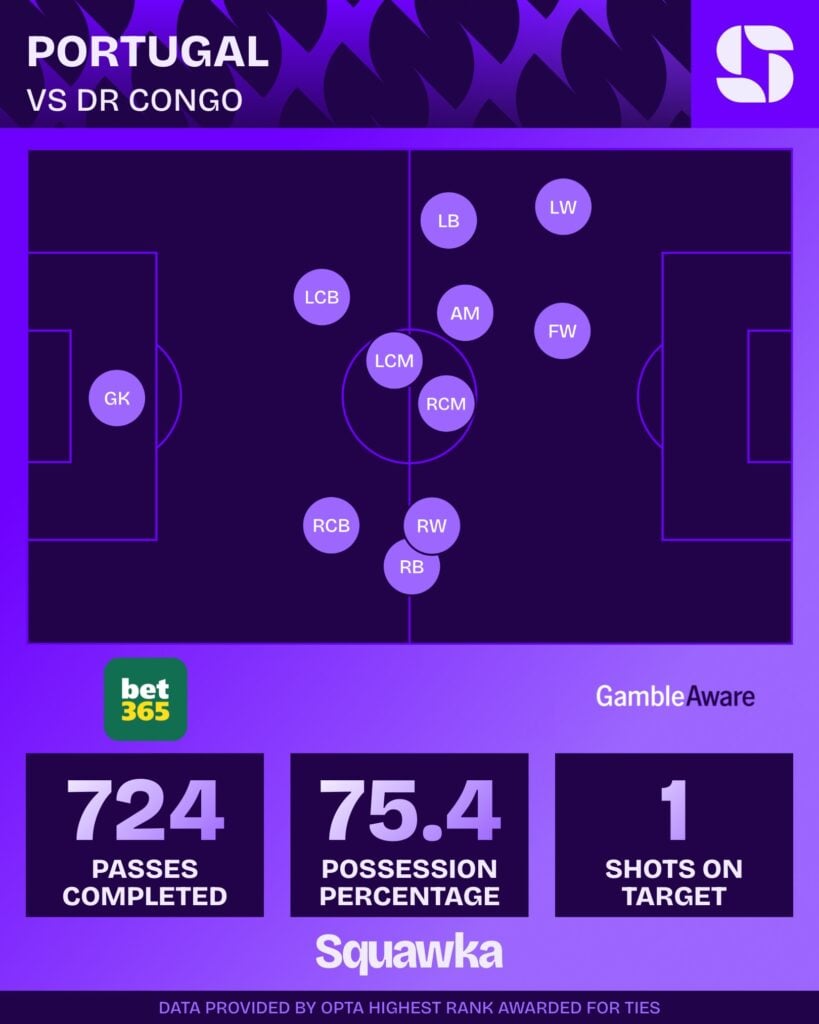
Instead, despite 75% of possession and the most completed passes in the first half of a World Cup match (490), Portugal failed to hit the target again for the rest of the match – registering an xG of just 0.07 in the opening 45 minutes.
They were pegged back by Wissa’s well-taken header, and were severely lacking a cutting edge after the break, with DR Congo refusing to yield.
It’s early days yet, but that is something Martinez must look to address if his side are to be genuine contenders for the title.
More history for Golden Oldie Ronaldo
Despite a relatively subdued display, Ronaldo still managed to create even more history.
At 41 years and 132 days, he became the oldest outfield player to start a World Cup match, while matching rival Lionel Messi as the second to feature in six different editions.
Ronaldo is also in the company of greatness when it comes to tournament appearances. His 23rd today moved him level with Italy legend Paolo Maldini, with only Messi (27), Lothar Matthaus (25) and Miroslav Klose (23) bettering that tally.
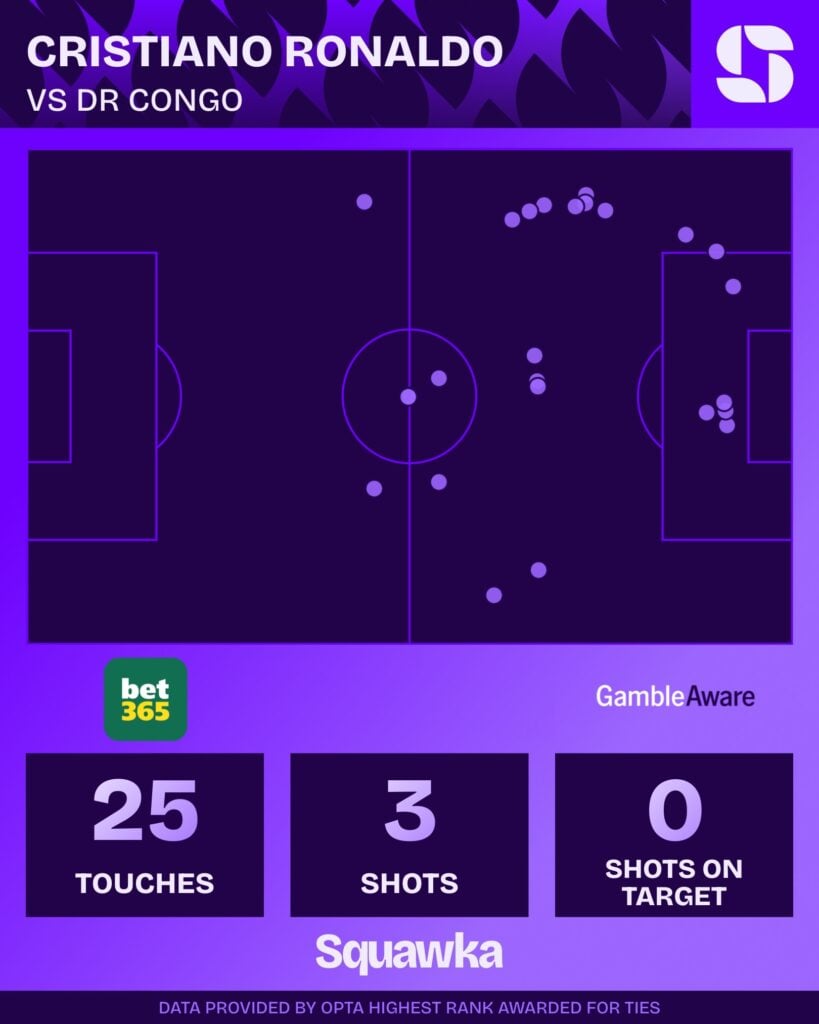
Nevertheless, he couldn’t mark the occasion with a goal – sending a couple of first-time shots wide from Francisco Conceicao cutbacks in the second half – while his tally of just 25 touches was the joint-fewest by any player that featured for the entire 90 minutes.
The 41-year-old is now without a goal in each of his last 10 games at a major tournament.
On a brighter note, though, he will be pleased to have got a full 90 under his belt, with Martinez needing to manage his gametime during this tournament.
Leopards CAN change their spots
It’s been a long wait – 52 years, in fact – but DR Congo are finally back at the World Cup finals. Only Wales (64 years), Egypt and Norway (both 56 years) have had longer gaps between successive participations.
When appearing at Zaire back in 1974, the nation’s reputation was generally the subject of ridicule. Sporting green jerseys featuring a logo of a leopard, they shipped in 14 goals without reply in their three matches.
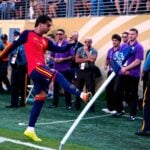
It was during one of those against Brazil that full-back Mwepu Ilunga wrote himself into folklore, when he charged out from the defensive wall to prevent the Selecao from taking a free-kick.
However, over half a century later, the Class of 74’s successors went some way to retrieving that reputation with a spirited display against one of the tournament’s favourites.
Sebastien Desabre’s side responded well to falling behind, and dragged themselves level with Wissa heading home the nation’s first ever World Cup goal.
Despite being on the back foot for much of the contest – recording just under 25% of possession – they more than held their own, and arguably carried the greater attacking threat – finishing with more shots (eight to seven) and a higher xG (0.82 to 0.69) than Portugal.
Read more: