






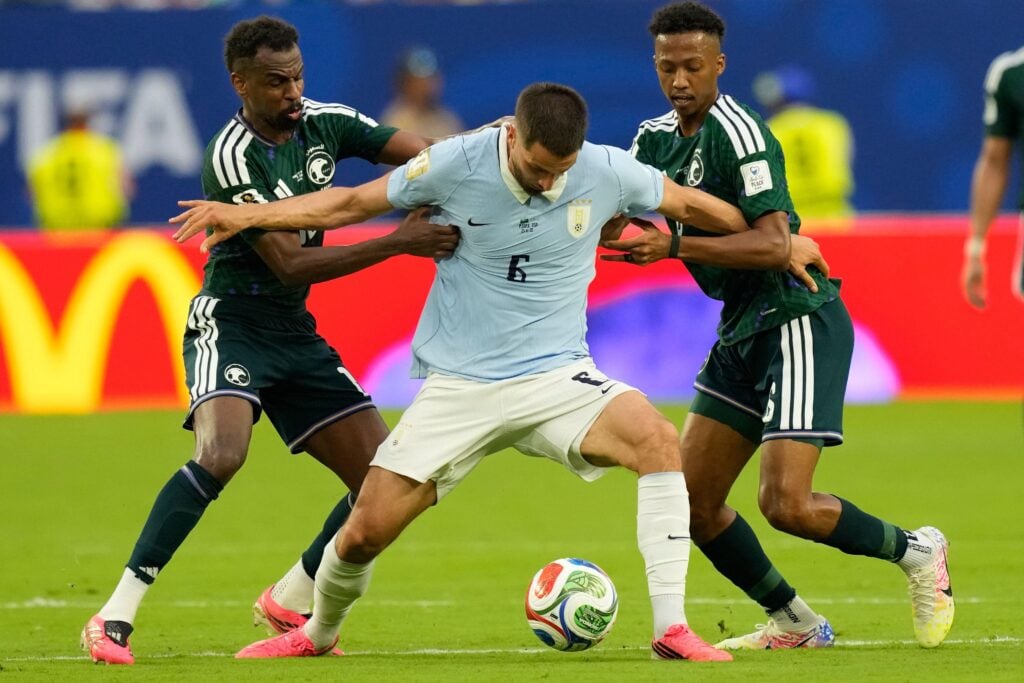
Saudi Arabia and Uruguay shared the points with a 1-1 draw, making Group H all square after the first set of games.
The first half was pretty tame from both sides. But Saudi Arabia took the lead into half-time thanks to a set-piece.
Uruguay manager Marcelo Bielsa made a number of second-half changes and things massively improved. The South American side held 75% possession in the second half, along, with 22 shots and two big chances. And they finally got the equaliser in the 80th minute, thanks to Maximiliano Araujo’s effort.

- Bet £10 get £40
- Super Fast Withdrawals
- Trusted Brand
#AD 18+. Play Safe. Online only. Ends 31.12.26. New UK customers only, registering with promo code FB40. Make your first deposit of £10+, then place a £10 single bet from main balance at odds of EVS+ (2.00+) on any sports market (excluding Virtuals). Get £40 in Free Bets (4x£10) after settlement. Each £10 Free Bet is valid on any Bet Builder, expires in 7 days, non-withdrawable and must be used in full (£10 each). Deposits via PayPal, Neosurf, Paysafe, Apple Pay, NETELLER, Skrill, ecoPayz, Kalibra/Postpay and WH PLUS Card excluded. One per customer. Full T&Cs apply. https://www.gamcare.org.uk/ . #ad
In this article, we’ll cover
Uruguay’s crazy 3-0-7
Bielsa’s side put in an incredibly disjointed first-half performance. Their buildup lacked any pace in circulation, or central penetration, to cause issues to Saudi Arabia’s front press.
Manuel Ugarte dropped between Mathias Olivera and Sebastian Caceres to form a three at the base in the buildup.
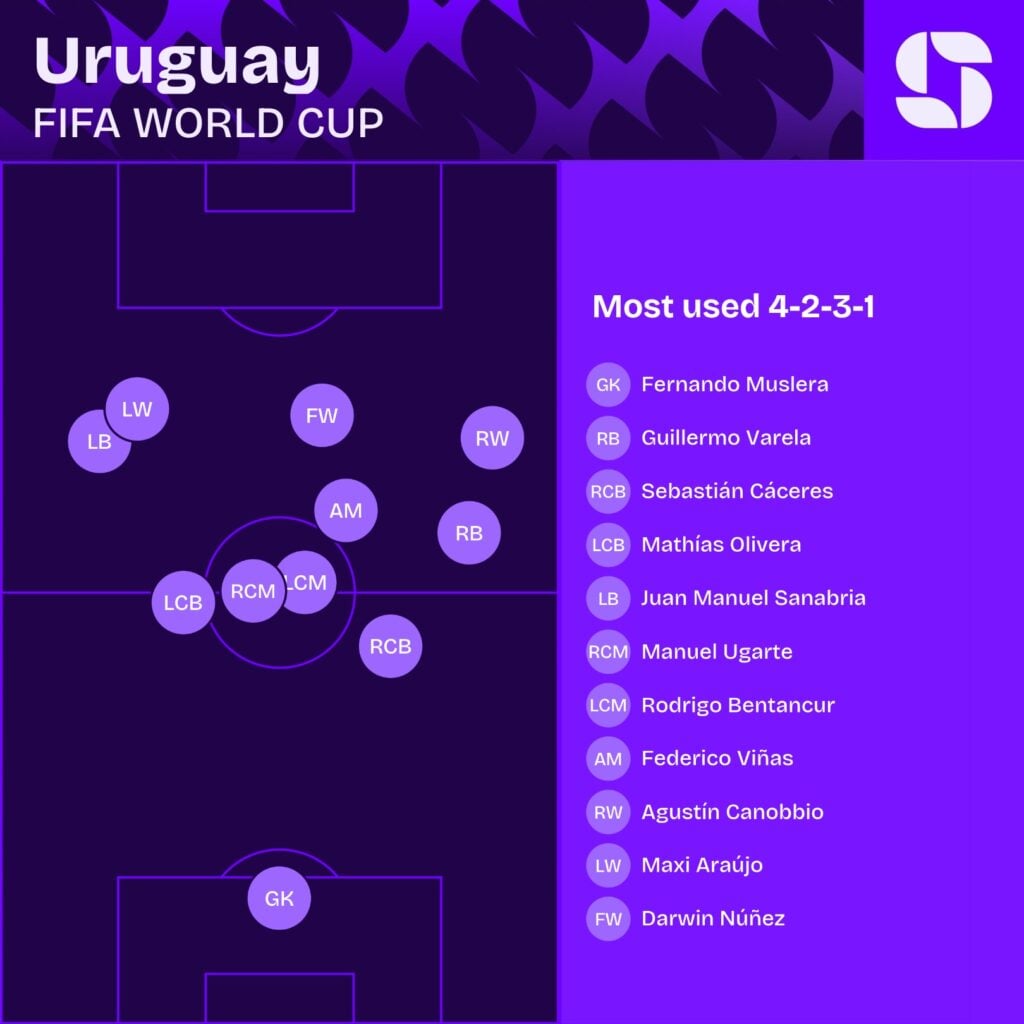
Matias Vina and Guillermo Varela then progressed further forward from full-back, with the former holding the width on the left for Araujo to drift inside. Varela provided double width with Federico Valverde also out on the right.
Uruguay’s biggest issue was Rodrigo Bentancur’s positioning. The midfielder often drifted behind the Saudi Arabia midfield line, creating a disconnect between the buildup base and the front seven.
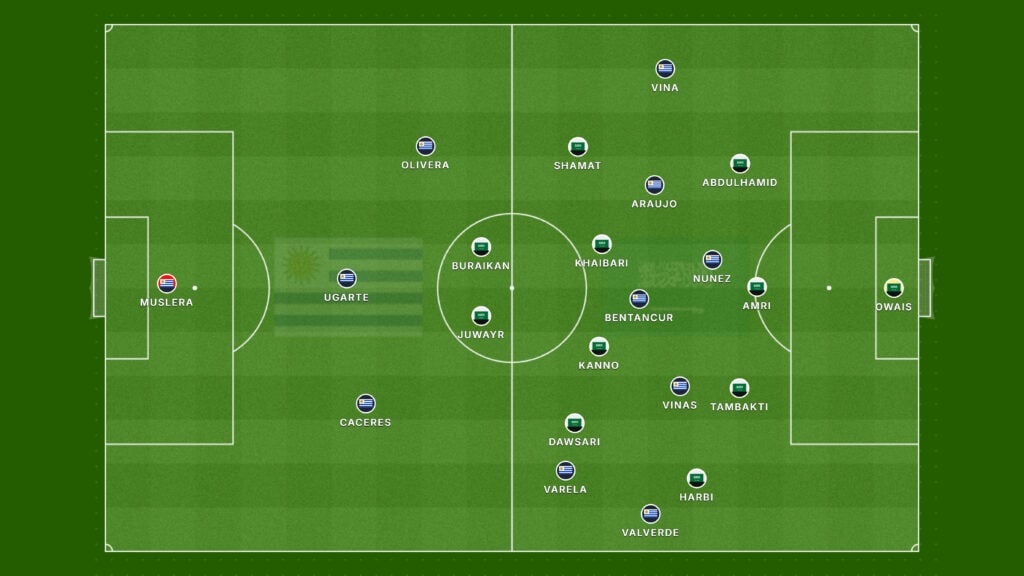
The advantages Uruguay could create were heavily reliant on the back three creeping forward under little pressure. They’d then look to either go direct into the front line or looking for the wide men.
Uruguay favoured the left, which left Valverde isolated and uninvolved on the right in the first half.
- Bet £10 get £40
- Super Fast Withdrawals
- Trusted Brand
#AD 18+. Play Safe. Online only. Ends 31.12.26. New UK customers only, registering with promo code FB40. Make your first deposit of £10+, then place a £10 single bet from main balance at odds of EVS+ (2.00+) on any sports market (excluding Virtuals). Get £40 in Free Bets (4x£10) after settlement. Each £10 Free Bet is valid on any Bet Builder, expires in 7 days, non-withdrawable and must be used in full (£10 each). Deposits via PayPal, Neosurf, Paysafe, Apple Pay, NETELLER, Skrill, ecoPayz, Kalibra/Postpay and WH PLUS Card excluded. One per customer. Full T&Cs apply. https://www.gamcare.org.uk/ . #ad
Abdulelah Al-Amri contribution
Both Saudi Arabia centre-backs were crucial in their opener. Musab Al Juwayr whipped the ball in, with Hassan Altambakti directing it goalward. His effort was saved by Fernando Muslera, both he could only parry it to Abdulelah Al-Amri. The centre-back poked it home from a few yards out to give Saudi Arabia the lead going into half-time.
Al-Amri’s contribution was more than just his goal, though. He won three of his four aerial duels, preventing Uruguay from gaining territory through direct balls down the centre.
Saudi Arabia defended well in their 4-4-2 in the first half, they were not pushed too deep despite Uruguay’s numbers in the front line.
However, the second half followed a different pattern, with Saudi Arabia defending a 1-0 lead and Uruguay making some much needed changes to their in-possession dynamics.
Uruguay second half improvement
Bielsa went back to the drawing board at half-time, making two changes at the break with Juan Sanabria coming on for Matias Vina and Agustin Canobbio coming on for Nunez.
But it was more about the tactical restructuring from Bielsa at half-time, with Vinas taking Nunez’s role down the middle. Valverde came more central to operate between the lines and Bentancur was positioned behind the Saudi Arabia front two on a consistent basis.
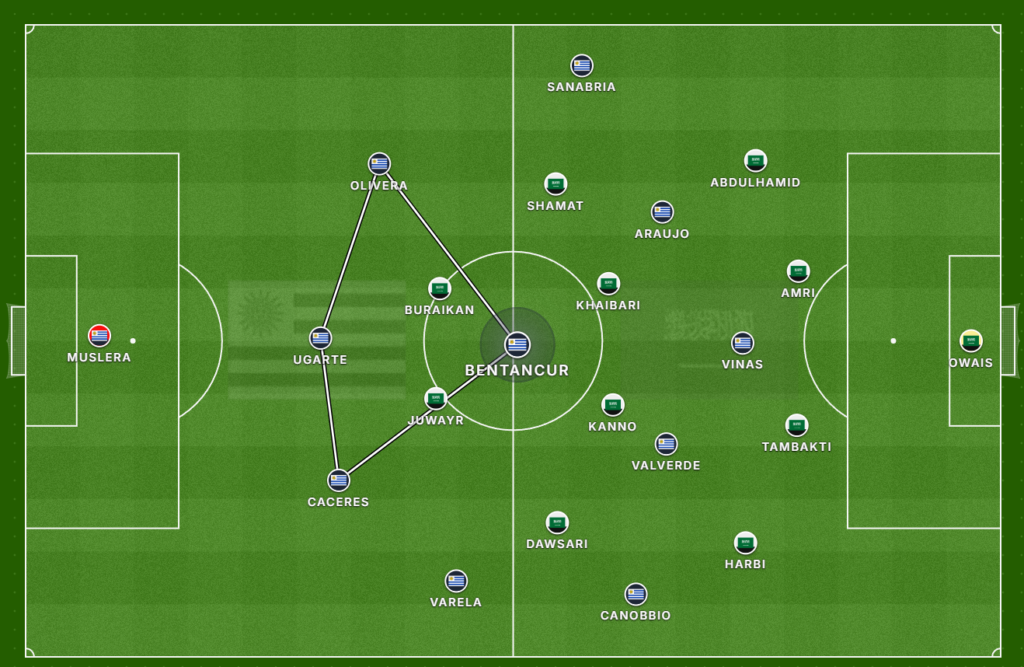
Bentancur began to operate more behind the Saudi Arabia front two, receiving the ball in the soft spot between the front two and midfield two. It gave Uruguay better progression from deep and connection between their units.
As Uruguay got more control in the game, progressing through the thirds and forcing Saudi Arabia to defend deeper, they shifted into a 5-4-1 shape off the ball. They did use an injury break with the goalkeeper going down to make those changes.
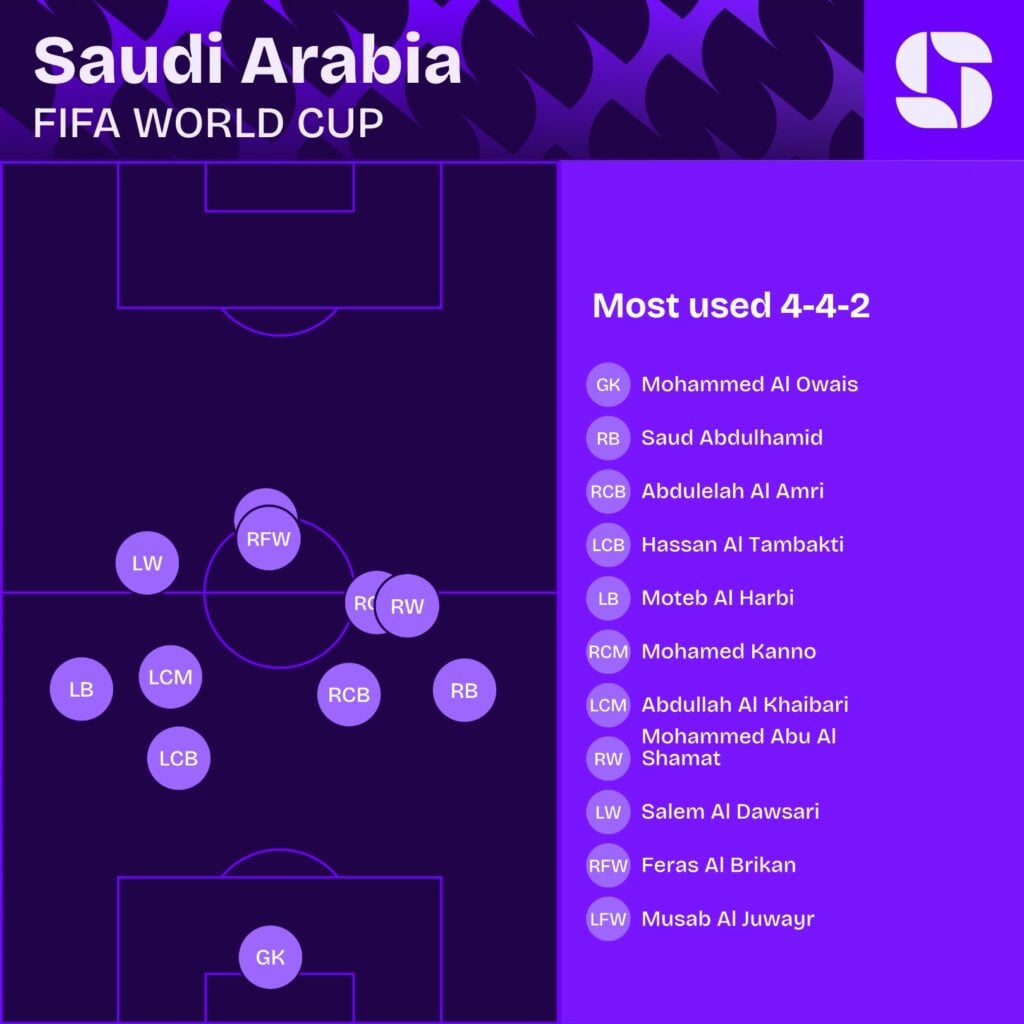
Saudi Arabia’s Mohammed Al-Owais then went down around the 60th minute, allowing Saudi Arabia to prepare their change of Al Juwayr to Nasser Al-Dawsari.
With Saudi Arabia dropping deeper and deeper, Uruguay began to create chances around the box, getting crosses into the box and striking a number from distance.
But they didn’t get their equaliser until the 80th minute. An inswinger from the left half-space found Vinas, who forced a save with his header. The ball was only parried back into Araujo’s path, though, and the Uruguayan guided it home.
Read more: