






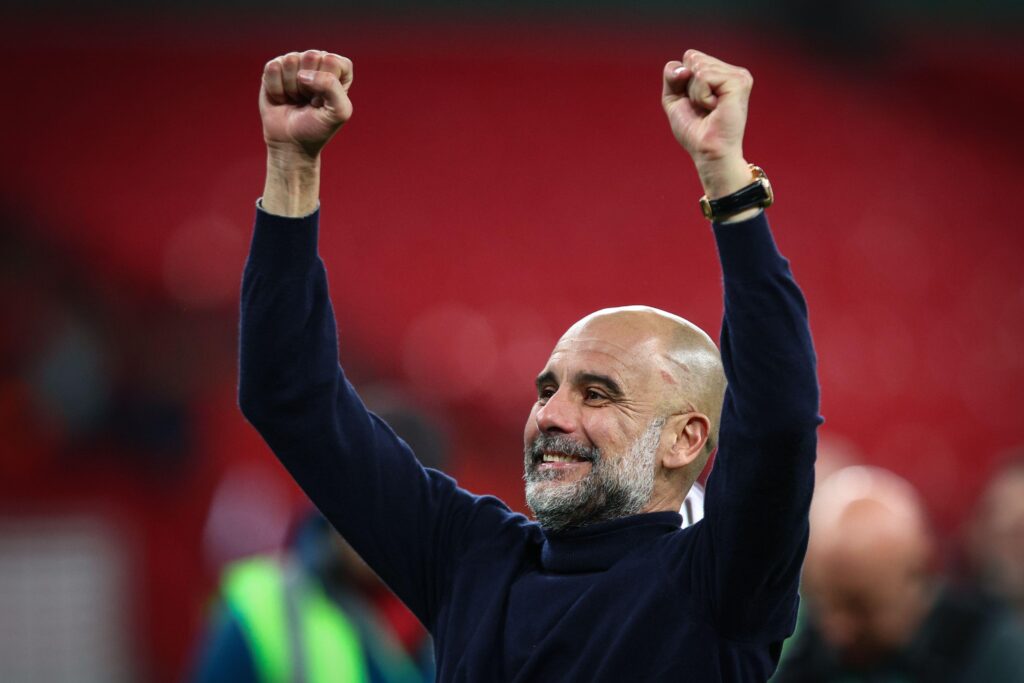
Pep Guardiola led Manchester City to yet another Carabao Cup title and his tactics were a big part of the story in the final.
A dominant second-half display was enough for the Citizens to overcome a few first-half scares and beat Arsenal in the League Cup final.
Pep Guardiola has talked openly about having to change and adapt his philosophies in order to keep up with modern football. City hiring former Jurgen Klopp assistant Pepijn Lijnders over the summer was a big indicator that things were about to change. Especially following such a poor season as 2024-25 ended up being at the Etihad.
This year, Guardiola’s ‘new thing’ was the introduction of central overloads. City have remained a mostly positional side, with a lot of regard for structure, but with increasingly more movement and rotations to keep things fresh.
In an age in which most sides look to automatically go wide due to the lack of space down the middle, City are one of the few teams trying to bring back central play. But that was not the case this Sunday against the Gunners.
What old traits did Pep Guardiola bring back to win the Carabao Cup?
Abandoning central play
Man City’s famous central overloads were nowhere to be seen at Wembley. Instead, Guardiola lined his team up in the more traditional and rigid 3-2-5 that he made famous in the whole world over the past decade or so.
Unfortunately for them, they faced one of the best antidotes to this approach. Mikel Arteta’s man-marking limited City’s options going forward and they struggled mightily to create anything of value in the first half.
BOYLE Sports offer: Bet £10 Get £40 in free bets
Not signed up to BOYLE Sports yet? Here's how to claim one of the best bookmaker welcome offers around...
- Sign up to BOYLE Sports using this link.
- Deposit a minimum of £10 (Excluding Skrill/Moneybookers, Neteller, PayPal, Paysafe or prepaid cards).
- Place a minimum bet of £10 or more at odds of EVS (2.0) or greater.
- Receive your £40 in free bets

18+ New UK customers (Excluding NI) only. Min Deposit £10. Min stake £10. Min odds Evs. Free bet applied on 1st settlement of any qualifying bet. 30 days to qualify. Free bets expire in 7 days. Cashed out/Free Bets won’t apply. Account & Payment method restrictions apply. 1 Free Bet offer per customer, household & IP Address only. T&Cs Apply
And yet, Guardiola’s initial wish to basically ignore the centre of the pitch was proven right – just not in the side he expected.
For perspective, City used the central corridor in just 7% of their attacking actions in the opening 20 minutes of the game. The rest was split between left side (56%) and right side (37%).
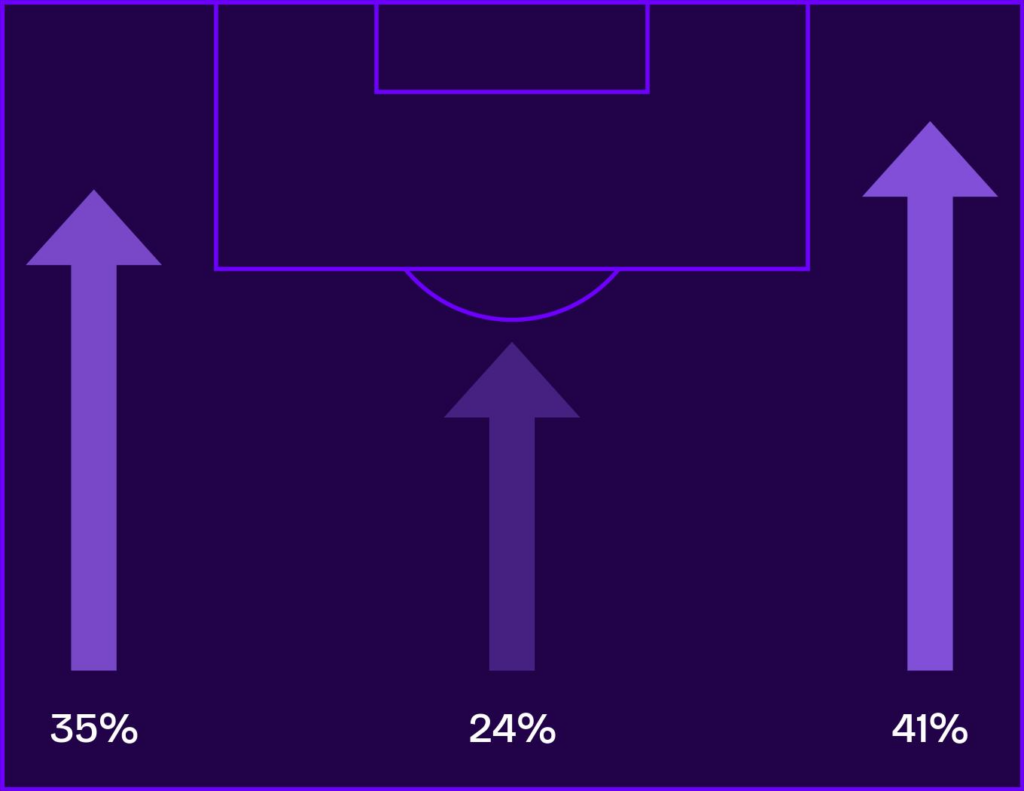
They ended with 24% of their actions coming down the middle, a lot of it inflated by Rodri and the centre-backs recycling possession with Arsenal sat in a deep low block. And yet, it’s still below their season average of 28% across all competitions.
It was a strange look considering how much effort the Citizens have put into crowding the middle of the park and having skillful players connect in close proximity.
Positional 3-2-5
The reason for Man City’s lack of central overloads was their system. Pep Guardiola went away from having four-to-five men around the ball down the middle and prioritised his traditional 3-5-2 in-possession.
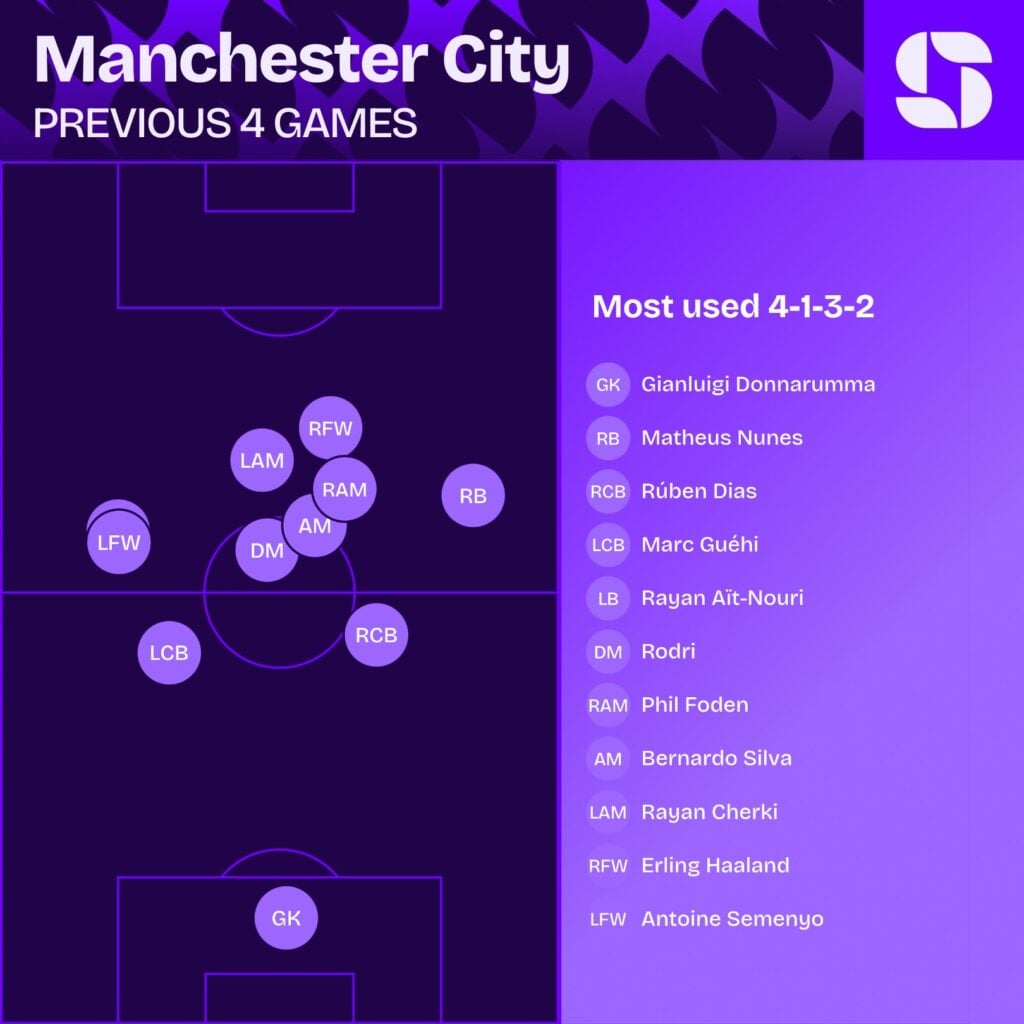
He also reverted back to having his wingers hug the touchline and full-backs tucking inside. Nico O’Reilly played a more advanced role as a left-sided centre-midfielder, with Rayan Cherki doing the same on the right.
This is actually what enabled him to attack the box in both of his goals: the fact that he didn’t play as a left-back when City had the ball.
Matheus Nunes, on the other hand, was responsible for completing the back-three alongside centre-backs. He rarely joined in going forward, but the one time he did was to assist O’Reilly for the second and final goal.
SBK betting offer: Bet £10, get £40 in free bets
Eligible readers* interested in this SBK betting offer can follow THIS LINK or click the image below.

New UK customers only. Min £10 first deposit using Debit Card or Bank Transfer. Place a bet of £10 at min odds of 2.0 and get a £10 Football Bet Builder token upon settlement. A £10 Multiple token, a £5 Horse Racing Multiple token and a £5 Football Bet Builder token will be credited after 24 hours. A further £10 Free Bet token will be credited 48 hours after the qualifying bet has been settled. Full T&Cs apply, 18+. GambleAware.org.
Jeremy Doku and Antoine Semenyo held the width as Guardiola identified their one-on-one abilities as the best chance for City to generate advantages. Doku was the main focus, but Semenyo quickly became their most dangerous threat in the final third.
Erling Haaland completed the five-man forward line, while Rodri and Bernardo Silva formed the double-pivot in the heart of midfield. The Portuguese jumped up to make it a 3-1-6 a couple of times, but those were exceptions and not the rule.
Though City faced difficulties to create clear-cut goalscoring opportunities, their positional 3-2-5 allowed them to push Arsenal back. It gave them territorial dominance and turned momentum to their side after the Gunners started off strong.
Wide play eventually won them the game, in fact, with Cherki and Nunes copying Semenyo’s overloads that worked a few times in the first half and materialised into second-half goals to give them the title.
Zonal marking > man marking
Another trend in modern football is that a lot of teams are going from the more traditional zonal marking to a man-oriented approach. A hybrid style, pressing individually and sitting deeper zonally has also become common.
A lot of it has to do with the popularity the Guardiola’s own 3-2-5 has gained over the past years. Man-marking is a good way of neutralising positional attacking play while also maintaining defensive structure.
But in order to take Arsenal out of the game, the Spaniard tactician did the opposite of managers often do nowadays. Many of them start with a zonal look and switch to an individual approach in order to nullify the opposition’s build-ups.
Guardiola, however, went from man to zone. His 4-4-2 out-of-possession took short and long passing options away from the Gunners, whose only option became hoofing it forward and giving up on possession.
From there, City would restart their own sequences looking to advance collectively and trap Arsenal near their own goal. It was the starting point in turning what looked like a favourable game for Arteta’s men on its head.
Old habits may die hard, but falling back to them isn’t necessarily a bad thing. Pep Guardiola and Manchester City did it and the result was a trophy playing against the most consistent and solid side in European football this season.