






In 1984/1985 in England, you could find Burnley being relegated to the fourth tier, Brentford and Bournemouth languishing in the third tier, Manchester City just about scraping promotion from the second tier and Everton running out as Division One champions.
North of the border, something even more unlikely was happening. Aberdeen, under the tutelage of Sir Alex Ferguson, were crowned Scottish champions and in doing so, they were the last non-Glaswegian team to lift the Scottish first division title.
In this article we’ll cover:
40 years have since passed, and the trophy has never left Clydeside. Celtic have racked up 22 of the 40 titles awarded in that time, with Rangers taking the other 18 – leaving the Old Firm level on an eye-watering 55 Scottish titles each, while no other club in the country has ever managed more than four.
But over in Edinburgh right now, something is happening.
While both Rangers and Celtic have been forced into managerial changes already this season and flounder for form both domestically and in Europe, Heart of Midlothian have been nothing short of sensational, winning nine and drawing two of their first 11 games to open up a nine point gap over reigning champions Celtic at this relatively early stage of the season.
The Tony Bloom effect
Earlier this year, Hearts fans will have been given reason to be optimistic when a 29% stake of the club was bought by Tony Bloom, best known as the majority owner and chairman of Brighton & Hove Albion but also the owner of Belgian club Union Saint-Gilloise and Australian A-League side Melbourne Victory.
When Bloom took over his hometown club Brighton in 2009, the club was languishing in the third tier and playing at an unfit for purpose athletics stadium on the outskirts of town. Within eight years the club had their own purpose-built 30,000-seat stadium and had won promotion to the Premier League. They have remained in the top tier ever since, finishing sixth in 2022-23 and qualifying for European football for the first time.
There’s a similar success story to be found at Union SG, who you may have spotted playing in the Champions League league phase this season. That comes on the back of them winning their first title in 90 years last season. A story made all the more remarkable when you consider the fact that when Bloom took over the club was still stuck in the second division, having last competed in the top tier in 1972.
Bloom’s ability to hire the right people and create a winning culture at a club is evident, but few could have expected it to be as effective as quickly as it has been at Tynecastle. As always, the most eye-catching way to find the kind of gains that Bloom has always managed to find is in the transfer market.
Taking a ‘moneyball’ kind of approach to transfer business has worked wonders at Brighton, with fans often wondering where the latest relatively unknown addition to the Seagulls squad has been plucked from and when the right offer comes, they’re not against selling star players, safe in the knowledge that a world class scouting network will have them well prepared to find the right replacement.
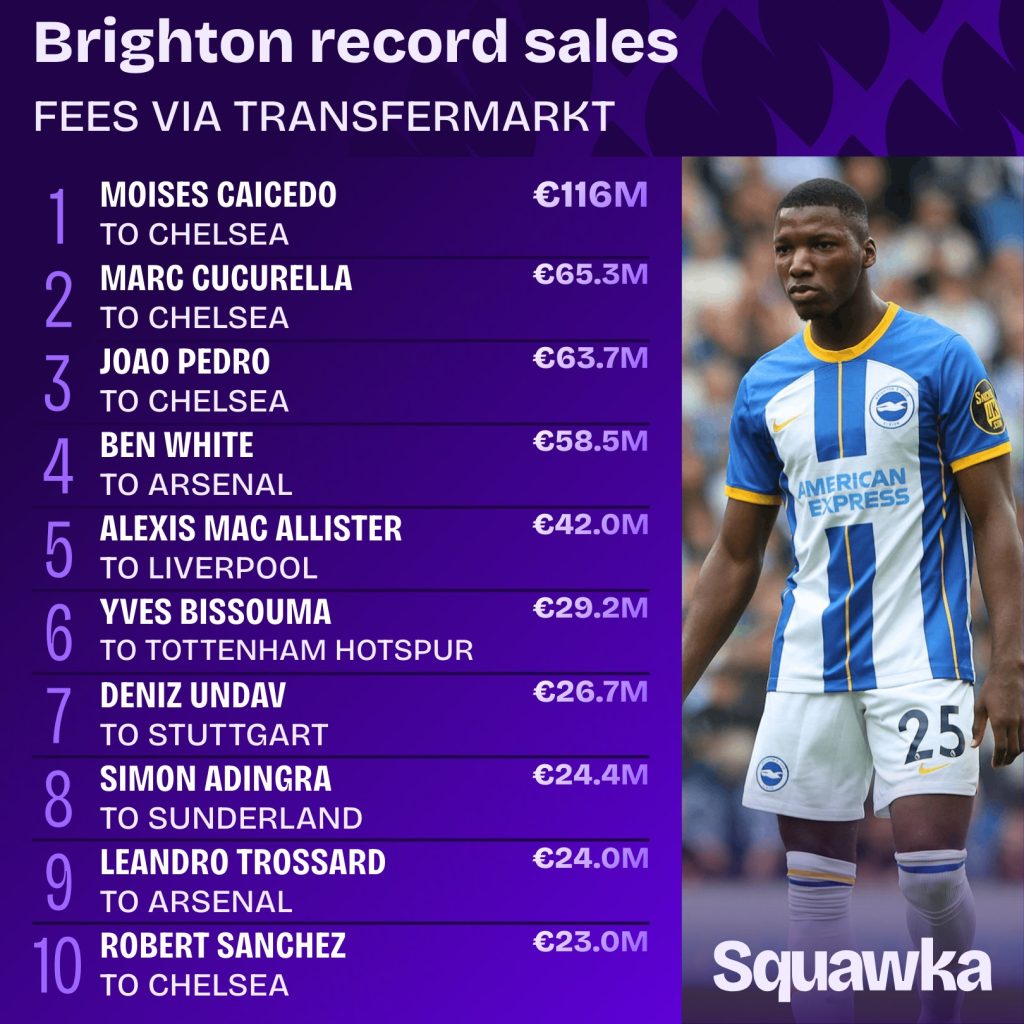
From Chelsea alone, Brighton have managed to recoup €268m from the sales of Marc Cucurella, Robert Sanchez, Moises Caicedo and most recently Joao Pedro – four players that collectively cost them a combined total of just €58m. That’s without touching on players like Alexis Mac Allister, Ben White and Yves Bissouma who were sold to Liverpool, Arsenal and Tottenham respectively for huge profits. Carlos Baleba, who joined for just €27m two years ago, could be the next in a long line of big money sales from the Amex Stadium.
The Scottish Premiership represents a unique opportunity for Bloom. Whereas the Premier League will always be a difficult nut to crack in terms of consistent European qualification and competing for major honours due to the strength and size of the biggest clubs, the two Glaswegian clubs’ dominance over the Scottish game may be seen as a more realistic duopoly to break – especially with some level of complacency potentially creeping in.
Hearts brought in 11 players in the summer for a combined total fee of less than €3m. Striker Claudio Braga, signed from Aalesund for just €520k has six goals in 11 games so far, while left winger Alexandros Kyziridis who arrived on a free from Slovakian outfit Michalovce and right-back Oisin McEntee, another free from English League Two side Walsall, have been important contributors so far.
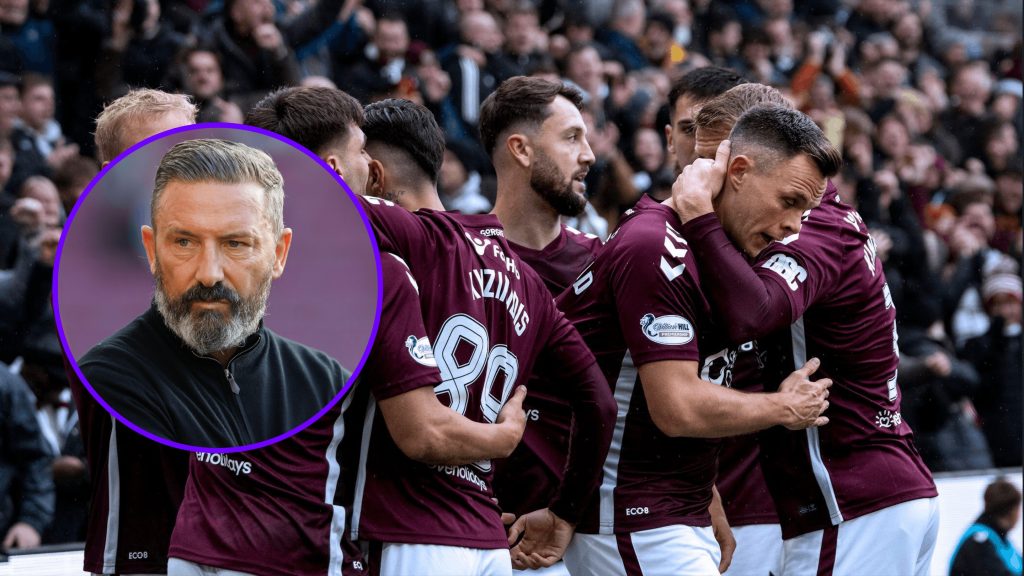
Intelligent moves in the transfer window are one thing – but there needs to be the correct figurehead bringing these talents together and in Derek McInnes, the club hired a rare kind of manager – a forward-thinking, tactically astute one with tonnes of experience and knowledge of the relevant division.
A high-risk, high-reward approach
McInnes team are the league’s most territory-focused: everything about their approach is about pinning opponents back, sustaining pressure, and playing as much football as possible in advanced areas. They advance the ball with intent, rather than circulating it slowly. They average just 51.9% possession so far this season – compared to 63.3% for Rangers and 70.8% for Celtic. Despite having less of the ball, they’ve attempted a league-high 821 passes into the opposition half, with 388 penalty area entries.
There are some stats that appear less positive at first glance that underline this point. No team has lost possession more times than Hearts in the Scottish Premiership this season while they’ve made 224 unsuccessful touches – also the highest number in the division. These are the kinds of stats that McInnes won’t mind though. His team are happy to play the percentages and lose the ball more often than their opponents, with the knowledge that taking more risks in possession is helping them to be more creative and more of a threat to their opponents.

That’s clearly playing out in the numbers. 128 chances created (second in the division) and 71 shots on target (first in the division) are evidence of this high territory, high volume attacking approach bearing fruit.
And while so much of the discussion in the English Premier League is around the increased attention on set pieces, Hearts are creating their own discussion of this ilk in Scotland. They’ve created a league-high 21 chances from set-pieces, with a very impressive seven goals from headers. Harry Milne has created 11 chances from his set-plays (second only to Rangers’ James Tavernier), leading to two assists. There’s a feeling they could score from any set piece.
Aggressive in and out of possession
Being aggressive with the ball goes hand in hand with being aggressive off it. They’ve won the most duels in the division with 706, while ranking third for possessions won in the attacking third and first for possessions won in the middle third. To put it simply, most teams just haven’t been able to retain possession against a Hearts team primed to force turnovers as quickly as possible. They’re happy to take risks and lose the ball, safe in the knowledge they’ll likely win it back quickly enough to prevent any threat to their backline.
You need players in form to make this kind of high risk approach work and up top, Hearts have the two most in-form strikers in the league. Lawrence Shankland and Claudio Braga are the only two players in the division to reach six goals so far (Shankland taking his tally to seven in the win over Dundee last time out), while they’re also the only two players to rack up 30 shots so far this term.
Profiting from the creativity of Alexandros Kyziridis who has four assists from a league-high 23 chances created (one more than Milne), if these two strikers can continue scoring at this pace, few defenders will be able to slow them down this term.
Whether this form is sustainable is the real question. Teams built on such an aggressive, high-risk style often ride momentum before a natural correction arrives, but it’s impossible to ignore how well Hearts are executing it. With Bloom’s influence already evident and McInnes extracting maximum value from a revamped squad, this might be the clearest opening in decades for someone to disrupt the Old Firm’s grip on the title.
Latest Features