







Chelsea are currently ramping up their search for a new head coach ahead of the summer.
Liam Rosenior was sacked in April, with Calum McFarlane taking charge on an interim basis until the end of the season. But Chelsea are expected to appoint their new manager before the World Cup kicks off.
The Blues reportedly have a shortlist of around six names, including Premier League proven managers such as Andoni Iraola, Marco Silva and Oliver Glasner. Other names include Cesc Fabregas and Felipe Luis.
But in recent days, the frontrunner seems to be Xabi Alonso.
In this article, we’ll cover
Xabi’s buildup ideas
“We don’t talk much about 3-2-2-3 or 3-2-4-1, it’s more about what we think might happen in the game and where we should be to have an advantage.”
That’s what Alonso believes.

This quote is extremely relevant, due to Alonso’s usage of a back three at Bayer Leverkusen and a back four at Real Madrid. This is just the starting formation to carry out the in-possession, and out-of-possession, instructions.
Alonso at Leverkusen
Despite starting in a back five on paper, Leverkusen’s buildup would often resemble more of a 4-2-4 before shifting into a 3-2-5. The positioning of both wing-backs were important to this.
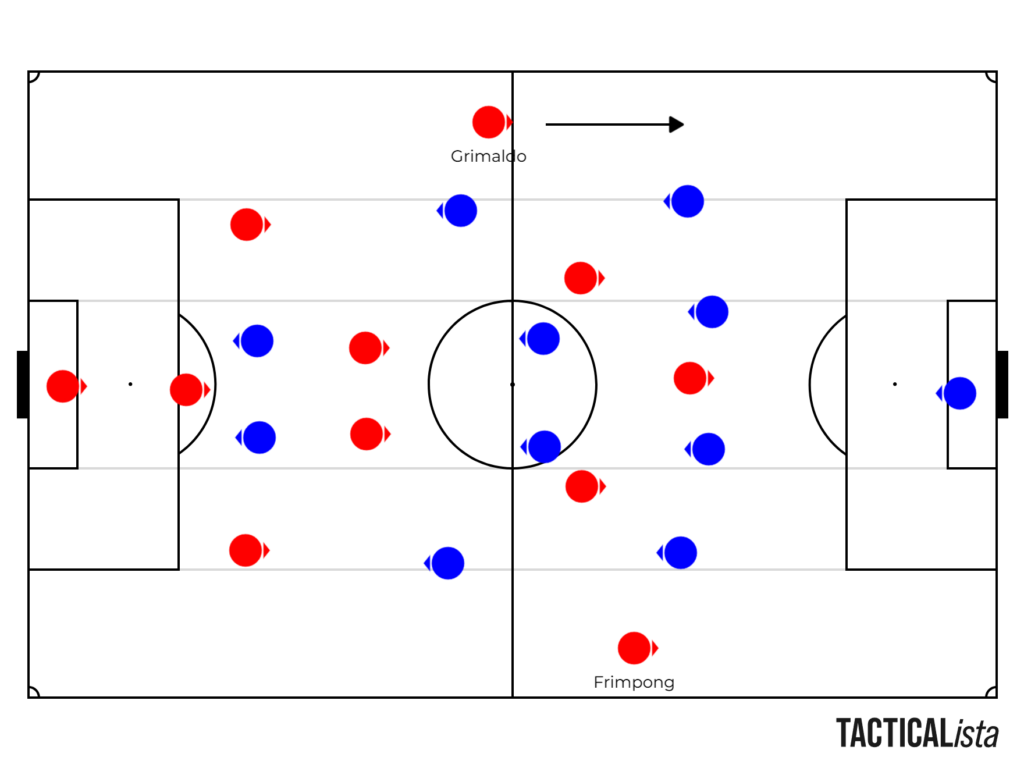
Alex Grimaldo’s role was slightly more reserved on the left, joining the back three to form a temporary back four against a front three, in order to overload the initial press.
Meanwhile, Jeremie Frimpong would push high and wide on the right, looking to pin the opposition full-back and make the pitch big.
More than an overall shape, this was player instructions that suited the skillsets of each individual while helping to gain an advantage in the build up for Alonso’s side.
Alonso’s Real Madrid
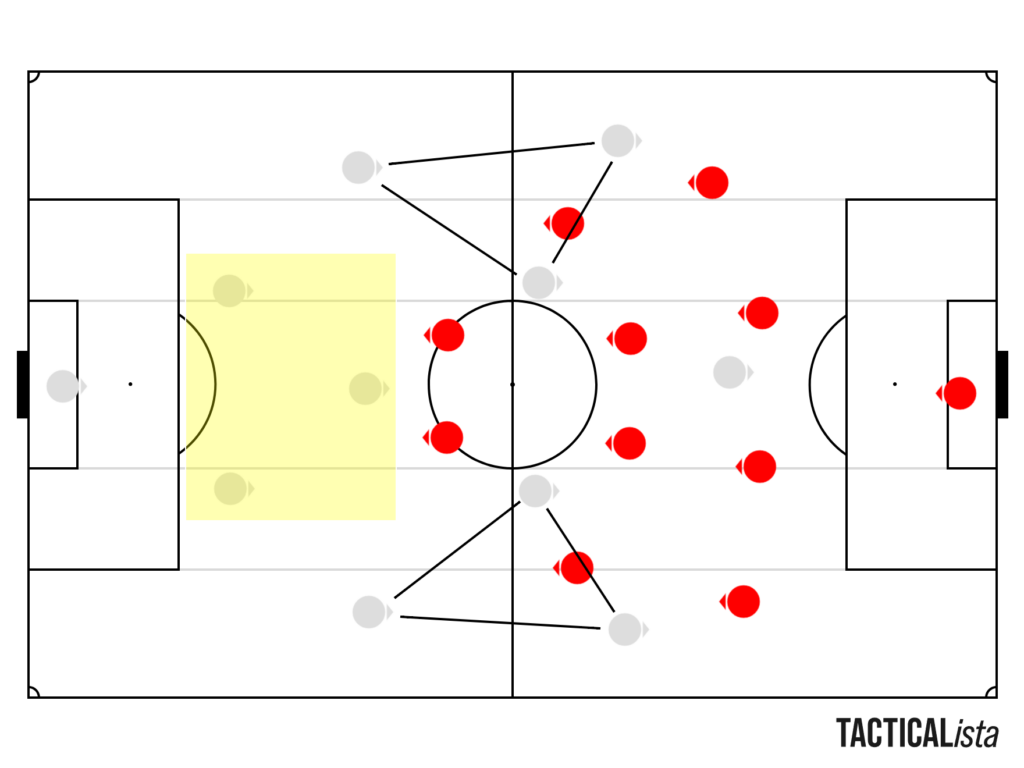
Similar principles were instilled at Real Madrid, but from a different start point in a 4-3-3 shape. Alonso’s side would still form a 4-2-4 in the initial build with one midfielder starting low and one pushing further on to join the front three, which would then form a 3-2-5 further forward.
Alonso had a number of different ways of getting into these shapes, with relationships between the full-back, No.8 and winger important factors to the zones they would occupy.
One variant was using Alvaro Carreras as a more passive full-back to tuck in and join the back three with the two central defenders, while Trent Alexander-Arnold or even Federico Valverde at times playing right-back pushed further forward.
Another idea was using Aurelien Tchouameni dropping between the central defenders to form the back three, with both full-backs pushing forwards and the two midfielders acting as the double pivot.
Overall, Alonso wants his side to be flexible in their approach, able to change shape dependent on the opposition, react to the demands of the game and find new solutions.
Betfred - Get £50 in free bets when you bet £10
- Sign up at Betfred using this link or clicking the image below.
- Deposit a minimum of £10 and place a bet of £10+ on Sports.
- Receive £50 in Free Bets within 10 hours of bet settlement.

New customers only. Register, deposit with Debit Card, and place first bet £10+ at Evens (2.0)+ on Sports within 7 days to get 3 x £10 in Sports Free Bets & 2 x £10 in Acca Free Bets within 10 hours of settlement. 7-day expiry. Eligibility & payment exclusions apply. Full T&Cs apply.
Sustain pressure
Another quote from Alonso that perfectly illustrates his philosophy is: “the more passes we make on the opponents half, the better the positioning will be for the gegenpressing.
“If we play too far and quick to the other half, we will be far away from each other, the lines will be far away and that will make gegenpressing (counter pressing) impossible to do properly.”
This is a similar idea of control to Enzo Maresca. The idea is to play at a slower tempo originally in order to move through the thirds as a unit, keeping the distances closer together incase of a turnover. It allows you to not only control the game through possession of the ball, but also to control the space on the pitch.
By creating these conditions moving through the thirds as a unit, Alonso’s side can suffocate the opposition inside their own half, take more risks on the ball with a better counterpressing net and rest defence setup and then regain possession quickly to attack a destabilised defensive unit.
Aggressive midblock
Out of possession, Alonso wants his side to impose themselves and regain possession quickly, in order to take control back and play their game.
However, this isn’t just an extreme intensity man-to-man press. Alonso has a number of hybrid schemes under his belt.
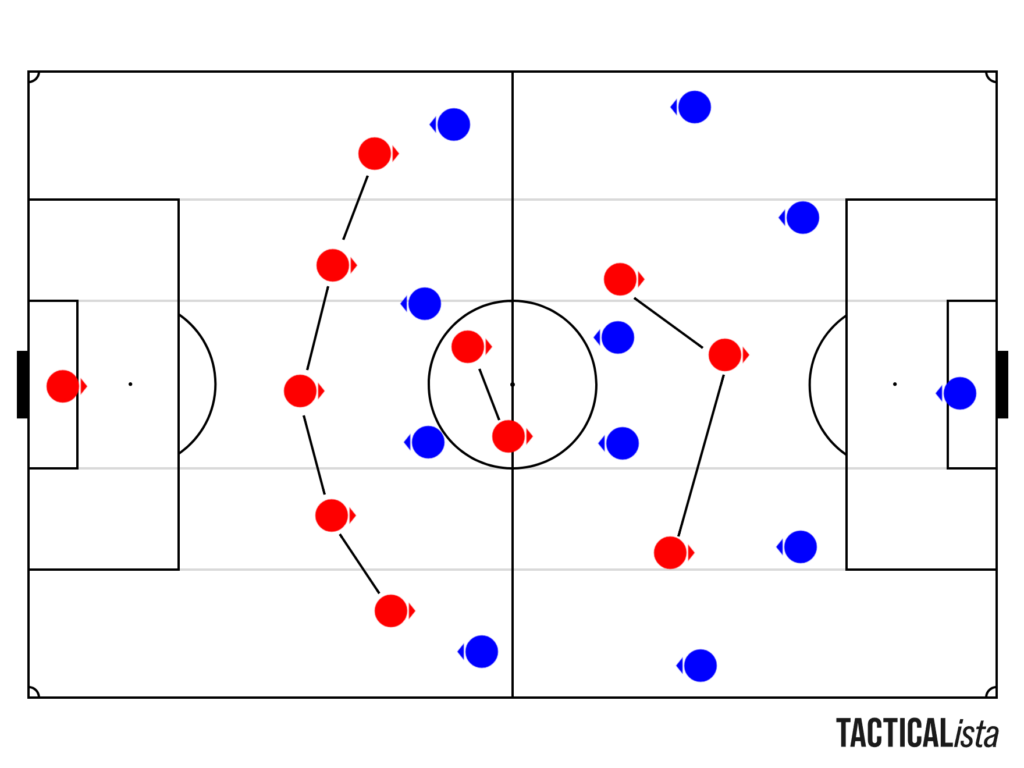
Leverkusen often pressed from a 5-2-3 midblock shape, looking to apply pressure to the ball in the opposition defensive third by jumping into a man-to-man press, with the back line stepping up to restrict space between the lines and force the opposition long.
This 5-2-3 would become more of a 4-2-4/4-4-2 with Frimpong jumping to press the opposition left-back and the Leverkusen right centre-back shifting into a right-back position to cover the opposition winger.
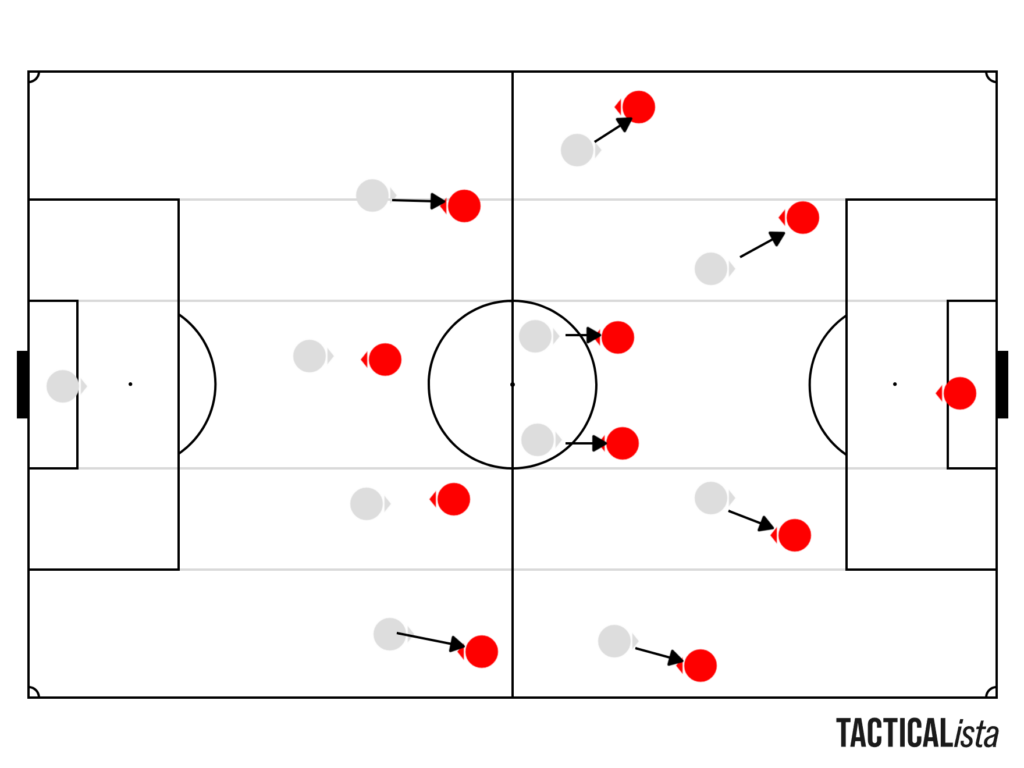
At Real Madrid, the out-of-possession ideas were similar, looking to press man-for-man in the opposition half. But this time from more of a 4-4-2 base shape.
The biggest difference was once they were forced back into the middle third defensively, the combination of a higher line with man-to-man principles to restrict space between the lines and not the hardest working front press to apply pressure on the ball, which allowed teams to take advantage more often.
How would Chelsea play under Alonso?
Alonso would be inheriting a squad which already has a strong positional play foundation from their days under Maresca, with similarites to their on-ball approach.
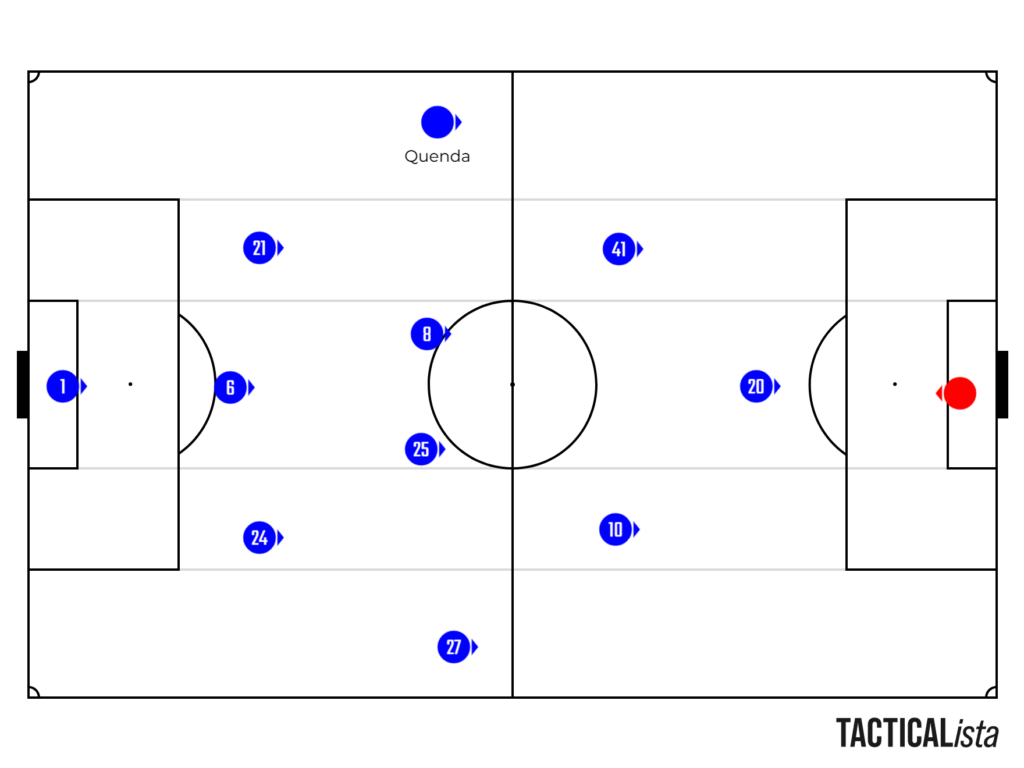
As mentioned earlier, the back three and back four usage can be interchangeable, especially given the wide options at Chelsea, with players like Geovany Quenda joining in the summer from Sporting CP and Pedro Neto who could play as a hybrid left wing-back/left-winger.
You then have profiles such as Reece James and Jorrel Hato who can play as nominal full-backs or wide centre-backs in a back three, with Levi Colwill the perfect central centre-back option whether that be in a starting back three formation or a back four which shifts into a three.
The likes of Estevao and Cole Palmer would thrive in the interior roles, with more freedom to drift and combine in the pockets, while Enzo Fernandez would be extremely interesting, as someone who can play in the double pivot with the right protection around him, or as a pocket player further forwards.
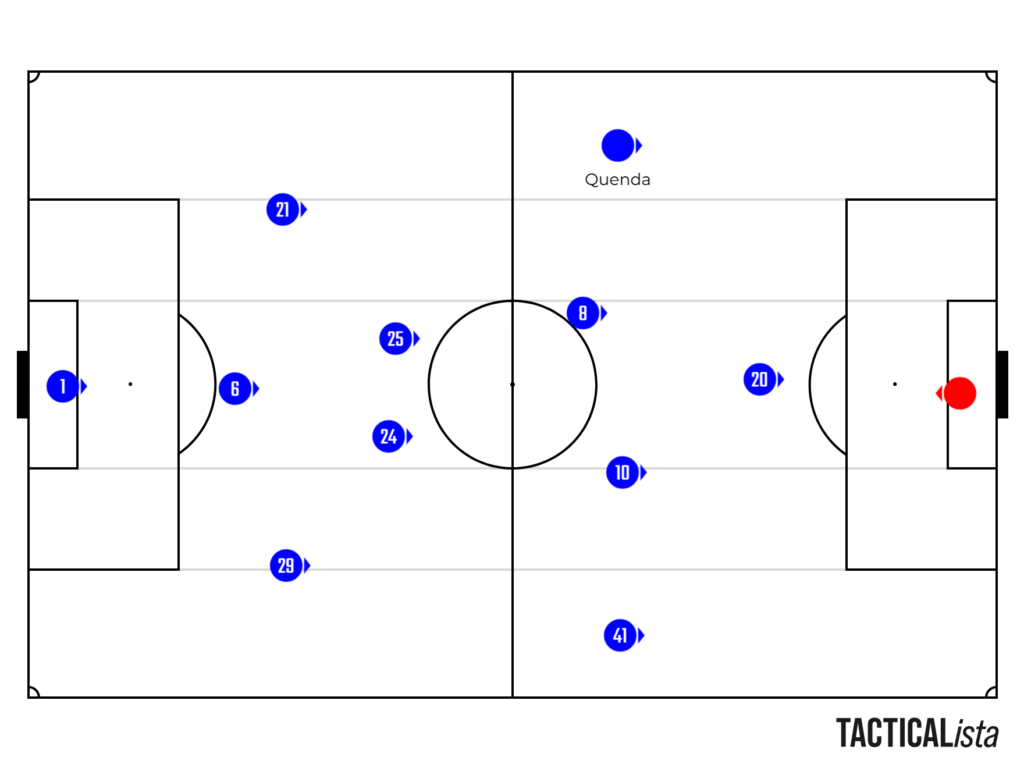
Another option starting in a back four would be similar to Maresca’s original ideas, inverting James into midfield alongside Moises Caicedo, pushing Fernandez forwards and keeping 1v1 wingers on both flanks with Quenda (or a new left-winger) and Estevao.
This would make a lot of sense with the links to new centre-back signings, allowing Chelsea to add an experienced partner for Colwill in defence, with either Marc Cucurella or Hato tucking in from left-back to form the back three on the ball.