





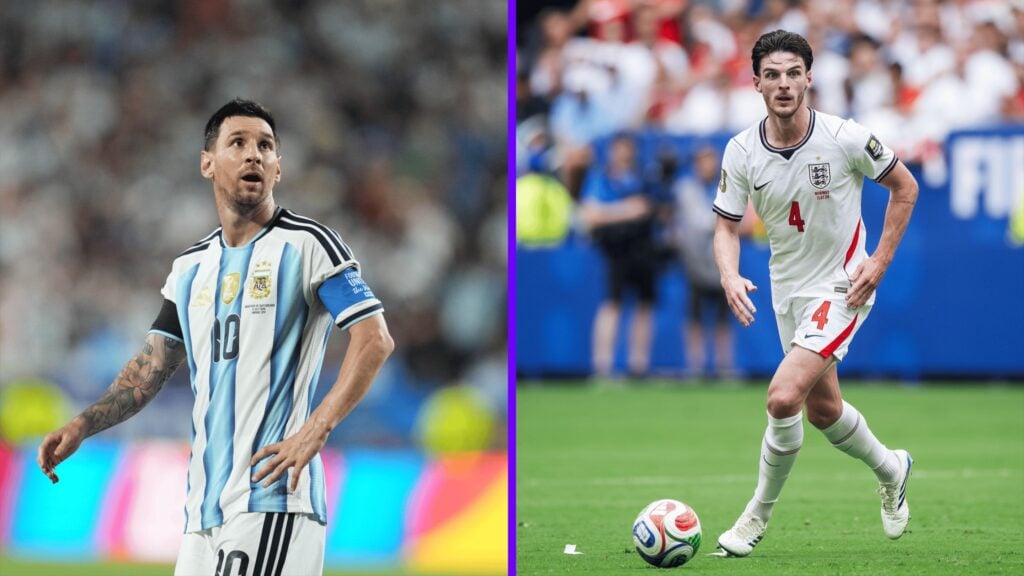
England are set to face Argentina in the World Cup semi-final on Wednesday. It’s a fixture with World Cup history after the 1986 quarter-final and 1998 last-16 tie.
This will be the first time England go up against Lionel Messi, with Argentina looking to join an elite group. Should they go all the way and lift the trophy on Sunday, they’ll be just the third nation to retain their World Cup crown.
History is against England. The Three Lions have won just one of their three World Cup semi-finals, losing most recently in 2018. But Argentina have never lost a World Cup semi-final.
So how can England beat Argentina and progress to the final? And how do their tactics against Norway start to create a blueprint?

#AD 18+ New Customers Only. Sign up using Bonus Code: COMMFREE110. Pay 0% commission on all sports bets for your first 110 days. Users making their first deposit by Skrill, Neteller or PaySafe card will not qualify for this promotion. T&Cs Apply. Be Gamble Aware.
In this article, we’ll cover
Wide combination importance
Thomas Tuchel was not happy with England’s performance against Norway, despite the 2-1 win to send them to the semi-final.
The German used the words “sloppy”, “technical errors”, “not fast enough” and “not repetitive enough” to describe the performance.
But what exactly did Tuchel mean?
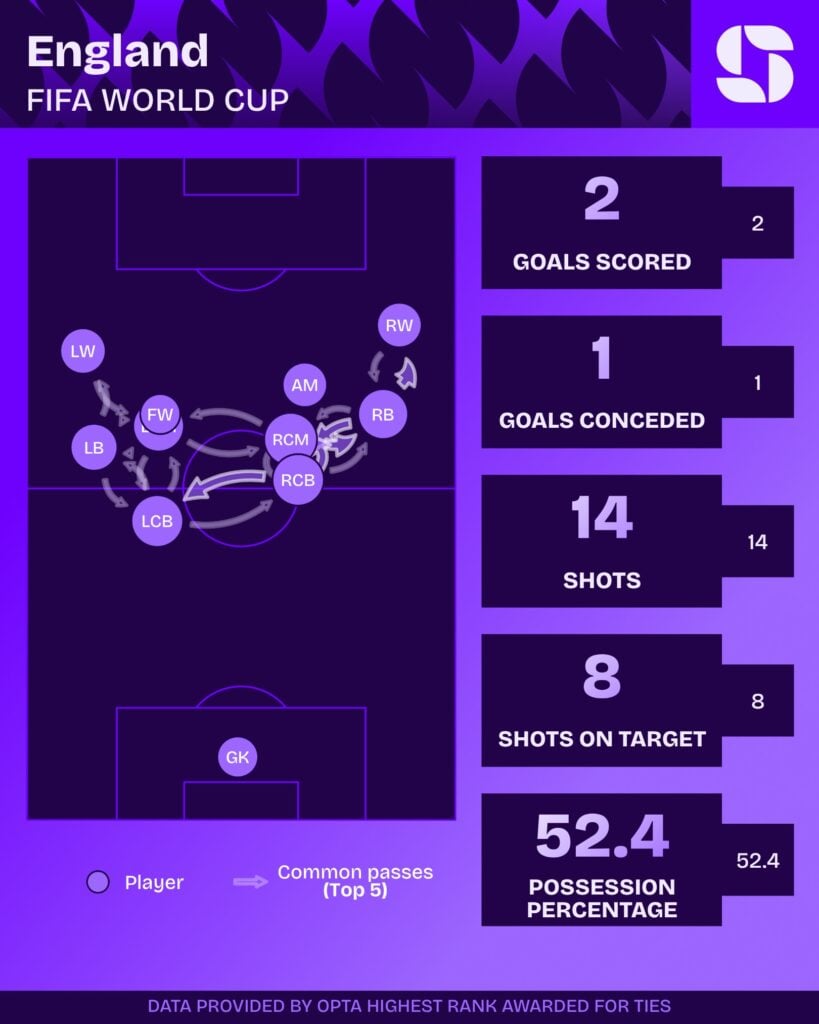
Throughout the tournament, England have been looking to work the ball in wide areas, using triangles. The full-back, No.8 and winger form triangles on either side. They use rotations and combinations to open space and access dangerous areas to create chances.
These same patterns were clear against Norway, particularly on the left with Nico O’Reilly, Elliot Anderson and Anthony Gordon.
However, England struggled to be repetite with their actions to move the ball into these wide zones to take advantage. They were hurt by the slow ball speed ans sloppy technical errors.
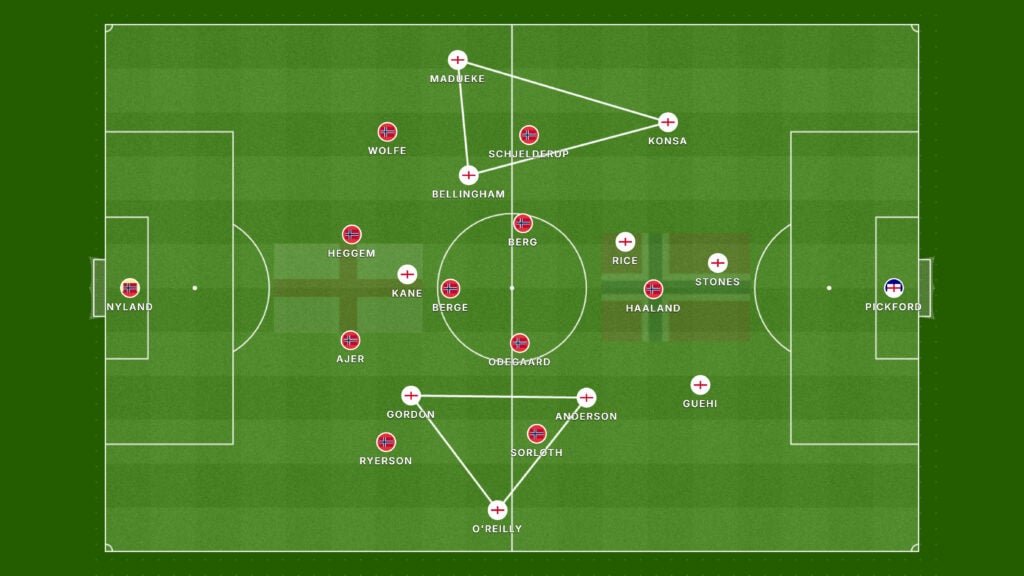
This was frustrating for Tuchel, and he didn’t hide that in his post-match interviews. But it could be a blessing in disguise.
Argentina’s out-of-possession scheme can also be exploited with these patterns of play. So this will present a good opportunity for Tuchel to fix those issues and hone in on them for the semi-final.
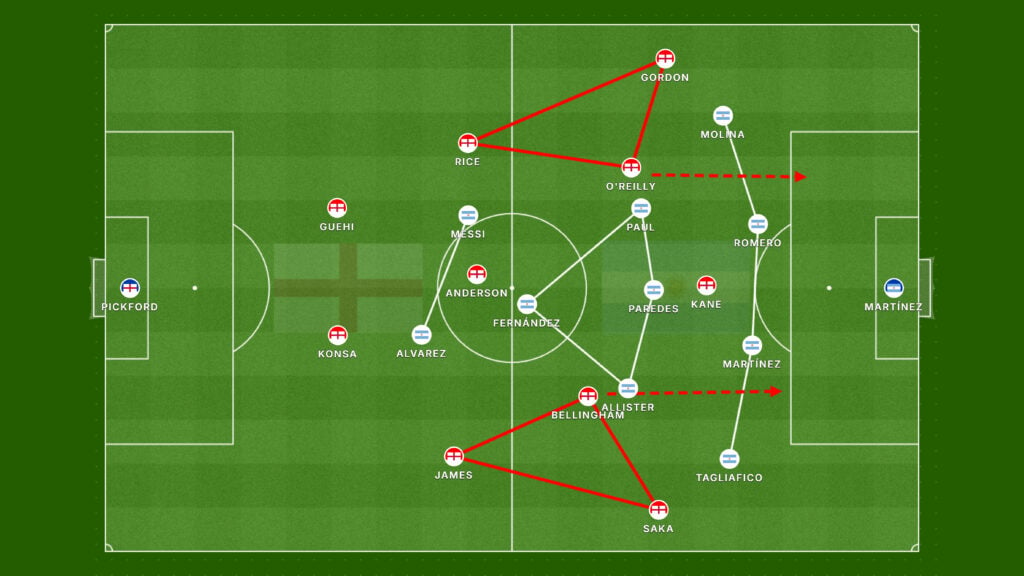
Argentina press in a 4-3-1-2 shape, settling into a 4-4-2 block out of possession, looking to sit narrow, block the centre and force play wide.
The first way England can take advantage is by shifting their block from side to side. Not only looking for switches, but also attacking back down the same side to create one-on-one isolations.
The full-backs have to close space to the wingers in those one-on-ones. But it’s often the wide midfielders in the line of three who ahve to track runs between the gate of the full-back and centre-back. The likes of Jude Bellingham and O’Reilly have the power to lose their markers to arrive in those gates.
By using dynamic movement to attack those gates, and utilising the one-on-one isolations out wide, England will have a variety of threat against Argentina.
#AD 18+ New Customers Only. Sign up using Bonus Code: COMMFREE110. Pay 0% commission on all sports bets for your first 110 days. Users making their first deposit by Skrill, Neteller or PaySafe card will not qualify for this promotion. T&Cs Apply. Be Gamble Aware.
Tracking midfield rotations
Argentina’s main source of threat is their central combinations. Their attacking organisation is largely based on relations around the ball.
In order to maximise this, Lionel Scaloni uses four midfielders behind Lionel Messi and Julian Alvarez.
All four midfielders are happy to rotate heights and positions to receive the ball. They orient their bodies to connect passes inside, creating mini overloads centrally.
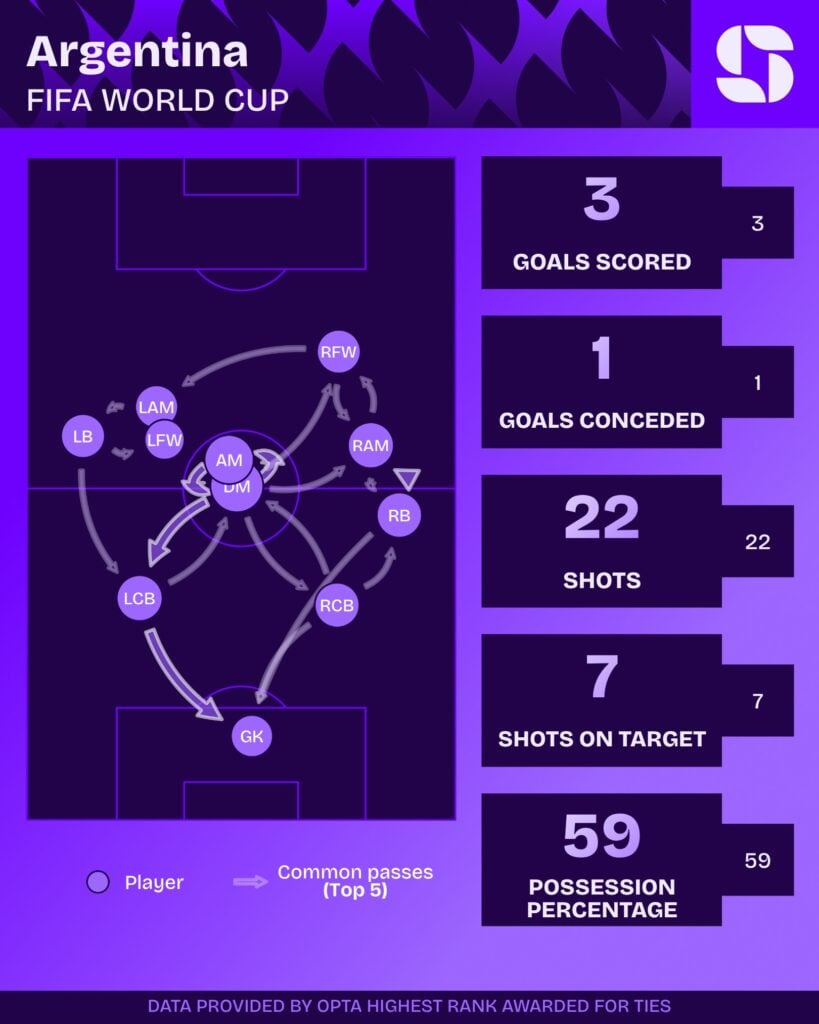
Swtzerland tried to deal with this by pressing aggressively when Argentina were building inside their own half in a man-to-man fashion. This is due to Argentina’s lack of speed an directness to attack into space. Not to mention their lack of physicality and height to play over the press.
However, when Switzerland were defending inside their own half, they collapsed to their 4-4-2 shape. Here, they looked to restrict the space between the lines.
Argentina are more dangerous in those moments, if they can drag lines apart through rotations, to find access in between for the likes of Messi.
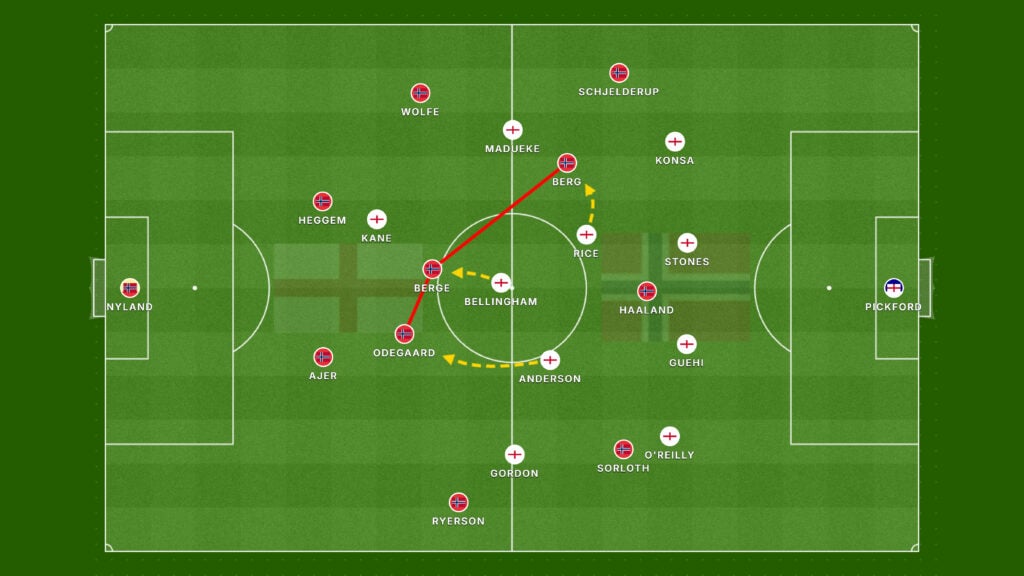
England were posed some similar questions with midfield rotations against Norway.
Martin Odegaard would often drop to create a +1 in the buildup, dragging Anderson high. Declan Rice was tasked with following Patrick Berg, who would also ask questions with high-to-low movements.
Jude Bellingham would then follow Sander Berge to man-mark their midfield three. But it was all about when to go and when not to go.
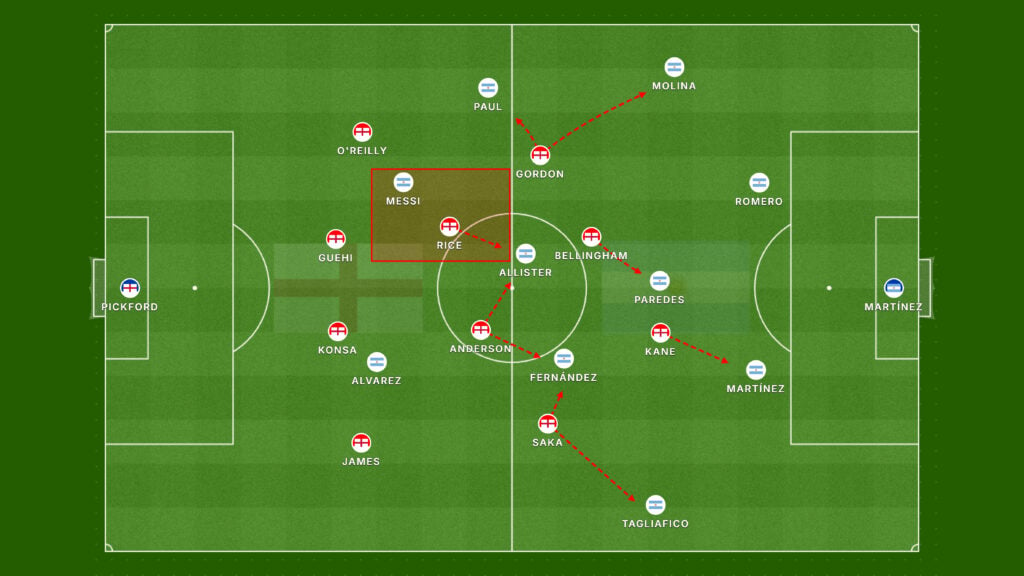
Argentina will look to ask the same questions, with Rodrigo De Paul floating inside to outside, Enzo Fernandez going from high to low and Alexis Mac Allister floating between the lines.
You then also have Leandro Paredes operating at the base and dropping in with the centre-backs to create an overload in the first line.
Bellingham will likely be responsible for him, while the likes of Rice, Anderson and the wide players manage the three in front.
Messi’s hot spot
Now, of course, part and parcel of dealing with those Argentina rotations is to stop space being created for Messi.
The 39-year-old has been showing different ways of dominating games at this tournament, getting on the ball through his IQ.
Instead of wasting energy chasing the ball, Messi has perfected the ability of ghosting into areas to receive the ball, mainly in that right half-space.
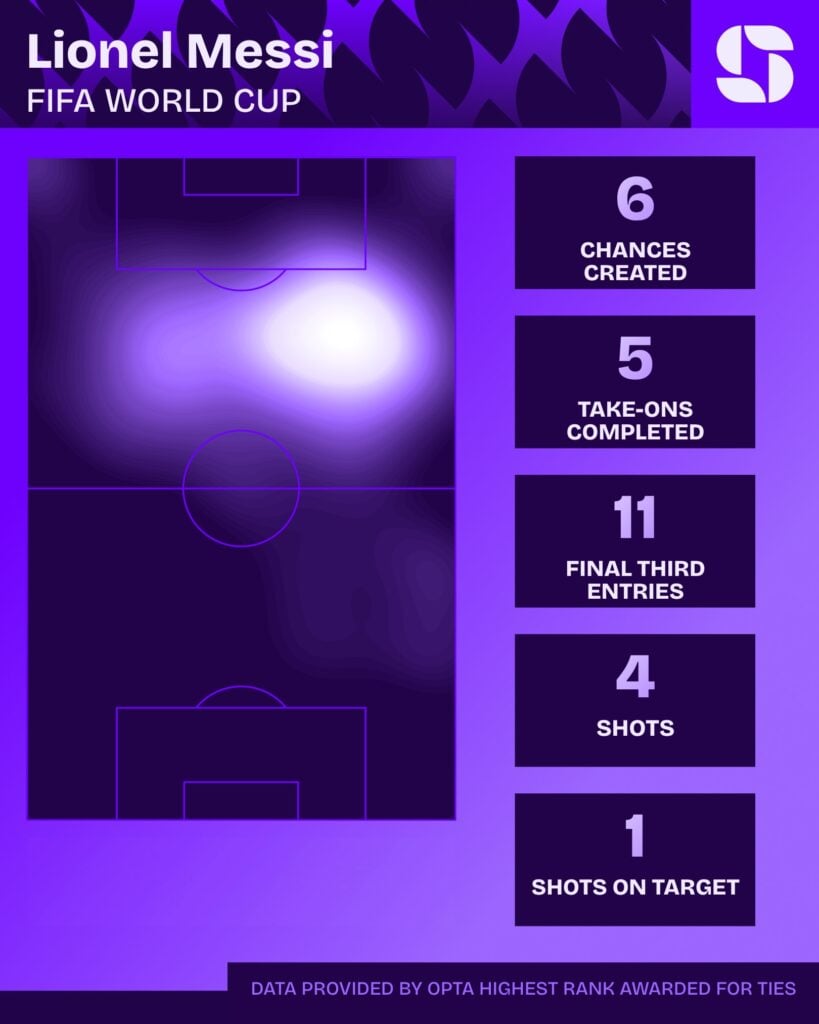
With the opposition midfield often being dragged forward by Argentina’s central combination play, it allows Messi to arrive in the blind spot.
This often creates a confusion for the defensive line on who should pick him up.
The left-back will often have to also account for the opposition full-back arriving at width, while the near-side centre-back is looking to defend the space in behind.
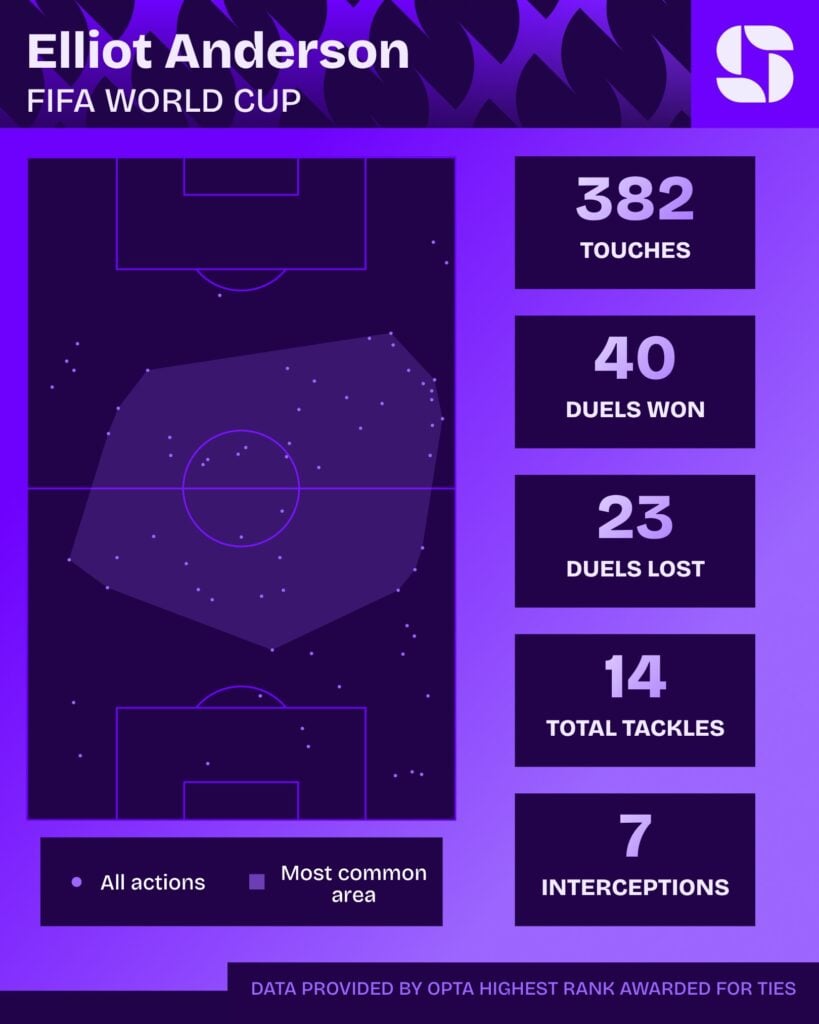
Anderson and Rice swapped positions against Norway, with the latter staying deeper towards the right and the former pushing higher on the left.
However, with Messi’s best receptions coming from him arriving behind a midfielder jumping out, he could get more joy with Anderson on his side.
Therefore, it could be wise to swap those roles back against Argentina, having Rice defend lower on the right to protect that space instead.
Messi is bound to still find ways of effecting the game, but by taking away this away, it could force Argentina to work wider where they tend to find less joy.
Read more: