







Manchester City have been subject to their own mini-rebuild over the past 18-months.
With an aging squad, Pep Guardiola’s side heavily invested across the past two transfer windows. Plent of the old guard either left the club or were slowly phased out.
Guardiola and his new sidekick, Pep Lijnders, are making a lot of tactical tweaks this season to his Man City side with their new tools. And a lot of those details become much clearer when we analyse one summer signing in particular. Rayan Cherki.
In this article, we’ll cover:
Cherki’s start to life at Man City
Cherki joined Man City for around £34million in the summer, signing from Lyon on a five-year deal.
Despite having clear technical quality and mastery on the ball, Cherki has been criticised heavily for his out-of-possession work rate and overall attitude on the pitch.
But Guardiola himself called Cherki “one of the most talented players I have ever seen in my career” comparing him to a street footballer who doesn’t feel pressure.
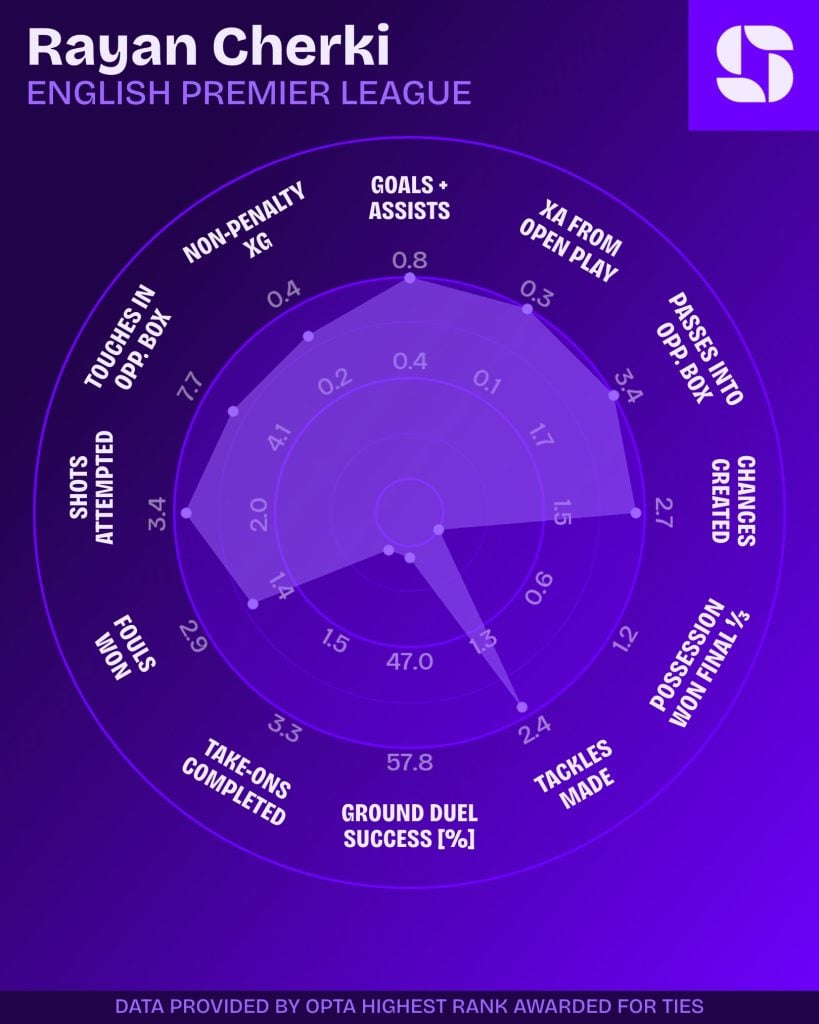
Cherki linked up with his new club before the Club World Cup and has made 15 appearances across all competitions. In that time, he has scored four and provided four assists.
The 22-year-old has sparked some of the most interesting tactical tweaks from Guardiola we have seen over his entire career. These include an extreme version of a classic role and a change in build up principles.
His false winger role
Using a false winger is not something drastically new. The idea is for winger to essentially start on the flank before drifting centrally and operating in the inside channels.
This leaves space on the outside for an attacking full-back to hold the width. It’s something Matheus Nunes has been doing with runs from deep to attack the vacated space in the right channel.
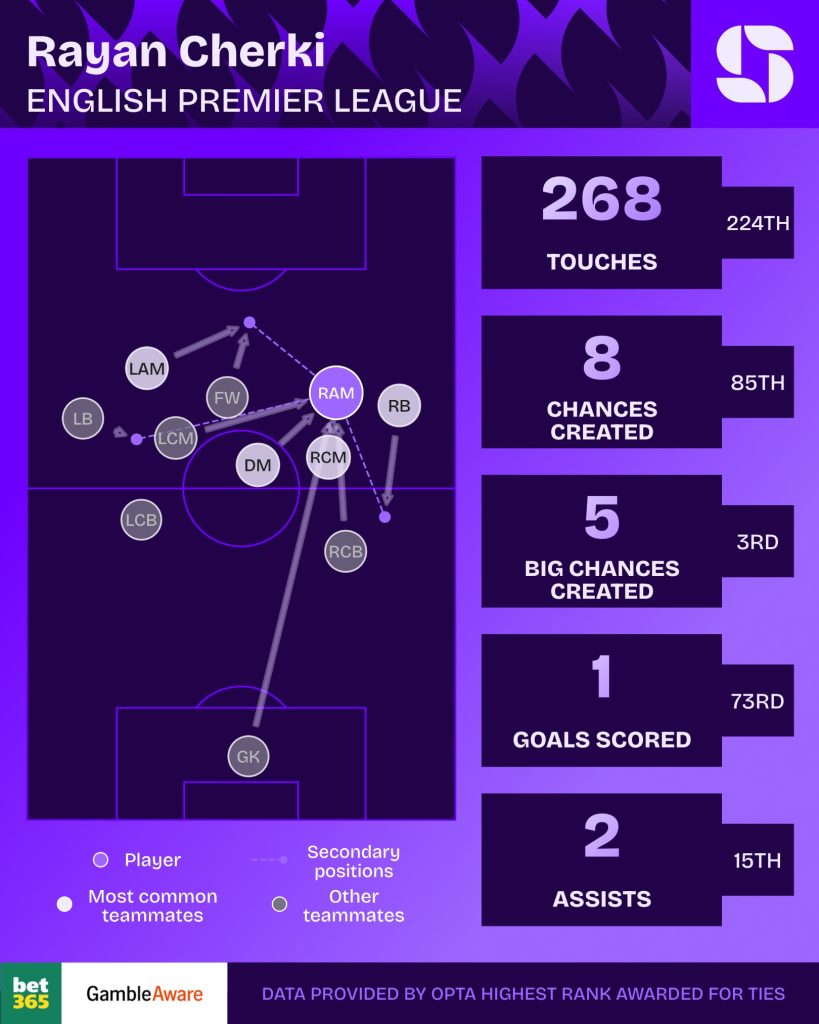
However, the way Cherki is being used in this role is interesting. He is playing as this false winger but in a rather extreme manner. The Frenchman is free to float all over the pitch and pick up the ball or overload wherever he wants.
Guardiola often opts to leave the right wing completely unoccupied, favouring his players in closer proximity to one another. This encourages combinations in central areas and relationships to be formed with his attacking talent.
Unique new build up
Man City’s build up shape often looks like a 2-1-4-2-1, forming a 2-3 base in central build up with the full-backs holding width, but from a lower depth start point.
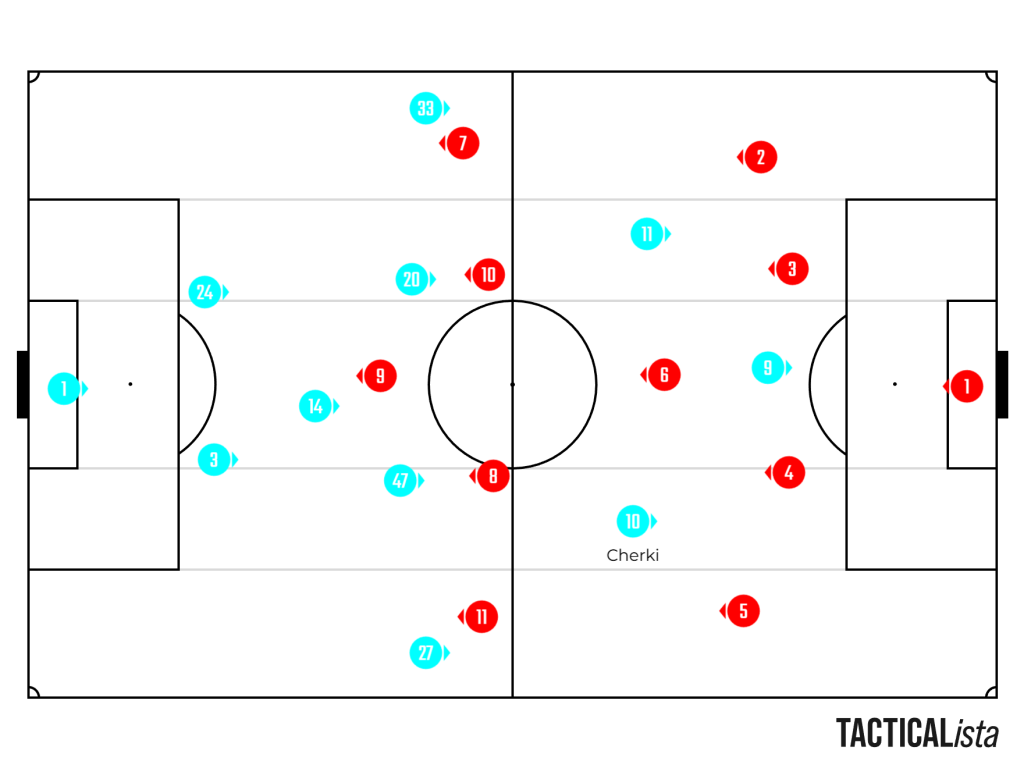
Guardiola then encourages his players to form these central clusters, where both Cherki and Doku will drop very deep in build up. It forces the opposition defensive line to make a decision on how aggressive they are going to be with following them.
If they choose not to follow, Cherki and Doku are able to receive behind the midfield line with a larger distance between the midfield and defensive line, giving them space to turn, face forward and make things happen.
If they choose to follow and be aggressive, this opens up the opportunities for Man City to be more direct with balls in behind, utilising the speed and power of Erling Haaland, as well as late runs from the full-backs who start in those lower depth positions.
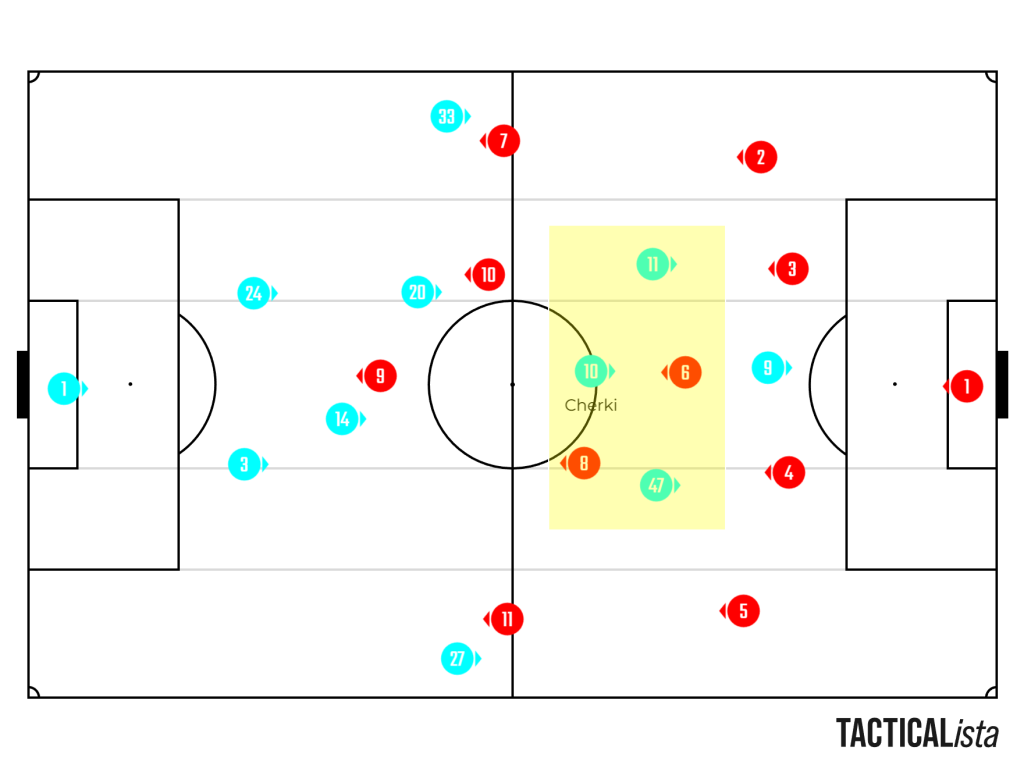
Another factor in these central clusters is when Cherki drifts all the way over playing in close proximity to Jeremy Doku. Foden can then drift forwards in settled possession and create an overload with three players between the lines.
By having the sheer volume of bodies in the middle of the park, Cherki can be more risky with his actions. The counter-pressing net is set to pounce if and when Man City lose possession in the middle of the park.
Creative burden?
One of the biggest questions this summer was how Guardiola was going to replace the creativity of Kevin De Bruyne. Especially given his superb synergy with Erling Haaland up top.
But having Cherki and Jeremy Doku both close to Haaland has allowed the pair to share the creative burden. And they both offer different qualities between the lines.


De Bruyne’s attempted 7.7 crosses per 90 minutes in the Premier League last season, completing 2.1 per 90. He also played 0.8 through balls per 90 from 14.9 forward passes, creating 3.0 chances per 90.
Now, Doku and Cherki don’t quite hit the same crossing numbers due to their inside positioning. But Cherki is actually averaging more through balls per 90 (1.3) and more forward passes (17.3). Doku, meanwhile, has created 3.5 chances per 90 this season, largely due to his ability to beat his man and find the pass into the box for Haaland,
Cherki also brings excellent technical quality between the lines and the ability to find solutions with his incisive passing. Doku adds that central carrying and Foden adds the extra quality with longer range passes and crosses.