






Pep Guardiola is set to leave Manchester City at the end of the season, following his successful 10-year spell at the club.
The Spaniard has won six Premier League titles, five EFL Cups, three FA Cups and, of course, the Champions League among other minor trophies.
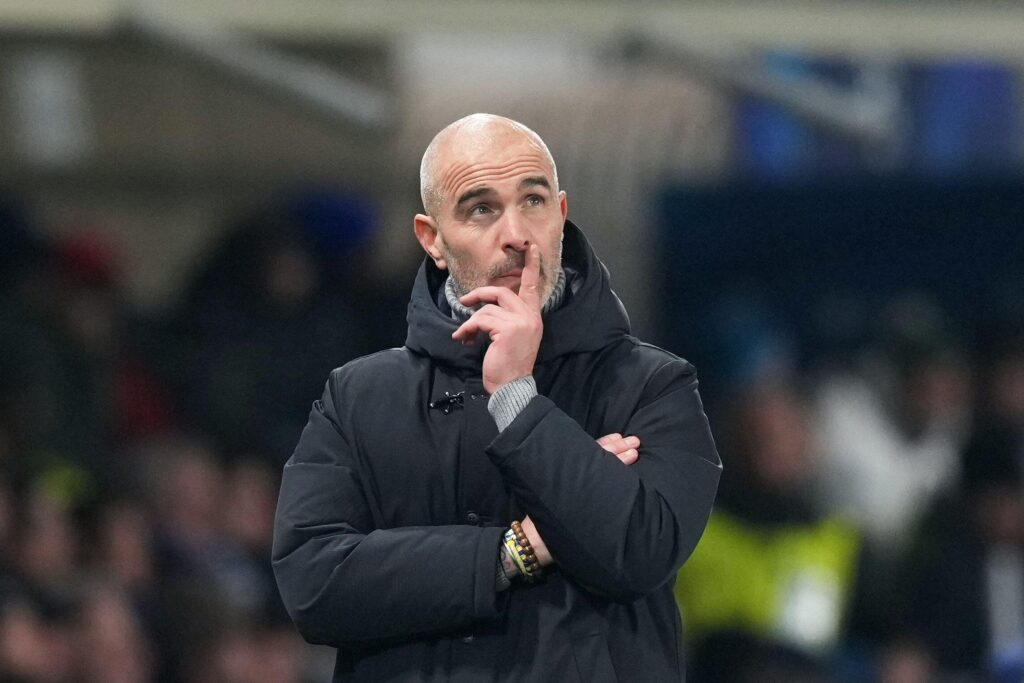
Replacing Guardiola will feel impossible. But former Chelsea boss and ex-Man City assistant Enzo Maresca is the man being tipped to take over in the summer.
In this article, we’ll cover
Maresca’s Guardiolan philosophy
Maresca has a history working with both Man City and Guardiola. He was the manager of Man City’s Under-23 side in 2020-21, before returning to be Guardiola’s assistant in 2022-23. The Italian was part of the backroom staff that led Man City to their historic Treble.
Guardiola hailed Maresca’s impact in helping fix Man City’s midfield balance in 2022-23, moving John Stones alongside Rodri in the pivot.
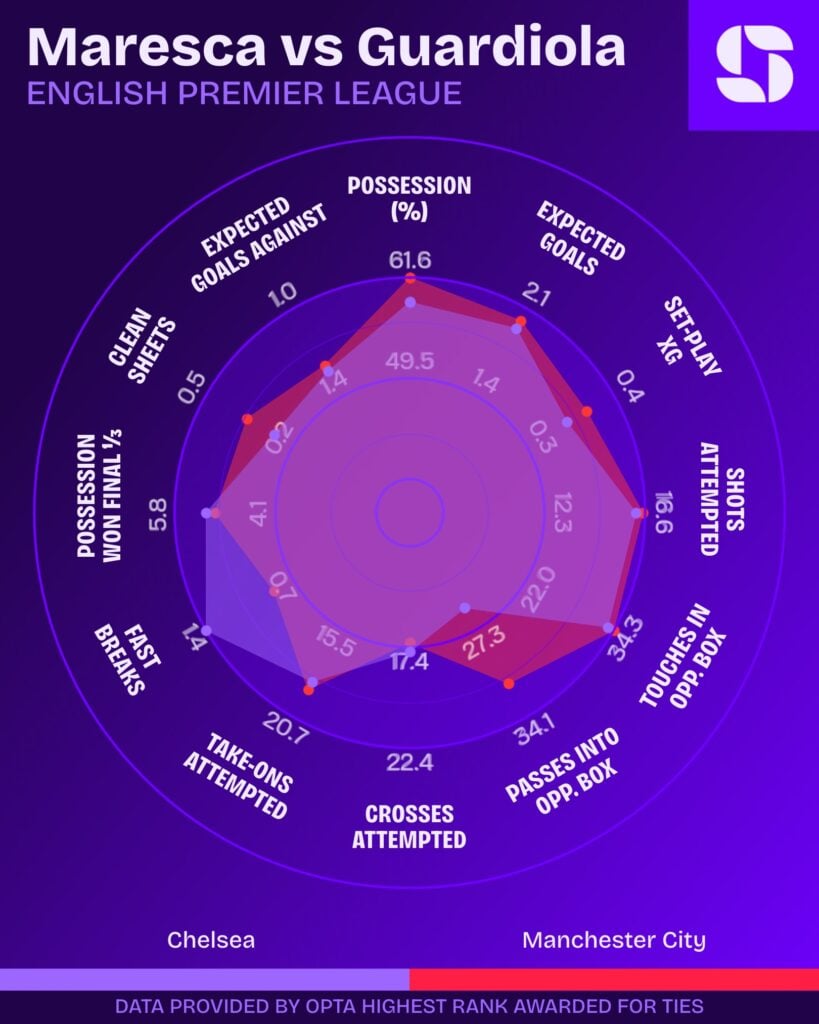
If you compare Maresca’s Chelsea with Guardiola’s Man City, you can see the similarities in overall philosophy. The Italian’s principles largely stem from Guardiola’s initial ideas of positional play.
Maresca wants his side to build out from the back in a slow and intricate manner. He often uses the goalkeeper as the +1 in buildup, looking to progress through the thirds and arrive in the final third with a clear structure to generate attacks, but sustain pressure and protect against transitions.
Off the ball, Maresca wants to press aggressively to regain possession and control of the game, much like Guardiola. This mindset is also applied to the counterpress, looking to regain the ball as quickly as possible after losing possession.
Dabble sign-up offer: Bet £10+ & Receive £10 In Free Bets
Not signed up to Dabble yet? Here's how to claim the Bet £10+ & Receive £10 In Free Bets welcome offer:
- Sign up to Dabble through this link
- Register your account with accurate personal details
- Place your first bet of £10 or more
- Receive your £10 in free bets when your qualifying bet has setted
- Use your Free Bet on any eligible sportsbook market within 7 days

#AD 18+ 7-day free bet expiry. Stake not returned. Promotional Terms Apply. GambleAware.org
Buildup importance
Since Guardiola’s arrival in England, using the goalkeeper as a +1 in the buildup has become popular. You could instantly recognise this with Guardiola’s decision to replace Joe Hart with Claudio Bravo in his first season at Man City.
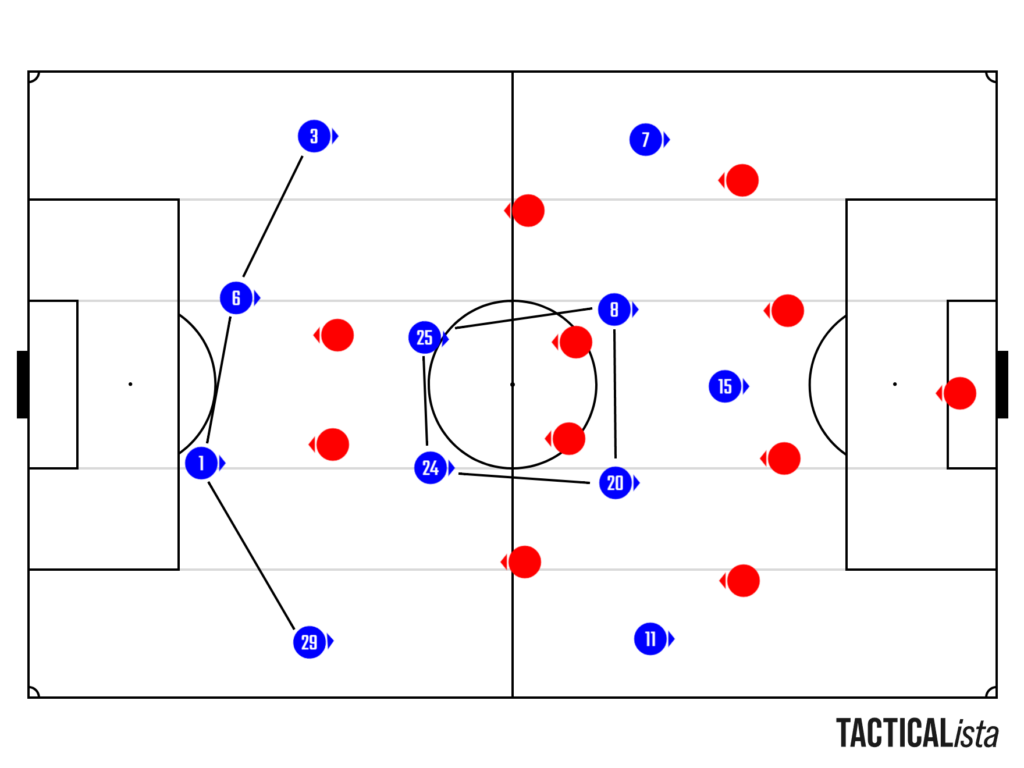
At Leicester, Maresca used Mads Hermansen to form a back four on the ball, with Robert Sanchez utilised in a similar way at Chelsea. When Hermansen made a mistake trying to play out from the back for Leicester, Maresca made his philosophy clear.
“It can happen. What cannot happen is that he starts to play long balls,” he said.
Maresca also added to telling Hermansen that any long balls would have seen him taken out of the team, at half-time in the very same game.
The Italian would rather build through the thirds at a slower tempo, with the aim to entice the opposition press and find the spare man. Like Guardiola, he saw those longer balls as hurting their odds, turning 100% possession with the ball at the goalkeeper’s feet into a 50/50.
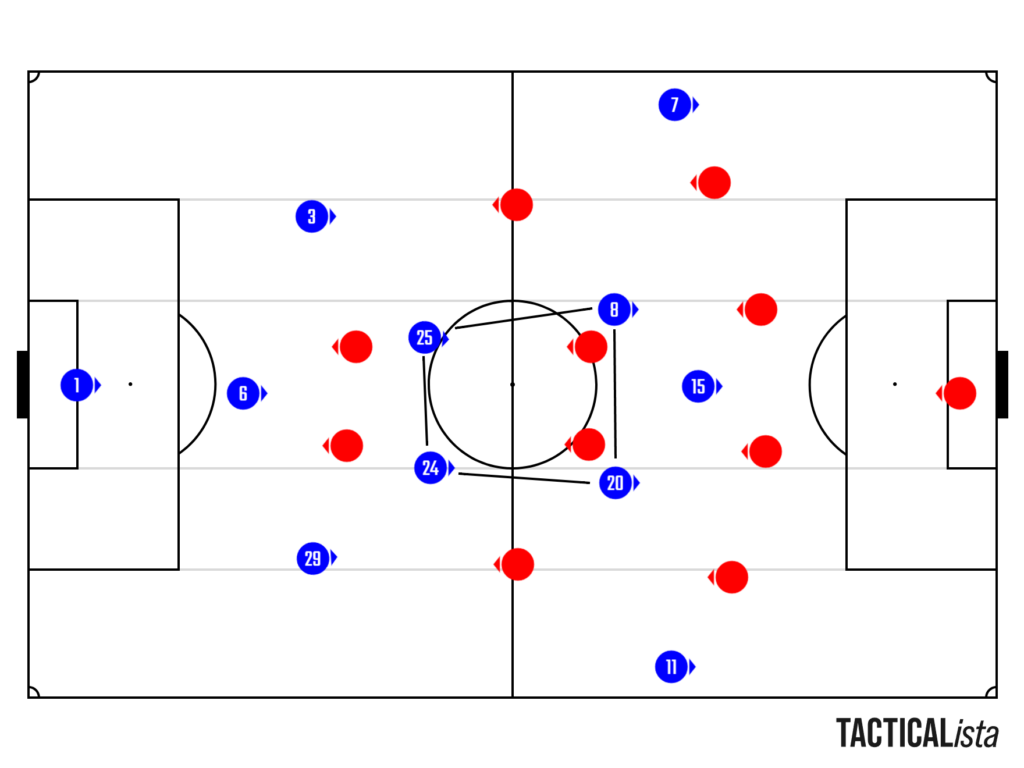
Maresca’s tweaks in his second season at Chelsea were interesting, though. Levi Colwill — their primary ball-hander — was out injured and Sanchez continued to make errors leading to shots and goals. Maresca decided to take the buildup responsibility away from Sanchez, opting to go longer after baiting the press. This brought an improved version of the Spanish goalkeeper.
This coincides with the increase in man-to-man marking schemes. Guardiola has also shifted this season to Gianluigi Donnarumma, and is more willing to play vertical into outlets such as Erling Haaland and Antoine Semenyo.
Control to defend
Maresca is fairly pragmatic in his coaching. Having a strong rest defence and counterpressing net comes first, which can easily be disrupted with a higher mobility and more fluid rotations. As Maresca once said, if players start moving wherever they want, it’s not freedom, it’s chaos.
The Italian believes that the structure of his team is the foundation for success. He puts players in the best possible positions to thrive, while simultaneously ensuring his team have solid protection when the ball is lost.
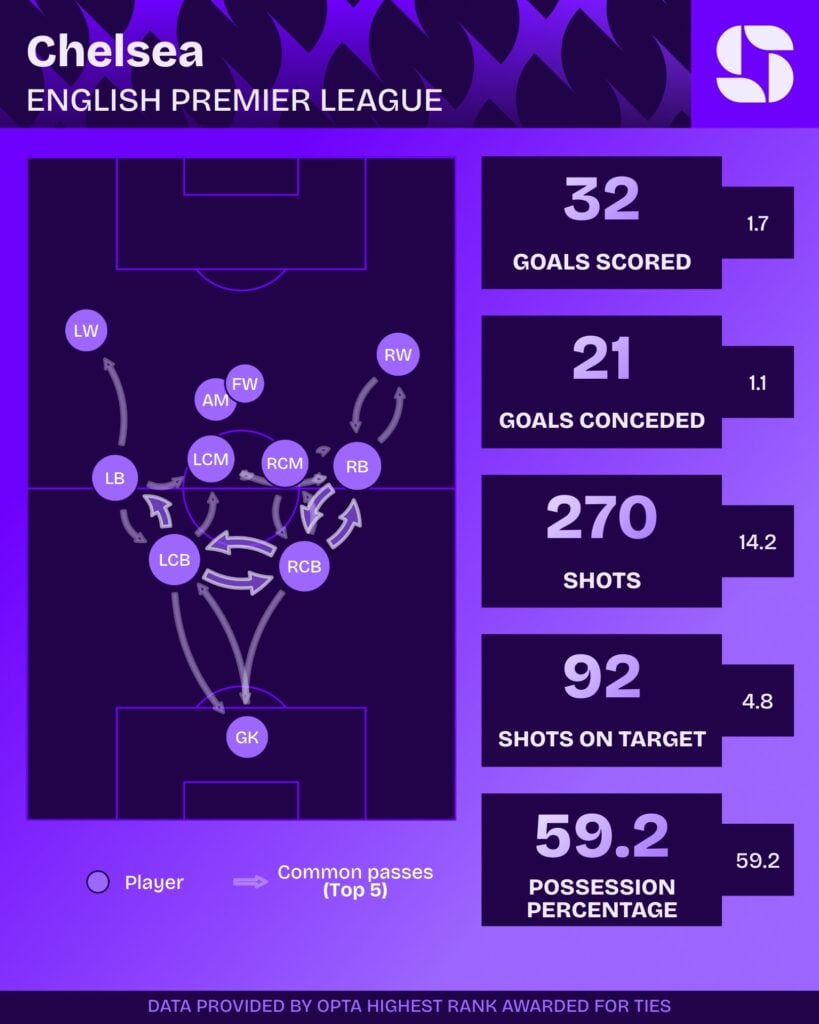
It must be noted, however, that Chelsea had a fairly weak defensive unit. And it was exposed even further when defending inside their own half.
To protect against that, Maresca wanted his side to defend by having control of the ball. An opponent cannot hurt you when you have possession.
Also, by moving through the thirds in a more methodical manner, you keep the units closer together to defend quickly when you turnover possession. The aim is to defend as far away from your own goal as possible, something that was also clear with Chelsea’s man-to-man approach out of possession.
Maresca’s Man City
Maresca is extremely likely to fall in love with his Man City squad. They have profiles across the pitch that suit his vision perfectly.
Defensive setup
The choice between Donnarumma and James Trafford in goal will be interesting. It will come down to whether Maresca wants to strictly adopt his buildup principles, or whether he’s willing to sacrifice that for Donnarumma’s shot-stopping abilities.
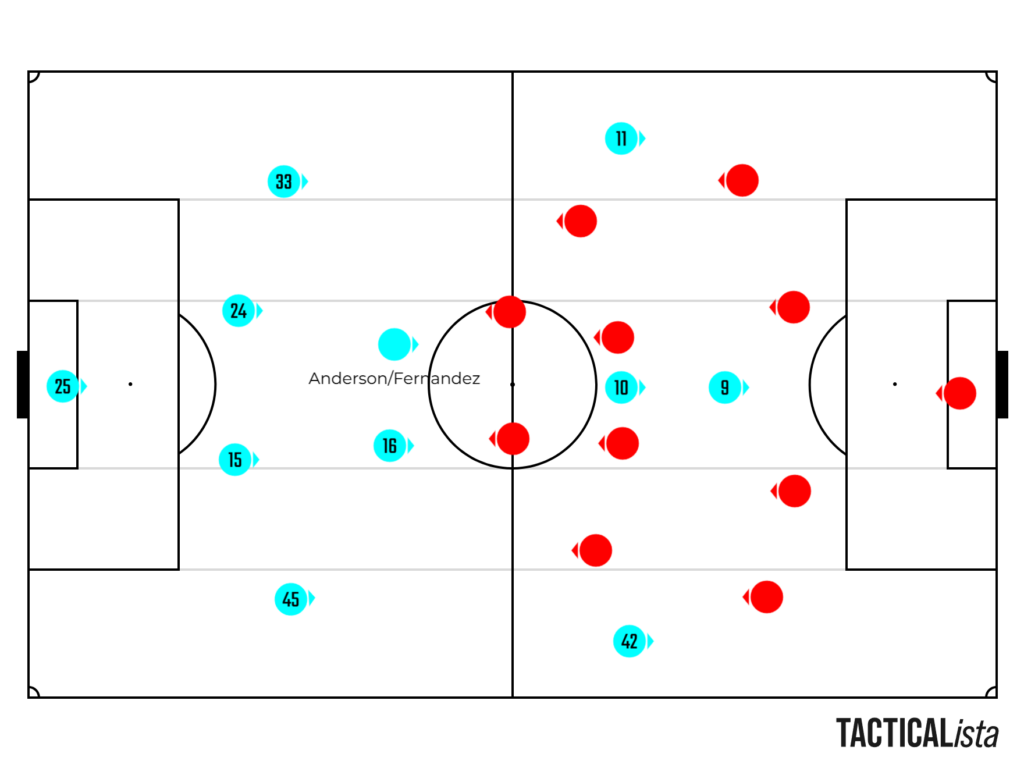
Man City’s backline has a number of exciting profiles for Maresca’s ideas. Marc Guehi is the perfect organiser, and orchestrator, from the central centre-back position. The likes of Josko Gvardiol and Abdukodir Khusanov both have the athleticism and quality blend to operate in those wide centre-back roles.
Maresca is known for his inverted full-backs, and Nico O’Reilly is perhaps his dream profile in this regard. He is able to operate in the pivot, further forward in the pocket, but also out wide on the left, giving him versatility for tactical tweaks. Matheus Nunes would also give him this option from right-back.
Midfield arrangement
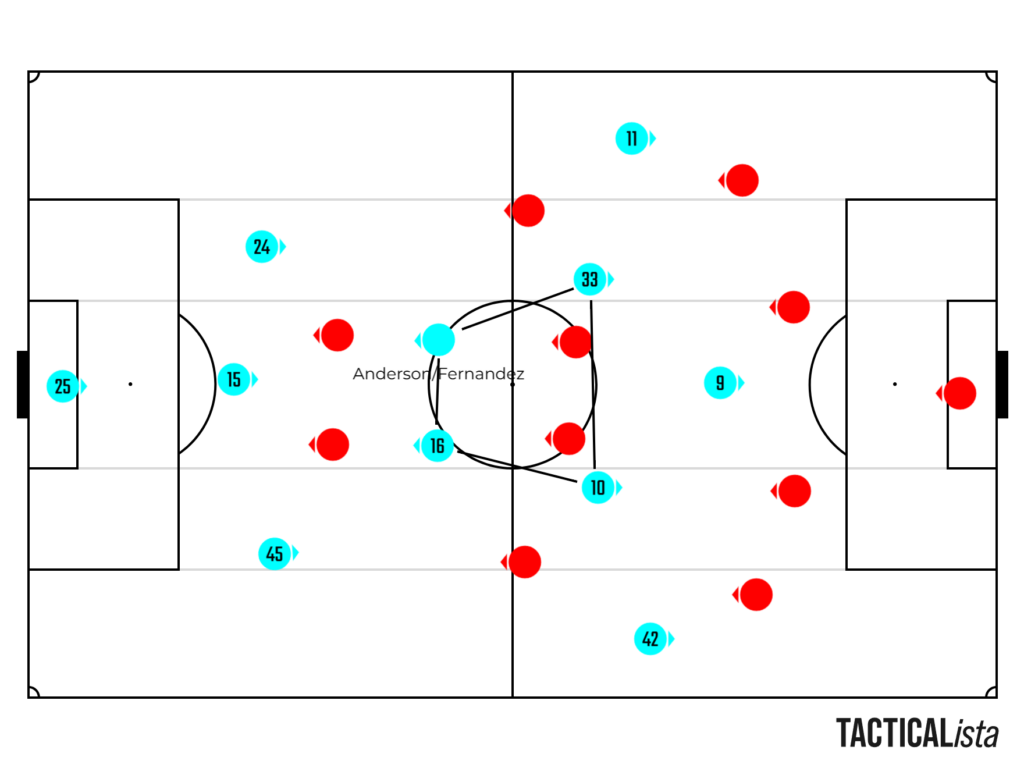
Forming the box midfield is another key factor of Maresca’s principles, wanting to have numerical superiority in the centre. Someone like Rodri is a fix in this Man City side when he is fit, but the pieces around him the Spaniard could be very interesting.
Bernardo Silva is leaving this summer, and Man City are being linked with moves for Elliot Anderson or Enzo Fernandez. This would allow Maresca to put his own stamp on the team, adding an all-phase midfielder who gives him tactical flexibility.
Further forward, Rayan Cherki is the magic man akin to what Maresca had in Cole Palmer at Chelsea. Maresca wants to maximise this player by putting them in the best positions to succeed on the pitch. They have the license to take plenty of risks in the attacking third.
Phil Foden is another fighting for this spot. His added off-ball enthusiasm in the counterpress — along with his positional understanding and tight space mastery — could make the Englishman another exciting option for Maresca.
Attacking options
Maresca will be very happy with his frontline options. The Italian likes his wingers to stay high and wide, stretching the pitch and isolating their full-backs one-on-one.
Jeremy Doku is the dream winger for Maresca. And either one of Semenyo or Savinho on the right offer a different set of traits to hurt teams in those isolations too.
Lastly, Haaland is the perfect striker for Maresca, looking to constantly be a threat inside the box, with crosses and cutbacks coming in from the wide men once they beat their man, but also taking multiple defenders away with him, allowing the likes of O’Reilly, Semenyo and even Anderson/Fernandez to crash the box and add goals.