







As always, it’s been a drama-filled start to the season at Manchester United.
Three defeats in the league, coupled with crashing out in the Carabao Cup to Grimsby Town, have led to questions of Ruben Amorim and his rigid system again. The Red Devils still look like a team wedded to a system that doesn’t control or win enough football matches.
While Man Utd have managed three wins, they have all come at Old Trafford and two amidst intense periods of early pressure followed by chaotic second halves — against Burnley and Chelsea.
In this article, we’ll cover:
Sunderland may be the only victory this season where Man Utd looked like they were going to win throughout, as they created plenty of chances while keeping a clean sheet.
Conceding goals has been a problem, with the Red Devils having the sixth-worst defence in the Premier League (11 goals conceded).
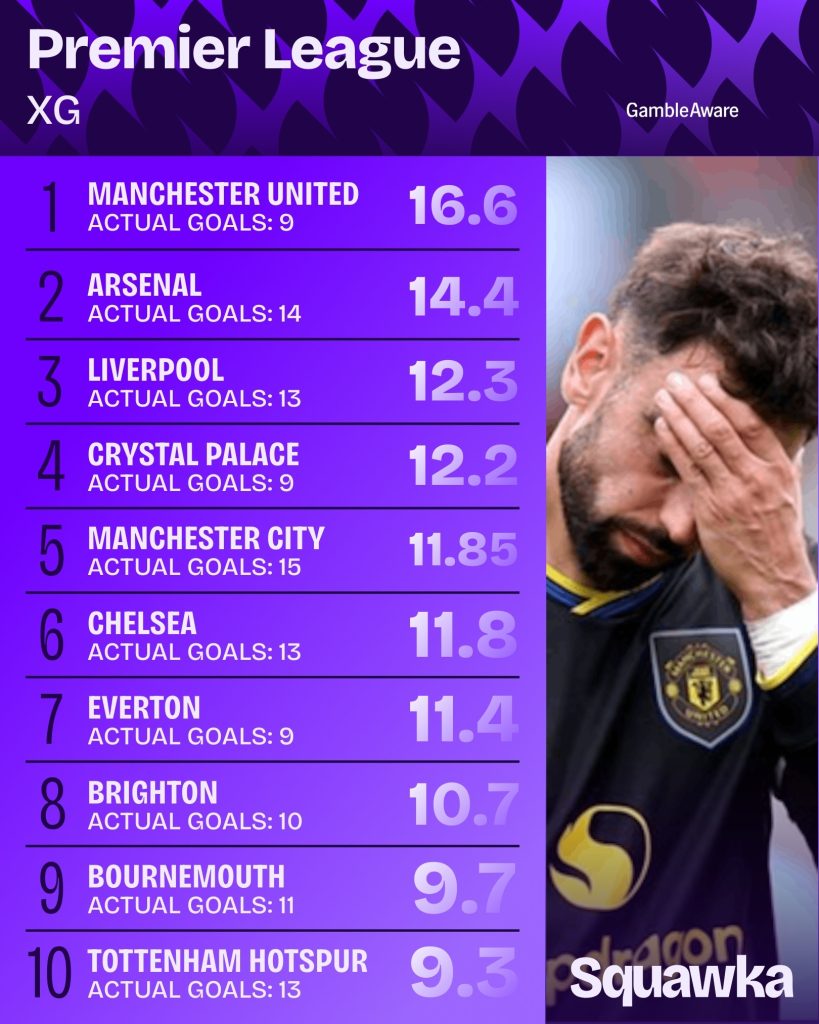
However, this doesn’t mean their forte is scoring, as Man Utd have the highest Expected Goals total in the league this season. But they are the biggest underperformers. And by a large margin.
Shots galore
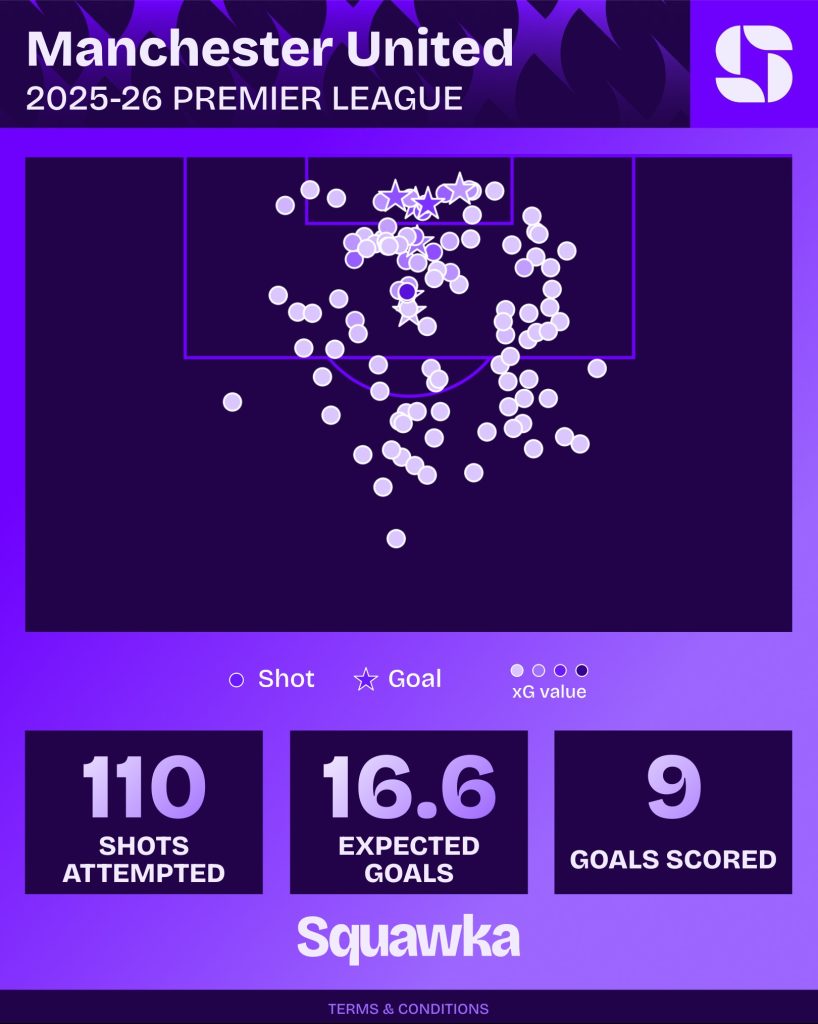
Demystifying Man Utd’s xG this season paints a revealing picture of a team that takes many shots in each game. But not many of them are high-quality chances.
On average, Man Utd take 14 shots per 90 minutes, indicating a side that shoots more in hope than with purpose.
For example, Man Utd posted 1.6 xG against Arsenal, compared to the Gunners’ 0.9. But Man Utd’s game from 18 shots, with only seven coming from inside the box. And five of those shots were taken after the 70th minute, when Man Utd needed to chase the game.
Man Utd have only taken fewer shots than their opponent once this season, in the draw with Fulham. So they shoot a lot. But it’s generally from ridiculous angles, or areas of the pitch where they’ll need something special to score.
Why are Man Utd underperforming against their xG?
When Man Utd create high-quality chances, they create few of them and fail to take them. Take, for instance, the matches against Fulham and Brentford.
First of all, Bruno Fernandes missed a penalty in both of these games, which accounts for roughly 0.76 in terms of xG. In the Fulham game, aside from Matheus Cunha’s one-on-one chance that was saved well by Bernd Leno, there wasn’t another high-quality chance created.
A similar story unfolded in the Brentford match. Although Man Utd’s 2.57 xG weighed up against Brentford’s 1.79 may look dominant, it was anything but.
Aside from the Fernandes penalty, the rest of the cumulative xG in that match came from one attack: Benjamin Sesko’s goal. Sesko took three attempts to put the ball into the net for his first goal for the Red Devils, and they all counted towards the xG.
Away from home, Man Utd still do not create enough changes for a team to have 33 league games under their manager and have spent big to bolster the attack in the summer. A penalty and one striker latching onto the end of a cross being your main chances to score the entire game should be cause for concern.
Should Man Utd be higher in the table?
You could make the case for the games against Fulham and Brentford turning on Fernandes scoring a penalty. And Brentford having a possible red card. The game state may have flipped, giving Man Utd much-needed confidence in a team that is clearly lacking in it.
But analysing the xG over the course of the games and contextualising them in the season? Man Utd are probably where they should be, barring possible fine margins that hinged on two missed penalties in two matches.
Dabble sign-up offer: Bet £10+ & Receive £10 In Free Bets
Not signed up to Dabble yet? Here's how to claim the Bet £10+ & Receive £10 In Free Bets welcome offer:
- Sign up to Dabble through this link
- Register your account with accurate personal details
- Place your first bet of £10 or more
- Receive your £10 in free bets when your qualifying bet has setted
- Use your Free Bet on any eligible sportsbook market within 7 days

#AD 18+ 7-day free bet expiry. Stake not returned. Promotional Terms Apply. GambleAware.org
Statistics are important in football matches as they explain the game in finer detail. But they always need to be taken into context with the actual football played.
For instance, in the Manchester Derby, Man Utd were trailing Manchester City 3-0 and managed to build up a head of steam, exploiting the gaps behind the defence and creating some decent opportunities in the process. These chances still arose when Man Utd were chasing the game, having conceded three goals with barely much time to spare.
Man Utd’s 1.46 xG against Man City mainly came from Casemiro missing a gilt-edged chance in the 84th minute, after failing to score in front of an open goal from Fernandes’ cross-come-shot.
Might Man Utd have mounted a comeback had the Brazilian converted? Perhaps, but we’re dealing in hypotheticals far too much.
Normally, if a team is underperforming their xG, it means they should score more goals than they have and win more matches. But in this case, Man Utd are not doing enough on the pitch when creating chances.
While they may have the highest xG this season, the Red Devils are not getting enough out of their expensive new front line.
It may take time for them to gel and for Amorim to figure out the best way to use his new forwards, but frankly, each defeat or performance where United don’t create enough chances raises more questions about his tenure as United manager. Time is a luxury the former Sporting CP manager doesn’t have.
He has precious little wins to his name after 33 league matches.
Even with better players in attack, analysing the underlying numbers further show the system is not worth sticking to, despite Amorim’s dogmatic stance.