









Cole Palmer, Morgan Rogers and Joao Pedro have managed 14 goals & assists combined so far this season after just five games.
It’s been a mixed start for Xabi Alonso since taking the reins at Chelsea, winning his first three competitive games to start out, before losing twice and drawing once in his last four.
The main positive to come from the new coach’s arrival so far is the potency of his front three, currently being labelled “JPMorgan” and “CPR”.
While there are plenty of positives coming from the attacking organisation for Alonso at Chelsea, there are multiple factors that must be analysed to fully understand the trade offs at hand and the long term success of the Blues attacking unit.
In this article, we’ll cover
The trio’s data
Palmer, having scored two goals and provided two assists in the first five Premier League games, is leading the trio in the majority of creative metrics.
The 24-year-old is averaging 2.3 chances created per 90 minutes, is completing the most through balls (0.5 per 90), the most forward passes (11.6 per 90) and the most take-ons completed (1.9 per 90).
He is also taking the most shots with 2.5 per 90, with 1.1 of those shots on target, but just an 11.76% conversion rate.
Rogers is level with Palmer on chances created with 2.3 per 90, despite only having the one assist to his name in the Premier League this season, along with his three goals scored. However, Chelsea’s new signing did manage three assists against Leeds United in the Carabao Cup.
The England international is also averaging 1.9 take-ons completed per 90, level again with Palmer in this metric, but Rogers is averaging more touches inside the opposition box with 6.0 per 90.
Lastly, Joao Pedro leads the Blues for goals + assists, scoring three and assisting three already this season, despite only playing four of the opening five games.
The Brazilian has shown the perfect blend between physical and creative traits this season, averaging 3.5 aerial duels won per 90, 3.00 fouls won per 90, 7.3 touches in the opposition box per 90 and a 70% take-on success rate.
Attacking conditions (direct)
The Blues rank third for direct attacks (11) so far this season, while ranking first for direct attacks ending in a goal (2).
Early in Alonso’s Chelsea tenure, we have seen an intent to attack in a much more direct fashion, finding the frontline with open space as much as possible in a few different ways.
Firstly, Chelsea are only averaging 47.5% possession in the Premier League this season, which is massively inflated from their previous two games against Hull City and Brentford where they had 66% and 60% shares of the ball. Prior to those two fixtures, in their opening three games of the season, the Blues were second-lowest for possession numbers, with only Hull City below them.
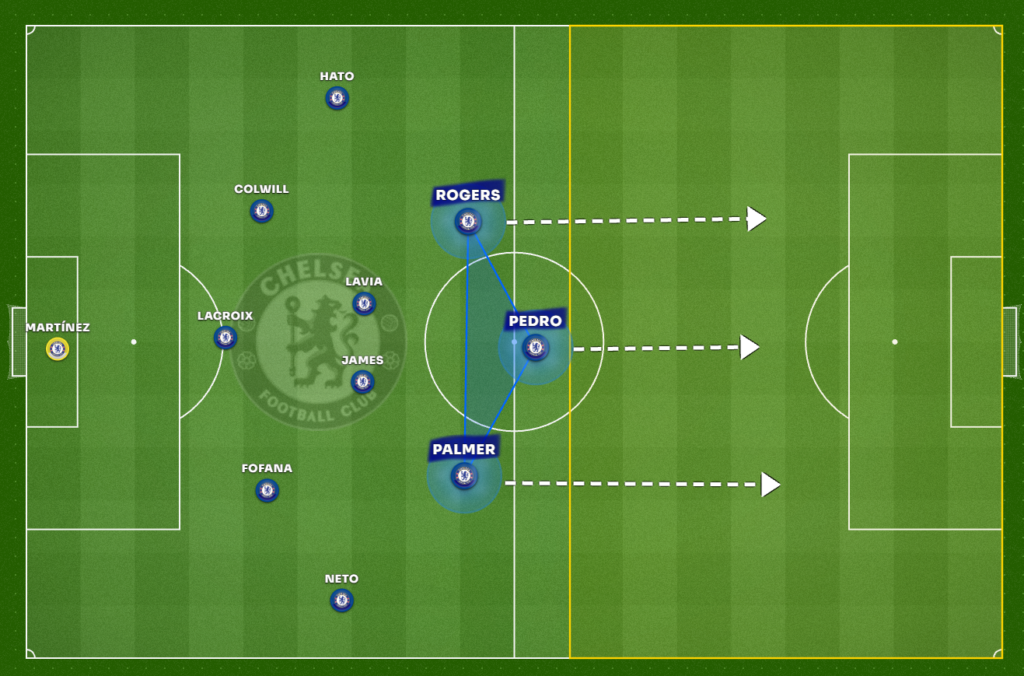
Naturally, by having less of the ball, Chelsea have been absorbing pressure deeper inside their own half, which creates advantages once possession is regained to attack the larger spaces left in behind.
But Chelsea aren’t only creating these conditions through transitions, they are also looking to be direct when they possess the ball, starting from goal kicks where Emiliano Martinez has been going long the majority of the time, looking to hit Pedro and Rogers as outlets and gain territory that way, especially given most teams press man for man from goal kicks in the Premier League.
In more settled possession phases, Alonso’s side are still trying to create this verticality to play more direct into open spaces, often dropping a midfielder into the backline.
The aim being to drag the opposition press out, leaving a large space in the middle of the pitch for players to drop into and combine, but also having runners on the last line to stretch with runs in behind, which Chelsea often look to pick out with long balls from the midfielder dropping deep.
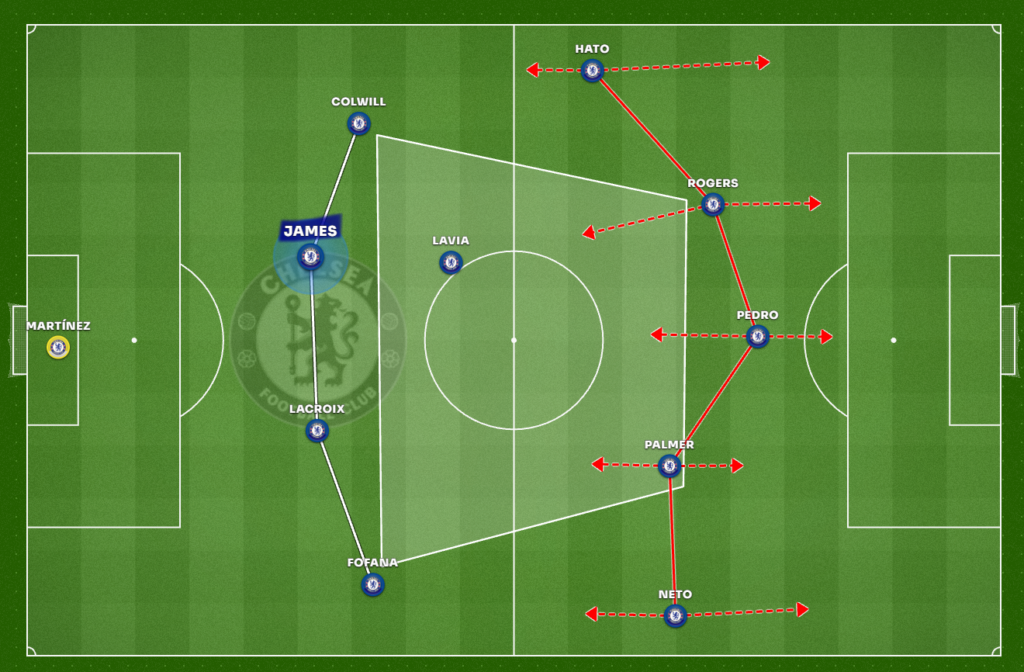
While these methods are all well and good when it comes to getting the best out of Chelsea’s front three, it can create some disadvantages to their overall game balance, with the main ones centered around control of the ball.
By looking to attack quickly when possession is regained, Chelsea can often create a chasm of space between their two units, the defense/midfielder unit and the front line (with the wing-backs marauding forwards to join them).
This often opens the game up into a transitional and more chaotic gamestate, as if Chelsea don’t manage to finish an attack and have the ball turned over, the spaces for the opposition to access between those two units and hurt Chelsea in transition appear.
Another disadvantage of their approach to attack quickly can be that lack of control with the ball, allowing the opposition to dominate possession and dictate the game. This puts added pressure on the defensive unit to absorb pressure, with the opponents having a high volume of actions in Chelsea’s half, which has contributed to their poor defensive record this season, already conceding 12 goals in five games.
Know your personnel (KYP)
A key detail when it comes to creating a functional attack in football is best described with a saying popular in basketball, KYP, know your personnel.
Pedro was asked about the frontline and their connections, stating “With Cole, I try to always give the ball to his feet. With Morgan it’s more to the space, or to let him in a one-on-one situation. And my job is to just run, and they are going to find me!”
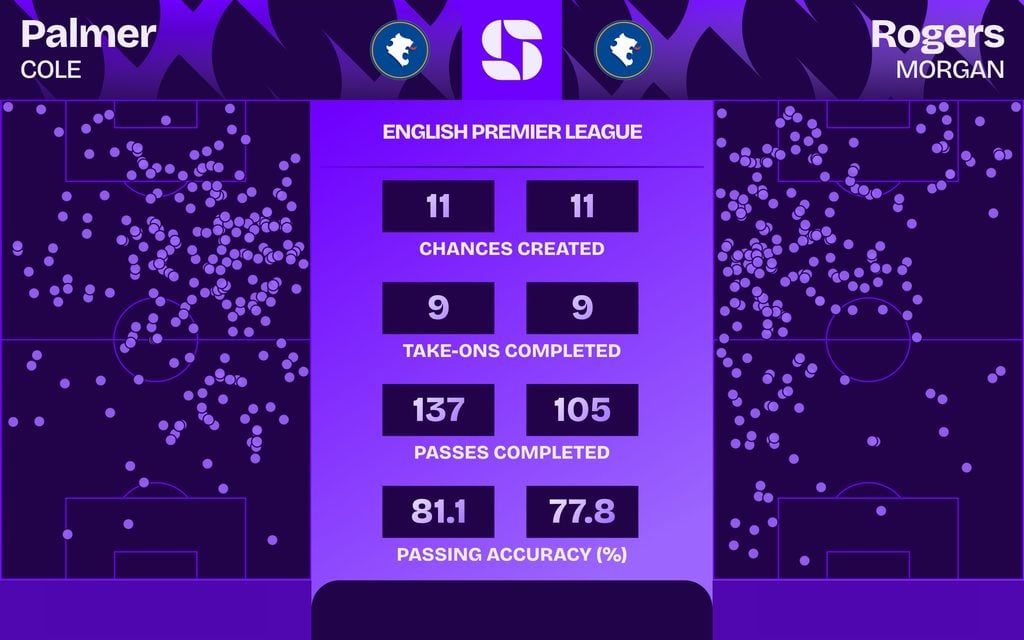
This speaks to the developing synergy between the trio in attack, as Palmer and Pedro played alongside each other last season and Rogers already has the childhood friend link with Palmer too.
Whenever Palmer gets the ball, there is a clear emphasis from both Pedro and Rogers to make runs off the ball, giving him as many possible passing options to benefit his best traits.
Alonso has given both Palmer and Rogers freedom to move across the frontline, starting on their “strong” sides but having the license to drift across, make blindside runs and create overloads.
Rogers often finds himself making those runs across from left to right to support Palmer when he has the ball at his feet, with Chelsea’s new signing often acting as more of a second-striker alongside Pedro in attack.
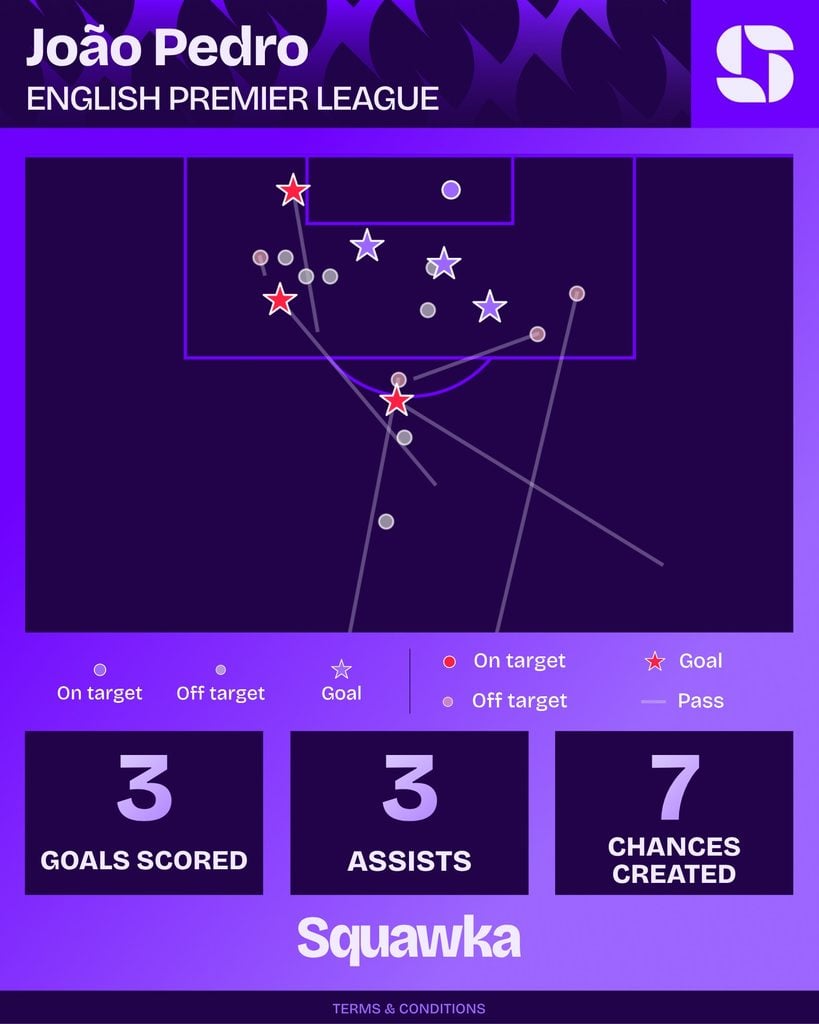
Pedro’s role in the frontline is slightly different, because while he stated himself he is looking to make runs beyond and receive passes from the duo behind him, the hybrid nature of the Brazilian’s profile allows him to contribute in many different ways.
You can also attribute the phrase “KYP” to Alonso and how he is providing optimal conditions for his forwards as previously mentioned.
The Spaniard knows Rogers thrives in larger open spaces where he can carry the ball over distance and arrive with momentum in the final third. He knows Palmer thrives with space ahead of him to pick passes into, with plenty of runners moving into depth. And he knows Pedro can provide a blend of the two, having the physicality and hold up play to bring things together, but also the technique and combination play to link things together and create danger in the opposition’s defensive third.
Now the question becomes about balance, can Alonso find the correct balance between direct attacks to maximise the trio’s qualities? But can he also continue to develop a synergy between his attacking unit to unlock more settled defensive units and find advantages in a slower more controlled manner in the attacking third.