







Real Madrid ended a four-game losing streak against fierce rivals Barcelona with a well deserved El Clasico win.
After enduring a tough time facing Barca in 2024-25 (four losses in four games), Los Blancos managed a commanding win in the first matchup of the new campaign.
Xabi Alonso’s game plan worked almost flawelessly and 2-1 was actually a ‘misleading’ final score. His side could have won by more.
Doesn’t take away from their performance, but it’s worth mentioning they did face a weakened Barcelona team. Raphinha, Robert Lewandowski, Marc-Andre Ter Stegen, Dani Olmo and others missed out through injury.
How did Real Madrid beat Barcelona?
Discipline, attention to detail and gameplan execution
Let’s get it out of the way quickly: the story of any Barcelona game features their high defensive line. While Real Madrid have Vinicius Junior and Kylian Mbappe up front. Their speed is how any football fan would expect Los Blancos to try and hurt Barca.
It’s exactly what happened and what led to their first goal. Jude Bellingham threaded the needle and found a beautiful through ball to Mbappe who made no mistake and opened the scoring.
Dabble sign-up offer: Bet £10+ & Receive £10 In Free Bets
Not signed up to Dabble yet? Here's how to claim the Bet £10+ & Receive £10 In Free Bets welcome offer:
- Sign up to Dabble through this link
- Register your account with accurate personal details
- Place your first bet of £10 or more
- Receive your £10 in free bets when your qualifying bet has setted
- Use your Free Bet on any eligible sportsbook market within 7 days

#AD 18+ 7-day free bet expiry. Stake not returned. Promotional Terms Apply. GambleAware.org
But none of it would’ve happened without the ‘bait’ run by Eduardo Camavinga. He signaled a one-two with Bellingham and projected himself forward, dragging Alejandro Balde with him. The left-back went too far back and broke the defensive line, sitting deeper than Eric Garcia, Pau Cubarsi and Jules Kounde.
This gave Mbappe just the time to run in behind without being offside and break through on goal. Beautiful, coordinated collective movement that allowed Real Madrid to capitalise on Barcelona’s main point of defensive exposure.
Without possession, Los Blancos were laser-focused throughout the whole 90 minutes and gave Barca no room to operate. Their man-marking was sharp, players knew how and when to switch opponents when the ball went from one side to the other and limiteed the opposition build-up play from the back.
And despite having just over 30% possession and sitting deep a lot of times, they managed to pressure in the attacking third very effectively.
Barcelona lost possession in their own defending third 37 times, their most in a game this season across all competitions.
And excluding Real Madrid’s own individual errors that gifted Barca the ball near their own goal, the guests had absolutely nothing going for them.
| Real Madrid | Barcelona | |
|---|---|---|
| Possession | 32 | 68 |
| Shots (on target) | 23 (10) | 15 (6) |
| Expected goals | 3.60 | 1.03 |
| Big chances | 4 | 2 |
The Eduardo Camavinga experiment
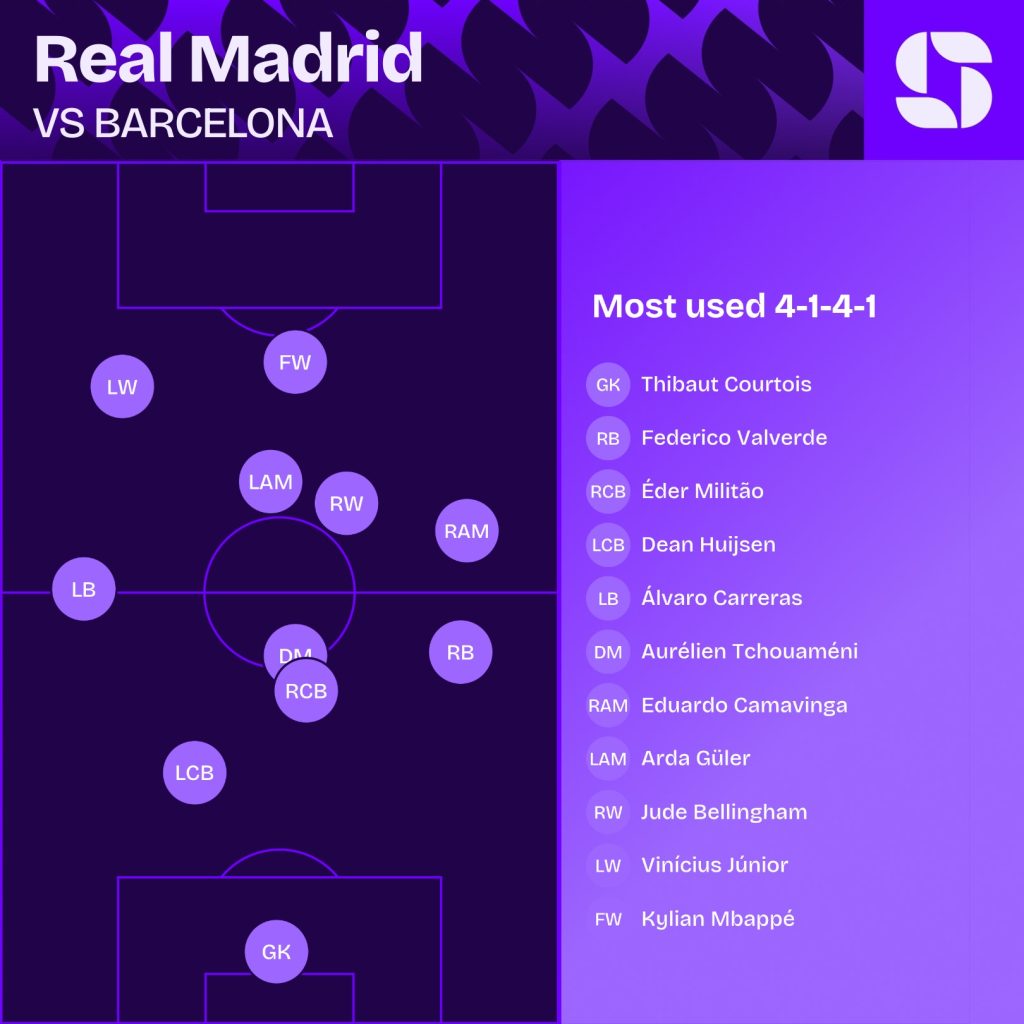
Speaking of Camavinga, he had an excellent performance in a few different roles. He actually started as the right-midfielder in a 4-1-4-1 that could morph into a 4-3-3, 4-4-2 or even 5-3-2 with and without the ball.
Xabi Alonso never intended for him to cause a lot of trouble on the ball down the right wing. The French midfielder had a more defensive focus shutting down the opposition’s actions in that side, allowing Bellingham – a more offensively-gifted player – to occupy a more central area. And it was this duo combining in those exact roles that led to Mbappe making it 1-0.
Later, he went back to forming a double pivot with Aurelien Tchouameni when Brahim Diaz came on for Arda Guler. He got stuck in and helped protect the defence, providing solidity in the middle of the park.

Key stats:
- 8 duels won (Ranked #2)
- 3 take-ons completed (Ranked #3)
- 3 tackles (Ranked #4)
- 2 chances created (Ranked #5)
Barcelona hurting themselves
Real Madrid had a very good game and well-executed strategy, make no mistake. But Barcelona put on a disappointing performance, to say the least. Both things can be true.
They started the game in their well-established 3-2-5 in-possession with a rigid structure but also a lot of movement and interchange between the pre-determined positions. The first 15-20 minutes were loaded with switches between Lamine Yamal, Ferran Torres and Fermin Lopez moving around in the attacking half.
At some point in the match, this stopped. The hosts managed to remove their build-up from the back and when that happened, there was no plan B to go forward and create chances.
It also didn’t help that their main players – the ones who were available, at least – had poor individual showings. Pedri and Yamal didn’t shy away from the game, but couldn’t use their brilliance to help their team.
Real Madrid used their man-marking setup but not in the whole width of the pitch. The idea was to ‘trap’ the opponents in the side where the ball was, and then shift accordingly.
One antidote for that is precisely switches of plays and moving the ball around quickly from one side to the other. The intention to do that from the Barcelona point of view was there just in the beginning. Had they mantained this strategy, it could have been an important weapon to create openings in the attacking half and cause miscommunications between Real Madrid defenders and midfielders.
Misuse of Lamine Yamal
Regarding Yamal, Hansi Flick – and/or his assistant Marcus Sorg – actually hurt him a little in the El Clasico. Despite not exactly hugging the touchline in the first half, he received the ball always in the same spots. The movement early on didn’t get him a lot of touches in central areas.
And they also – unexplicably – forced a lot of their actions down the left, despite usually going more for the right-sided attacking third. That almost took the 18-year-old out of the game.
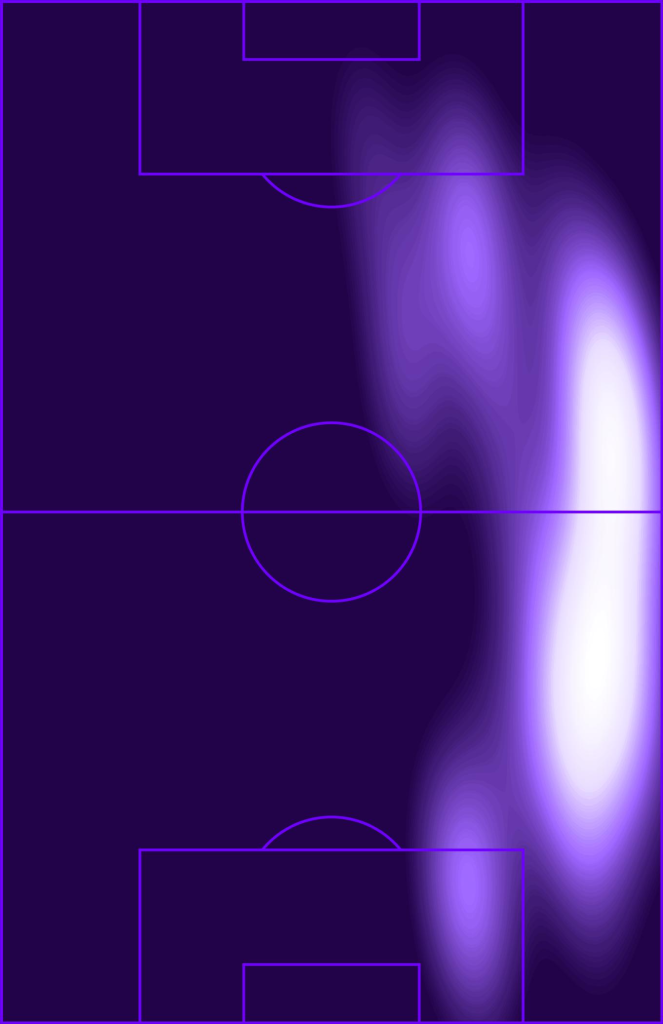
He had his second fewest touches in a first half of a game that he started this season (28, ahead only of the 22 vs Rayo Vallecano).
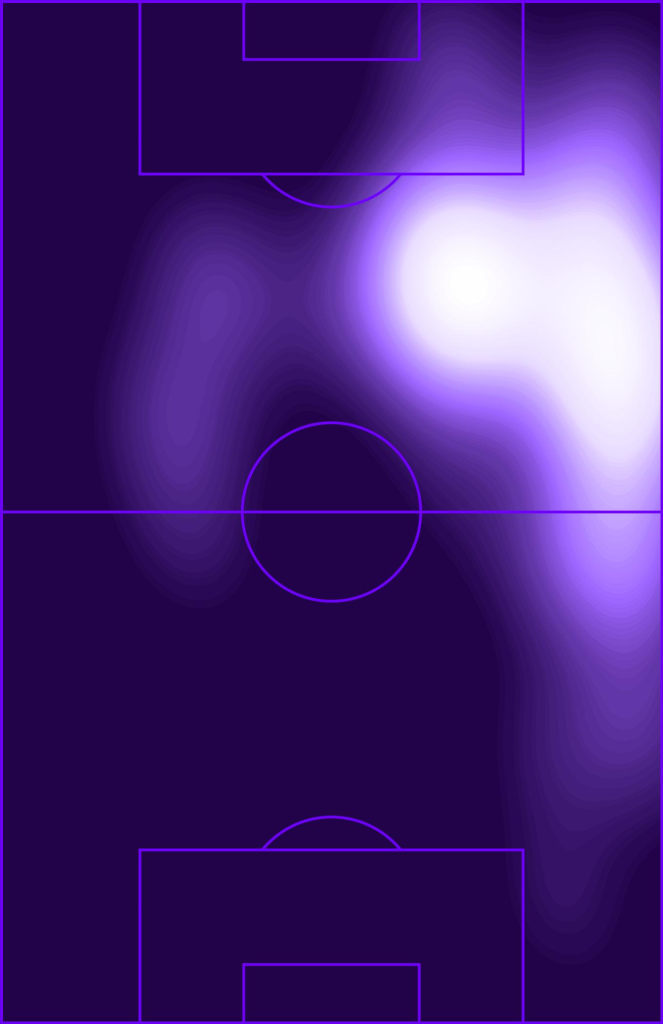
That only changed in the second half – especially the last 20 or 30 minutes of the game. At the end, he had total freedom to roam around however he liked – and that’s when he truly introduced himself into the match.
His unpredictable movements left opponents in doubt as to where he was going, since Alvaro Carreras didn’t chase him around as to not be dragged out of position. In one of those moments, Yamal had enough space to put Kounde through on goal, but the defender had a poor touch and failed to get a shot off.
Ultimately, it felt like Barca could have done more for themselves. But that doesn’t take anything away from Xabi Alonso’s gameplan and how disciplined and focused his players were in order to execute it to near perfection.
A good example of how dominant they were is that, despite Barcelona being very much alive until the end only one goal down, they didn’t show any belief that they could equalise. The one-goal difference looked much larger than it actually was considering the attitude and body language of each team.