





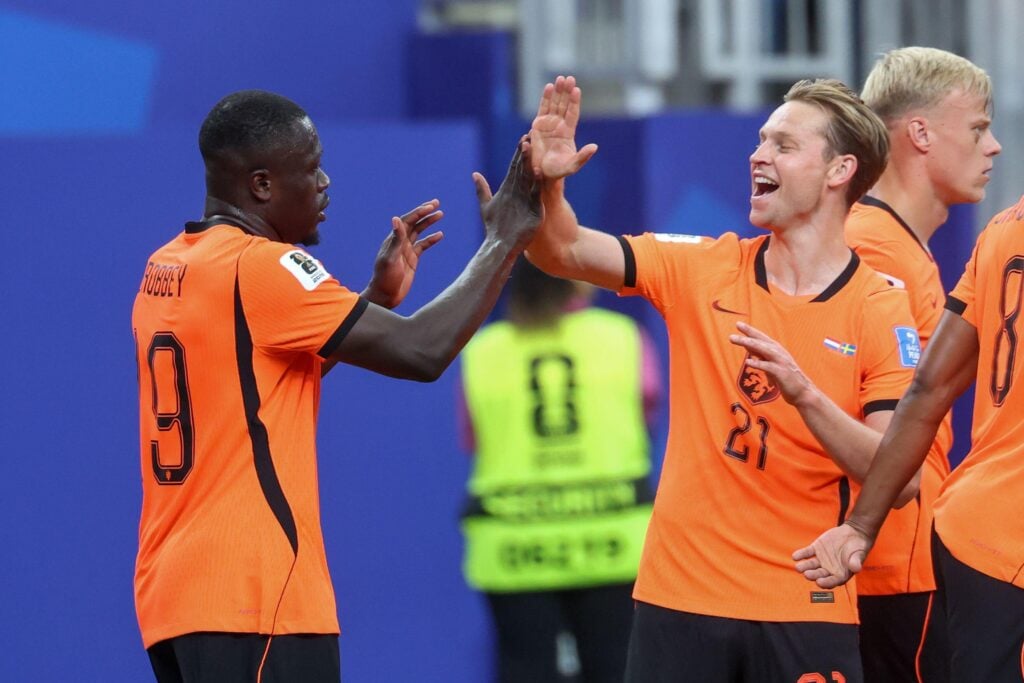
Netherlands took a giant step towards qualifying for the knockout stages of the 2026 World Cup with a commanding 5-1 victory against Sweden.
It was a lightning start from the Dutch players, who found themselves 2-0 up within the first 17 minutes. Both goals came from Sunderland striker, Brian Brobbey.
Eyebrows were raised when the starting eleven was announced with Brobbey replacing Crysencio Summerville. This was despite the West Ham forward impressing, and scoring, in Netherlands’ opening match of the tournament.
It proved to be a masterstroke from Ronald Koeman though, with Brobbey bullying the Swedish defence and getting his reward with his brace.
The second half saw another flurry of goals. Netherlands again started quickly, scoring twice within nine minutes of the restart. They held a 4-0 lead with less than an hour played.
It was Cody Gakpo who scored both the third and fourth. Those goals, and an impressive performance overall, must have Liverpool fans hoping he’ll be in for a more profitable season for the Reds next term.
Sweden grabbed a consolation through Anthony Elanga but they were unable to halt the Netherlands charge. Summerville, a half time substitute, finished the rout when he added a fifth from the edge of the area.
Netherlands might’ve had their frailties exposed against Japan but they flexed their muscles against Sweden.
Bet £10 & Get £30 in Free Bets with Bet365
Not signed up to bet365 yet? Here's how to claim one of the best bookmaker welcome offers around...
- Open an account (here's a link)
- Make a qualifying deposit of between £5* and £10*
- Claim the offer to receive three times your deposit in 'Free Bets'.
- To release your 'Free Bets', place qualifying bets to the value of your qualifying deposit and allow those bets to settle.
- Your 'Free Bets' will become available shortly after your qualifying bets have settled
- To use your 'Free Bets', select 'Use bet credits' in the bet slip.

Min deposit requirement. Free Bets are paid as Bet Credits and are available for use upon settlement of qualifying bets. Min odds, bet and payment method exclusions apply. Returns exclude Bet Credits stake. Time limits and T&Cs apply.
What were the major factors in the match?
The inclusion of Brobbey
As we mentioned above, it was a bit of a surprise when Brobbey was included in the Dutch line up. It was all the more shocking that his inclusion came at the expense of the dynamic Summerville.
It was a move that paid off almost instantly, though. The Sunderland forward was at his industrious, physical best. He occupied the Swedish defence almost single-handedly, all the more impressive as Sweden lined up in a 3-5-2 formation.
Brobbey won 60% of his duels in the match, including both of his aerial contests. This ability to win the ball, especially in the final third, allowed Netherlands to maintain possession. It also brought his teammates into play more.
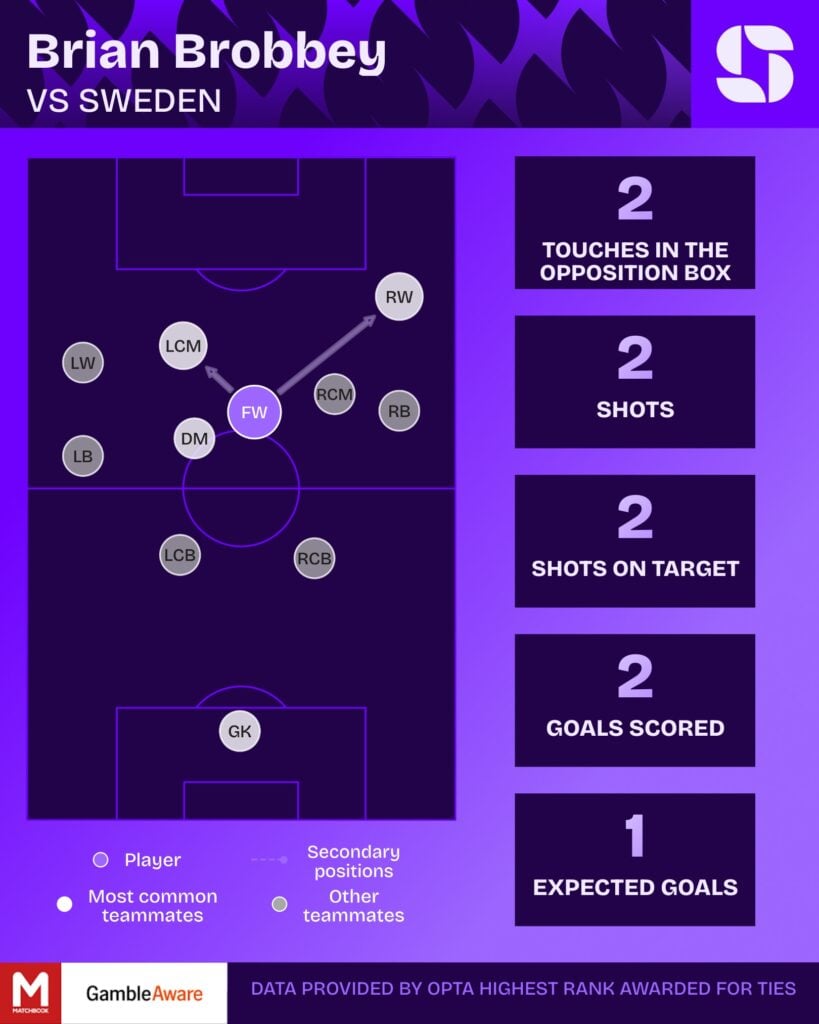
Against Japan, Donyell Malen led the line. However, he looked to get in behind the Japanese defence, leaving the wide players frustrated. Brobbey was happy to play with his back to goal, though, bringing Malen, playing wide on the right, and Gakpo into the game.
Sweden didn’t help themselves, though. Their three centre back were so narrow. This forced the wing backs inside more and left space for the Dutch players out wide. It was something they took full advantage of.
Netherlands put 11 crosses into the box in the opening 45 minutes to great success. Both of Brobbey’s goals came from balls from wide and it took Sweden far too long to adapt their shape to halt Netherland’s wing play.
Subtle repositioning of De Jong
Another area that Koeman identified, and adapted, from the Japan game was the position of Frenkie De Jong.
In Netherlands first game, De Jong would drop into the Dutch defence when out of possession. This created a back five, with Virgil Van Dijk and Jan Paul Van Hecke shuffling across. Koeman seemed worried about Japan’s ability to break through the channels and this was his answer.
It didn’t really work, though. It negated perhaps De Jong’s greatest strength — his ability to break lines with his passing. Against Japan, he maintained a passing success rate of 95% but most of his passes were lateral. This meant he was simply moving the ball rather than progressing it.
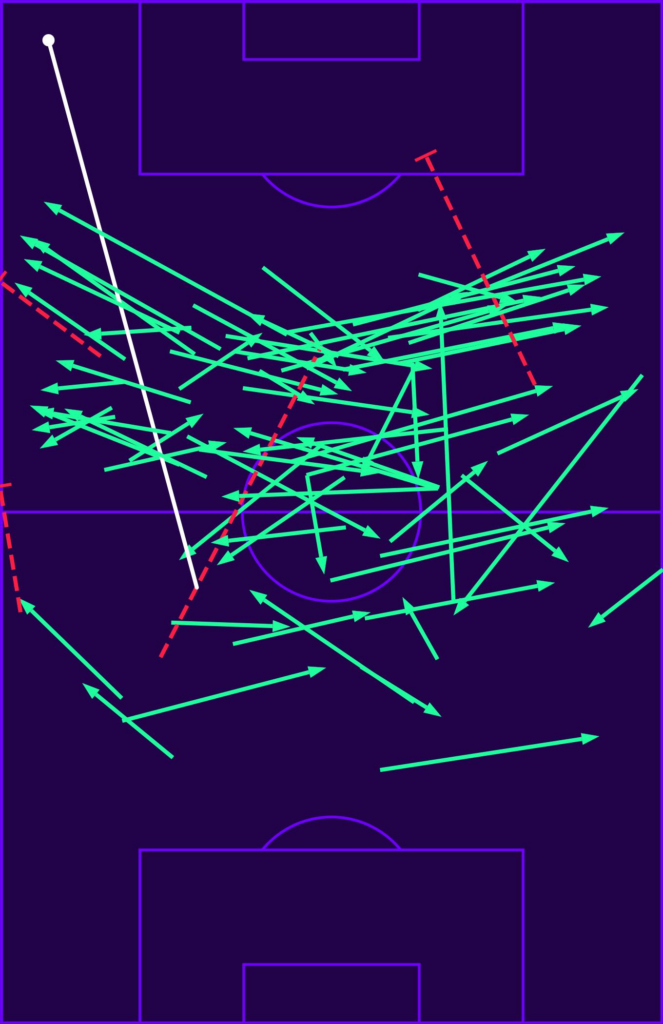
Frenkie De Jong’s passing map vs Japan.
By pushing him further up the pitch, De Jong was able to progress the ball with greater success. Netherlands certainly enjoyed the advantage of this.
Hydration breaks again change the game
Much has been made of the hydration breaks at this summer’s tournament, and not all of it positive.
Something that is clear to see from these mandated breaks is that it’s changing the momentum of the game. That was even more prevalent in this match.
Using the new momentum tool in our match centre, you can see just how the momentum swung. The first half hydration break was astounding in it’s immediacy.
Prior to the break, Netherlands had four first half shots to Sweden’s single effort. Following the break, Sweden had eight shots in the remainder of the first half, with Netherlands having just one effort on goal.
It’s clear that Graham Potter identified something in the opening 23 minutes and the water break allowed him to effectively convey this message to his players. Temperatures might not be excessive in some of these cases but coaches are using this break as a chance to turn things around.
This isn’t an isolated incident. There was plenty of discussion about the momentum in Germany’s clash with Curacao. The minnows were enjoyed their best period of the game, scoring their goal in the build up to the hydration break. The break halted that, with Germany regaining control and Curacao never enjoying the same level of pressure.
It’s something to keep your eye on as the tournament progresses. Could a knockout game be decided by a hydration break and what are the potential ramifications of that?
Read more: