






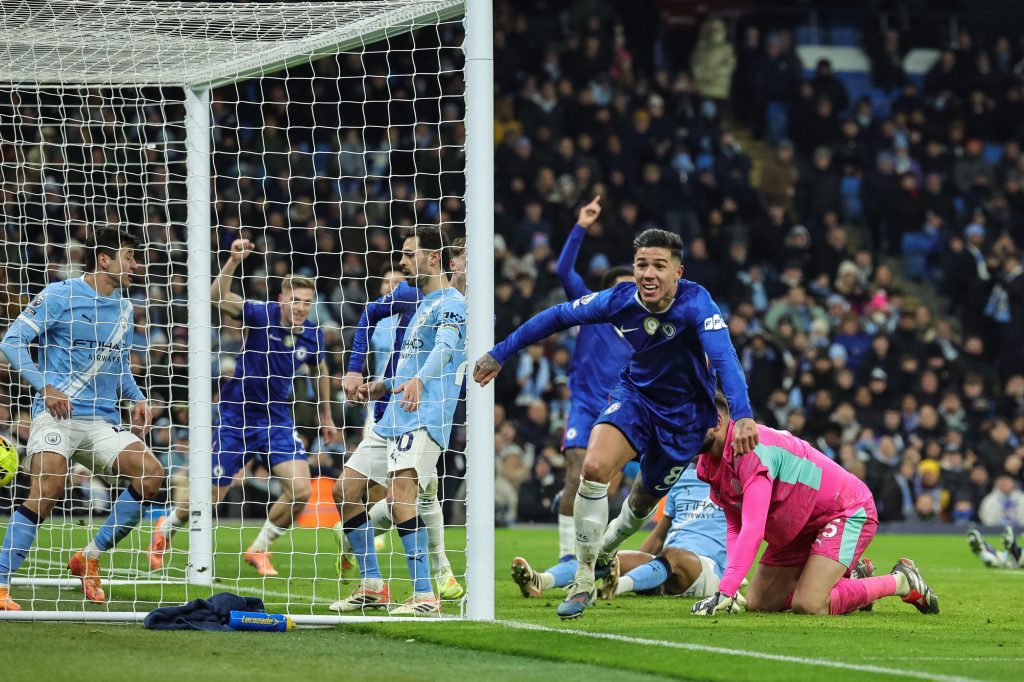
Chelsea snatched a draw from the jaws of defeat against Manchester City in the first game of their post-Enzo Maresca era.
A dominant first half was not enough to give Man City the win over Chelsea. Enzo Fernandez’s late equaliser meant the Citizens are six points behind leaders Arsenal in second place. Meanwhile, the Blues went back to fifth.
Considering how the first 45 minutes went, the second half looked like it was going to be just as easy. However, interim head coach Calum McFarlane made things interesting after the break as the guests got back into the game.
But in order to earn the draw, they had to go behind in the first place.
How did Chelsea come back to win a point vs Manchester City?
Reijnders’ impact for Manchester City
Tijjani Reijnders had a huge role from the start. Easing Jeremy Doku back into fitness, Pep Guardiola gave the Dutchman the nod at the left wing. But he didn’t play as an out-and-out left-winger.
The 27-year-old did spend most of his time in the left channel, but not hugging the touchline. He opened the corridor up for Nico O’Reilly to overlap while Phil Foden and Rayan Cherki overloaded the middle. It was Bernardo Silva who played out wide in the opposite side.
Dabble sign-up offer: Bet £10+ & Receive £10 In Free Bets
Not signed up to Dabble yet? Here's how to claim the Bet £10+ & Receive £10 In Free Bets welcome offer:
- Sign up to Dabble through this link
- Register your account with accurate personal details
- Place your first bet of £10 or more
- Receive your £10 in free bets when your qualifying bet has setted
- Use your Free Bet on any eligible sportsbook market within 7 days

#AD 18+ 7-day free bet expiry. Stake not returned. Promotional Terms Apply. GambleAware.org
And Reijnders was a big part of Guardiola’s strategy to try and hurt Chelsea. His constant off-ball movement was key to unlocking their attack, pushing the opponent’s back line and trapping them inside their own defending third.
Reijnders performed a number of different runs in-behind, sometimes even starting from the left and going diagonally to the right. The idea was to play through balls for him to chase while the Blues’ defence ran back. It would eventually open up space in central zones in the attacking half for their other midfielders to operate.
All of this was crucial to them controlling the first half. In the end, he was rewarded with the goal after thumping the ball into the back of the net with his weaker left foot.
Pep Guardiola also decided to manipulate the Blues’ man-marking with long chases to their favour. Reijnders was one of the main pieces in that strategy as well, dragging Josh Acheampong out as far as his own corner flag and opening space for Josko Gvardiol to explore in the attacking half with Cole Palmer marking him.
| First-half stats | Manchester City | Chelsea |
|---|---|---|
| Possession | 68% | 32% |
| Shots (on target) | 9 (2) | 1 (0) |
| Expected goals | 0.69 xG | 0.19 xG |
Calum McFarlane’s bold second-half gamble
Other than a blocked Estevao attempt – which even led to a dangerous Manchester City counter attack -, Chelsea didn’t do much in the first half.
Early on, they pressed high and showed more aggressiveness than they used to under Enzo Maresca. There were also a few good passing sequences from the back, but they could never turn them into dangerous situations or shots.
Halfway through the first half, Man City managed to assert themselves and deny spaces. Chelsea eventually started gifting them the ball inside their own half and make their job easier.
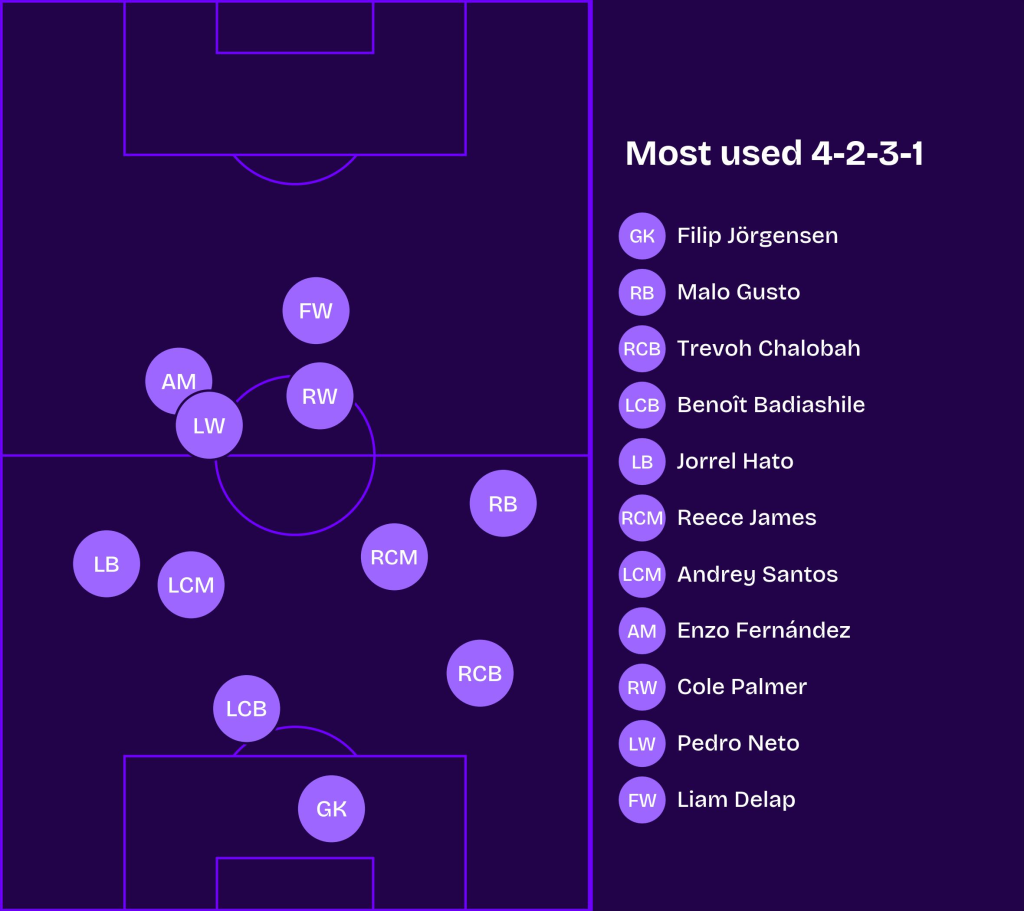
Calum McFarlane then decided to mess things up – in a positive manner. By replacing Estevao with Andrey Santos at half-time, the interim head coach turned the previous 4-2-3-1 into a 3-4-2-1 of sorts. But an asymmetrical one, with Pedro Neto acting as a proper winger rather than a wing-back, seeing as Matheus Nunes would rarely go forward.
As anything in football, it had its upsides and downsides. The changes made Chelsea a lot more present in the attacking half but also way more exposed at the back. City had more than one dangerous counter-attacks but ultimately failed to capitalise.
Within five minutes of the second half, the Blues had already gotten near the goal twice. Pedro Neto even missed a great chance worth 0.30 xG in a fast break.
Jorrel Hato replacing Acheampong reverted Chelsea back into a back-four and, structurally, stabilised things a little bit on the defensive end. He did however make two consecutive mistakes right after coming on and nearly gifted City the second goal.
Anti-Maresca-ball?
The ironic part is that Chelsea not only improved but also got back into a game they had no business surviving by doing the exact opposite of what Enzo Maresca preaches.
The Italian manager has said publicly more than once that he wants control, not chaos. He tries to give his players freedom but within a certain context, prefering to maintain structure.
Well, there was no structure for Chelsea in the second half – only chaos. And it was precisely what allowed them to go back to London with a valuable and unlikely point.
Catching the Citizens off-guard was the only way McFarlaned judged possible for them to earn anything. And they did.
He was responsible for the draw in another way as well. Not only did his changes make the Blues better, but he also tinkered with Enzo Fernandez’s positioning.
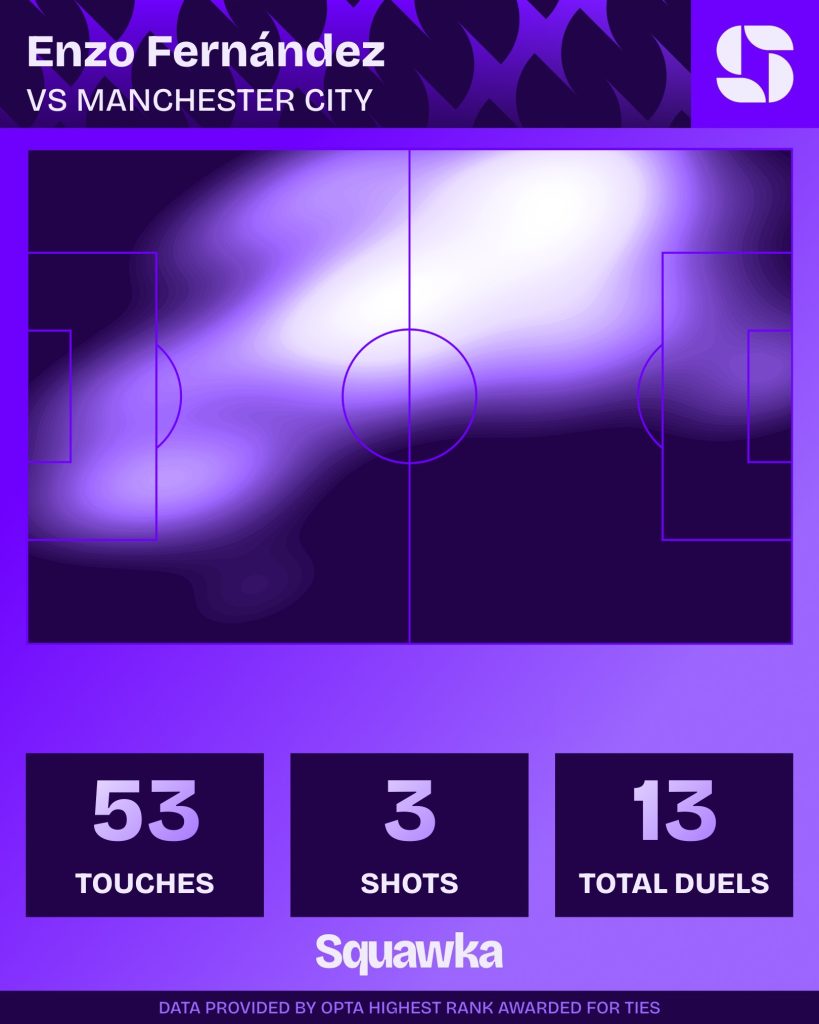
The Argentine first became a left-attacking-midfielder in the 3-4-2-1 with Cole Palmer on the right. Then, a left-centre-midfielder of an asymmetrical and chaotic 4-3-3 in the end of the second half. Sometimes it became the original 4-2-3-1 with him taking a few steps forward on the left-hand side.
And it was him arriving at the back post almost as a left winger who put Chelsea level. Malo Gusto did great work to get past O’Reilly and cross the ball into the box.
Two other players also thrived in the chaotic scenario that McFarlane created in the second half. Andrey Santos gave them excellent 45 minutes in the middle of the park and Liam Delap showed a lot more than what he had previously under Maresca.
Cole Palmer looked more comfortable having freedom to carry the ball from right to left and back if he wanted to. Still, he had a quiet game.
In the end, Calum McFarlane turned what looked like a sure Man City win into an incredible draw for Chelsea. And they deserved to get something out of the game, having had each of the four best goalscoring chances in the game.
| Stats | Manchester City | Chelsea |
|---|---|---|
| Possession | 58% | 42% |
| Shots (on target) | 14 (3) | 8 (3) |
| Big chances | 0 | 3 |
They did lack attacking volume and looked completely lost in the first half. But at the same time, they managed to limit clear-cut opportunities for City for the most part and the gamble payed off, surviving a few counter-attacking scares in the second half.
Chelsea’s second-half tactics are probably not sustainable long-term and maybe McFarlane only employed them because he knows he wouldn’t have many opoortunities, so he treated a league game like a knock-out single-leg match. But for 45 minutes, it worked wonders against one of the best managers to ever do it.