






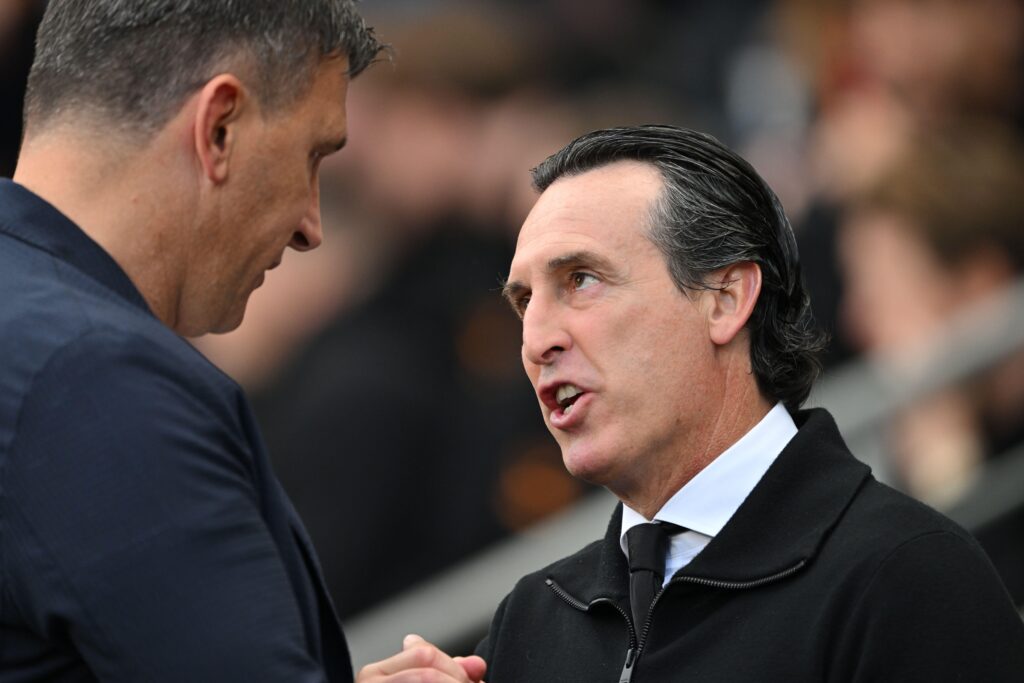
Hull City and Aston Villa drew 0-0 in a match that had an unusual kind of tactical battle as the main talking point.
Unai Emery and Sergej Jakirovic ended up cancelling each other out at MKM Stadium. But they did not do it the way football – and especially Premier League – fans are used to seeing.
That’s not to say everything they tried worked. The second half in particular featured good chances for both sides. The Villans had quite a few earlier on, while the Tigers tried to hit them with a late wave of attacks.
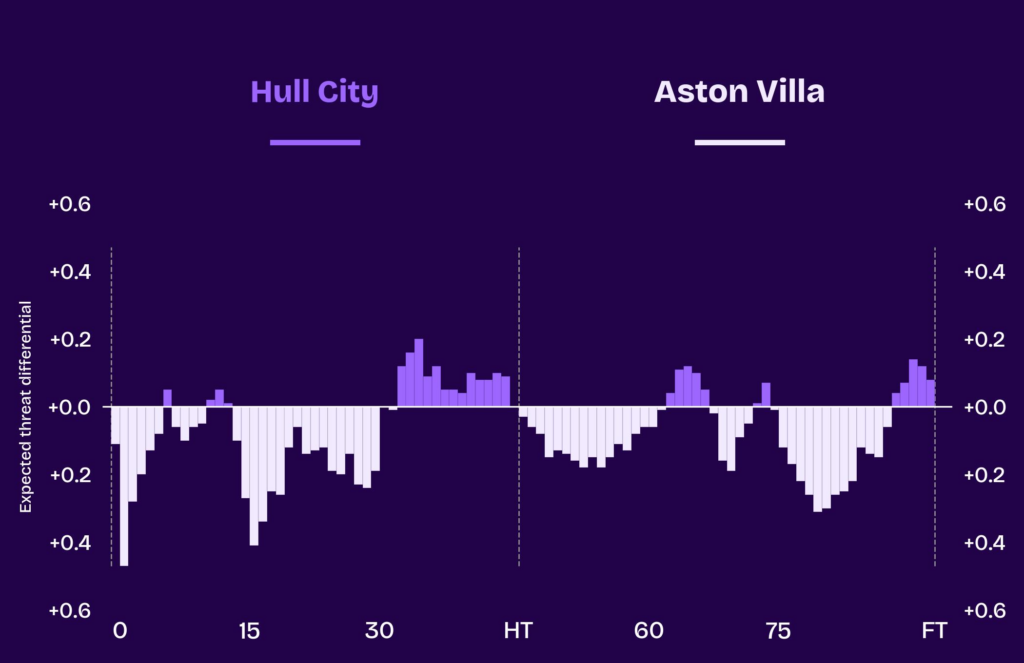
But it did make for a rather dull game other than that. Emery reacted quicker and his bold tactical choice was in full display for most of the 90 minutes. Jakirovic, however, took a while to adjust – doing so just before and after the break.
How did Hull City and Aston Villa adjust to each other’s attacking threats?
Aston Villa’s unashamed 6-2-2
It’s no secret that Hull City like to attack down the flanks, with the threat of Ryan Giles’ cross as one of their weapons. And they tried to put this into practice against Aston Villa as well.
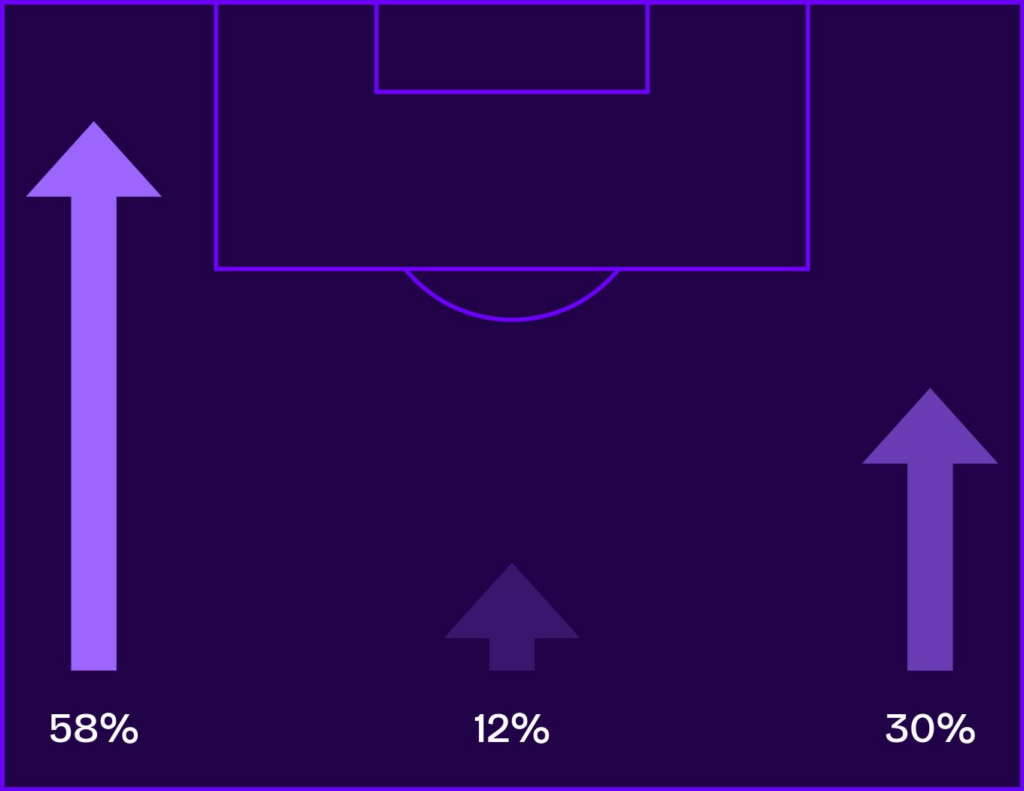
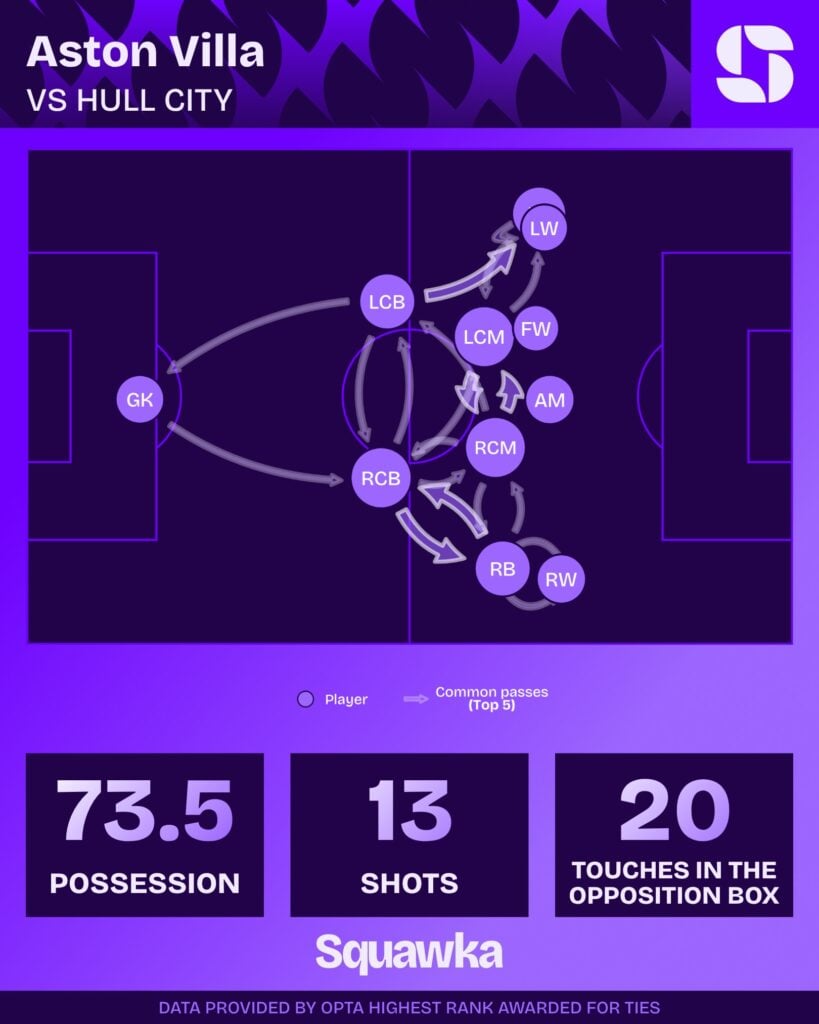
Their very first attack of the game was a Giles cross that Oli McBurnie arrived just a second late. Emery saw enough less than five minutes in and decided to turn his usual 4-4-2 formation out of possession into a 6-2-2.
Average position maps only take into consideration players’ on-ball touches. But the off-ball movements weren’t much different.
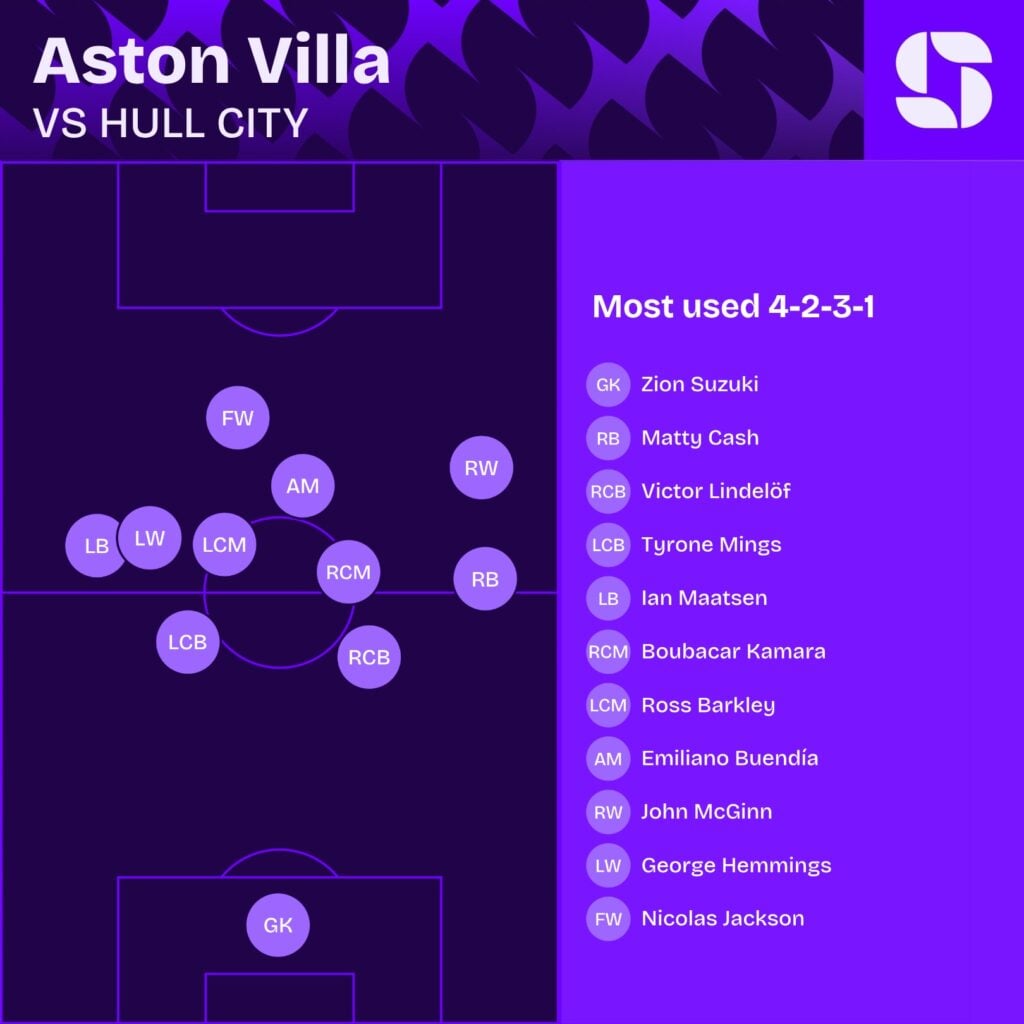
It was an easy adjustment to make, too. Emiliano Buendia, as he usually does whenever playing as a centre-attacking midfielder, joined Nicolas Jackson up front to form a two-man partnership out of possession.
John McGinn and George Hemmings are already used to taking turns stepping back and acting as wing-backs from time to time. They did it a lot against Arsenal, for example. The difference today is both wide midfielders did it at the same time, expanding the last line to six men.
It slowed down Hull’s attacks and they spent a long time without actually creating danger. Villa’s strategy did give them more time on the ball, and they used it to their advantage. But they mantained the game plan of executing their plays quickly, usually ending their possessions with long-range attempts.
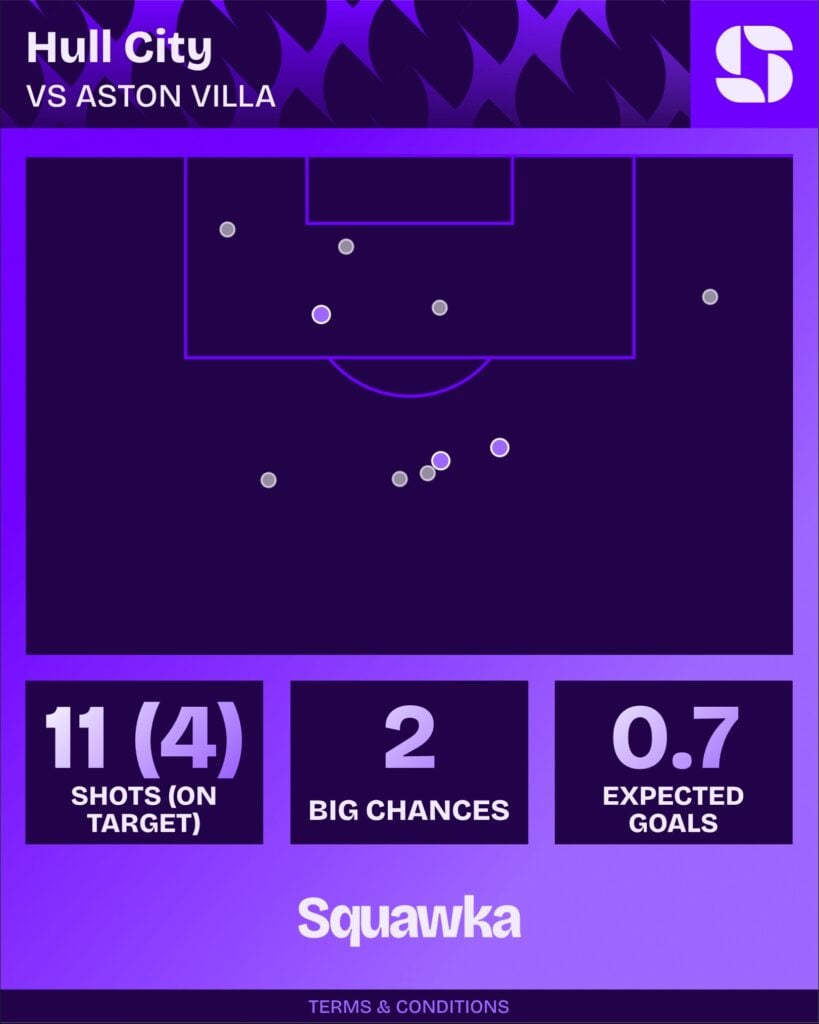
For perspective, six of the Tigers’ first seven shots came from outside the box. But they did have clear-cut chances down the stretch.
One of them, in fact, from a Ryan Giles cross that McBurnie failed to connect properly with the ball. But it was precisely in a moment when Villa had not gotten into their six-man defensive shape yet. Alysson was on Giles trying to prevent the cross but Alejandro Garnacho hadn’t fully tracked back.
Hull City’s shape-shifting 5-4-1
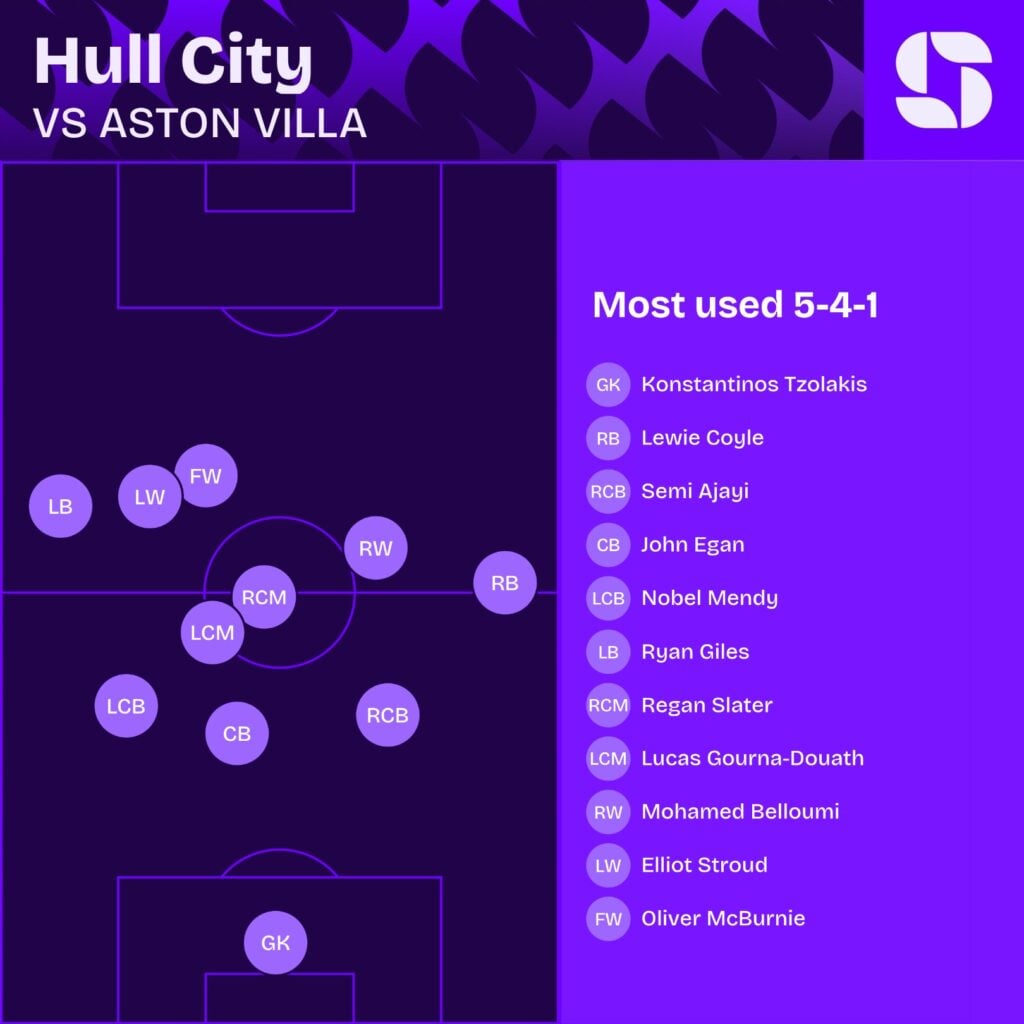
Hull City usually play in a 5-4-1, but the formation is rather flexible. It can be a 3-4-3/3-4-2-1 in possession, a 5-2-3 out of possession, sometimes an asymmetrical 5-3-2 or even a 4-4-2. We saw all of those in display today.
Aston Villa have deployed central midfielders (attacking or not) out wide for years. Morgan Rogers, John McGinn, Emiliano Buendia, George Hemmings, you name it. Unai Emery likes to try and attack down the middle and place a lot of players in the central corridor.
Their central combinations led to many different dangerous chances today at the MKM. Buendia had a field day while Hull’s central midfielders were caught between stepping up to help in the press or step back and protect the backline. Ross Barkley, Boubacar Kamara and Victor Lindelof picked out endless passes between the lines.
But the Argentine had a poor performance overall and couldn’t capitalise on any of them. There were poor decisions, badly executed passes and missed chances on the No.10’s behalf. McGinn also missed a clear-cut opportunity from a central combination between Barkley, Buendia and Jackson.
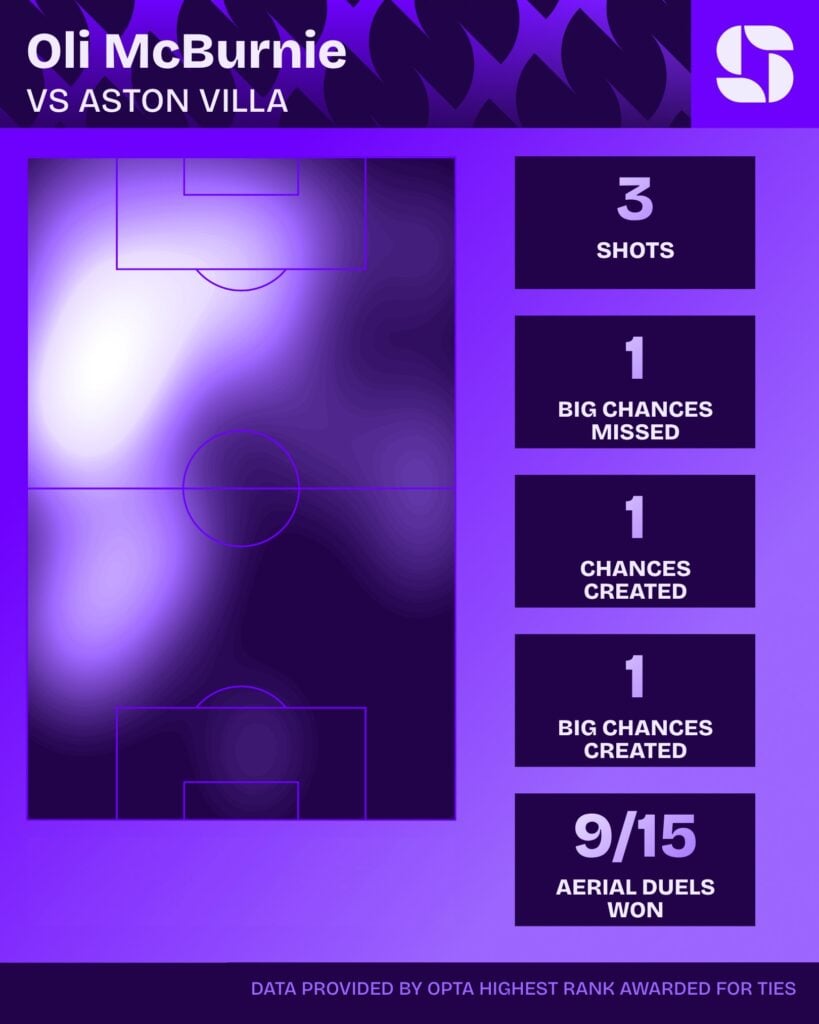
Jakirovic’s answer for that was an unusual one. He placed striker Oli McBurnie on the wings. Meanwhile, either Elliot Stroud/Sorba Thomas or Mohamed Belloumi would lead the line on their own.
Those three players have much more speed and energy to either chase down defenders when pressing high up the pitch or close down the passing lanes in the defensive half in a mid/low block.
It also helped McBurnie to stay wide whenever the Tigers recovered possession. He won a whopping nine aerial duels and took advantage of battling in the air against smaller players such as the Villans’ full-backs. But he also tracked them until the end when they had the ball and fulfilled his defensive duties when called upon.
Aston Villa actually had the longest shot drought of the game, not attempting a single one between the 53rd and the 76th minutes. It was right after the sequence of Buendia’s and McGinn’s misses three minutes apart.