








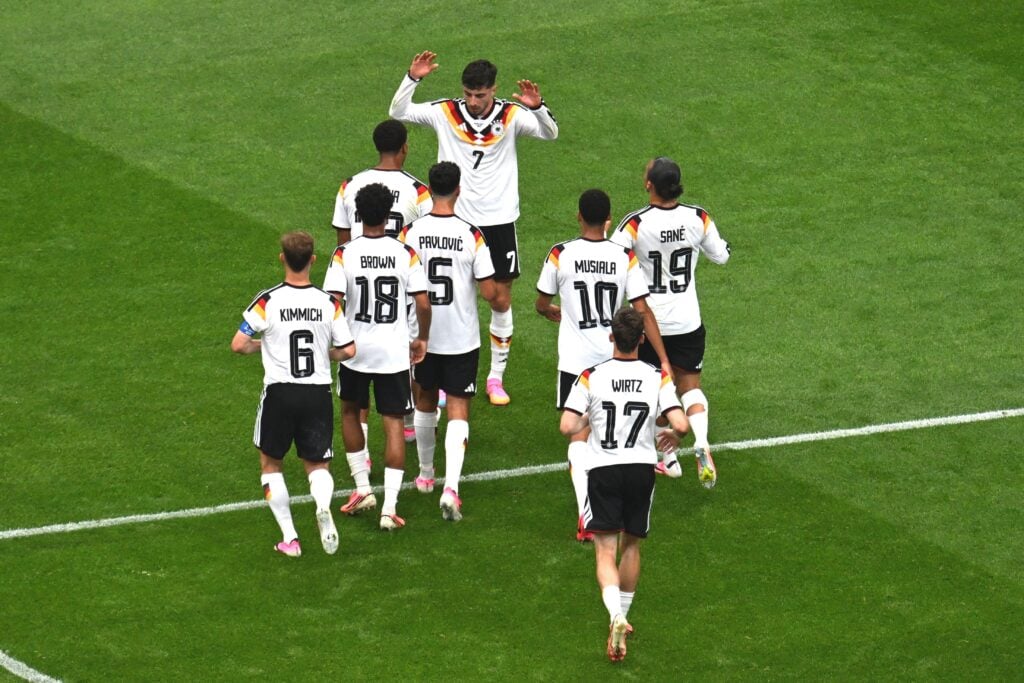
Germany got their 2026 World Cup campaign off to an excellent start with a 7-1 win against Curaçao in Houston, kickstarting Group E.
Julian Nagelsmann’s side started fast, with Felix Nmecha smashing it home from outside the box after just six minutes.
Curacao did hit back though, making it 1-1 in the 21st minute, with a big switch of play putting Germany on the back foot. Where the Blue Wave were then able to threaten in behind the Germans, leading to a failure to clear the ball and a deflected strike from the top of the box beating Manuel Neuer.
However, after heading into the first hydration break of the game, Germany did establish better control of the game, scoring two more before half-time, and then adding a further four goals in the second half.

- Bet £10 get £30
- Excellent Football Betting Options
- Extensive Bet-Builder
- Multi-Award Winning Bookmaker
New customers can sign up using bonus code SQUAWKA365, bet £10 and get £30 in Free Bets. Min deposit requirement. Free Bets are paid as Bet Credits and are available for use upon settlement of bets to value of qualifying deposit. Min odds, bet and payment method exclusions apply. Returns exclude Bet Credits stake. Time limits and T&Cs apply. Registration Required. This code is for marketing and tracking purposes only. #Ad.
In this article, we’ll cover
Central clusters & minimum width for Germany against Curacao
Nagelsmann’s attacking organisation is extremely fun and effective, utilising concepts such as minimum width to support their main principles of play.
The German coach wants his side to combine and connect passes through the centre, with players attuned to coming towards the ball and positioning themselves in relation to the ball in order to offer a variety of options in close proximity.
While Aleksandr Pavlovic often stays at the base of midfield, Nmecha has a role which allows him to push forwards, while Nathaniel Brown also joins the attacking unit, forming a 3-1-6 on the ball.
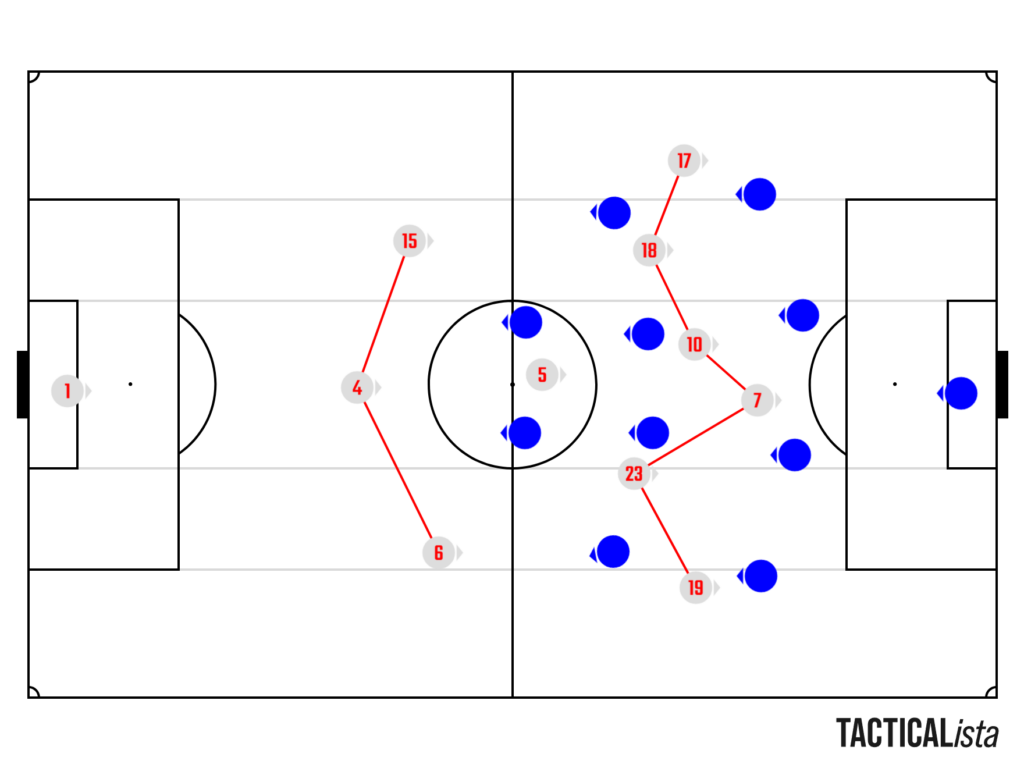
Nagelsmann’s utilisation of minimum width is seen through his wide players positioning, looking to only hold as much width as is necessary to be on the full-back’s outside (just on their shoulder).
By using these principles, the two key benefits Germany gain from this are having their wide men as part of their central overloads, able to combine with the players inside the block, but it also means they are in closer proximity to the ball if possession is turned over, allowing their counterpress to work more effectively.
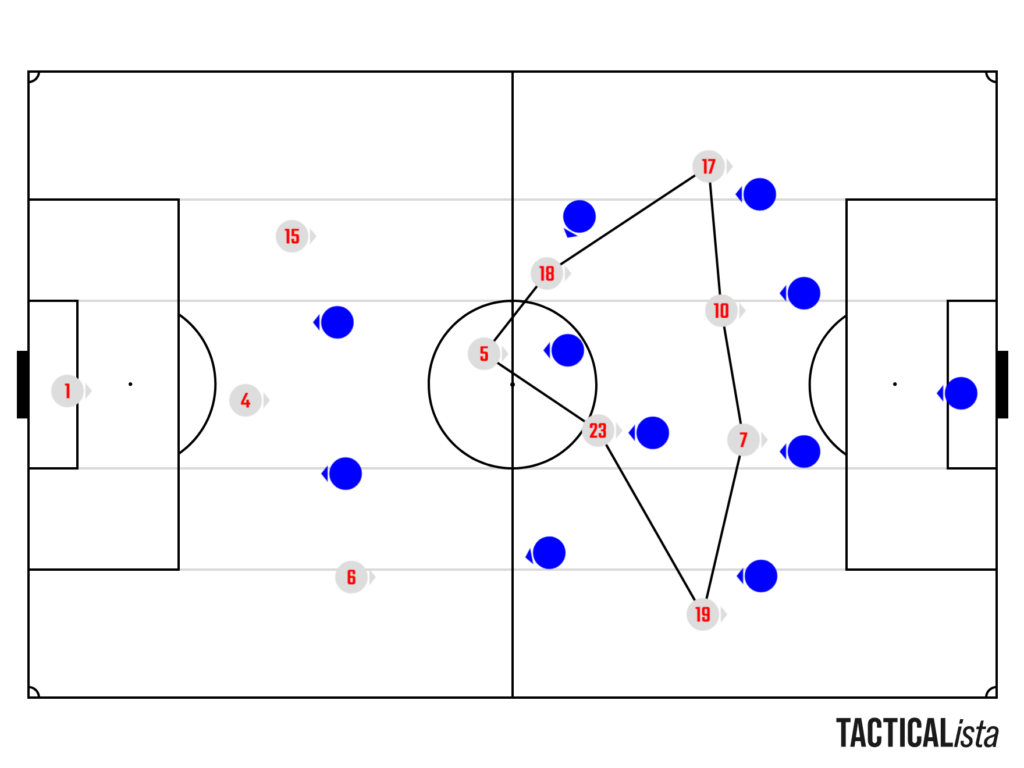
Germany create a high number of their chances through these central clusters, with players able to bounce passes between them, provoke opposition defensive behaviours inside the block and find solutions to progress into dangerous areas.
- Bet £10 get £30
- Excellent Football Betting Options
- Extensive Bet-Builder
- Multi-Award Winning Bookmaker
New customers can sign up using bonus code SQUAWKA365, bet £10 and get £30 in Free Bets. Min deposit requirement. Free Bets are paid as Bet Credits and are available for use upon settlement of bets to value of qualifying deposit. Min odds, bet and payment method exclusions apply. Returns exclude Bet Credits stake. Time limits and T&Cs apply. Registration Required. This code is for marketing and tracking purposes only. #Ad.
Wirtz and Brown combo
While Germany tend to keep their wide men as narrow as possible, the combination and synergy between Florian Wirtz (LW) and Brown (LB) is key to their attacking dynamics.
Both players have the technical security to combine in close proximity with one another, but also looking to make counter movements both vertically (runs into depth) and horizontally (one drifts inside, the other fades outside).
The movement of both players often opens good passing lanes for teammates, whether that be with balls in behind the opposition defensive line or diagonal entry passes into the overloaded central zones.
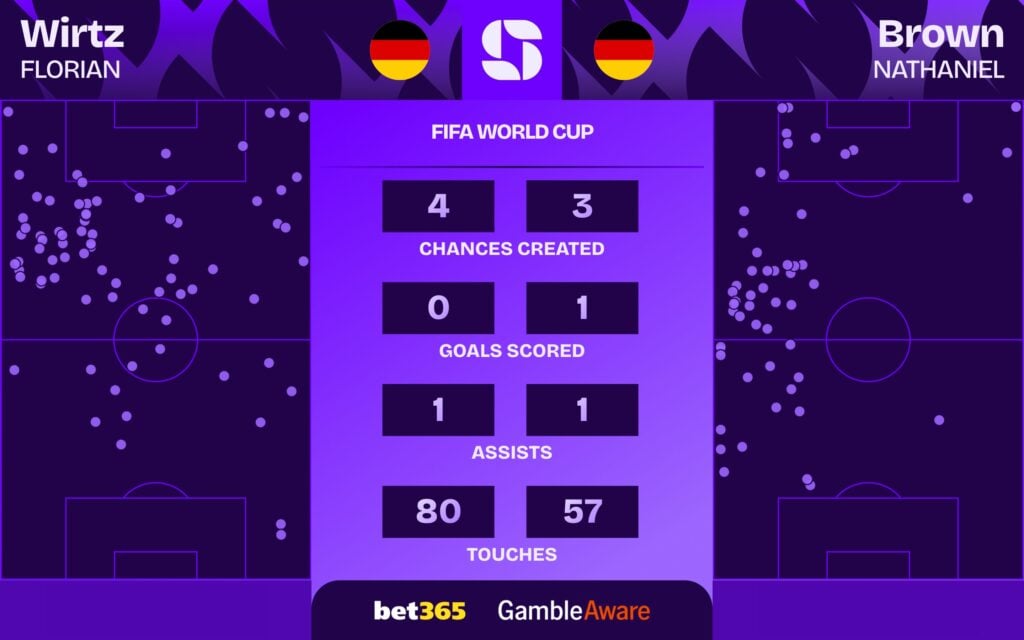
Wirtz and Brown created seven chances between them, both setting up a goal each and Brown scoring his first ever goal for his country, which perfectly demonstrated the principles of play down Germany’s left side that we just mentioned.
Wirtz cutting inside in a 1v1 with the Curaçao right-back is the trigger for Brown to make a run into depth and take his marker away from the centre, where Wirtz is then able to find the diagonal entry pass, accessing the central cluster who then find solutions in close proximity, as Deniz Undav provides a flick into Brown who struck it home on the volley.
Germany rest defence issues?
While the goal Germany conceded wasn’t an example of this, Nagelsmann’s side did show some vulnerability in the earlier stages of the game, with Curaçao threatening on the counter on a number of occassions.
This is part of their tactical trade-off, by looking to form a 3-1-6 shape on the ball, overloading the centre and attempting to progress through the middle to accelerate play with those close proximity combinations, Germany are susceptible to turnovers, which then leaves their 3-1 base/rest defence shape exposed.
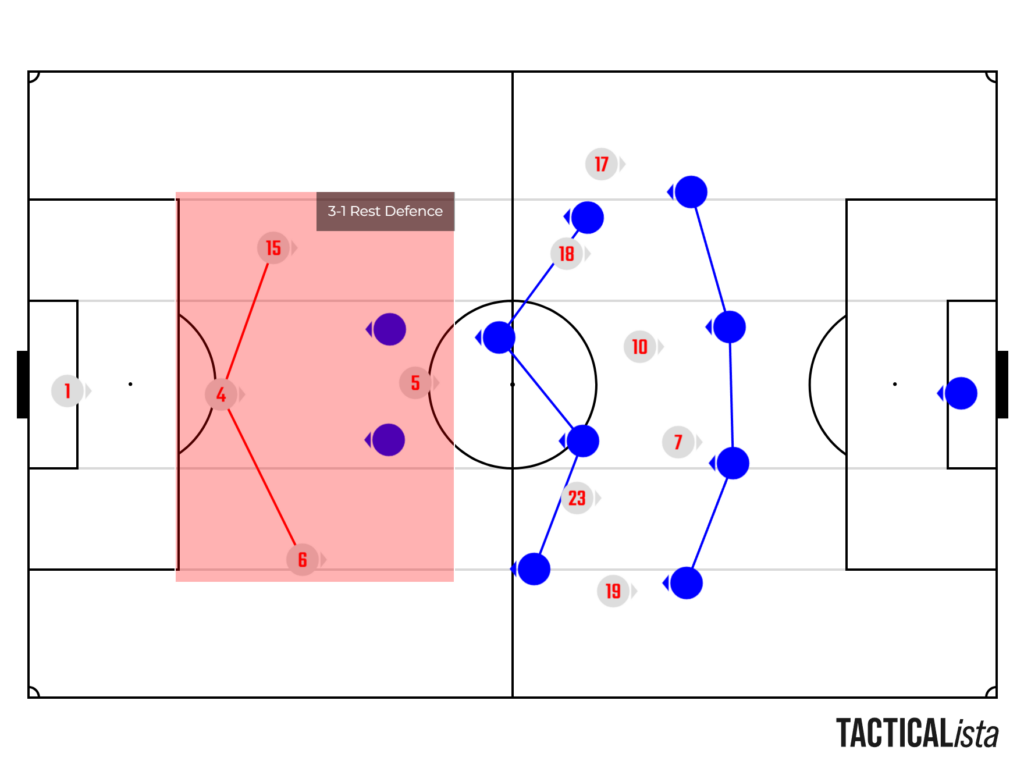
A large part of Nagelsmann’s principles are tailored towards an aggressive counter press, looking to swarm the ball once they lose possession, which the backline will often step up to support, in order to ensure there isn’t large distances between their counterpress and the defensive unit for the opposition to exploit.
The issues arise when opponents beat that initial counterpress, as the 3-1 rest defence – comprising Pavlovic, Joshua Kimmich, Jonathan Tah and Nico Schlotterbeck – lacks athleticism and pace, making balls in behind them or dribbles from quick attackers difficult to deal with on the break.
Whether Nagelsmann is slightly more reserved against better opposition, utilising someone like Nmecha in a 3-2 rest defence shape instead could be one way of making them more secure, but that will be down to the German when the time comes.
Felix Nmecha importance in Germany vs Curacao
Speaking of Nmecha as a solution, we could easily understate his role and importance in this Germany side, as the 25-year-old has only made nine appearances for his country so far.
However, the 6’4″ midfielder gives Germany a set of attributes the team had been crying out for, with physicality and the ability to cover large amounts of ground.
Nmecha won four of his six ground duels, also winning both of his aerial duels and giving Germany some added steel in the middle of the park, in order to win those first contacts and protect the middle of the pitch.
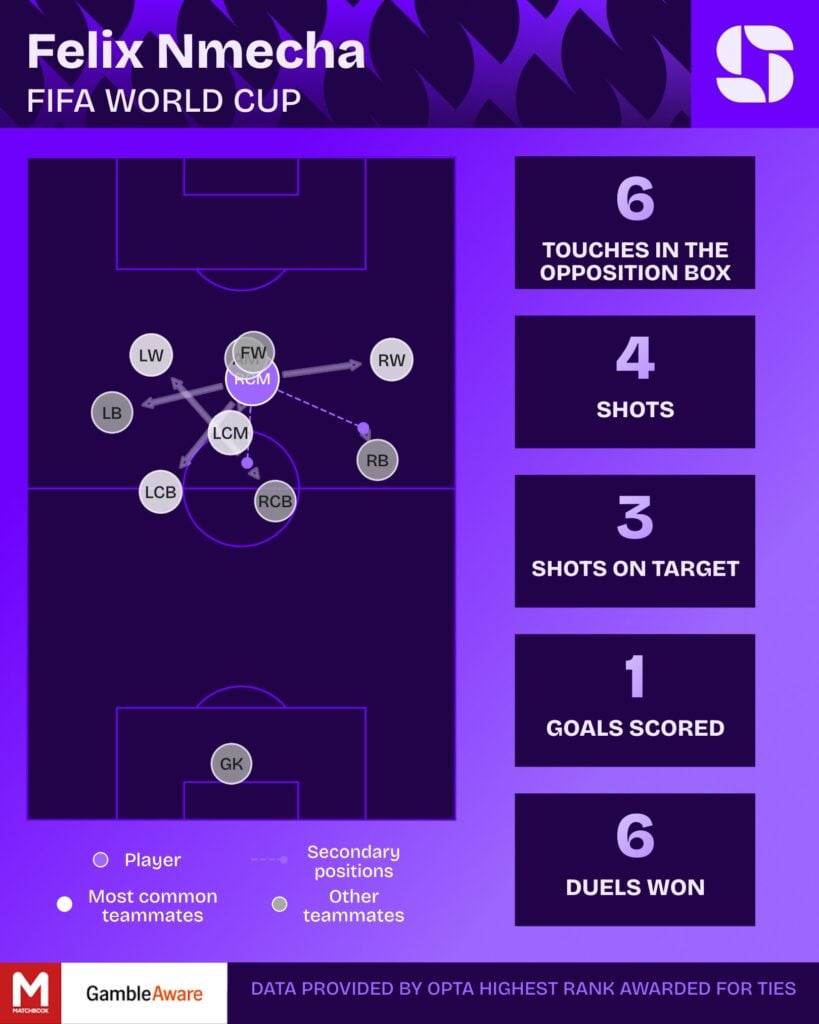
But going forward he offers plenty too, shown from his goal early in the game from outside the box, winning the penalty for Kai Havertz to slot home and make 3-1 before half-time and often arriving in the box as a secondary striker, causing chaos for the opposition defence with his long legs and height.
Many will look towards the likes of Kimmich, Wirtz and Jamal Musiala as the main stars, but Nmecha could be one of Germany’s most important players at this tournament, helping to balance the physicality of the team and offering a versatile tactical piece, who can play at any height in the midfield as a sitting midfielder, a box to box midfielder or even as one of the number tens.
Read more: