








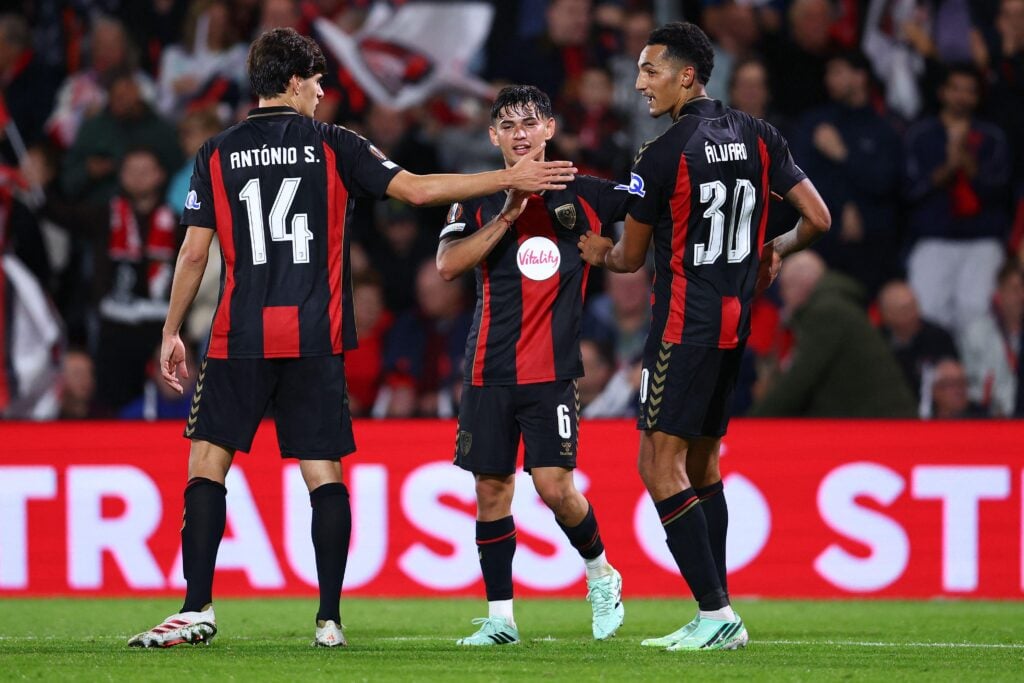
Bournemouth came from behind to beat Celta Vigo in Spain and make it 10 straight wins across all competitions.
It looked like the Cherries were gonna stop at nine wins when Bafode Diakite received a red card just three minutes after Iago Aspas opened the scoring at Balaidos.

The former Liverpool forward had a field day in the opening 45 minutes with his spatial awareness. When it wasn’t him taking advantage of the gaps between Bournemouth’s defenders, he picked out passes for teammates in dangerous positions.
But a second-half surge turned things around for Marco Rose‘s men. Alvaro Rodriguez quickly equalised after the restart and Rayan secured the win in the 78th minute, in a goal that featured contributions from all three players who had come off the bench 10 minutes earlier.
In fact, that was a big factor in them getting the three points. But first we need to take a step back to show the actual problem and how they solved it.
How did Bournemouth engineer their comeback against Celta Vigo?
Celta moving Diakite and Brooks around
For the first 15 minutes, left winger Couhaib Driouech and left-wing-back Sergio Carreira switched positions quite often. It was an attempt by manager Claudio Giraldez to get Celta Vigo to manipulate Bournemouth’s man-to-man press.
As a result, right midfielder David Brooks defended as a right-back at times, while actual right-back Bafode Diakite moved in the other direction, appearing as the right midfielder in their 4-4-2 out of possession. This favoured the home side, that saw an attacking midfielder having to form a back-four.
At the time, Celta actually exploited the right flank more often, looking to get Aspas involved whenever they could.
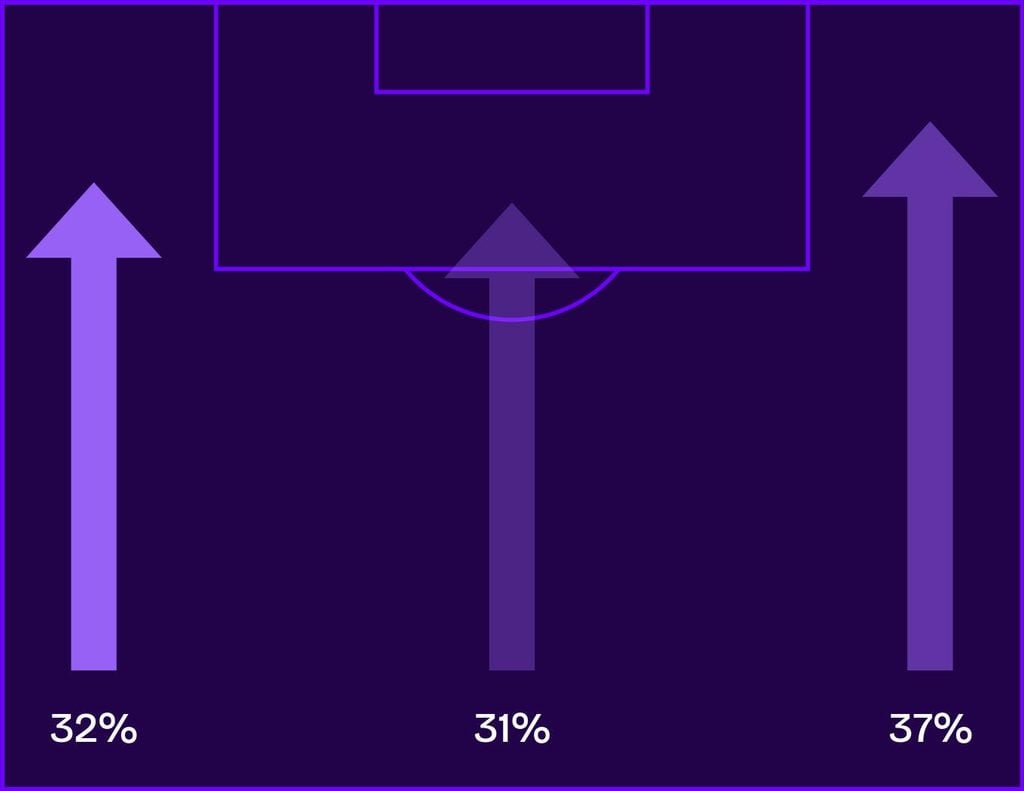
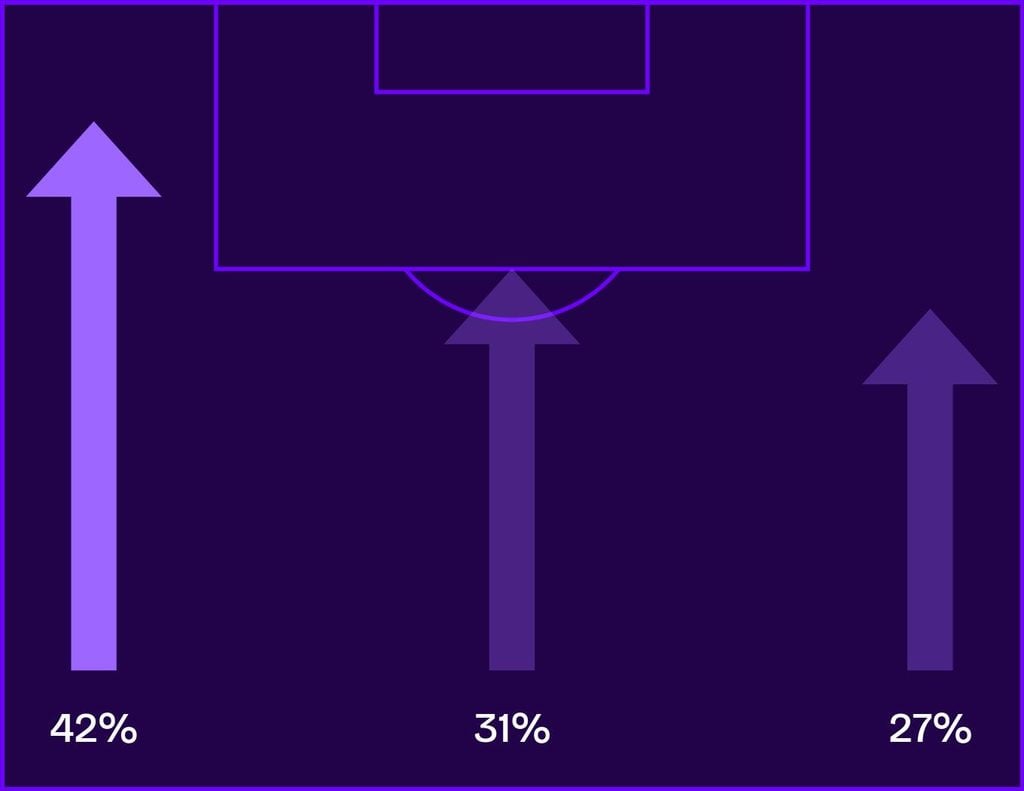
In the end, it was precisely Driouech dropping deep that attracted Diakite along with him and forced the foul that led to his sending off. From then on, Brooks became a full-time right-back until the end of the first half. This prompted a sudden change in their approach.
Now, Giraldez wanted to take advantage from the Cherries playing with 10 men in addition to having Brooks as right-back.
Professional full-backs
At half time, Marco Rose replaced Justin Kluivert, who played as a second striker in the right-hand side, with defensive midfielder Tyler Adams. This change made Lewis Cook go from midfield to right-back and it heavily altered the rest of the match.
Now, Bournemouth had a much more adequate option to defend in the back-four. Brooks went back to being a right midfielder but also helped Cook tracking back and even turning their defensive line into a back-five at times.
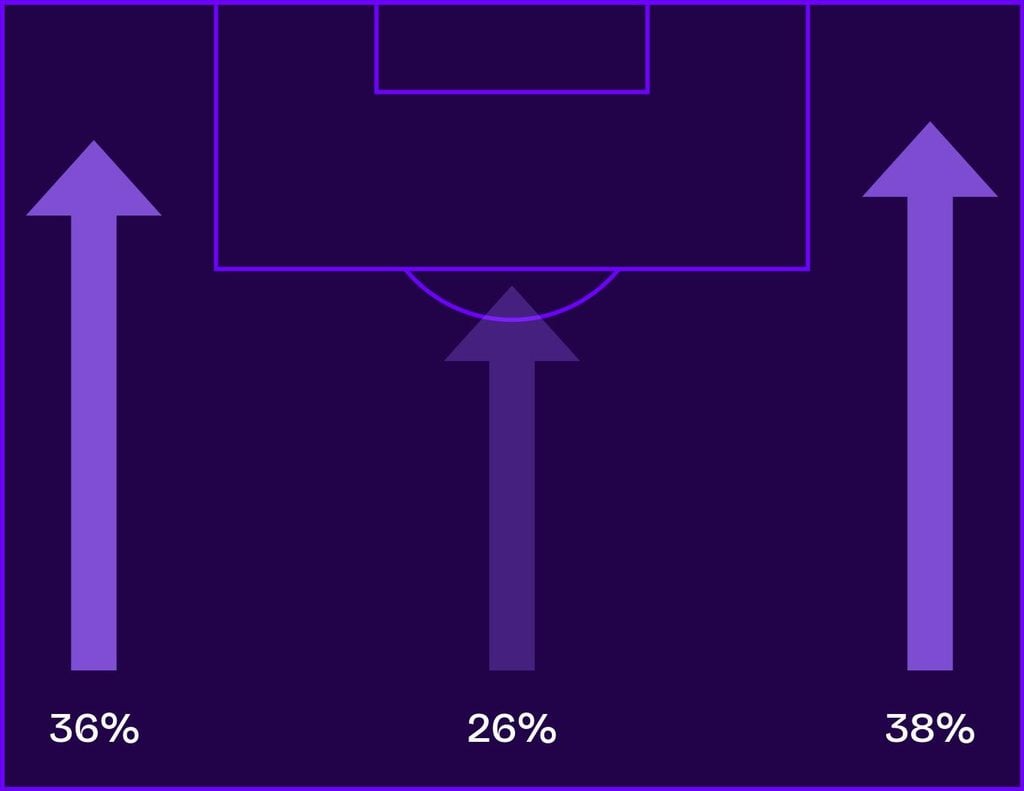
Celta suddenly stopped targeting the left flank, as they weren’t finding the same success from the later stages of the first half.
Cook was a big reason for that, with Brooks pitching in to help him defend the right-hand side. But Adrien Truffert played a big part in them not only defending well, but actually scoring the winner.
It was the Frenchman who regained possession for the Cherries and kick-started the fast break that led to Rayan’s goal after a pass from Marcus Tavernier.
Truffert igniting a counter attack on the left and Cook holding his own on the right were the two keys in Bournemouth having a much better second half, going as far as erasing a one-goal deficit and turning it into a 2-1 away win with 10 men.
Bournemouth’s aerial threat
Alvaro Rodriguez gives Bournemouth a different look, which they have turned to almost exclusively in the Europa League. At 6’3”, the Uruguayan offers them more aerial presence up front than Evanilson. Though the Brazilian has scored his fair share of headers.
In terms of hold-up play and being a target for long balls, it’s a completely different style. For perspective, Rodriguez has attempted 8 headed lay-offs in 314 minutes in the Europa League, four times as many as Evanilson in 932 Premier League minutes (2).
Rodriguez ended up scoring the equaliser from a header, after a beautiful cross from Amine Adli. And it was set pieces that kept the Cherries afloat all game, even in the first half when they didn’t have a lot going for them in the final third.
A whopping 60% of Bournemouth’s expected goals tonight at Balaidos came from set pieces (0.38 of 0.63). They finished the game with five corners, four of which were in the first half.
In the second half, free-kicks (direct or indirect) were their main source of danger. The goal came after an indirect attempt – and Alex Scott tried his luck twice from direct attempts. One of those even led to a dangerous follow-up from James Hill.