






As cliche as it sounds, 24 hours is a long time in football.
According to the Times’ Paul Joyce, Arne Slot’s representatives “had said on Friday that there was no change in the support from Liverpool.” Yet on Saturday afternoon, the club had parted ways with the Dutch tactician.
A little over a year after he had guided the Reds to their 20th league title, the Merseyside club felt they needed to sever ties with the former Feyenoord boss to keep things going in the right direction.
The message up until that point had been emphatic. Slot was being backed by the club to right the wrongs of the 2025/26 campaign, despite needing a positive result on the final day of the season for a fifth place finish. Miguel Delaney of the Independent recently published a piece in which it was claimed the data still supported the Dutchman ahead of the likes of Xabi Alonso as the man for the Reds.
Now though, we know that it was all talk.
Michael Edwards and Richard Hughes assessed the season before it was finished and determined a change was needed. They didn’t announce it publicly so as not to derail the campaign further. After all, a Champions League place was up for grabs. But the speed in which they’ve moved now points to this being a plan that had been in the works rather than something they’d only discussed prior to the season coming to an end.
Andoni Iraola appears set to become the new Liverpool boss. His style of play, full of intensity and high energy, couldn’t be any more different from Slot’s passive approach last term. That alone is quite telling. But why else might the Reds have decided to call time on Slot’s stint as manager?
The Mohamed Salah factor
We’ll start by addressing the elephant in the room.
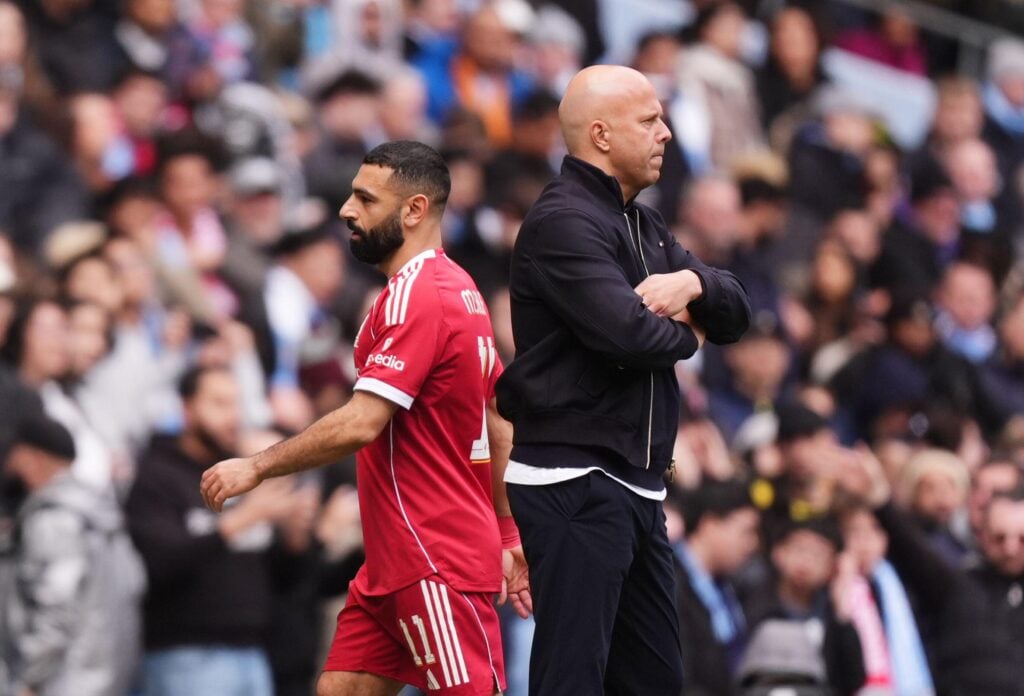
With results going against Slot back in November, he made the bold decision to bench Mohamed Salah. What followed was a narrow 2-0 win over a struggling West Ham side, a 1-1 draw with Sunderland at home and a 3-3 draw with Leeds United having given up a 2-0 lead and a 3-2 advantage. It was painted, by some, as progress.
Salah, however, felt he’d been thrown under the bus. The implication was Liverpool’s defensive issues stemmed from his lack of effort in attack, and that the press couldn’t function effectively with him in the team.
In truth, Liverpool had structural issues and they never really addressed them. The fact Slot was seemingly so eager to make it about one player, and not just any old player but a club legend, was a bad sign. Especially when performances didn’t improve without Salah in the team.
You then had Salah referencing standards at Liverpool towards the end of his stint with the club, a telltale sign that not everything was well behind the scenes. Slot lost the war with Salah. It didn’t lose him his job but it intensified the scrutiny on him.
Regression, not transition
With so much change in the summer, this season was tipped to be one of transition. The team was being shifted away from Mohamed Salah FC and entering a new era of Florian Wirtz FC. That was the idea. In reality, Liverpool did neither.
Slot just wasted the talents of the squad.
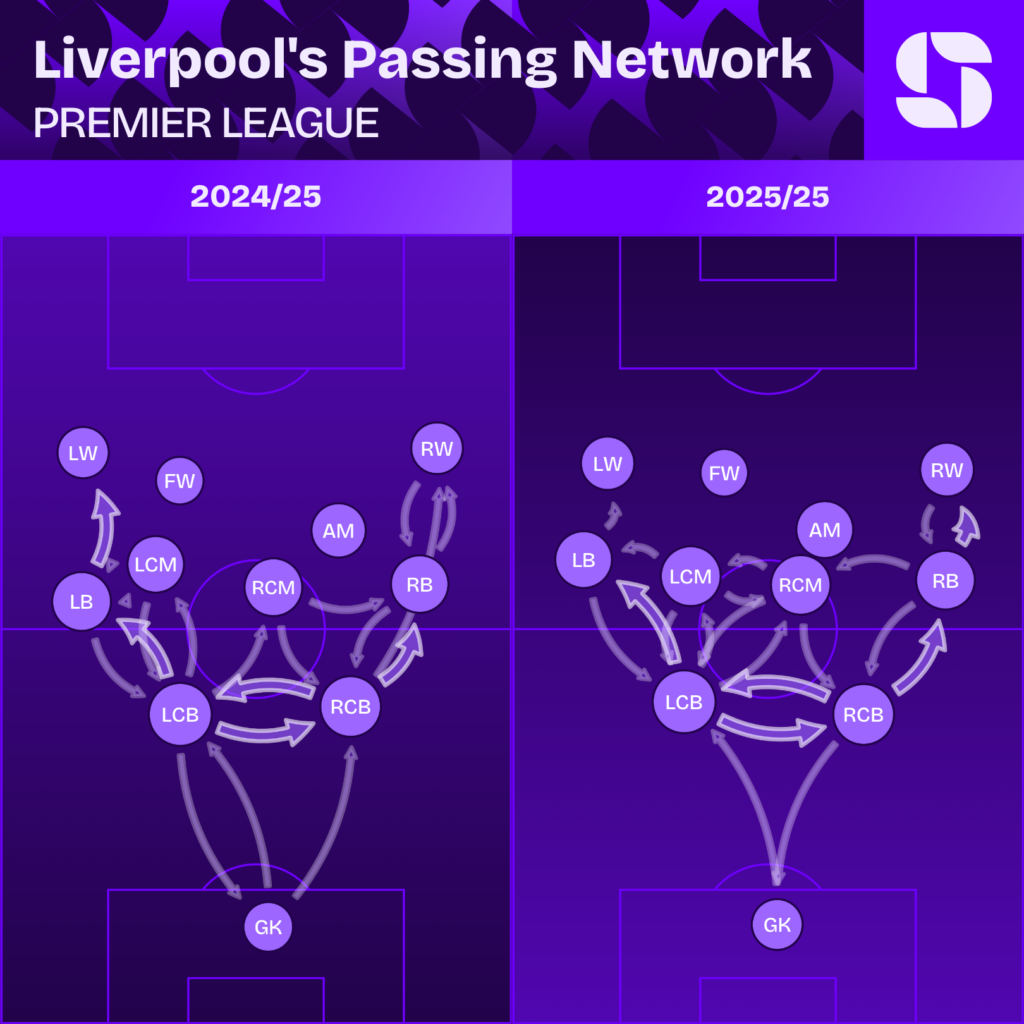
Salah was a lot more isolated and ineffective as a result. Wirtz was shifted around the team, playing as a No10, a left-winger, a right-winger and even as part of a double pivot. There was a lot more sterile possession in midfield and fewer risks were taken with the ball.
At various stages of the campaign, every new signing was described as a waste of money. It’s spectacular when you think about it. No player in red managed to impress this season and even Dominik Szoboszlai, the player of the season for Liverpool, faced criticism when he wasn’t scoring free-kicks.
The system and the tactics didn’t play to the strengths of any of the team and it’s why every player struggled. People wanted to attribute that to the transition but with no style of play or identity, it wasn’t a transition, it was simply a team regressed due to an inept set-up.
Deadball deja vu
Liverpool had a lot of struggles last season.
They struggled to deal with set pieces. They struggled to be a threat with their own set pieces. They struggled when dealing with long balls, throw-ins and counter-attacks. They struggled when teams dominated possession and they struggled when teams ceded possession. They didn’t want to play transitional football but struggled when coming up against low-blocks, as Slot would regularly mention.
The perfect game for Liverpool didn’t exist. But one of the biggest struggles was in the final third. Slot would regularly say the Reds weren’t ruthless enough with their opportunities. The 2024/25 Premier League champions, simply put, weren’t getting opportunities to miss.
As the data shows, they had a lot of shots but their Expected Goals total was only the fifth highest. So, lots of low value shots, and they were effectively average in attack with 63 goals from an xG of 63.7.
You can’t really talk about missed chances being the difference when you’re not really creating chances to miss, not high value ones. Slot managed to blunt what was the best attack in 2024/25. Obviously there was a lot of change in the final third in the summer but he had a number of attacking talents at his disposal and he did nothing with them.
Everything that was within Slot’s control was average at best, so he can’t feel aggrieved at being dismissed.
Read more:
- Premier League predictions & tips
- Premier League outright odds
- Latest football news
- Best betting sites
- Best free bet offers
- Football accumulator tips
Latest Features