




Brazil have disappointed in the last two World Cups but are relying on new faces to make a proper run in 2026.
It’s been a dark few years for Brazilian football. Two straight defeats in World Cup quarter finals (2018 and 2022), a series of managerial changes and even corruption scandals in the confederation.
Then, there was the over-dependence on Neymar, his move to Saudi Arabia, the ACL injury and a turbulent return to Santos.
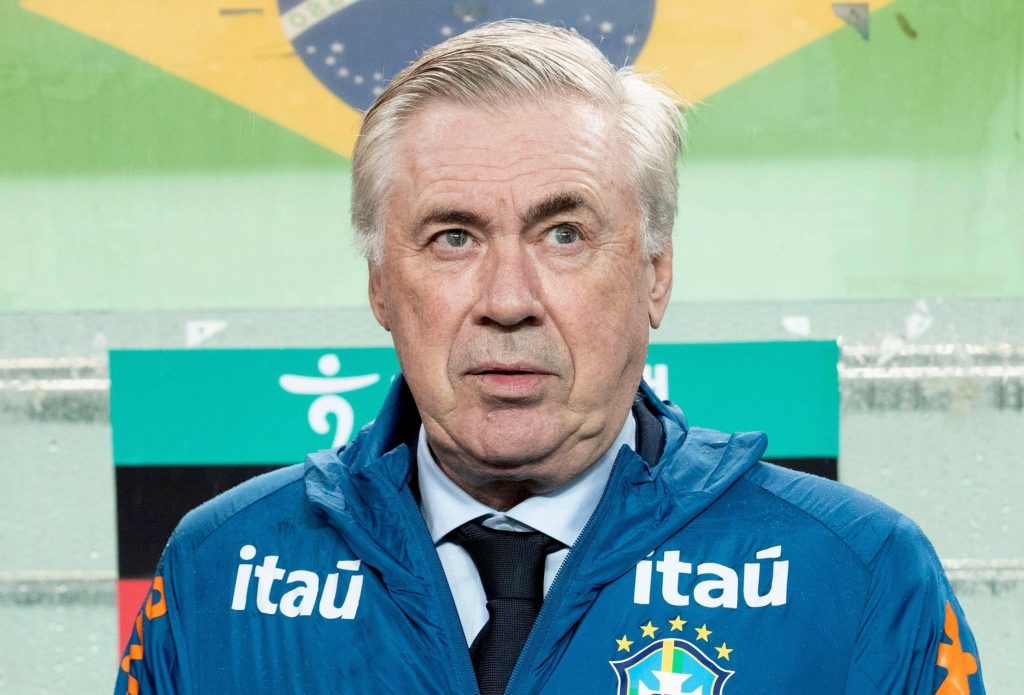
Now, everything looks a little different in each of those departments. A new president in Samir Xaud and a new manager in Carlo Ancelotti – along with the hopes of him turning the Selecao into one of the favourites to win it all next year.
Seven games into the Italian’s tenure at the helm, Brazil have four wins, one draw and two losses
In addition, a more ‘collective’ approach with the former Barcelona and PSG start seemingly out of the pitcure. But is there a world in which all of this blends together perfectly as Brazil lift the trophy in eight months time?
What do the ‘new Brazil’ look like?
Ancelotti-ball already showing
Brazil went through a few transitions since Tite left after the 2022 World Cup. He had them playing in a rather rigid structure that worked wonders in South American qualifiers and, honestly, deserved better luck in 2018 and 2022.
Next up was Fernando Diniz, the exact opposite of what is currently known as ‘positional football’. It didn’t work out and Dorival Júnior replaced him – with relatively similar ideas from his previous works. But he tried to recreate a few of the things Tite used to do, while also adding his personal touch. Also didn’t work.
Dabble sign-up offer: Bet £10+ & Receive £10 In Free Bets
Not signed up to Dabble yet? Here's how to claim the Bet £10+ & Receive £10 In Free Bets welcome offer:
- Sign up to Dabble through this link
- Register your account with accurate personal details
- Place your first bet of £10 or more
- Receive your £10 in free bets when your qualifying bet has setted
- Use your Free Bet on any eligible sportsbook market within 7 days

#AD 18+ 7-day free bet expiry. Stake not returned. Promotional Terms Apply. GambleAware.org
Now, we can clearly see the Selecao playing in a similar manner to Real Madrid from Ancelotti’s second stint (2021-2025).
No true striker, four fast and skillful forwards roaming freely in the attacking third, wide overloads, players moving towards the ball instead of away from it. It feels like everyone is always involved in the build-up somehow.
Downside of the four forwards
Like anything in football, there are disadvantages that come with this new set-up. The two holding midfielders are often overloaded, having to join the attack whenever possible and also track back like their lives depended on it when Brazil lose possession.
Luckily for Ancelotti, he has two great options for these positions. Bruno Guimaraes is basically the prototypical modern box-to-box midfielder while Casemiro seems to have found his best form again. The 33-year-old also performs relatively similar roles both for Manchester United and the national team, which helps.
And since the Selecao are always trying to activate their forwards in rhythm, pace and space to run into, it leads to a lot of transitions both ways. This also puts pressure on the defensive line.
Major doubts at the full back positions
At the back four, Marquinhos and Gabriel Magalhaes are basically guaranteed to start. In the author’s humble opinion, however, Thiago Silva – even at 41 – is still playing at a high enough level in the Brazilian Serie A to deserve another shot.
But Ancelotti still has a lot to figure out both at right and left-back. The Italian manager has tested quite a few different names. Militao, Wesley, Vanderson, Vitinho and Paulo Henrique on the right, Alex Sandro, Douglas Santos and Caio Henrique on the left.
Considering the tactical consequences that the 4-2-4 (of sorts) brings, Militao and Alex Sandro look like the best suited options. Both are able to sit deeper, offer defensive stability and still have enough attacking prowess to push forward every now and then and also help in the build-up.
However, both of them also carry a long and troubled injury history that could lead to changes in the future.
And even with them, Brazil have looked somewhat exposed at the back during the Ancelotti tenure. Top-tier national teams could have a field day with that.
The ultimate ceiling
There has also been a little more trouble to break down low blocks than one would like, considering the attacking firepower they have. But the young forwards have struggled to replicate their club form at international level.
Vinicius Junior still hasn’t stepped up to be the ‘main character’ like he has been at Real Madrid. Rodrygo hasn’t played consistently. Matheus Cunha has been at a struggling Man United side (though it’s been looking better as of late) and Estevao is often an on-and-off kind of player under Enzo Maresca at Chelsea.
But all of this comes down to individual play more than a collective issue or anything like that. And this could be the key to either unlocking Brazil’s potential as a World Cup title contender or limiting them to the players’ shortcomings.
Brazilian fans are mostly skeptical regarding Neymar nowadays, but his ability to take games by the scruff of the neck is sorely missed. Especially when the Selecao’s current stars underperform – which has been a common theme in the past few years.
Ancelotti seems to be doing everything he can to make the players feel comfortable in his system. It looks like he will solve the managerial issues that haunted Brazil during this World Cup cycle. After that, it’s down to the players themselves to take the team to the next level.