







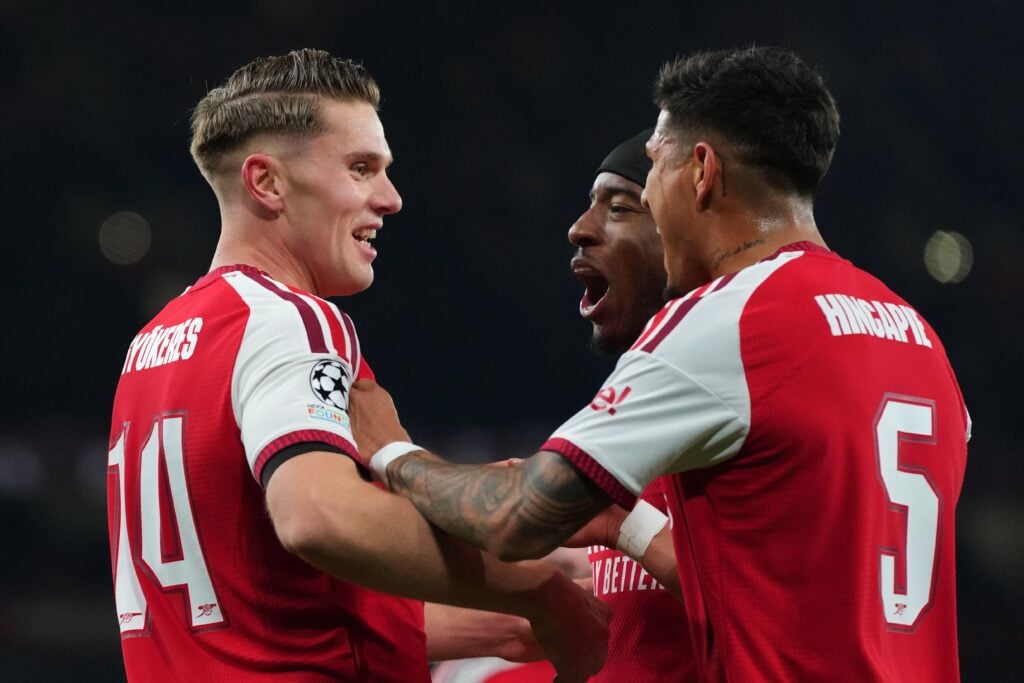
Arsenal drew 1-1 against Borussia Dortmund, taking the Gunners to 11 points after five games played, currently putting them fifth in the Champions League group phase.
It didn’t take long for Arsenal to get going, with Viktor Gyokeres starting the scoring with a beautiful strike from outside the box, dipping and swerving past Gregor Kobel between the sticks to make it 1-0 after 10 minutes.
After going in 1-0 up at half-time, Dortmund came out fast in an attempt to get back in the game, with Maximilian Beier levelling things up in the 55th minute.
Mikel Arteta‘s side re established control after Dortmund got their goal, controlling proceedings with 65% possession in the second half, taking 16 shots, creating three big chances and generating 1.40 expected goals.
However, the Gunners were unable to grab a winner, making it a good result away from home for Niko Kovac’s Dortmund side.
In this article, we’ll cover
Arsenal’s rotations
Arteta’s Arsenal have been showing signs of evolving in-possession ideas for a while, but those ideas are really starting to come together this season.
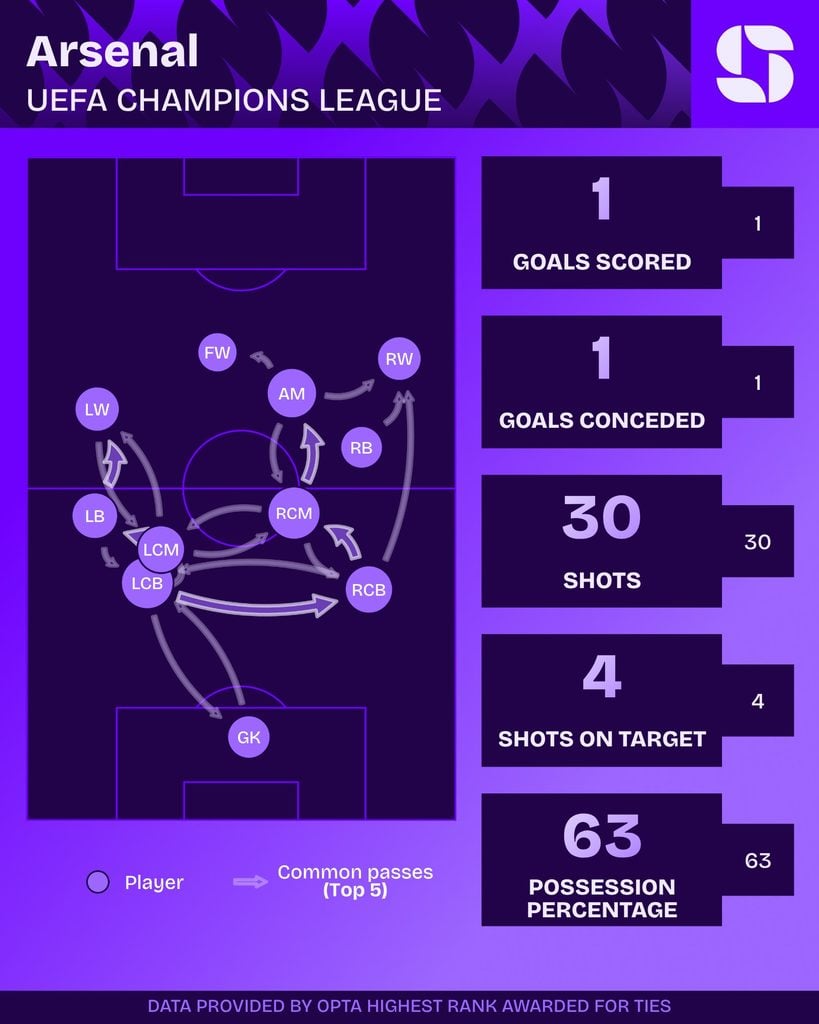
Much like PSG, Arteta wants his side to have fluidity and mobility within a more positional structure, not complete freedom to move wherever they want, but controlled rotations to destabilise the opposition press and cause problems.
The key profiles and players that allow them to do this are their full-backs and midfielders, which we saw in this game against Dortmund with the positional rotations between Piero Hincapie, Ben White, Declan Rice, Myles Lewis-Skelly and Martin Odegaard.
Rice often drops into the first line, joining Ezri Konsa and Gabriel, which allows White and Hincapie to push on and take up more advanced positions.
Lewis-Skelly and Odegaard have the freedom and mobility to drop low and arrive higher between the lines, with one looking to occupy more of a number six position (often Lewis-Skelly) and the other roaming between the lines (often Odegaard).
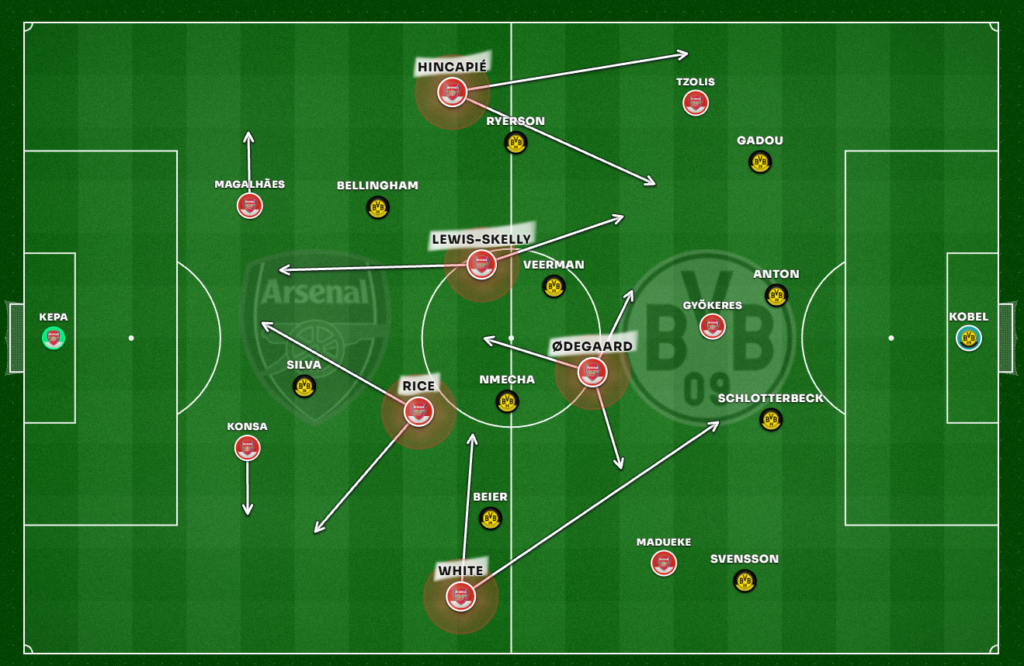
Both White and Hincapie are capable of holding width, allowing their side winger to drift inside, but also occupying the inside spaces themselves between the lines, which allows the wide players to occupy width instead.
White’s positional fluidity in this game was a key talking point. Early on, he was interchanging with Rice in a more holding midfield position during the build up, but he was also finding himself in some really interesting advanced positions, including for Gyokeres’ goal, where his movement and positioning was pivotal.
Gyokeres wonder goal
As Arsenal moved forward in the build up to their goal, White found himself as the most advanced player, occupying a centre-forward position.
Gyokeres, with White occupying the centre-backs of Dortmund, was able to peel away, create seperation by dropping away from the Dortmund defensive line and receive the ball from Noni Madueke.
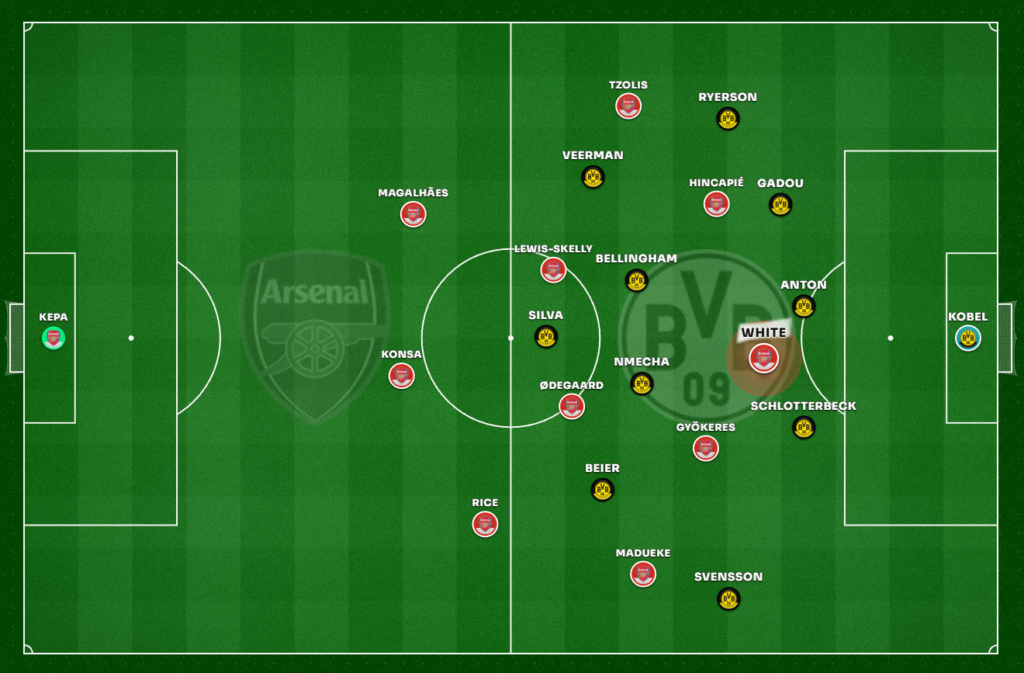
With White pinning the centre-backs, Gyokeres had time to receive, take two touches to prepare to get his shot off and then strike it with such purity.
And if White’s position wasn’t enough, as Gyokeres took the shot, it was actually Hincapie attacking the back post, making both of Arsenal’s full-backs the two most advanced players on the pitch.
This didn’t feel like a one off moment in the game either, as Gyokeres was constantly dropping away from the defensive line to receive the ball, which isn’t something you would usually associate with his playstyle.
But by using their full-backs to attack depth, much like PSG often do, it was opening up space for the likes of Gyokeres to receive in front of the defence and get their shots away, which is reflected by Gyokeres’ stats from the game.
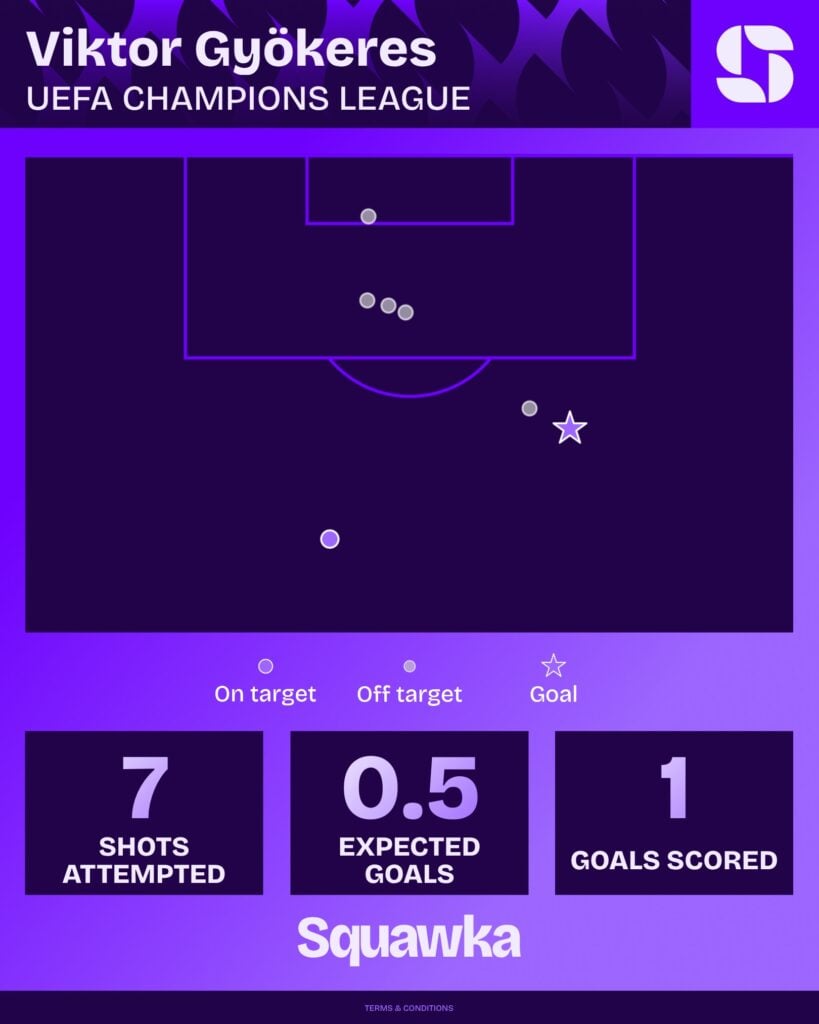
The Sweden international took seven shots in the game, getting two on target and missing one big chance in the match.
But the sheer volume of his shots in the game was enough to signal it’s worth looking at, as Gyokeres has only averaged 1.48 shots per 90 minutes in the Premier League and 2.49 shots per 90 in the Champions League this season.
Whether this was down to the tactics from Arteta to open those shooting opportunities up for Gyokeres, or a mentality shift from the Swede to prove a point, it was definitely something interesting that will be worth keeping an eye on in the coming weeks.
Gadou breaks the game
While Gyokeres stole the show with his excellent strike, Joane Gadou showed exactly why he is so highly rated against the Gunners.
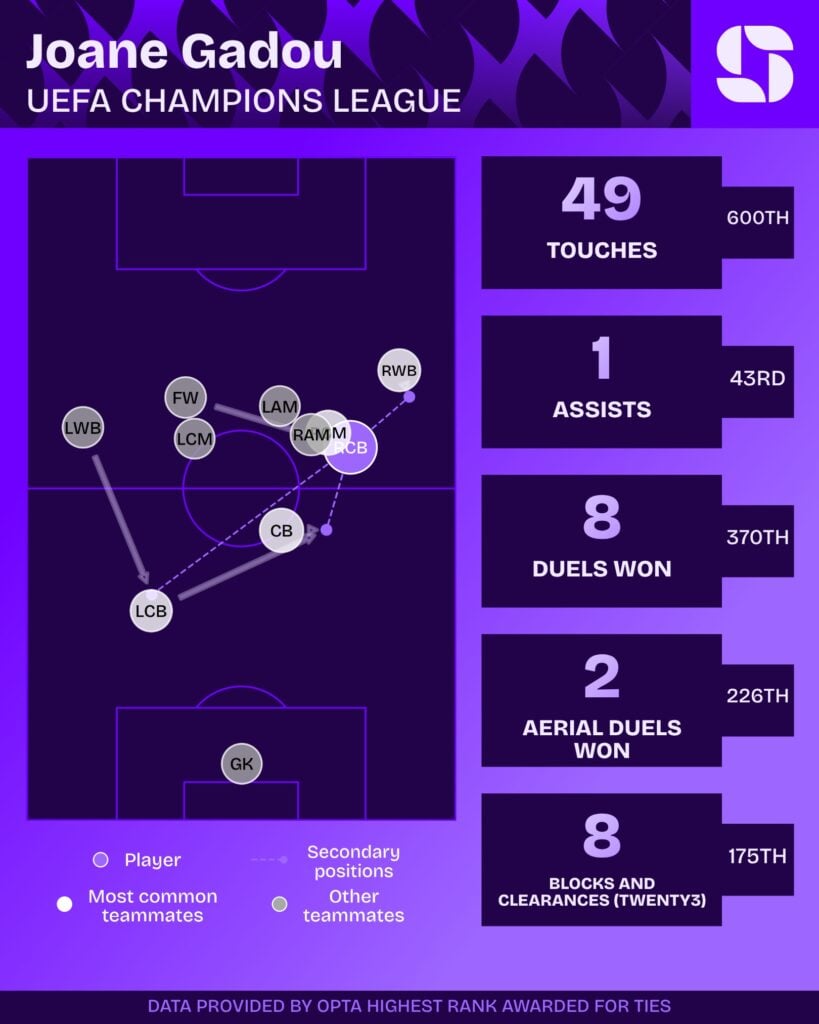
Firstly, with his defensive attributes, winning six of his eight ground duels, winning both of his aerial duels, making seven clearances, two blocks, one interception and two tackles in the game.
Gadou has the physicality to defend 1v1 in the channels, the speed to recover when balls are played into depth, but also the preparation and IQ to defend his own box when absorbing pressure.
But Gadou isn’t just a strong defender, he also has in-possession qualities which he showcased for Dortmund’s equaliser.
Receiving the ball in more of a right-back position, Gadou was pressured by Christos Tzolis, letting the ball look like it was going to roll across his body, before taking a late spring touch to go back across Tzolis’ momentum and carry the ball through the centre.
Gadou then used his power and long stride to eat up ground through the middle of the pitch, bringing the ball past Arsenal’s midfield unit.
He then played it into the feet of Beier, who did well, taking a nice touch back across Konsa who tried to come across and win it, setting it on his left-foot and striking it back into the near bottom corner.
The 19-year-old defender was already highly-rated, having played for PSG in his youth career, before going to RB Salzburg and earning his move to Dortmund in the summer. If he continues performing like this, it won’t be long until a team like PSG is back knocking on the door.