








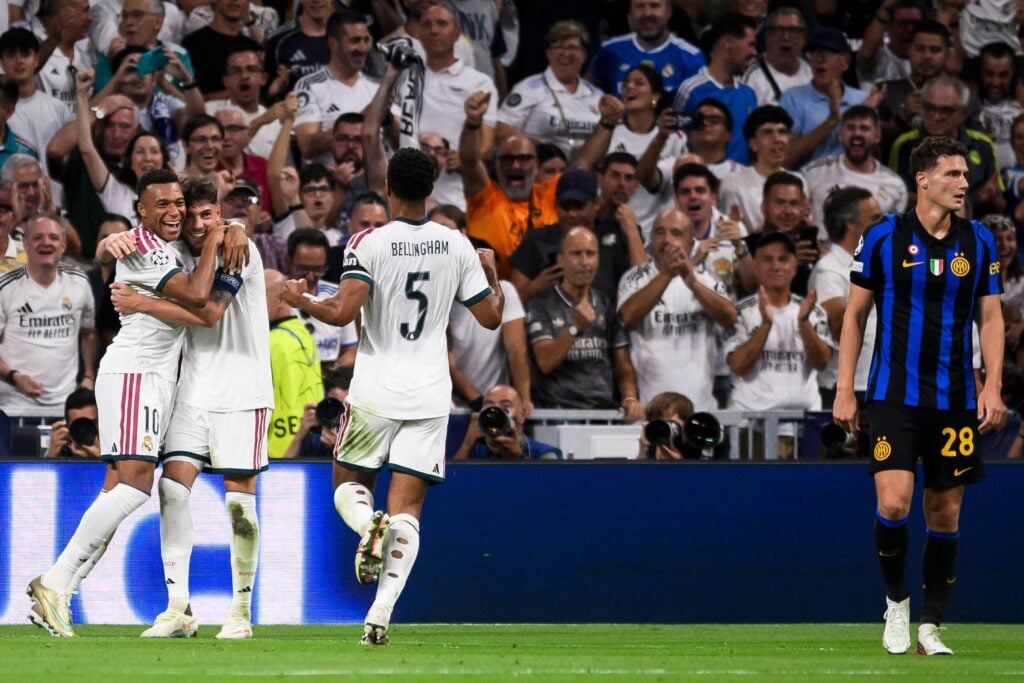
Real Madrid beat Inter Milan 2-1 in their opening Champions League match of the season, getting three points on the board.
Despite a strong start from Cristian Chivu’s side, it was Kylian Mbappe who opened the scoring after 14 minutes, as Real Madrid prized possession from Inter Milan inside their own defensive third.
Just nine minutes later, Real Madrid scored a second through Federico Valverde, who pressured Josep Martinez between the sticks, catching him on the ball and poking it home for 2-0.
Inter Milan gave themselves a fighting chance, making it 2-1 in the 77th minute through Carlos Augusto
In this article, we’ll cover
Mourinho’s defensive plan
Real Madrid’s defensive plan was an interesting one, as they were fairly happy to allow Inter Milan possession of the ball, while still wanting to apply pressure to force them backwards and manage rotations.
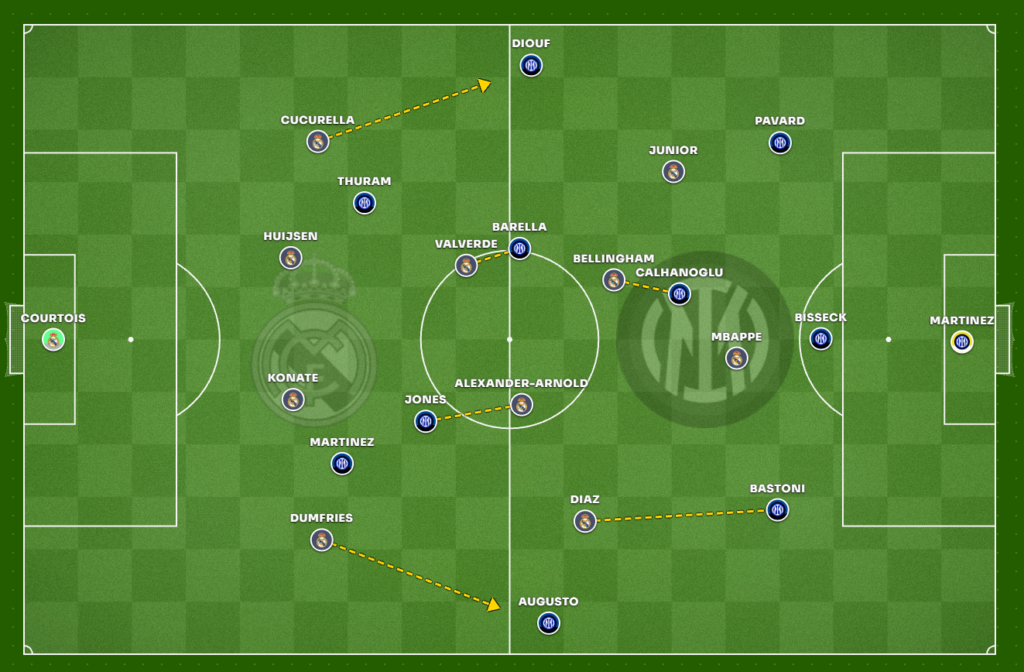
The easier roles to identify were those of Mbappe and Vinicius Junior, with the Frenchman looking to manage to central centre-back, while the Brazilian was largely responsible for Benjamin Pavard at right centre-back.
But it was the midfield three of Real Madrid whose roles were more interesting, as each had their man-oriented reference points, while looking to retain a primarily zonal structure.
Inter Milan’s midfield three were fluid with their movements, Hakan Calhanoglu was dropping to receive from the backline, Curtis Jones was rotating between high pocket positions and lower left-back zones, while Nico Barella was floating from central areas into a range of different positions.
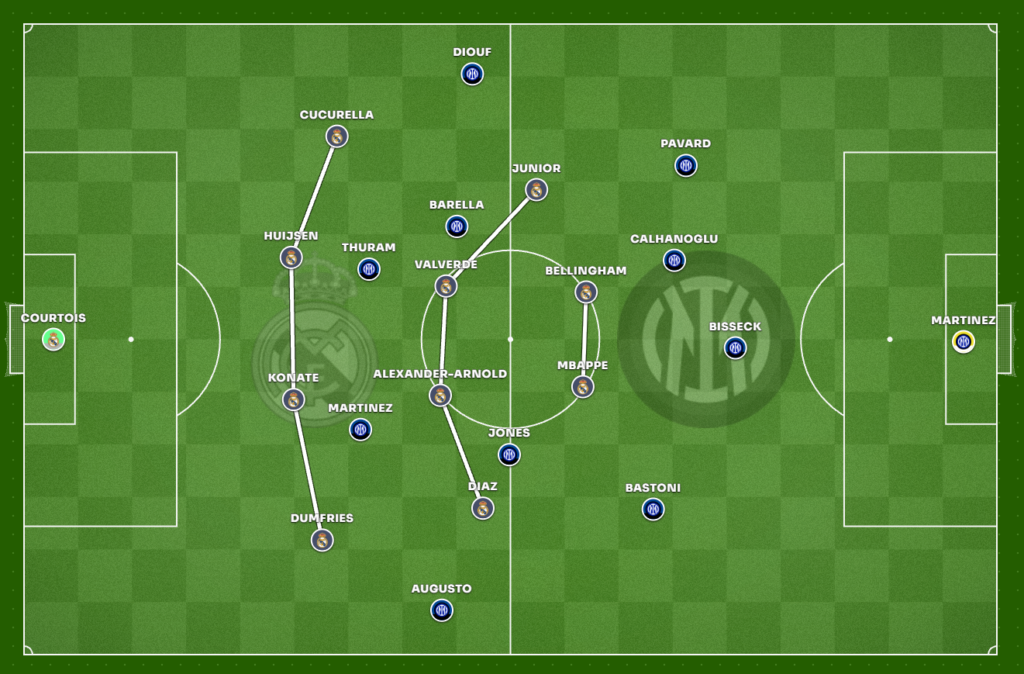
While the midfielders had clear man to man references, the collective idea felt more geared towards protecting space between the lines and keeping midfielders in central areas when collapsing into their 4-4-2 shape, rather than allowing them to be dragged away by their marker.
Having the ability to absorb pressure has been a staple of Mourinho sides of the past, which paired with the transition threat this Real Madrid side has to offer, can become a huge strength if done correctly.
Devestating Madrid
In the first half, Real Madrid had just 30% possession, but still managed six shots, four of which were big chances, scoring their first two shots of the match.
Their first goal came from a pressing situation, as Real Madrid locked on to Inter Milan trying to build out. Jones had the ball infield, where Trent Alexander-Arnold followed him, while Barella was followed by Valverde.
As Jones tried to come back inside to retain possession, Alexander-Arnold’s pressure was enough to force a mistake, which led to Yann Bisseck compounding that mistake with one of his own, as Mbappe applied back pressure on the ball.
Brahim Diaz was then able to play the ball into a massive gap between Bisseck and Alessandro Bastoni, with Mbappe slotting it home first time to make it 1-0.
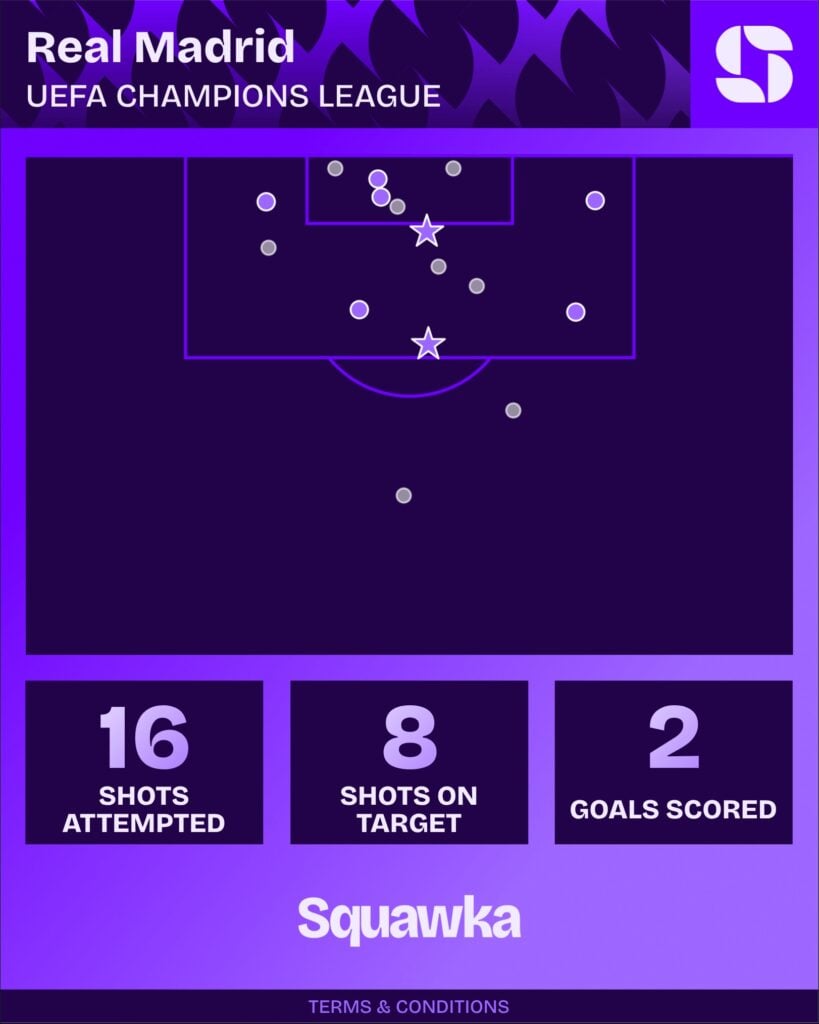
The second goal was also from a pressing moment, as Real Madrid stepped up to apply pressure to Inter Milan’s build up, where Valverde was able to rush the keeper into a mistake and score to make it 2-0.
Due to Barella’s position on the same vertical line as his goalkeeper, Valverde was able to keep his momentum pressing past Barella, arriving at speed and forcing the mistake from Martinez in goal.
They also had some chances to break from deep in the second half, having absorbed pressure lower on the pitch, allowing the likes of Mbappe, Vinicius Junior and Jude Bellingham to stretch their legs.
Inter Milan’s wide overloads
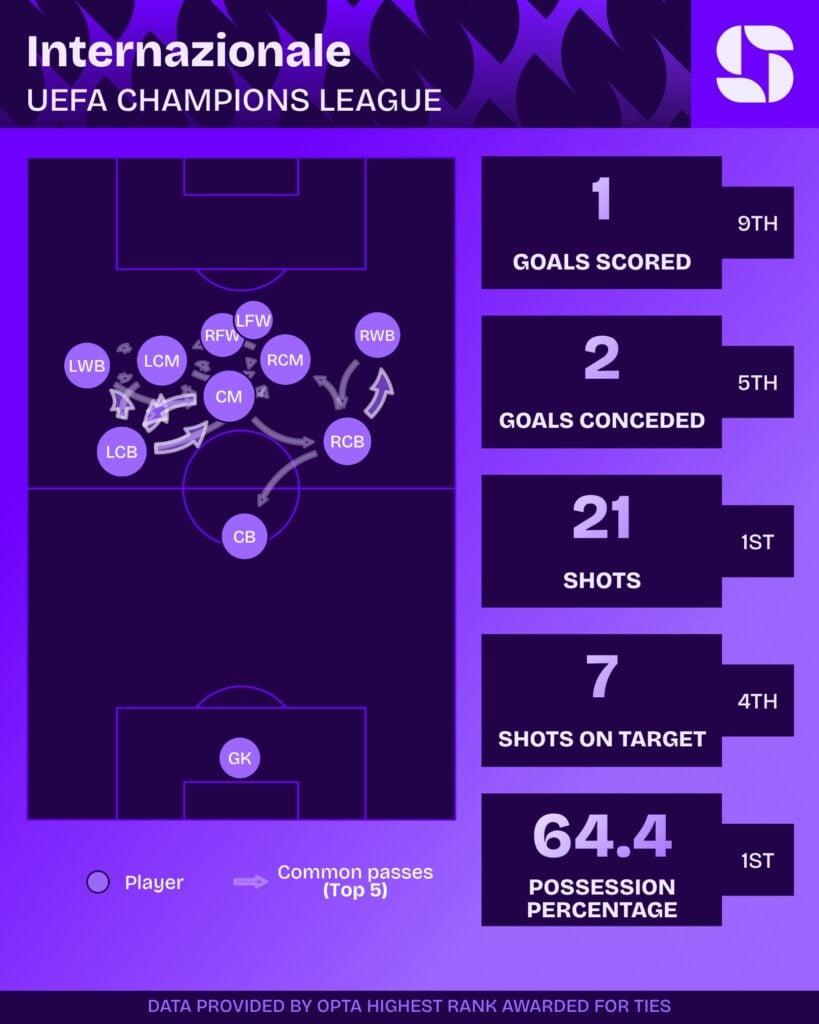
Chivu’s side had 64% of the ball, often able to possess the ball in deeper areas with Real Madrid largely happy to cede possession in a more zonal structure.
During these settled possession periods, the main advantages came in wide areas, as Inter Milan often had wide triangles on either side.
With the wide centre-backs stepping forward, the advanced number eight and wingback would form that triangle, with Martinez often drifting over to create a +1 and overloading down the flanks.
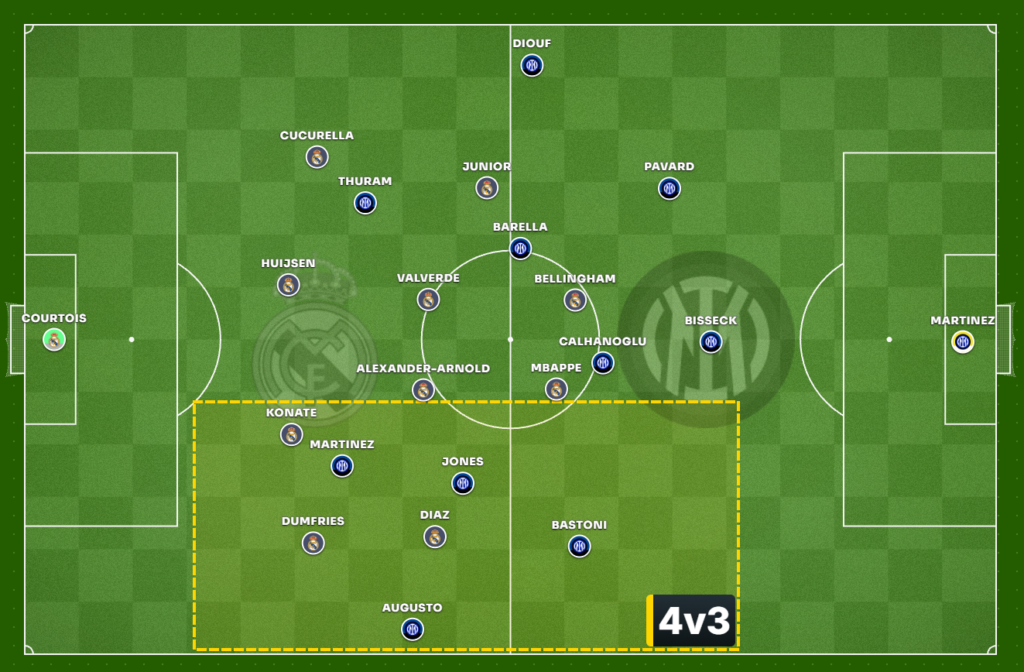
In the second half, Inter Milan began to exploit these advantages more, looking to bait pressure from Diaz and find dynamic ways to arrive with Lautaro Martinez and Augusto in the last line by creating tension for Denzel Dumfries.
For their goal, Inter Milan circulated play from their right side back towards the middle, where Bisseck made a move forward from his right centre-back position.
With Marc Cucurella tucked inside and Martinez drifting over to occupy him, Bisseck was able to receive the ball arriving from deep in an advanced wide position down the right-side.
This gave Inter Milan a 2v1 overload against Cucurella, allowing them to manufacture a cutback from Martinez into Augusto arriving in the box, making it 2-1 and keeping the game alive.
Despite losing their first game of the Champions League campaign, Inter Milan will be hopeful performances of that calibre, without the early errors, will be conducive to enough points to qualify for the next stage of the competition.