






Defending is a key aspect of football. Stopping your opponents’ scoring will often lead to great success. But what if you stopped your opponent from scoring and then went up the other end to strike? That is the beauty of a well-executed counter-attack.
The concept is simple, really – defend deep, win the ball and quickly transition to attack with direct, measured passes which exploit space and lead to goalscoring opportunities.
However, there are complexities and variations to counter-attacks which make them such a valuable and effective part of the sport, all of which will be detailed below.
What is a Counter-Attack?
In basic terms, a counter-attack involves winning the ball and transitioning that reclaim of possession into a goalscoring opportunity in one fell swoop.
This is an extremely effective tactic for teams with lower budgets than their opposition, as it allows them to close the gap in on-ball quality by avoiding risky passes and playing direct, often looking to force an error or catch out a team who has overcommitted players to their own attack.
The most famous recent example of a team using counter-attacks as their main method of offence has to be the 2015-16 Premier League champions, Leicester.
Having survived relegation by only six points the previous season, Claudio Ranieri came in and changed up the system entirely, building everything around a counter-attacking style.
Two big centre-backs, Wes Morgan and Robert Huth, could deal with any balls which came into their box; Christian Fuchs and Marc Albrighton would whip crosses in at will; Shinji Okazaki was able to hold things up once Leicester went long; and N’Golo Kante’s elite ball-winning meant the Foxes could launch these attacks regularly.
Then, of course, there was Jamie Vardy. The speedy forward latched on to so many long balls from quarterback impersonator Danny Drinkwater, scoring 24 Premier League goals and becoming a legend along the way.
Is it still relevant today?
The 2010s were the heyday for the counter-attack. The high-possession, tiki-taka styles of Pep Guardiola and Vicente Del Bosque were all the rage, so it was only natural that the likes of Jose Mourinho and Diego Simeone opted for the antithesis as their weapon of choice.
That shows that it is not only for the low-budget teams, too, with Real and Atletico Madrid regularly using counter-attacks under those managers, and that is not to say the tactic has died out either.
Sunderland, Bournemouth and Brentford all finished in the top half of the 2025-26 Premier League while averaging 50 per cent possession or less, while only two teams averaged less of the ball than Nottingham Forest (41.2 per cent) when they finished seventh the season prior.
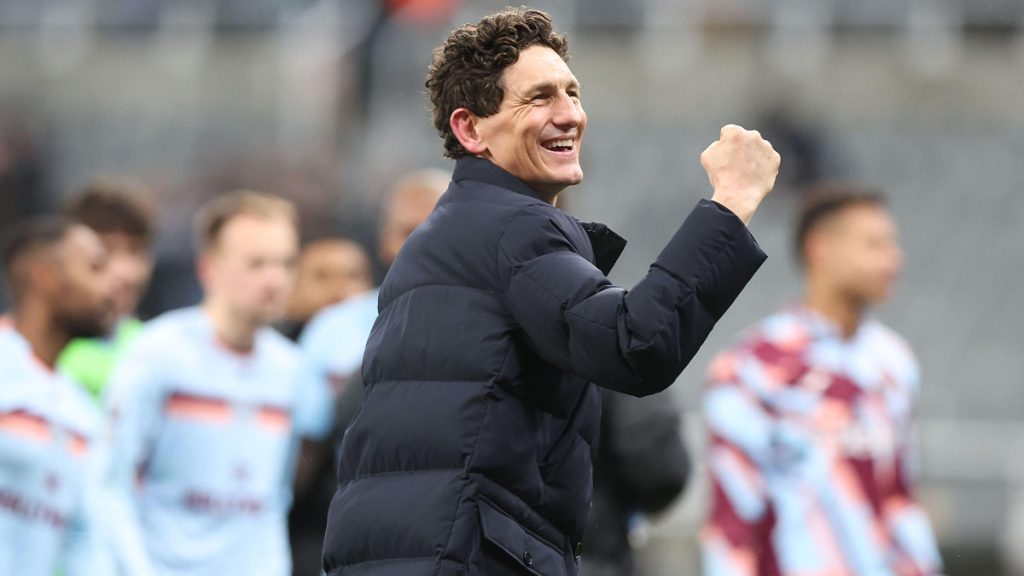
Under Nuno Espirito Santo, Forest were the blueprint for a counter-attacking team. Defend deep with big centre-backs (Nikola Milenkovic and Murillo), play long balls to a target man (Chris Wood), who can then bring star men like Morgan Gibbs-White into play, or get the ball wide to pacey wingers (Callum Hudson-Odoi and Anthony Elanga).
Forest enjoyed great success under Nuno. Brentford have started the 2026-27 Premier League season well and are employing similar tactics. The counter-attack will always be a key aspect of football, at every level, as its effectiveness cannot be underestimated.
A big reason football is so loved is its ability to produce some unbelievable results. Without competent counter-attacks, that wouldn’t be the case.