




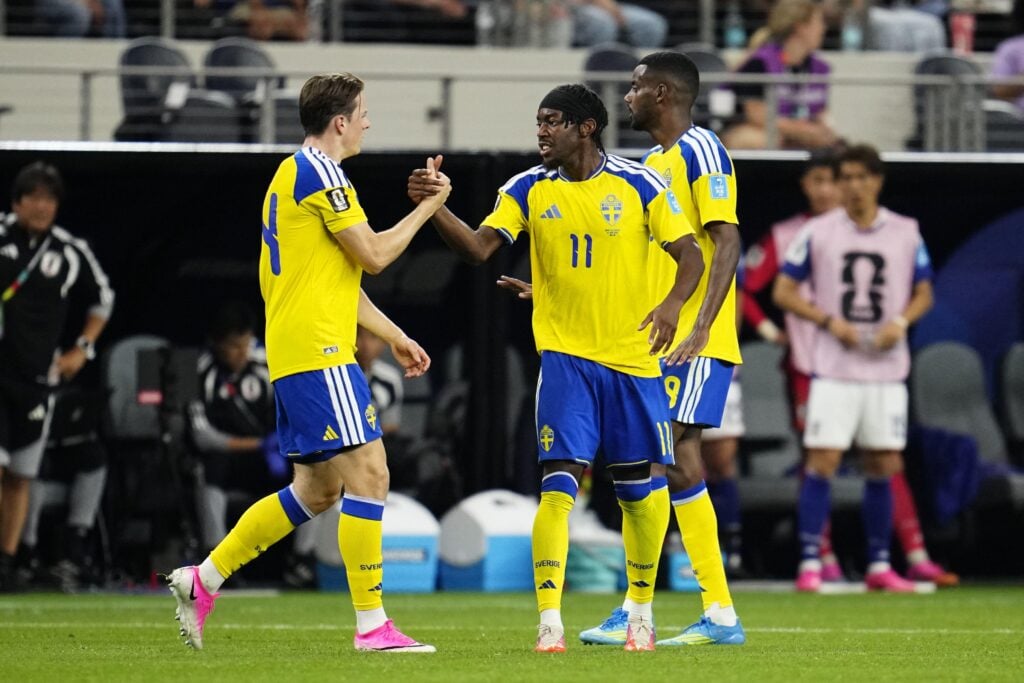
Japan and Sweden drew 1-1 in their final game of Group F, as both sides secured their spots in the final 32 of the competition.
The first half was fairly uneventful, with both teams playing in a more passive manner, only taking six shots between them and generating 0.28 expected goals.
Japan were the first to strike after the halftime break though, with a lovely piece of interplay between the front three leading to Daizen Maeda’s opener.
Sweden burst into life from that point onwards, getting a goal just six minutes later through Anthony Elanga to level it up.
Graham Potter’s side took more control in the second half after the goal, which nuliffed the threat of Japan and allowed them to secure the point they needed to progress.
In this article, we’ll cover
Japan’s 5-2-3 midblock
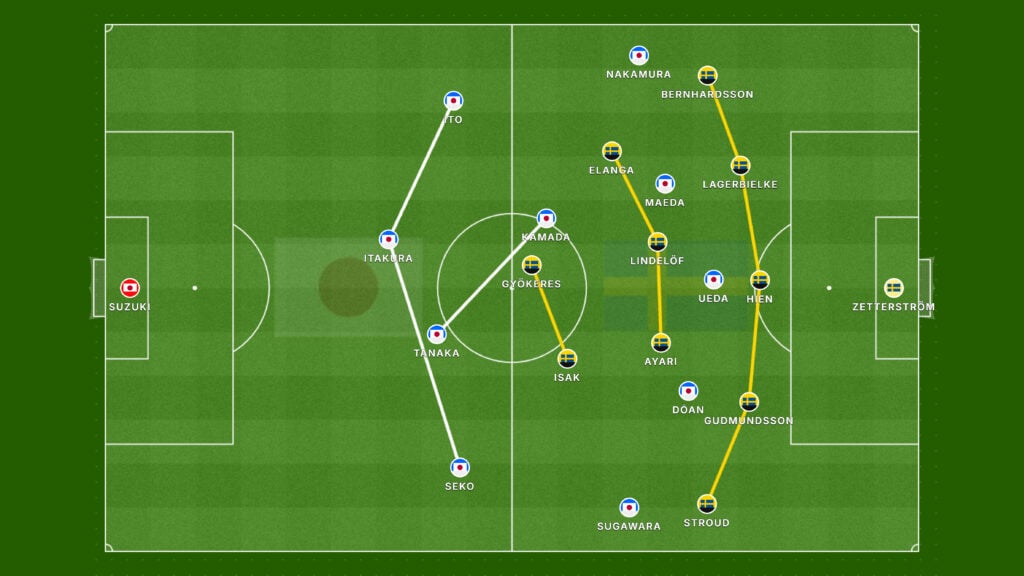
Hajime Moriyasu’s Japan side are extremely well coached out of possession, setting up in their 5-2-3 defensive shape.
This is an active and aggressive midblock, Japan also have clear references to jump out and force teams backwards.
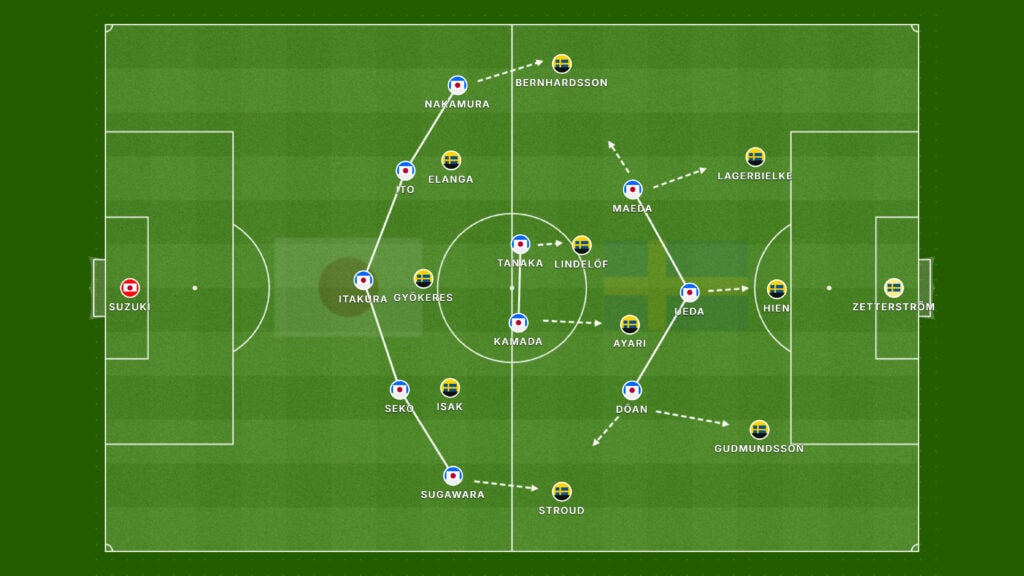
Ritsu Doan, Ayase Ueda and Maeda set up as the front three to screen central access, while also looking to pressure the Sweden front three on the ball.
Ao Tanaka and Daichi Kamada then protected the middle incase access was found, ready to jump and apply pressure if the ball came through.
The wing-backs had easier matchups as they were up against Sweden in a similar shape, following the opposition wing-backs if they went low or high.
Japan’s backline do a brilliant job of backing up the press when they jump out, keeping space tight between the lines but also retreating to cover depth runs.
Sweden dribbles beat directness
Sweden found it difficult to build through Japan’s defensive shape, with anything being played inside the block pressured.
This saw Potter’s side looking to play over the front press, by attracting the front three forwards, before going backwards to launch it forwards.
Alexander Isak, Viktor Gyokeres and Anthony Elanga were there to contest long balls, with Gyokeres getting himself in a few feisty tussles throughout the game.
However, despite Gyokeres winning a fair few of these contested balls into the front line, Sweden were unable enough bodies around the second ball.
Instead, it was a carry that broke Japan’s defensive shape rather than a long ball, as Gabriel Gudmundsson initially made a move ahead of the ball, creating space between the front three.
Victor Lindelof was then able to carry it inside the block, collapsing their shape and finding Gyokeres who found Elanga out wide.
Gyokeres making an underlapping run allowed Elanga to cut inside, curling it into the far left bottom corner.
Japan’s fluid rotations
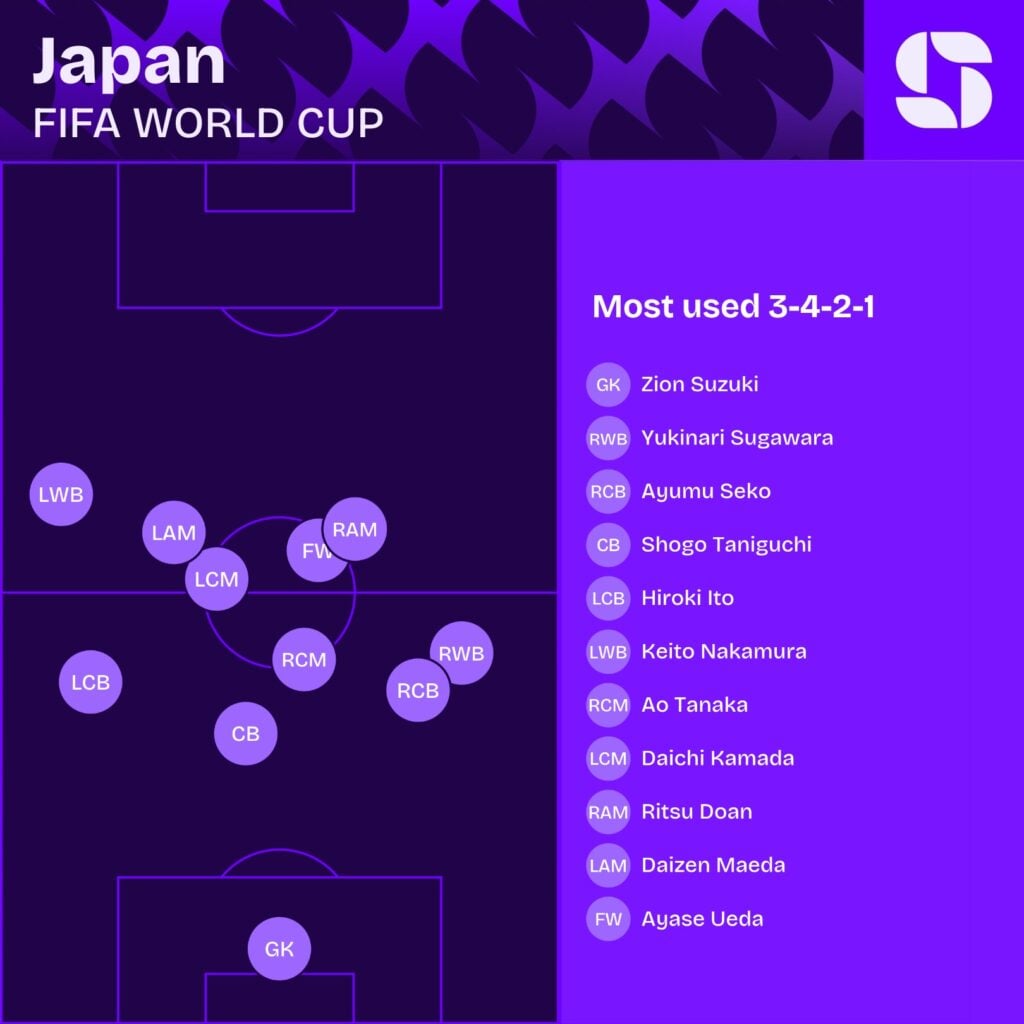
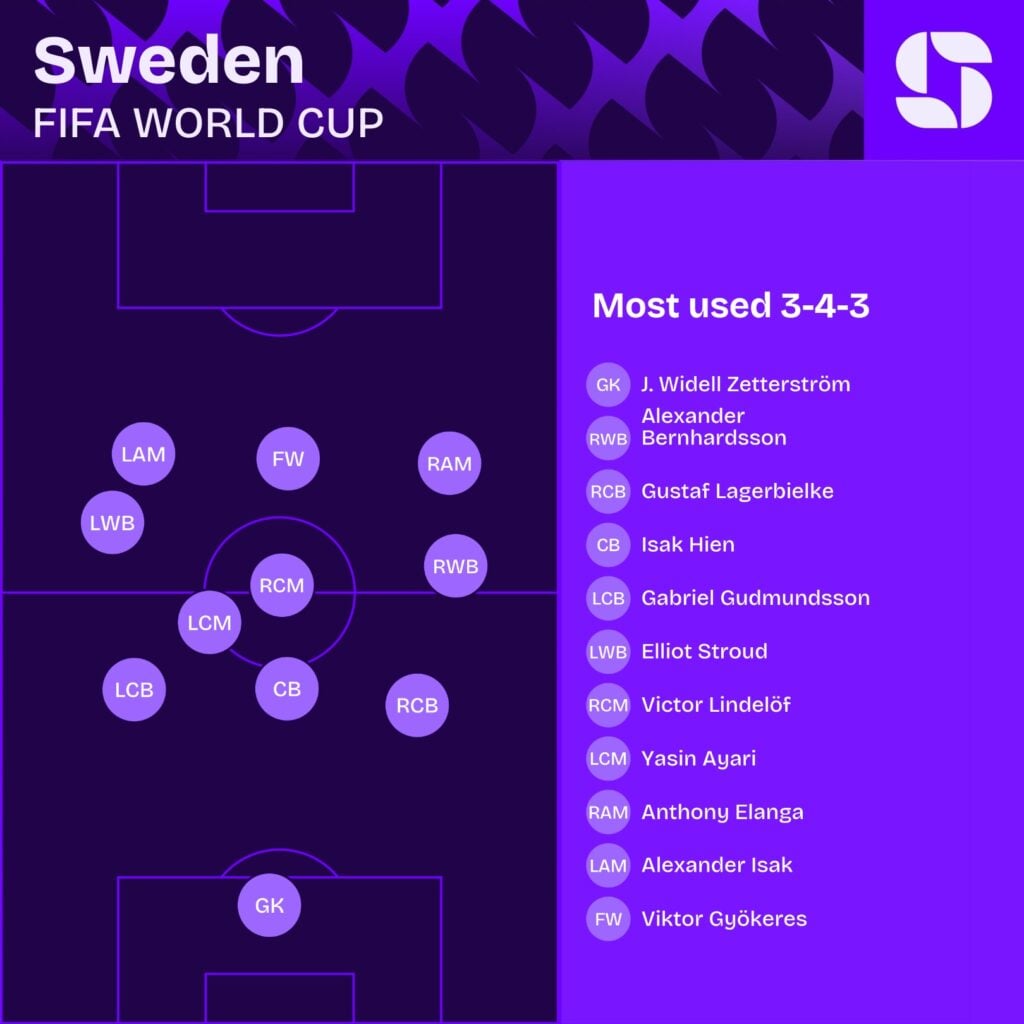
On the ball, Japan set up in their usual 3-2-5 shape in possession, but a few of their rotations were interesting to bypass and manipulate the Sweden press.
The wide centre-backs for Japan were splitting extremely wide, looking to stretch the front three of Sweden.
Tanaka was then dropping into the backline, creating a +1 against the Sweden front three, while Daichi Kamada floated between high and low positions.
Japan’s front five have a sense of fluidity to their movement, with all five players being comfortable switching attacking channels.
Not only can they interchange positions, but all five are willing runners and comfortable with the ball to feet, giving them an unpredictability with their variety of movement.
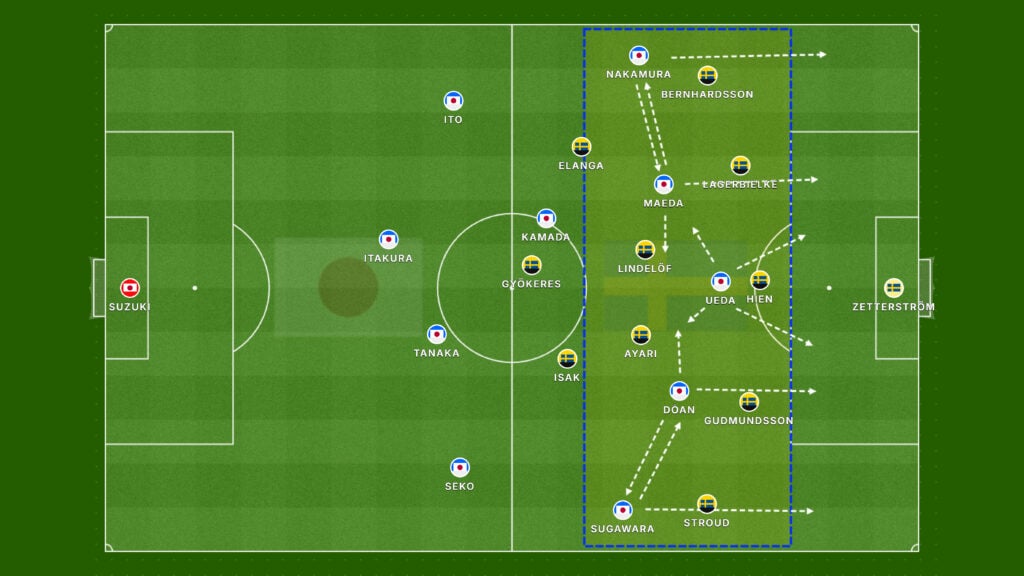
This was in full flow for Japan’s goal, as Yukinari Sugawara picked up the ball in a wide position to start the move off.
At the same time, Ritsu Doan found himself dropping from a centre-forward position into the right pocket, while Ayase Ueda made the counter movement.
Sugawara made an inside diagonal pass to Doan, allowing him to spin it into the feet of Ueda first time, using him as a bounce board for the give and go to find separation.
The second Doan made the inside movement to receive it back, Maeda made his run from deep into the space behind Sweden’s backline, receiving the ball and applying the finish.
A point serves all
Towards the back end of the game, after the Sweden equaliser, Potter’s side were able to effectivley take some sting out of the game.
Both sides knew a point was enough to secure qualification to the next round, with Japan finishing second on five points and Sweden finishing third on four points.
While both sides had a few more direct balls forward, earning set-pieces and looking to generate danger that way, neither side over extended, going back to the pattern in the first half of their more pragmatic approaches.
Japan continue to look like true dark horse contenders in this competition, while Sweden will be hoping they can find a little more in the later rounds.
Read more: