






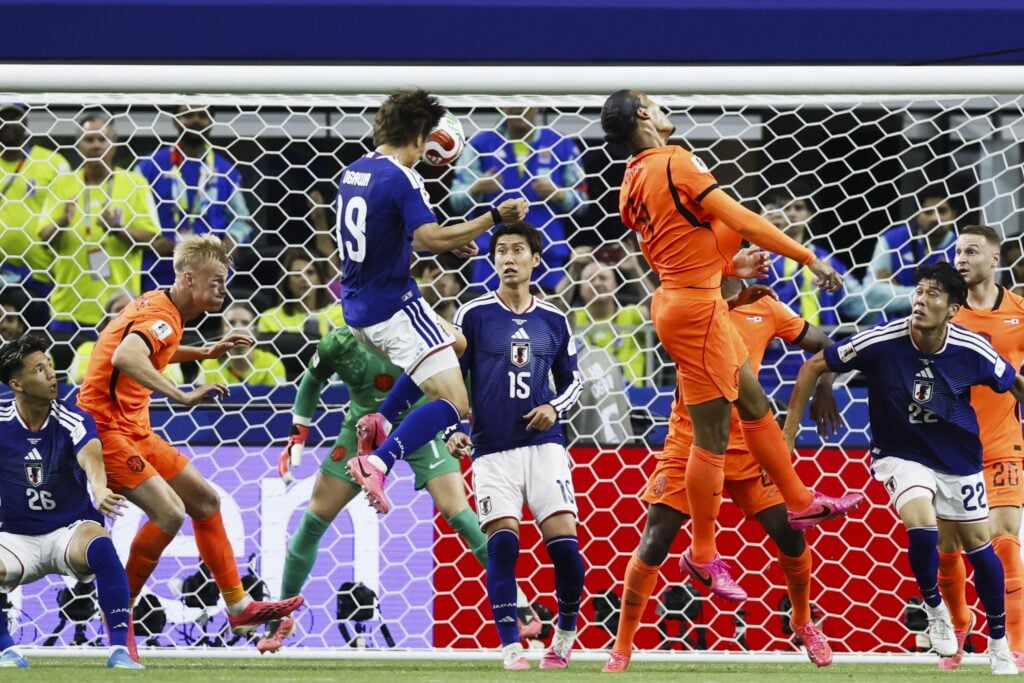
Netherlands and Japan shared the spoils with a 2-2 draw for the opening game of both their World Cup campaigns.
The first half was an extremely cagey affair, with neither team creating a single big chance, only taking seven shots between them and generating 0.49 expected goals between them.
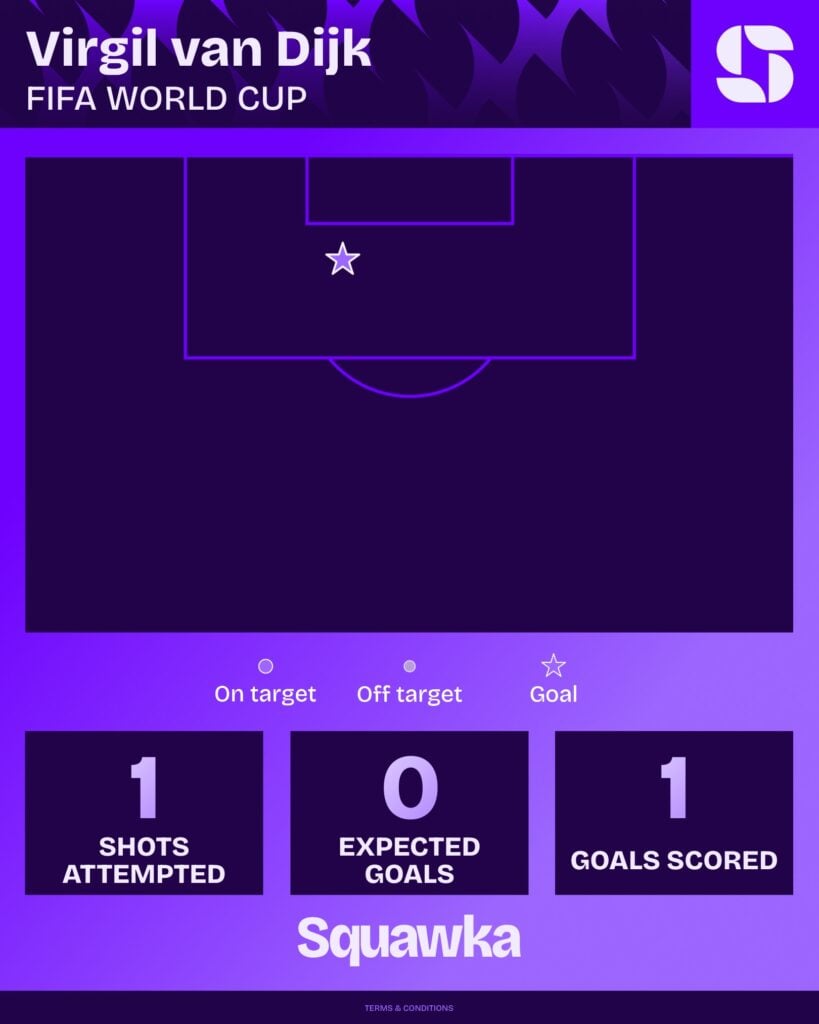
The moments of quality arrived in the second half, with Virgil Van Dijk opening proceedings with a headed finish off the post, followed by a Japan equaliser just six minutes later from Keito Nakamura.
Crysencio Summerville restored the lead for Netherlands in the 64th minute with a beautiful curled effort from the top of the box, before Japan levelled again through Daichi Kamada in the 88th minute to rescue a point.
In this article, we’ll cover
Japan’s 5-2-3 midblock vs Netherlands build
The first half followed a similar pattern throughout, as the tactical choices from both sides led to a cagey first 45, as the two sides cancelled each other out.
On the ball, Ronald Koeman’s side set up in a 4-1-5, keeping both full-backs deeper in the build up in nominal full-back positions, while Frenkie De Jong operated in a single pivot, with the two number eights pushing forward to create a front five.
Meanwhile, Japan set up in their usual 5-2-3 midblock, with the front three looking to screen off access to the pivot/pocket players, the two midfielders protecting the space behind the front three and the back five ready to jump aggressively on any pass/carry inside the block.
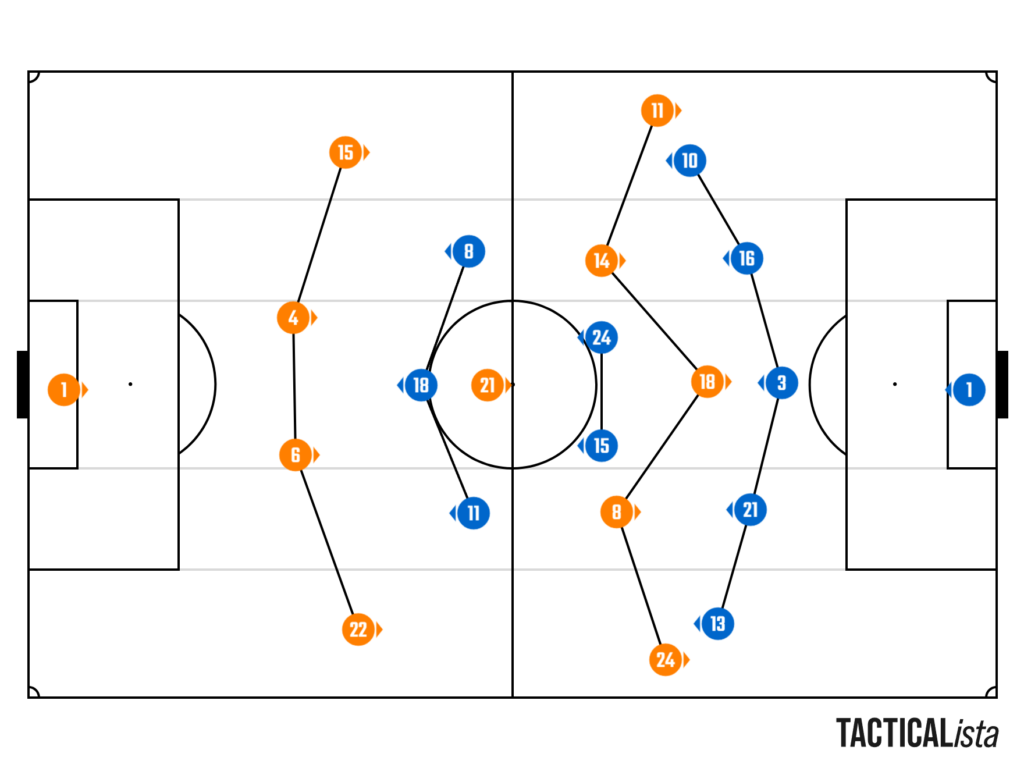
The game plan from Netherlands was clear, looking to use their back four to overload the front three of Japan’s press, giving them good control of the game, while also giving them more protection against transitions.
However, the issue for Netherlands in-possession was their lack of mobility and rotations, making it very static in front of the Japan midblock, with the ball circulation also slow, stopping them from accessing advantageous areas at a good enough rate.
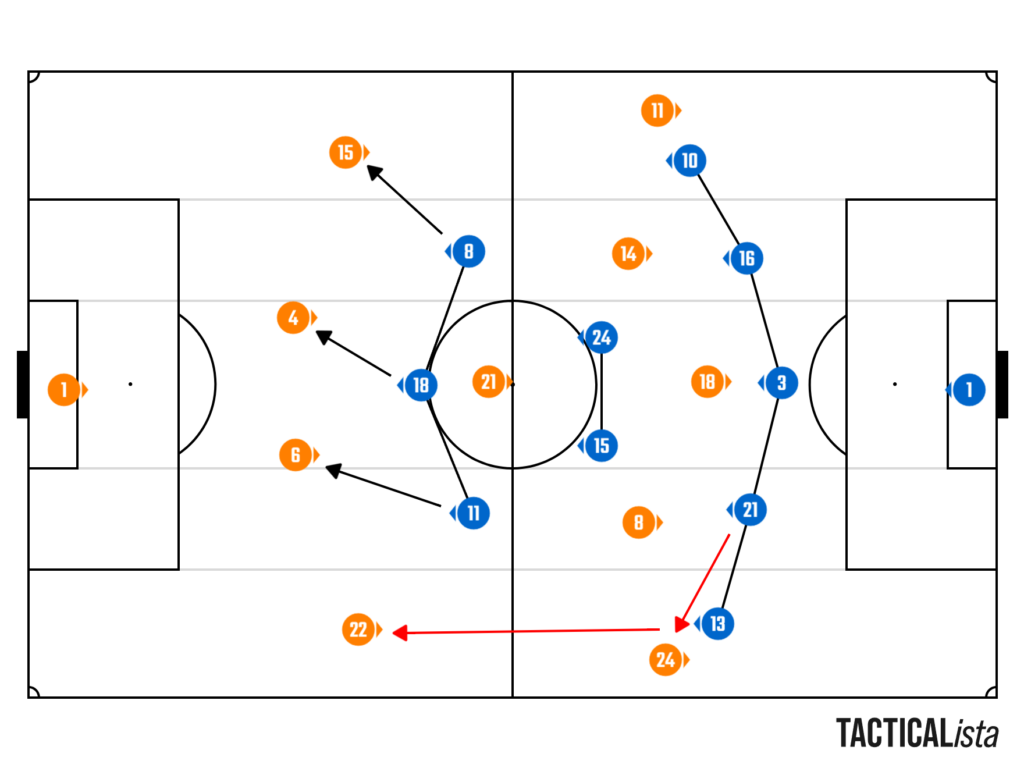
The positioning of the full-backs increased the distances for the Japan players when transitioning from a more zonal 5-2-3 midblock into a man to man press, with the main jump to afford that being Nakamura jumping from left wing-back onto Denzel Dumfries, with Hiroki Ito then shifting over to mark Summerville out wide.
However, if Japan were pinned in the last line and couldn’t jump out effectively, Daizen Maeda did a great job of getting over towards Dumfries to screen off any pass towards Ryan Gravenberch, forcing him either out wide or backwards.
Frenkie De Jong’s interesting role
I could wax lyrical about De Jong’s role on the ball, having such a high level of press resistance that the opposition often don’t even try to steal the ball from him.
However, in this game, it was his out of possession role which was extremely interesting, as De Jong was dropping into a right centre-back role off the ball to form a 5-4-1 defensive block.
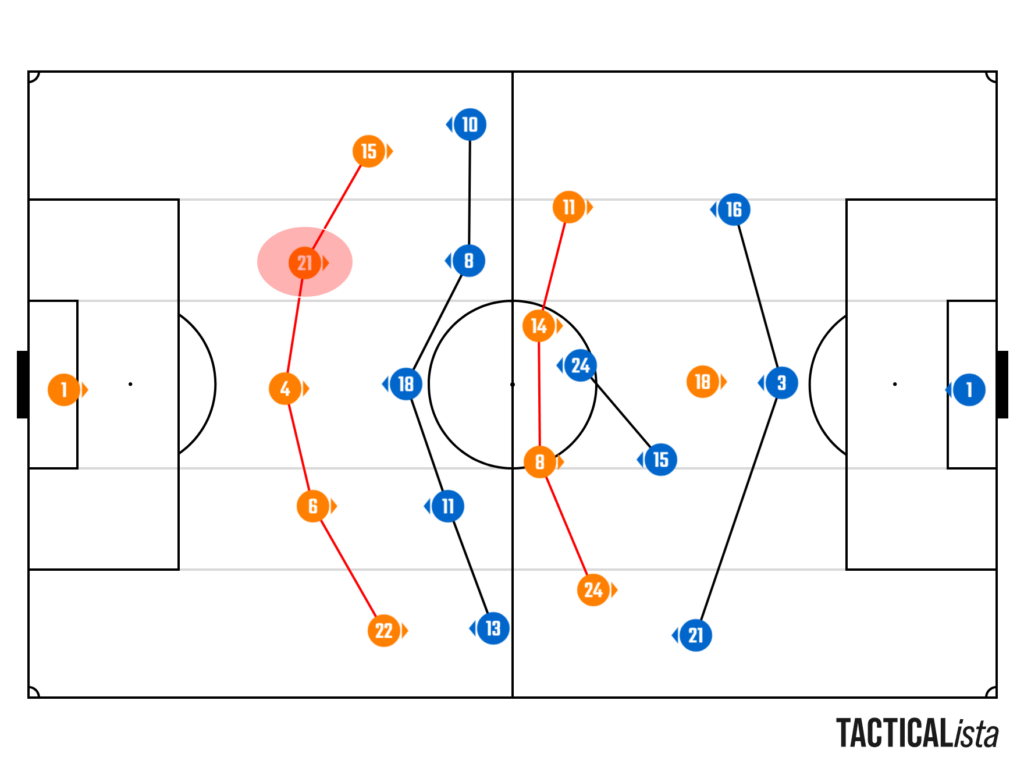
Netherlands did this primarily to match up with Japan’s front five, allowing their full-backs to lock on to the opposition wing-backs while still keeping three players in the centre to defend against Japan’s front three.
Netherland’s biggest issue off the ball was the spacing between their back five and midfield four, which Japan should’ve accessed better to find some more joy.
Physical prowess & individual magic
The second half produced four goals, but despite featuring better football and a few more chances, the teams created only one big chance, generating just 0.84 xG across 13 shots between them.
In the first half, the biggest chances felt like they came from set-pieces, with the Netherlands having a physical advantage over Japan from those scenarios.
Van Dijk’s opener came from the second phase of a set-piece early in the second half, as Japan were slow to get out, giving Gravenberch time on the ball to whip it back into the box, finding Van Dijk who headed it home.
For Japan’s first goal, Takefusa Kubo was able to access the space between Netherlands’ defensive and midfield line, this pushed Netherlands back towards their own box.
Nakamura was able to utilise the extra space at the top of the box to receive the ball and manufacture a strike at goal, hitting it back across the keeper through bodies at the near post.
A frenetic finish
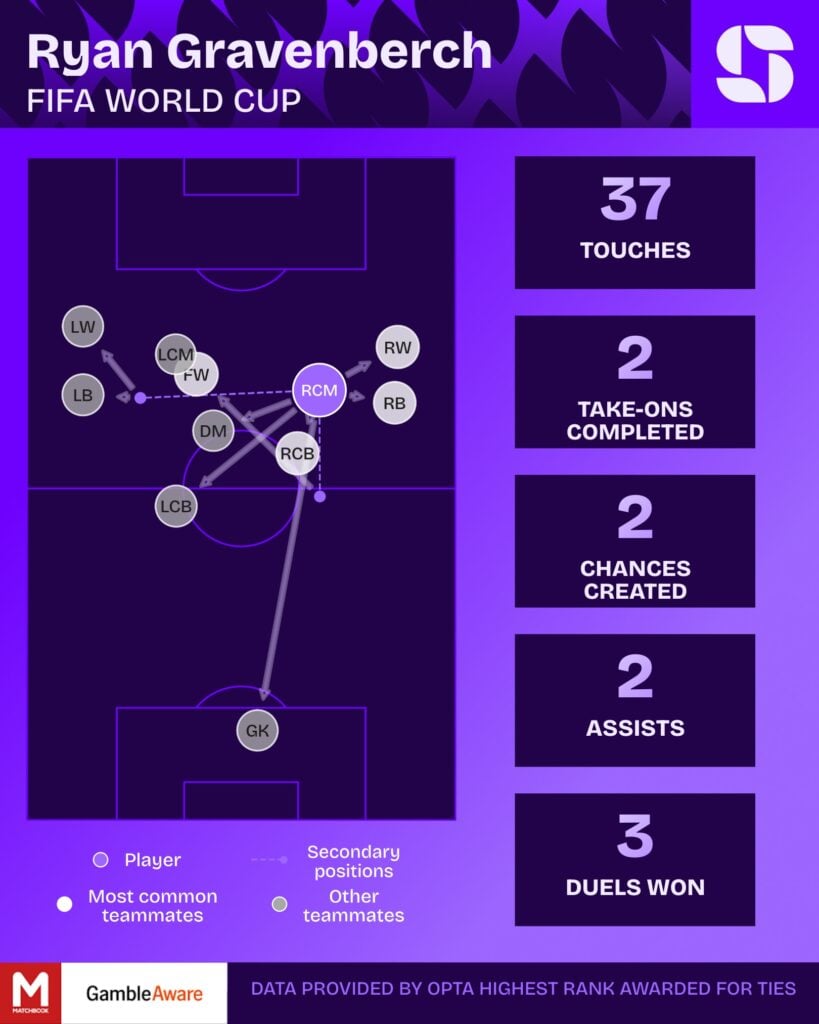
But with things level, Gravenberch was finally able to receive between the lines on a rare occasion, triggering the aggressive Japan pressure which he was able to manipulate and retain the ball through his tight space dribbling.
This opened up a pass out wide to Summerville, with Maeda now dragged away from arriving as the help defender against Summerville in the 1v1 against Nakamura, and a late run from Dumfries (who also didn’t get enough of the ball in this game) pulling the Japan defensive line backwards.
Summerville was able to use this, cutting inside and having the space to get his shot away, curling it into the bottom left corner from the top of the box.
But to steal a point, Japan were able to score from a corner in the 88th minute, with Koki Ogawa getting himself free to make the first contact, hitting it into Kamada where it then deflected off him past Bart Verbruggen in goal.
Read more: