






Paris Saint-Germain take on Arsenal in a bid to retain their Champions League crown on Saturday.
The Parisians have already secured the Ligue 1 title, their fifth consecutive success in the French top-flight. And they’ll be looking to join an exclusive list of back-to-back European Cup winners.
Arsenal, on the other hand, are chasing their first-ever Champions League trophy. They also come into the game as domestic champions, having ended a 22-year wait for a Premier League title.
With plenty on the line for both sides, Luis Enrique and Mikel Arteta are set to provide fans with a tactical battle of the highest order. But what will be the main details to look out for?
In this article, we’ll cover
Arsenal’s direct route
PSG look to press in a man-oriented fashion, with each player having a specific reference/matchup.
Against the top sides such as Bayern Munich, PSG have done this by having their wingers (Desire Doue and Khvicha Kvaratskhelia) mark the opposition centre-backs. Ousmane Dembele then drops to cover one of the holding midfielders.
Vitinha jumps forward to follow the other holding midfielder in a double pivot, while Fabian Ruiz covers one full-back. He’s mimicked on the other side by the PSG right-back — Warren Zaire-Emery in this example.
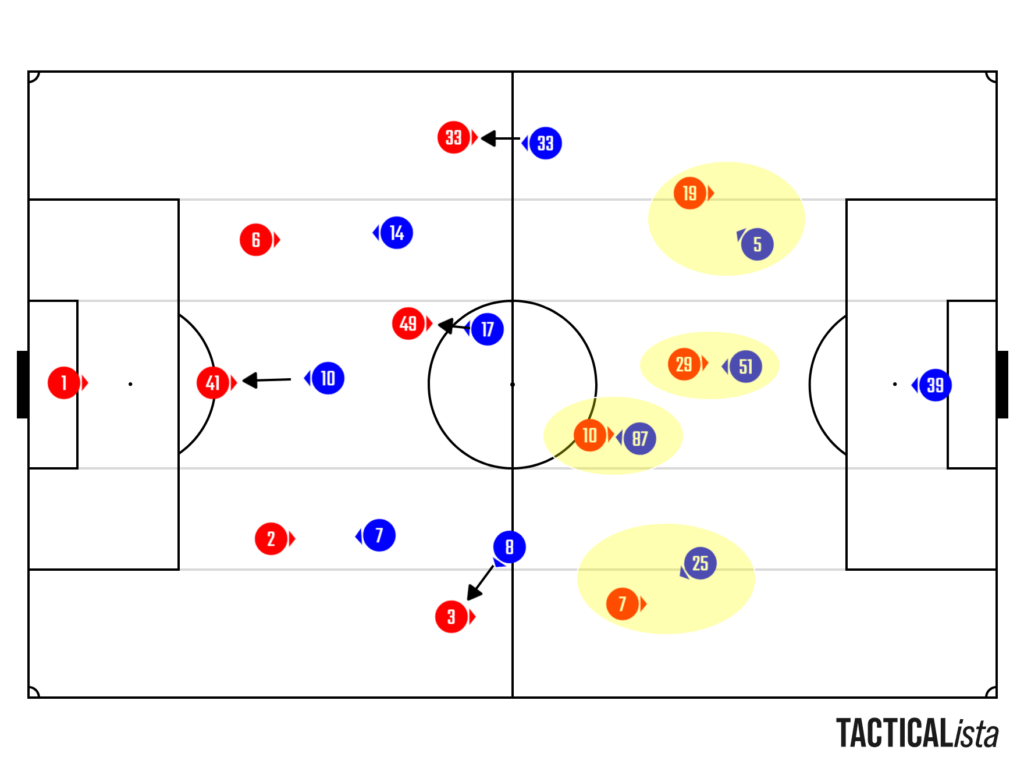
Joao Neves’ role is interesting. He will often cover the opposition No.10, following them everywhere. Whether they drop deep, run beyond or even peel wide to attack the channels, Neves is there.
With the right-back jumping up to press the opposition left-back, Marquinhos shifts over to cover the opposing left winger. Nuno Mendes is then left one-on-one with the right-winger, while Willian Pacho takes the striker.
How Arsenal can bait PSG’s press
There are a number of ways to manipulate, and take advantage of, an aggressive man-to-man press. Arsenal may want to replicate the method Bayern Munich used effectively, especially with their physical edge.
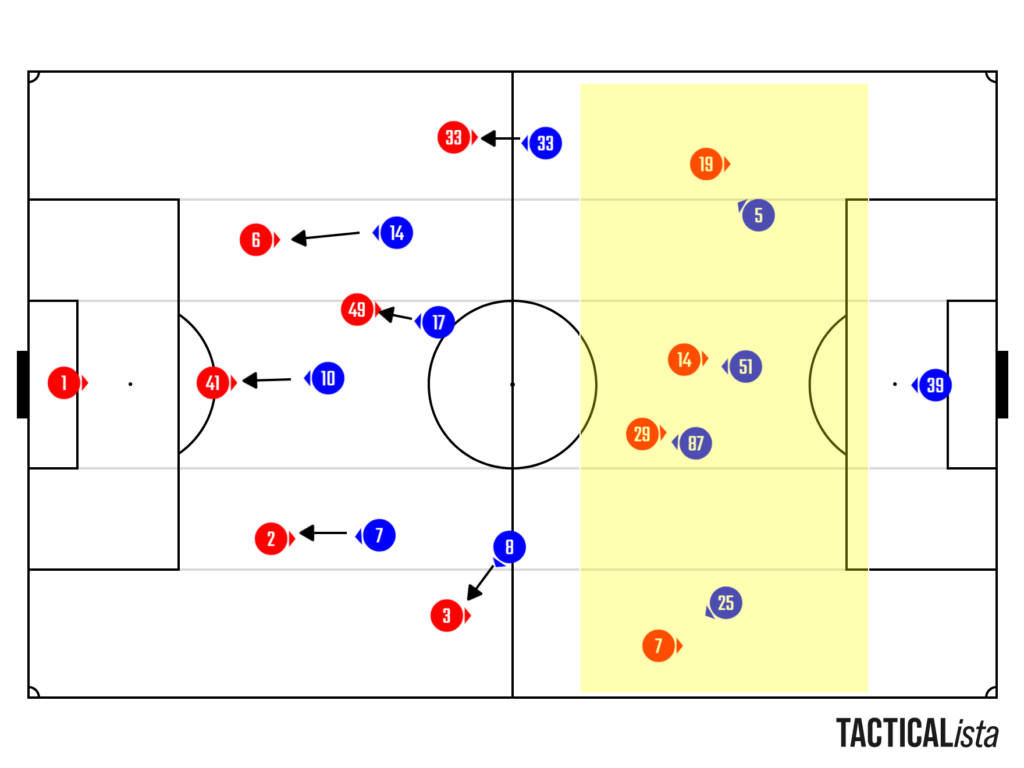
By baiting PSG’s front press to latch onto the first phase of buildup, you can crate a chasm between the two lines of engagement, clearing the centre and opening space to arrive in.
Arsenal could have a four-on-four against the PSG makeshift back line, including Neves. It would allow them to go long to gain territory, winning the first and second balls in favourable matchups.
An effective way to do this would be to start both Viktor Gyokeres and Kai Havertz. The pair would provide the physical mismatch to win those longer balls forward, allowing Arsenal to generate attacks from this moments.
The Gunners then have the likes of Declan Rice, Myles Lewis-Skelly, Cristhian Mosquera and Riccardo Calafiori who can all burst forward to win those second balls, behind PSG’s first line of engagement. Arsenal can continuously put the French side’s backline under pressure.
PSG’s rotations
PSG have become renowned for their fluid positional rotations. They make it difficult for the opposition to find their references to shift between a more zonal and a more man-oriented approach.
Arsenal, meawhile, often tend to set up in a hybrid press, which can be a 4-4-2 or a 4-2-4 off the ball. Each player understands their reference when they jump to apply man-for-man pressure.
However, it’s tough to keep those references against PSG. Vitinha can drop into left centre-back on the ball and Mendes will then push forward down the left. Neves will also rotate with the buildup unit, either taking up a pivot position or dropping into the backline. The likes of Doue, Dembele and Kvaratskhelia will look to drift and interchange positions across the frontline.
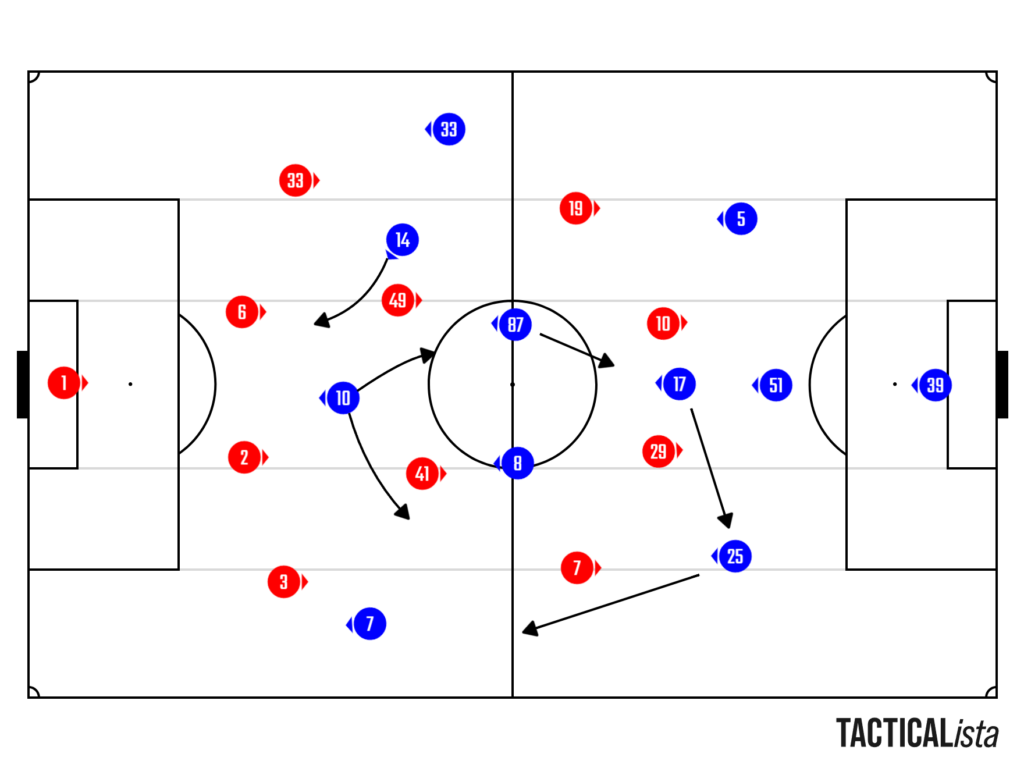
Dembele could prove to be the biggest problem for Arsenal. The Gunners often prefer to retain a +1 in the last line, instead of jumping a centre-back to cover the dropping centre-forward.
However, against PSG you run the risk of Dembele popping up in all sorts of areas across the pitch, being able to turn and face play and take control of the attacking organisation.
Doue coming inside off the right, while Zaire-Emery holds the width, will also be key. The winger can pin one of Arsenal’s defenders, but also drift over to the left to create two-on-one scenarios alongside Kvaratskhelia. It’s something they did effectively aginst Bayern Munich.
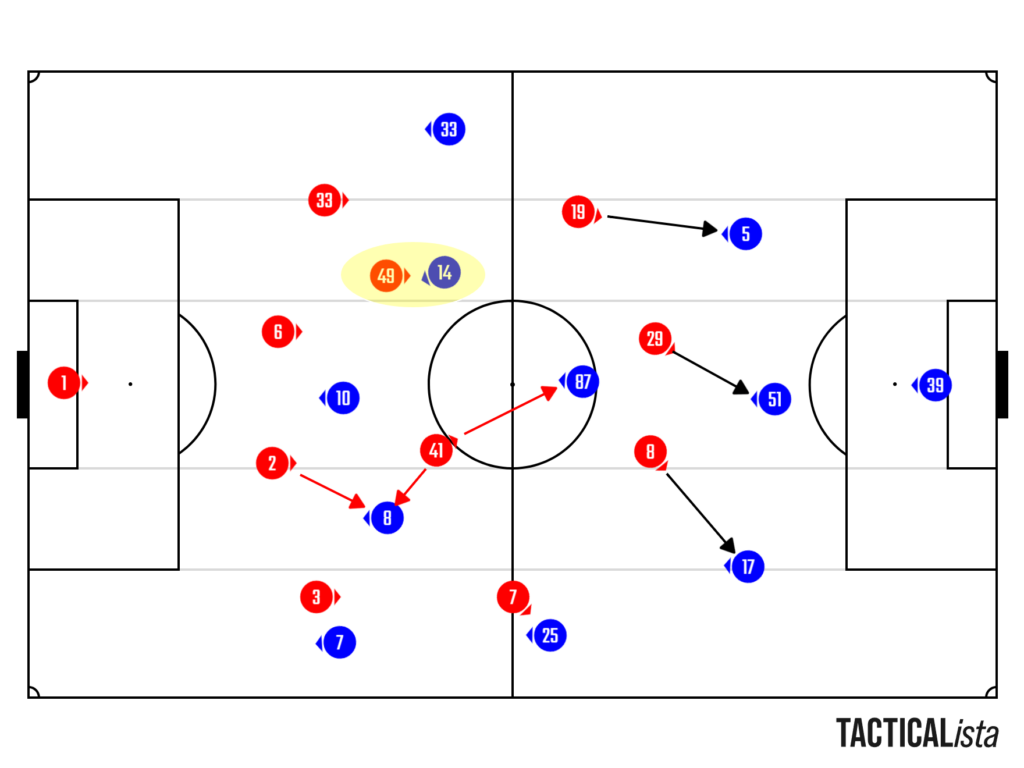
How can Arsenal handle PSG?
How Arsenal choose to deal with these rotations will be interesting. The more zonal approach could lead to them being unable to jump, allowing PSG to take control and hunt mismatches in one-on-one scenarios.
However, if Arteta decides to press with more intent, Martin Odegaard could be called upon as the starting No.10. The Norwegian would have the job of man-marking Vitinha, while Havertz jumps to Pacho, Trossard onto Marquinhos and Saka follows Mendes.
This would give Rice a key hybrid role in the press. He’d look to cover the left half-space, but also be ready to jump and apply pressure to Neves in the pivot. Backing up the press, Rice would give Arsenal a better chance of forcing PSG long.
The main thing Arsenal have to watch out for with this tactic is PSG’s runners making counter movements to go beyond. It’s something PSG have mastered, exploting space in behind.

Set-pieces and physical battle
As mentioned earlier, Arsenal can look to win the physical battle against PSG by baiting their man-to-man press and going direct.
By extending the distances between PSG’s pressing lines, Arsenal will be able to make it a physical battle, which they will believe they have the upper hand in.
PSG have only conceded five goals from set-pieces in Ligue 1 this season. However, with the added physical power of a team like Arsenal, it will take a lot more effort to keep them out from dead-ball situations.
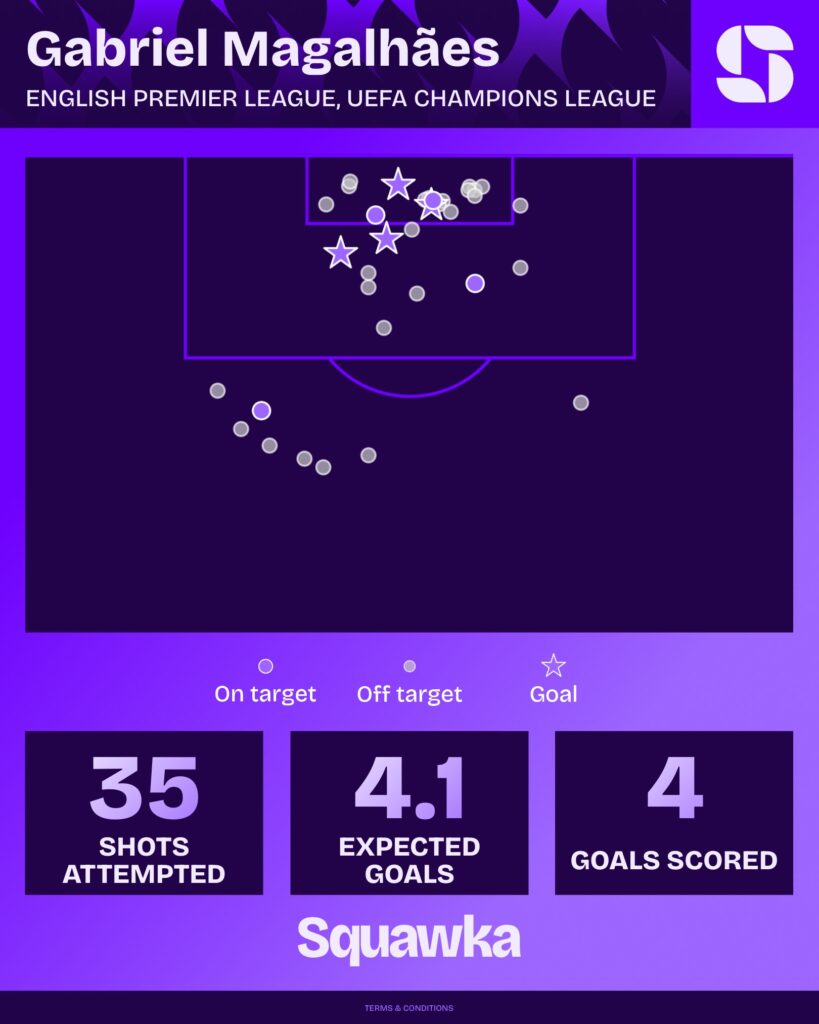
Arsenal have the likes of Gabriel, William Saliba, Havertz, Calafiori and potentially Mosquera who will be a handful for PSG in the box. The Parisians lack the same size and power to cope with them, with only Pacho boasting that physical capacity.
If PSG go the route of clustering the box and overloading the area where Arsenal’s big men position themselves, it will likely leave the edge of the box open, where Eberechi Eze has struck from already this season with effective set-piece routines.
The sheer size and power of Arsenal is bound to cause issues for PSG, and could be a decisive factor in the game. Whichever defensive route they take in an attempt to nullify the set-piece threat, another gap will open up for Arteta’s side to exploit.
Key matchups?
With the physicality in mind, one key matchup could be Havertz on Neves. It’d give Arsenal that out ball, with Gyokeres making runs off the shoulder to drag Pacho away with him.
If Arteta decides to go with Eze instead, it would be a different type of matchup for Neves. He would have to track those movements from high to low, joining the buildup and looking to receive in the space between those two pressing units of PSG, to turn and carry forward.
Both teams look like they will have a matchup including a natural central defender marking a winger. Mosquera is likely to shape up at right-back up against Kvaratskhelia, and Marquinhos will shift over in PSG’s press to cover either Trossard or Gabriel Martinelli on Arsenal’s left.
As already mentioned, another vital matchup will be Dembele dropping away from the Arsenal centre-backs and how they choose to deal with that. But a rogue one could be Calafiori up against Zaire-Emery filling in at right-back for PSG, providing those dynamic runs forward which the Frenchman would have to track efficiently.