







Como currently sit fifth in Serie A, just three points away from Juventus in fourth, as they continue their hunt for a Champions League qualification spot.
Despite losing three of their past four games, Cesc Fabregas has his side playing some excellent football. Two of those defeats have come to Inter Milan in the Coppa Italia and Serie A, with Como losing two of their past 10 league matches.
With four games left, all eyes are on whether Fabregas will be able to secure enough points to qualify for the Champions League next season. It would be a significant step for Como as they look to go from strength to strength with their exciting project.
In this article, we’ll cover
Como’s season by numbers
Como have averaged 61.3% possession per match this season, more than any other Serie A side. They’ve also averaged 531 attempted passes per 90, ranking third in Serie A for this metric.
In attack, Fabregas’ side have produced 54.08 Expected Goals in the league, the fourth-most in Serie A. And they also rank fourth for shots per 90, at 14.28.
Como are also impressive defensively. They rank first for passes per defensive action (PPDA) with 9.2, conceding 9.2 shots per 90 (ranking second) and allowing 30.75 xG Against (also ranking second).
Betfred - Get £50 in free bets when you bet £10
- Sign up at Betfred using this link or clicking the image below.
- Deposit a minimum of £10 and place a bet of £10+ on Sports.
- Receive £50 in Free Bets within 10 hours of bet settlement.

New customers only. Register, deposit with Debit Card, and place first bet £10+ at Evens (2.0)+ on Sports within 7 days to get 3 x £10 in Sports Free Bets & 2 x £10 in Acca Free Bets within 10 hours of settlement. 7-day expiry. Eligibility & payment exclusions apply. Full T&Cs apply.
Positional buildup
Fabregas’ buildup ideas largely stem from the idea of positional play, looking to set up his side in the first phase from restarts to finding numerical superiorities and exploit opposition structural weaknesses.
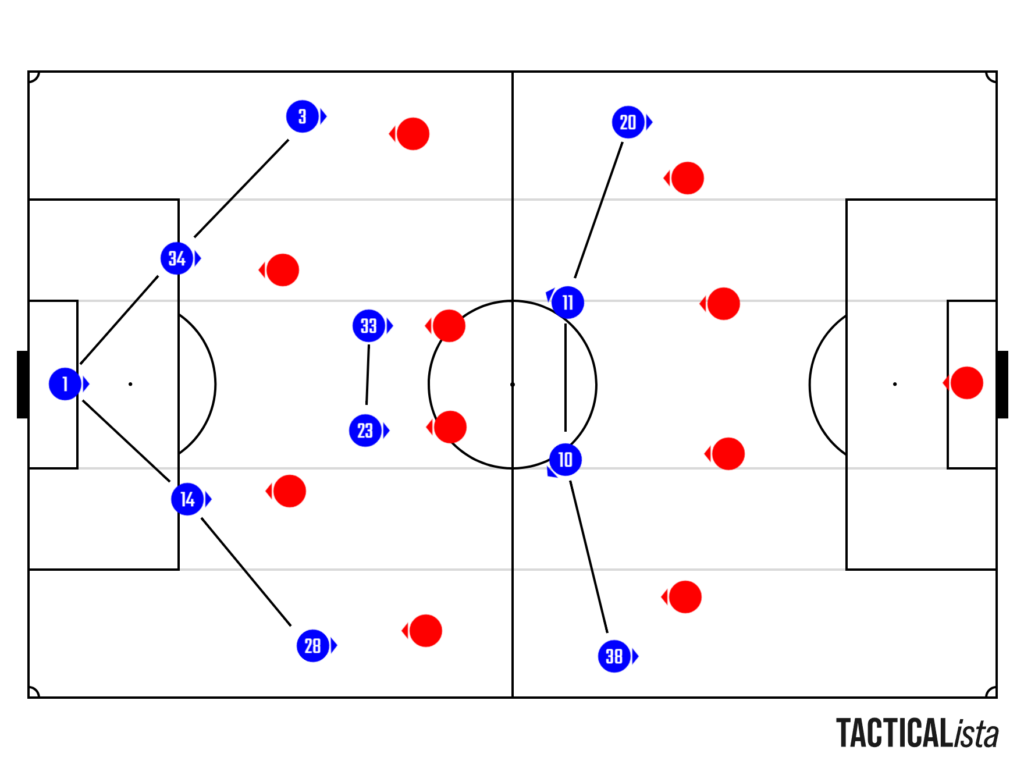
A common pattern you see from Como is their 4-2-4/4-2-2-2 build up shape, with the centre-backs splitting either side of the goalkeeper, the full-backs pushing higher into the same line as the double pivot, the striker and attacking midfielder playing deeper to ask questions of the opposition defenders and then the wingers high and wide to pin the opposition full-backs.
This is something that has become extremely familiar in the modern game, with the likes of Roberto De Zerbi popularising this structure to gain advantages against the opposition and force them into decisions such as pressing man for man (centre-backs stepping out with the two central players between the lines) or dropping off (often giving a +1 or more in the build phase and allowing them to take control).
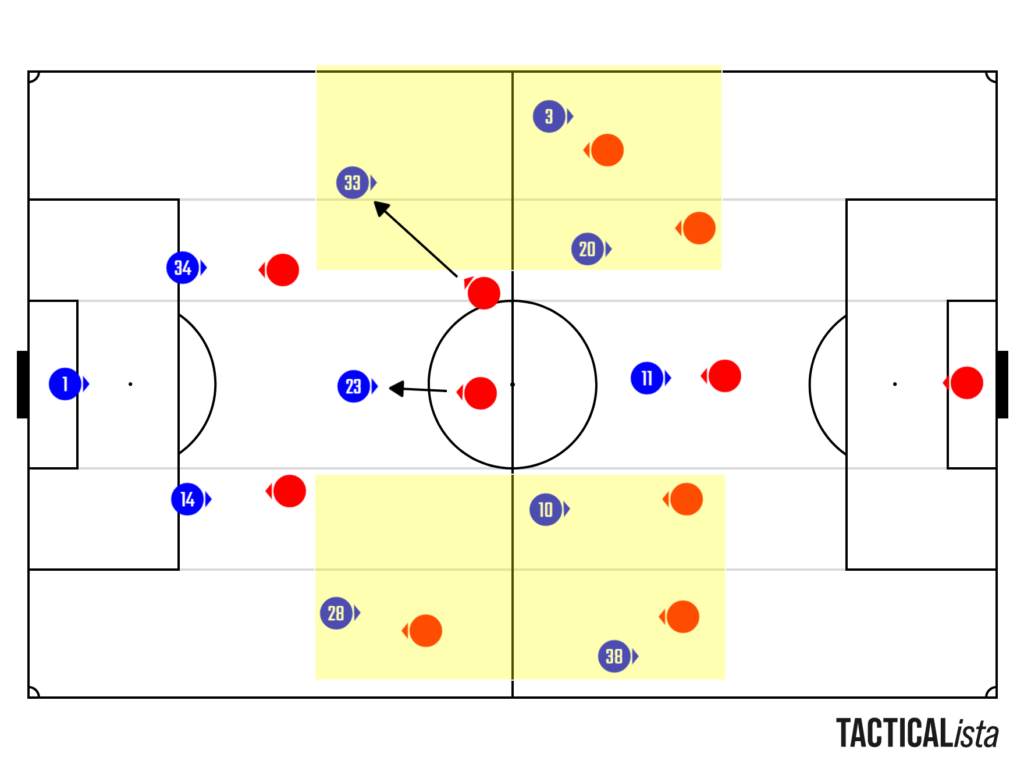
Another pattern Fabregas will utilise is more of a 2-3-2-3, with either one of the pivot players or one of the full-backs joining the front four to form a front five.
One player will stay as a more fixed pivot player, while the other can roam into the full-back position (in this example, Lucas Da Cunha rotating in at left-back to release Alex Valle to hold the width and rotate Martin Baturina inside).
These simple rotations can cause problems for the opposition press, dragging certain players out of position and opening different angles for progression.
Zone replacement attack
In attack, Como look to sustain pressure in the opposition half and have more settled periods of possession, which is when Fabregas’ approach can add a little bit more flavour.
Both full-backs are allowed to be dynamic with their movement, interchanging and combining with their wide partner and looking to provide solutions with their off-ball runs.
The two centre-backs and double pivot will often take up the four-man rest defence positions, either in a diamond shape, or even in a flat back four at times, keeping the ball circulting and looking to protect against transitions, helping to sustain pressure inside the opposition half.
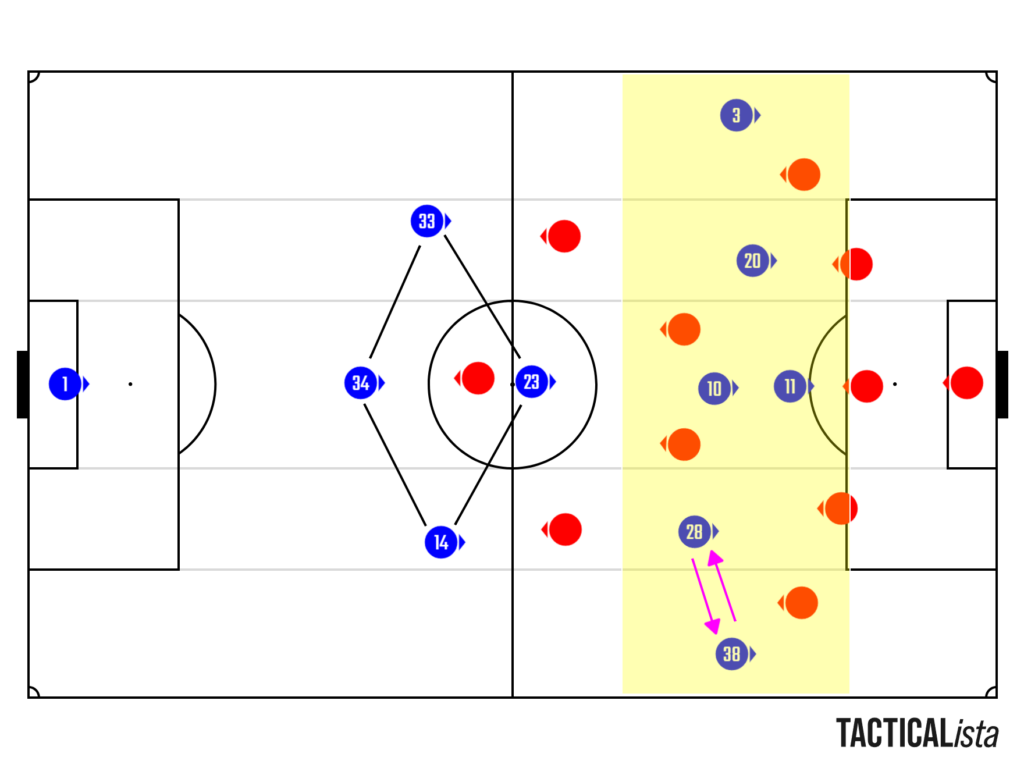
From here, the front six (front four and two full-backs) have more freedom to combine and interchange, with Fabregas implementing zone replacement ideas, where one player can drift into a different zone, with another then replacing them in their original zone.
This makes it more difficult for the opposition to keep their marking references, can allow the likes of Nico Paz to get more space and separation from his marker to make things happen and help to raise the tempo in the attacking third.
Out of possession approach
Fabregas has a good blend with his out of possession ideas, as he looks to apply an intense press in order to regain possession and continue controlling the game, but in a calculated manner.
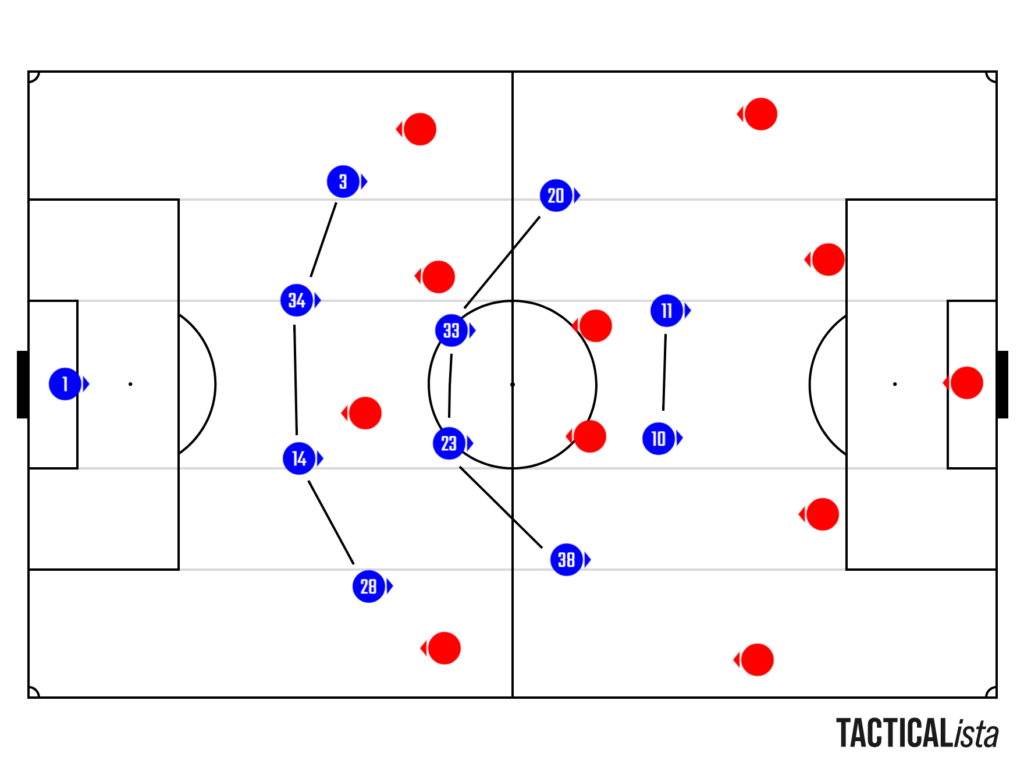
Como often set up in a 4-4-2 off the ball, looking to sit in a mid block initially in order to zone off access to the middle of the pitch.
The two wide men will look to come narrow and block entry passes between the lines, with the two strikers looking to block the opposition access to their pivot.
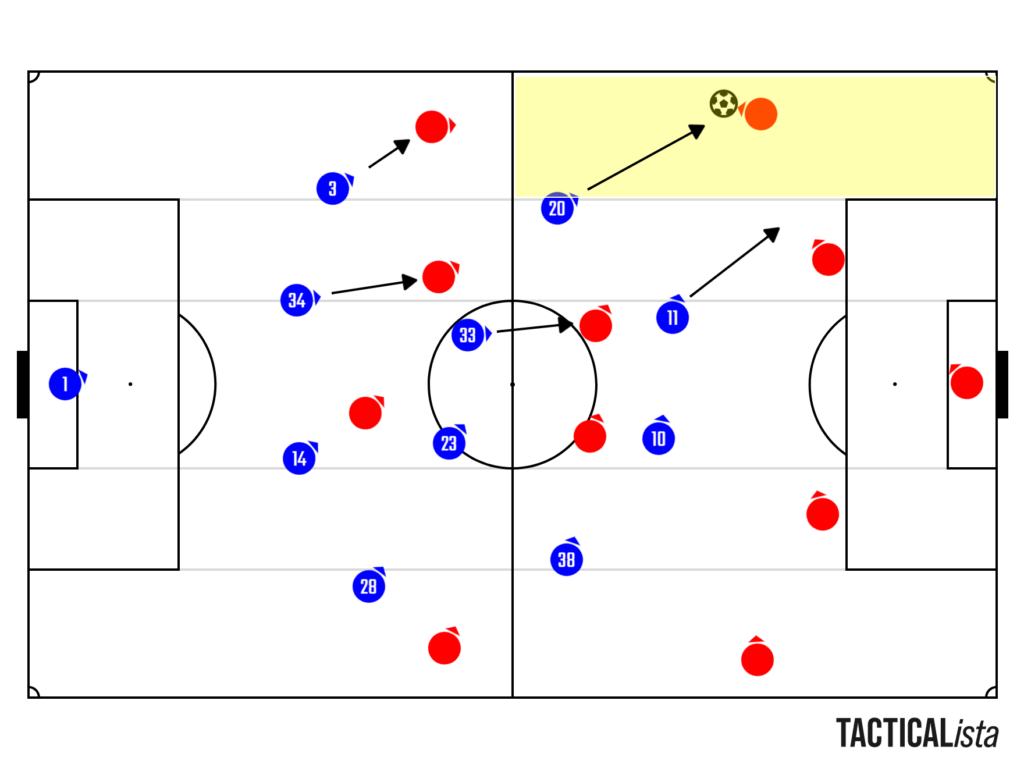
The aim from their more zonal midblock approach is to guide play towards the sides, blocking central access and then looking to jump to their man to man more intense pressing scheme once the ball goes towards the sideline.
Setting traps against the sideline to trigger their man to man response is key, using the sideline as an extra defender and aiming to regain possession in those moments.
Fabregas has also shown a willingness to stay compact in his midblock approach when looking to defend a lead, which is another important strategy to have in your locker as a coach.