






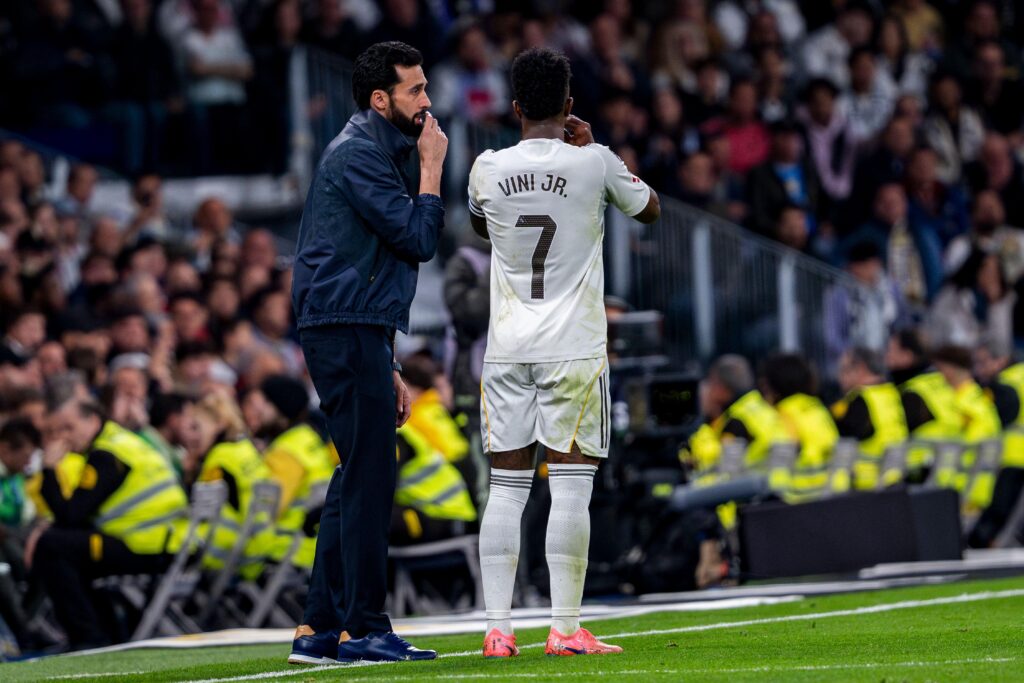
Alvaro Arbeloa has won 13 of his 17 games in charge of Real Madrid since taking over from Xabi Alonso, and is currently on a five-game winning streak.
The Spaniard lost his first game in charge of Los Blancos, being knocked out of the Copa del Rey with a 3-2 loss against Albacete.
However, since taking charge of his first game, Arbeloa has managed to transform this Real Madrid side. They smashed Monaco and Manchester City in the Champions League, and won the Madrid derby 3-2 in their final game before the international break.
In this article, we’ll cover
The Pitarch build up fix
One issue Real Madrid have faced since losing both Toni Kroos and Luka Modric has been their efficiency in the build up phase.
Alonso tried to fix this issue utilising Arda Guler in a deeper midfield role. New ignings such as Dean Huijsen and Trent Alexander-Arnold were also key to the new direction he was trying to take the team in.
However, Arbeloa has managed to fix this with the addition of Thiago Pitarch in the side, promoting him from the B team to transform their build-up.
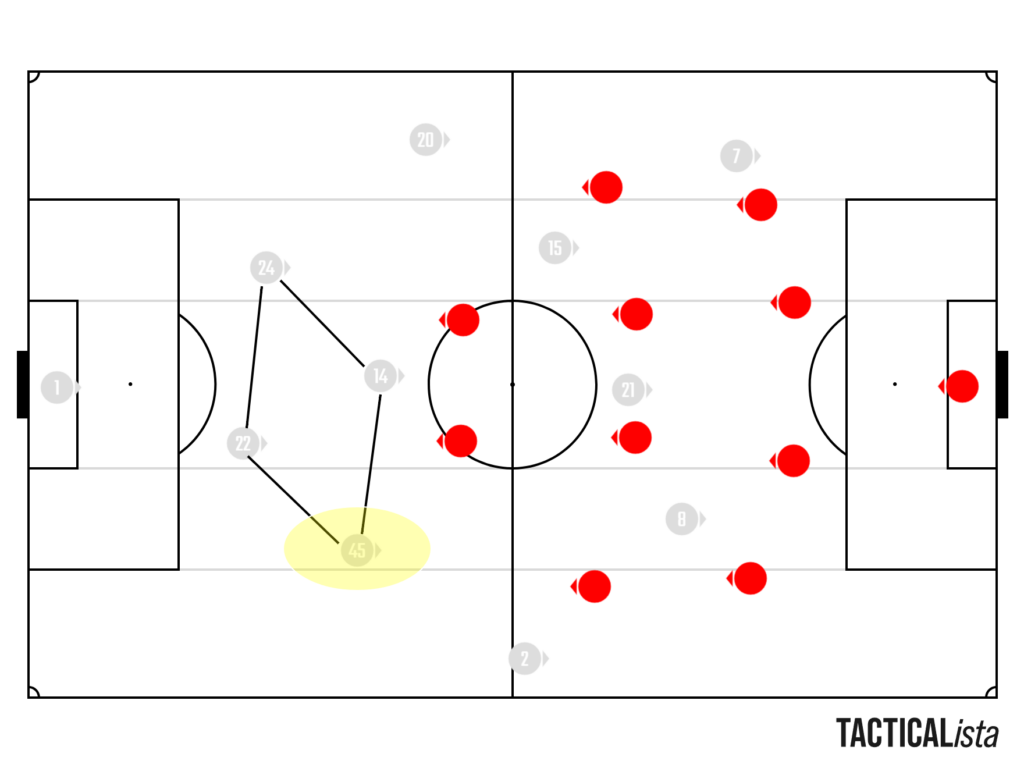
Since the 18-year-old made the step up to the first team under Arbeloa, there has been a vast improvement with Real Madrid’s build-up. They build with the two central defenders and double pivot in a flexible diamond shape.
This four-man building unit has the flexibility to shift positions and find solutions to progress play, with Pritarch key to this, often dropping into right-back zones with Aurelien Tchouameni dropping between the two central defenders to pull apart the opposition front press.
Betfred - Get £50 in free bets when you bet £10
- Sign up at Betfred using this link or clicking the image below.
- Deposit a minimum of £10 and place a bet of £10+ on Sports.
- Receive £50 in Free Bets within 10 hours of bet settlement.

New customers only. Register, deposit with Debit Card, and place first bet £10+ at Evens (2.0)+ on Sports within 7 days to get 3 x £10 in Sports Free Bets & 2 x £10 in Acca Free Bets within 10 hours of settlement. 7-day expiry. Eligibility & payment exclusions apply. Full T&Cs apply.
Out-of-possession fragility
While there have been improvements across the board following the arrival of Arbeloa, Real Madrid have still conceded 16 goals in their last 17 games.
Some areas of their out-of-possession work has improved. But their high press still has its issues, mainly due to the personnel carrying it out.
As Ralf Rangnick once stated, ‘a little bit of pressing is like a little bit of pregnant. Either you are pregnant or not? Either you want to play pressing or not?’.
The likes of Vinicius Junior and Kylian Mbappe have often been criticised for their lack of intensity in the front press for Real Madrid, which has a knock-on effect for the entire pressing structure behind it.
One area the out-of-possession looks to have improved however, is Real Madrid’s counter press. The in-possession dynamics are affording closer units to react quickly to protect against transitions and regain possession as quickly as possible.
Attacking pairings
Real Madrid’s attacking dynamics have changed drastically under Arbeloa, with more emphasis on the balance of pairings who can benefit each others game.
Vinicius Jr and Guler are a perfect example of this. The Brazilian starts as a left-sided striker in a 4-4-2, while Guler starts at left midfield.
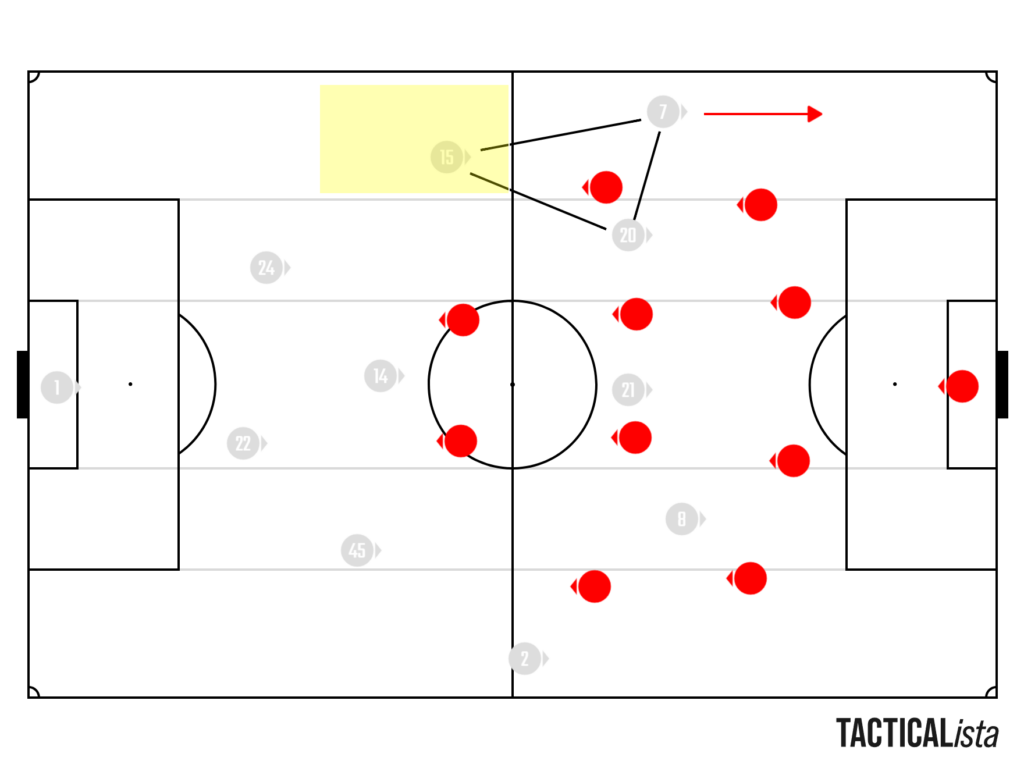
Vinicius still drifts out wide to occupy width on the left, looking to get into 1v1 isolations out wide.
Meanwhile, Guler drops deeper, allowing him to get on the ball in nominal left-back zones, something Kroos mastered in his time at Real Madrid, giving him time and space to pick passes and dictate the game from deep.
Fran Garcia (or Ferland Mendy) will then supplement the left-sided pairing by making runs in beyond to stretch the pitch, drifting into central spaces in the left half-space to pin the opposition midfield and create space for Vinicius and Guler.
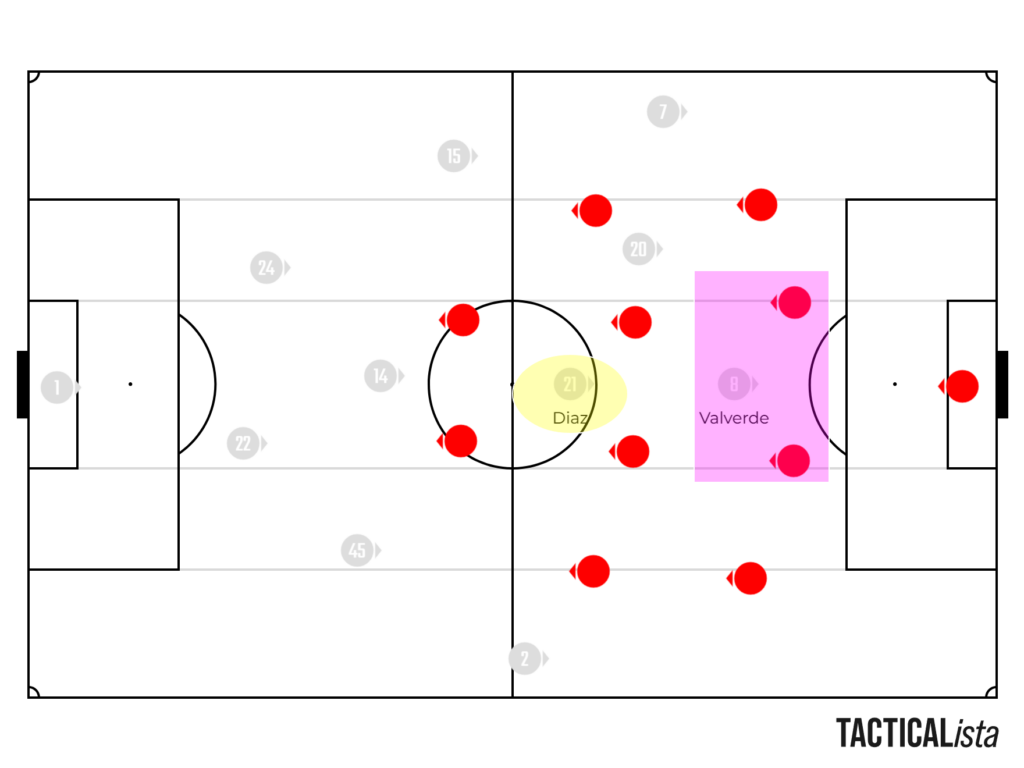
Another key pairing is between Federico Valverde who starts on the right, while Brahim Diaz starts as the right-sided striker.
Diaz’s role is much more akin to a false nine, drifting to create overloads on either side, dropping into midfield areas to test the opposition central defenders and cause problems inside the defensive block.
Valverde will then either drift inside to pin the opposition central defenders, or play in the right half-space, with the right-back (Dani Carvajal or Alexander-Arnold) providing width on the right.
While the right side lacks the same 1v1 threat Real Madrid possess on the opposite side of the pitch, Valverde’s athletic power to arrive in the box and finish moves, along with Diaz’s ability to combine in compact spaces gives them something different in attacking areas.
Full-back platformers
The full-backs play a key role in possession. Their primary function is to provide favourable conditions for the key attacking players around them.
Whether the full-back is making underlapping runs to stretch the pitch and create space for others, providing width to stretch the pitch horizontally, or even offering a below option to circulate possession and protect against transition, their role will often depend on the positioning of the attackers around them.
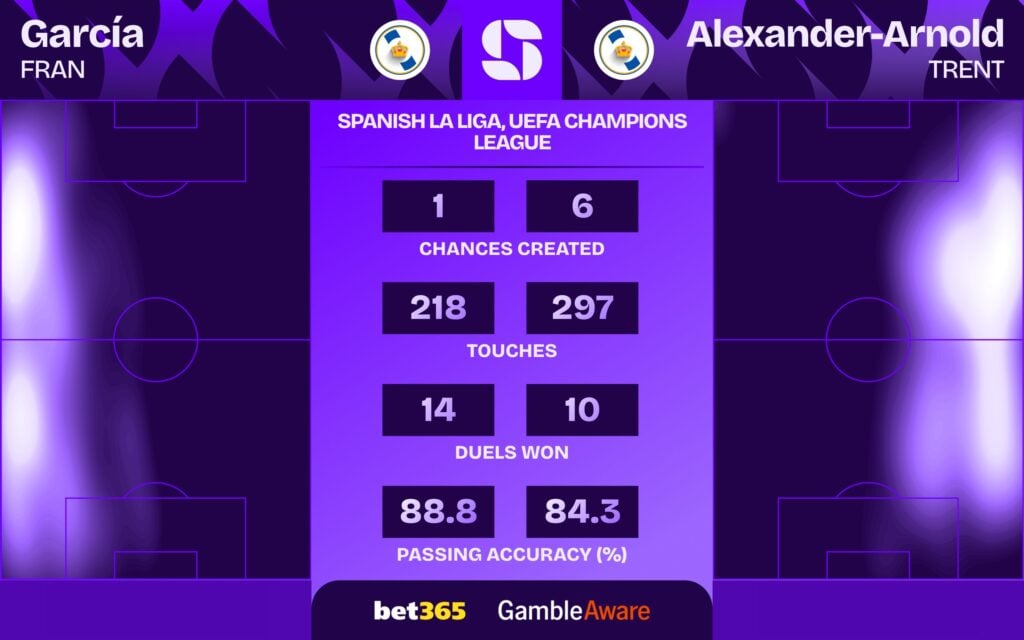
Alexander-Arnold is slightly different. He is a gamechanger type profile, possessing a killer pass or devastating final ball.
The dynamics on the right side allow Alexander-Arnold to drop deep and get on the ball in the first phase, with Valverde holding width and Pritarch floating centrally. The English full-back can then maraud forwards to affect the game in the final third, with Valverde drifting central and Pritarch dropping below to provide support and protection.
Creating these wide triangles on either side which can operate and move in tandem is the key to how Real Madrid function under Arbeloa, allowing each individual to access their most effective zones as consistently as possible.