







As we continue our deep dive into tactical explainers and the finer details of the game, it’s time to discuss box midfields.
The concept of a box midfield began to emerge as a means of overloading the opposition midfield by having players in close proximity to form a ‘box’.
The ‘box’ part of the term is literal – you have four midfielders in the middle of the pitch creating a square or ‘box’.
Former Manchester United manager Ralf Rangnick was one of the first managers to deploy the 4-2-2-2 formation and use a box midfield at RB Leipzig.
Similarly, he brought the same formation across to the Premier League with less success as he had strikers who were less mobile and had limited natural width.
The box midfield normally consists of two ‘pivot’ players from deep central midfield and two more advanced midfielders.
In this article we’ll cover
Advantages of A Box midfield
Jurgen Klopp and Pep Guardiola also began using their own variations of box midfields during their famous rivalry which proved fascinating to watch.
The flexibility of a box midfield allows teams to move an inverted full-back into the centre of the pitch to help progression and also disrupt defensive structures.
For instance, when Klopp converted Trent Alexander-Arnold to an inverted full-back and Guardiola began using Joao Cancelo in the middle of the pitch, it means an extra marker has to come inside to track a player who is nominally playing as a full-back.
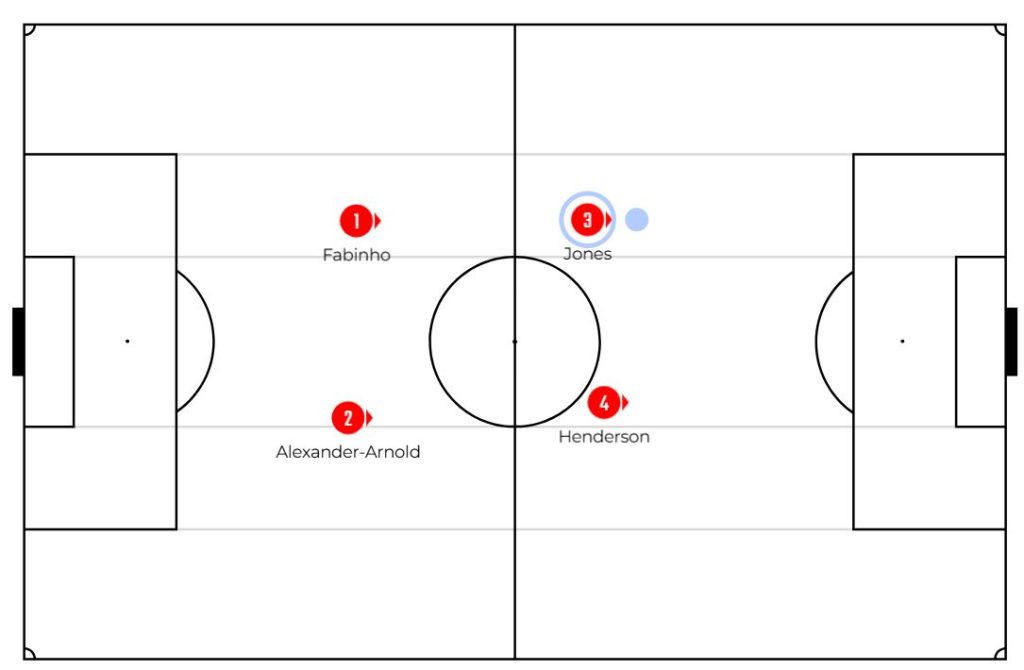
This means you don’t have to lose a pivot player or two attacking midfielders higher up the pitch, instead you actually give them more room to manoeuvre and increase your chances of finding space centrally or you can move one player out of the box and support the centre-forward.
The ‘box’ concept is derived from having four players that look after getting the ball from defence into attack. It matters that they are all in close proximity to each other, tightly close together.
As you’ve seen recently from Michael Carrick’s Manchester United or Guardiola’s City when he has moved two wingers in the centre of the pitch, having so many players close together means you can zip the ball around and get out of tight spaces.
It also means an opponent is going to have to mark several players in one zone close together, so if you can work the ball free you can make the switch to one wing or the other.
The pivots are generally the ones who receive the ball from defence and hopefully combining with the central attacking midfielders ahead of them. If they are marked off, the pivots can look to go wide.
The two advanced midfielders are awkwardly positioned as the defence may have to step out and block the pass into them or a centre-back may be dragged out whilst covering them if you can have a striker joining to pin them.
Additionally, having four players centrally means you can retrieve the ball quickly in the middle of the pitch and block off any transitions the opponent may look to initiate.
Meanwhile, the ‘two 10’s’ can also join into the press and cut off any central passing lanes. A box midfield tends to overload a midfield containing two or three players, meaning often, a defender is likely going to have to step out to screen an attacker or be occupied already with another forward.
If you can overload the middle, it will allow you to get on the ball dangerously or spray the ball wide.
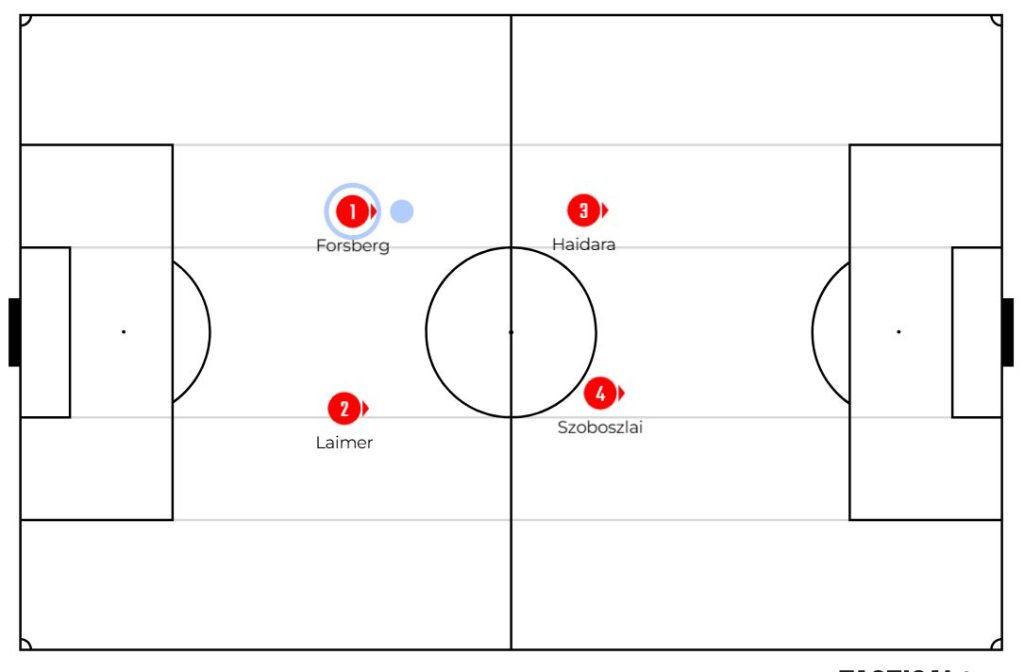
A good example of a successful box midfield was Rangnick’s Leipzig with the midfield of Dominik Szoboszlai, Konrad Laimer, Emil Forsberg and Amadou Haidara. Each player possessed good passing, ball-carrying and was able to circulate the ball quickly even when closed down.
Disadvantages Of A Box Midfield
The disadvantages aren’t necessarily related to the actual concept of deploying a box midfield, it’s more to do with how difficult it is these days to find the ball in central areas.
The rise in the Premier League of set-pieces, corners and throw-ins has emerged because of how difficult it is for teams to find space.
Even when teams are risky enough to press high, commit more men in the middle of the pitch (as Guardiola’s City do) it can leave them vulnerable to counter-attacks and can lead to a lack of control.
Guardiola is committing more men in the middle, and to a large degree it has been working, but having that many players in one zone means opponents crowd central areas. As Guardiola is using players like Jeremy Doku or Antoine Semenyo you end up losing players on the wing.
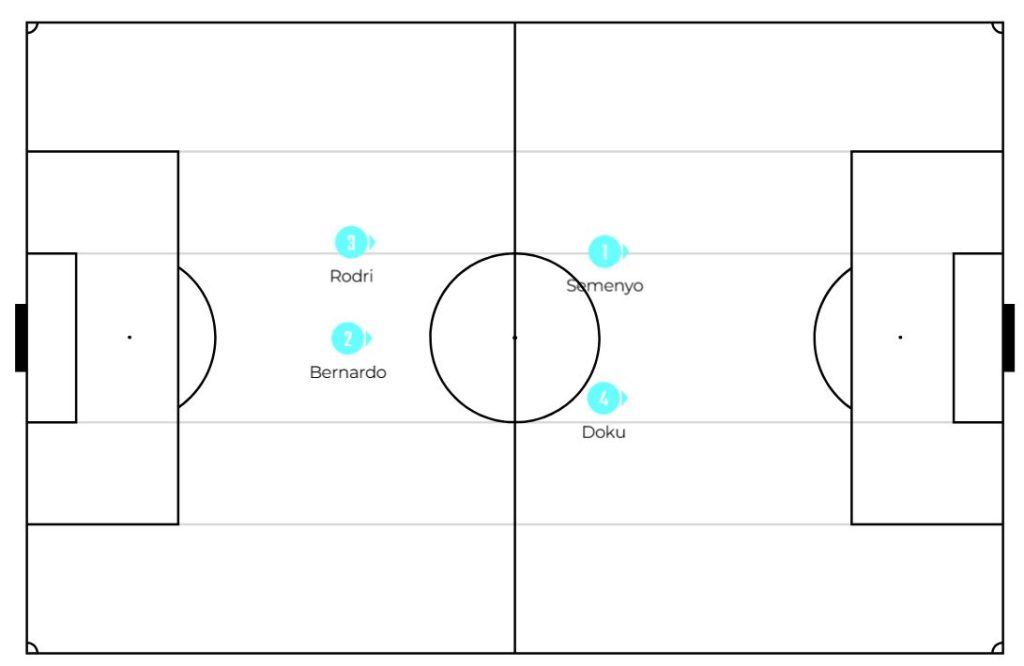
The answer (from a team that dominates possession) in terms of trying to pick the lock of teams who block off central areas has not been found yet, even when committing more players in the middle.
There will likely be more tactical innovations to come next season and over the summer but there is a reason less teams are using a ‘box’ and an inverted full-back as opponents simply place four midfielders in the middle and block off progression.
Additionally, committing two central attacking midfielders and two pivot players as Rangnick found out during his ill-fated Manchester United tenure means you sacrifice a lot of width, making it harder to stretch defences.
The box midfield continues to be used but it is more effective for teams that have players who can operate centrally and be dangerous peeling off into half-spaces such as Manchester United’s Bruno Fernandes.
As the battle for space in the middle of the pitch continues to be football’s great tactical war, we may see more innovations and variations on the ‘box’ to dominate matches.