






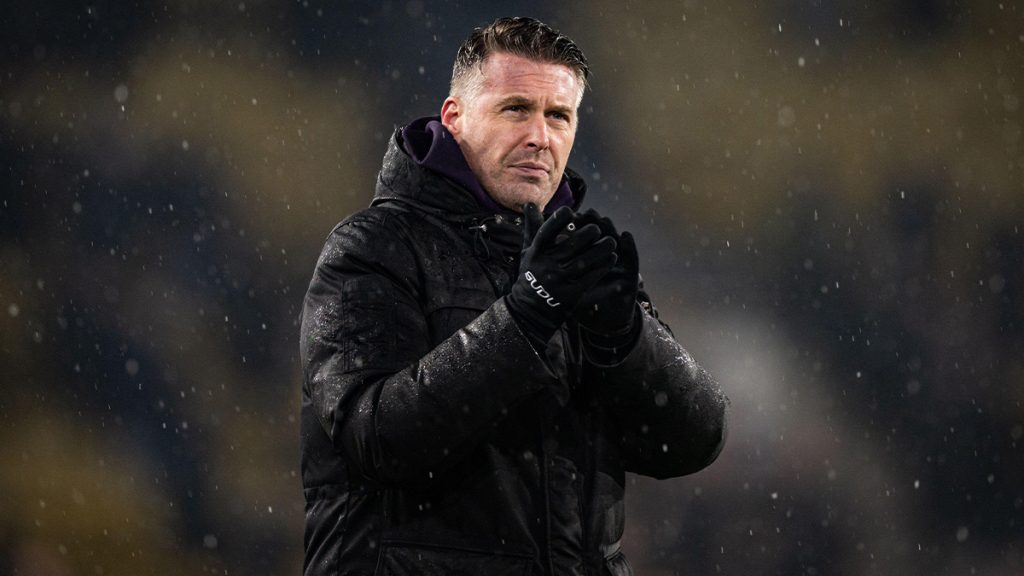
When Rob Edwards took charge of Wolverhampton Wanderers back in November, the club were winless and sitting bottom of the Premier League table.
Wolves had accumulated just two points, averaging 0.18 points per game, and no side had ever survived from that position. Fast forward to Februray, and relegation is still looking incredibly likely with Wolves 17 points adrift. But there’s no doubt that Wolves have improved under the former Middlesbrough boss.
Since Edwards took charge, Wolves have averaged 0.5 points per game. While it’s not enough for them to be thinking about survival, Edwards has made his side more difficult to beat. But what’s changed?
In this article, we’ll cover:
Out of possession
Wolves were extremely chaotic under Vitor Pereira. They pressed high up the pitch, leaving space in behind, with players vacating their positions in order to try and hunt the ball down.
Edwards has altered how often their side press the opposition. Under Pereira, Wolves allowed 11.53 passes per defensive action, compared to 14.3 under Edwards. Edwards has Wolves in more of a low block, rather than a mid block or high press.
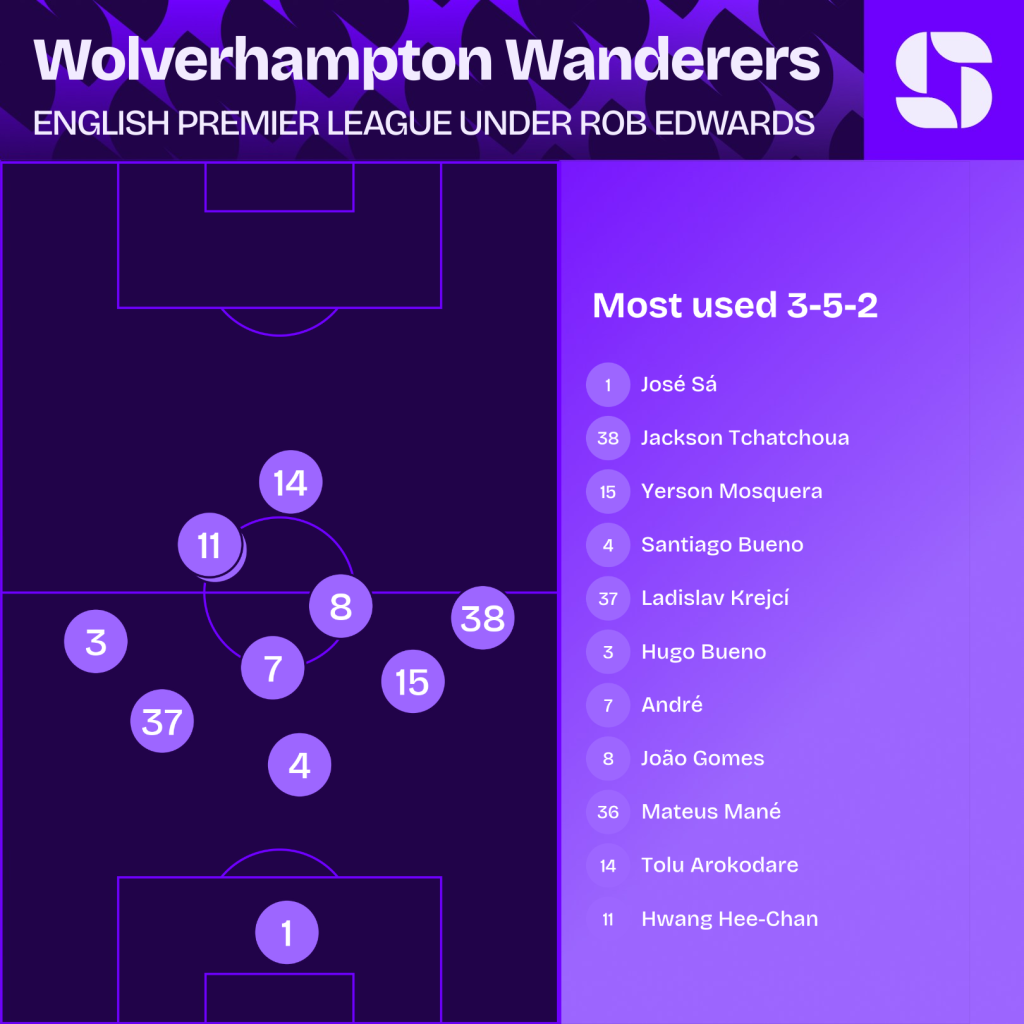
Edwards has utilised Andre in a more defensive role, almost as a single No.6. Joao Gomes and Mateus Mane have then been given freedom to get further up the pitch. The Wolves boss has also used a more narrow system, allowing them to compact the central areas, attempting to prevent the opposition from coming through the middle of the pitch.
Wolves still have width through their wing-backs. But the likes of Tolu Arokodare, Mane, and Hwang Hee-chan — who take up the advanced positions — are tucked in centrally in and out of possession.
Wolves are always going to find it difficult to take the game to the opposition and dominate possession. So staying compact and looking to hit teams on the counter is a smart move from Edwards.
In possession
Wolves are in attacking positions less often than they were under Pereira. But Edwards is about being efficient when you do get into the final third.
Edwards’ side have significantly less possession than they did under Pereira, but their number of shots on target per game is around the same. How has he achieved this?
As previously mentioned, Edwards sets his team up to sit deep and hit on the counter. That has led to 0.5 shots from counter-attacks, in comparison to 0.27 under Pereira.
Wolves now have less ‘pointless’ possession in the opposition half. Edwards knows that his time are better when they don’t have the ball. And their attacks need to be based on instinctive moments rather than sustained pressure.
In the final third, Wolves now averaged just 88.06 passes per game, the fewest in the league, compared to 105.18 under Pereira.
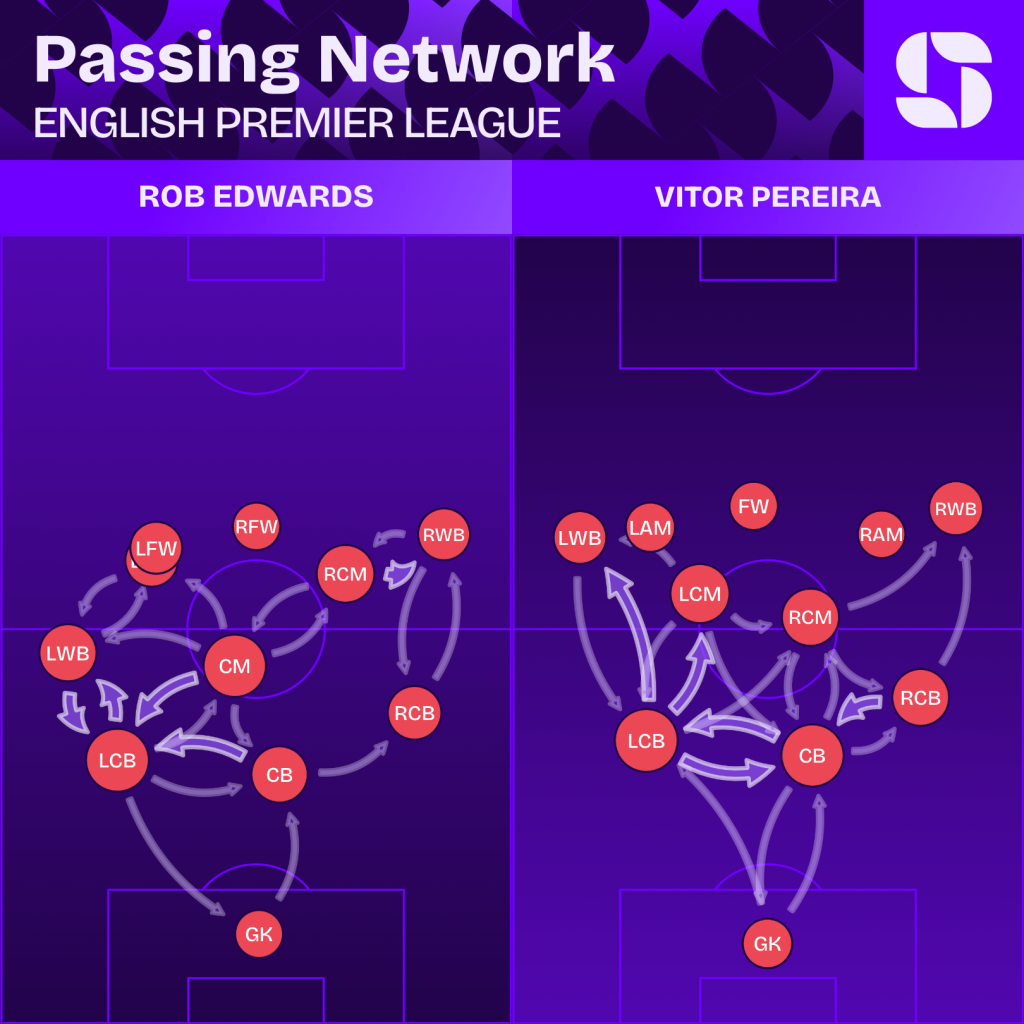
As you can see, under Edwards there has been a clear focus on having the left-wing-back more involved in deeper build-up, allowing the right-wing-back to play higher up the pitch. As previously mentioned, Andre sits deeper as a single No.6, allowing Wolves to get players further up the pitch in central positions.
With Wolves almost in a back-four in terms of their rest defence, this allows them to be more compact defensively when they have the ball, in case of transitions.
Bet £10 & Get £30 in Free Bets with Bet365
Not signed up to bet365 yet? Here's how to claim one of the best bookmaker welcome offers around...
- Open an account (here's a link)
- Make a qualifying deposit of between £5* and £10*
- Claim the offer to receive three times your deposit in 'Free Bets'.
- To release your 'Free Bets', place qualifying bets to the value of your qualifying deposit and allow those bets to settle.
- Your 'Free Bets' will become available shortly after your qualifying bets have settled
- To use your 'Free Bets', select 'Use bet credits' in the bet slip.

Min deposit requirement. Free Bets are paid as Bet Credits and are available for use upon settlement of qualifying bets. Min odds, bet and payment method exclusions apply. Returns exclude Bet Credits stake. Time limits and T&Cs apply.
The Matheus Mane effect
Edwards made a bold move shortly after he was placed in charge, bringing young attacking midfielder Mateus Mane into the fold.
Throwing a young academy star into the deep end was a risk from Edwards, knowing it could make or break him. But it’s certainly done the former so far.
Edwards has deployed Mane in one of the three central midfield positions, but he’s allowed him to have freedom to get forward.
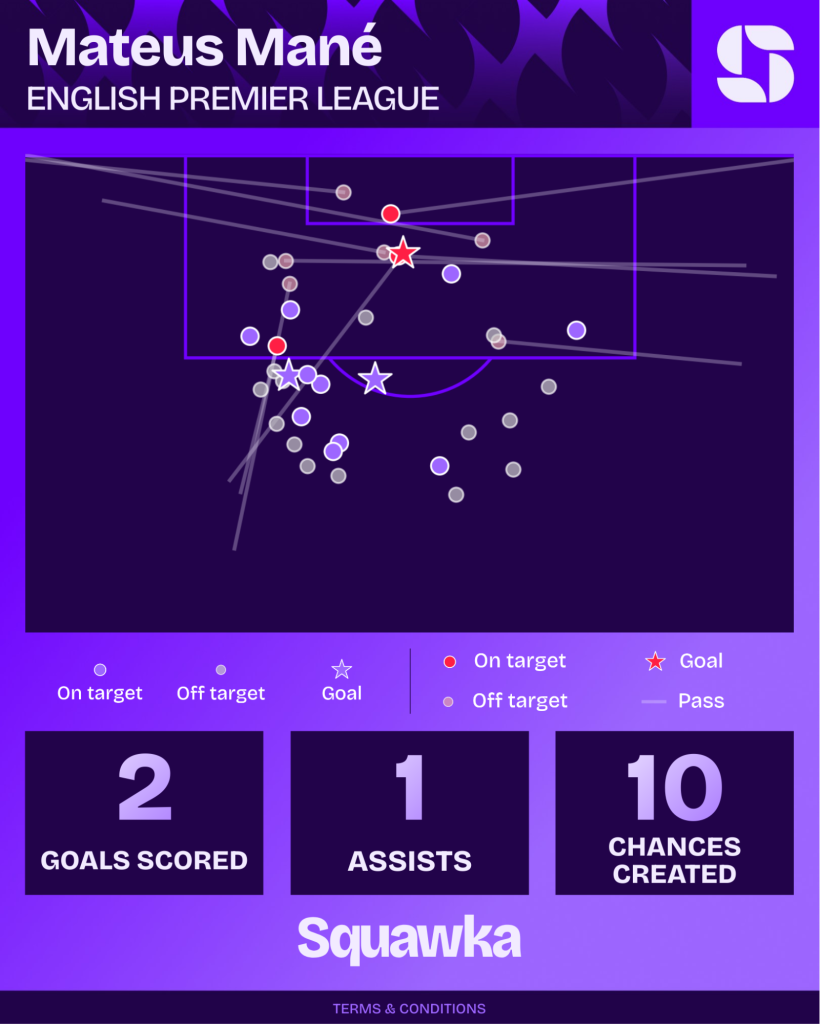
Mane has been given freedom in the final third. So he’s allowed to showcase his strengths – taking players on, winning fouls, and simply making things happen.
Mane ranks fifth in the Premier League for fouls won per 90 minutes. This might seem like a semi-meaningless stat, but for a side like Wolves, it’s a huge positive.
By winning fouls regularly, Mane allows Wolves to slow the game down. They can try to create from set-pieces and frustrate the opposition. His ball-carrying also allows them to get up the pitch from deep. They aren’t forced to try and play through the lines and risk losing the ball.
Of course, Mane will regularly give up possession due to his age and lack of experience. But when he does so, it’s usually in central areas, where Wolves have plenty of bodies in order to try and win it back.
It was a high-risk, high-reward decision from Edwards to bring Mane into the fold. But his traits on the ball are exactly what Wolves have needed in the second half of the season.