






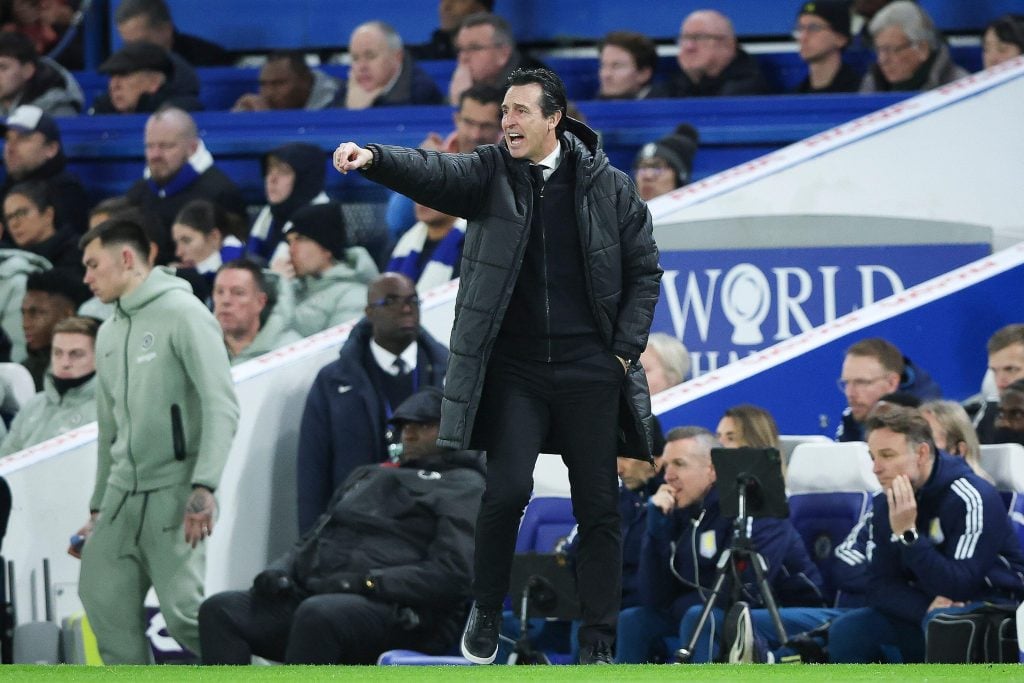
Aston Villa came from behind to defeat Chelsea 2-1 at Stamford Bridge after a lifeless first-half performance.
Unai Emery’s men turned what was lining up to be their worst game of the season into one of their grittiest wins of the current Premier League campaign. They have now beaten Arsenal, Chelsea, Manchester City, Manchester United and Tottenham.
How did Aston Villa turn their fortunes against Chelsea?
Chelsea’s complete domination in the first half
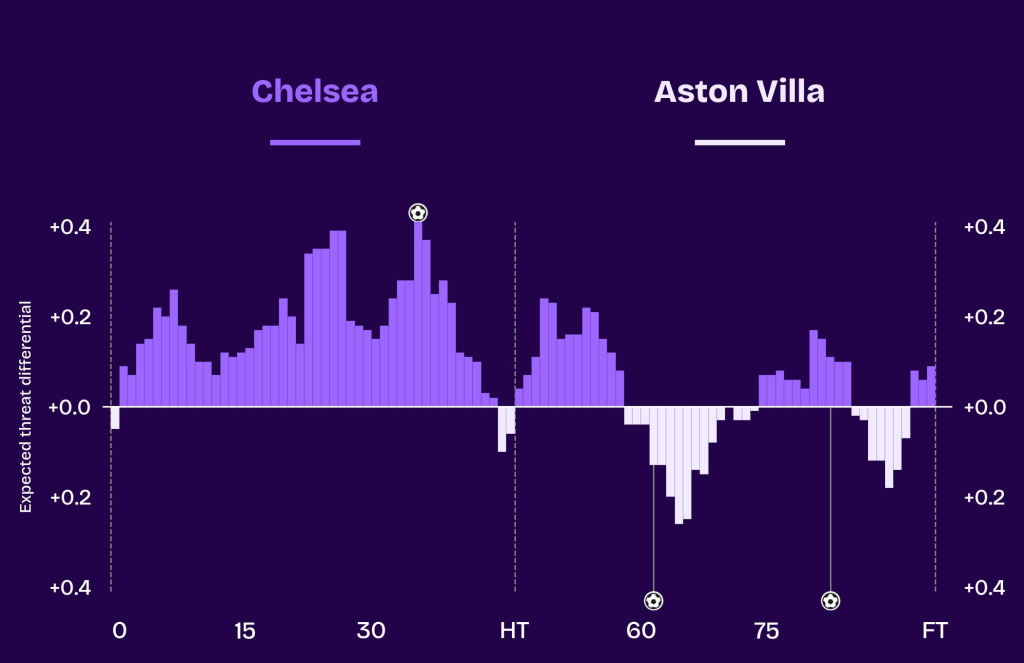
Chelsea controlled the game completely not only in the first half, but in the opening 60 minutes overall.
There seemed to be a clear emphasis from Enzo Maresca to find Pedro Neto in rhythm and space to take Ian Maatsen one-on-one. Neto didn’t exactly light the world on fire, but created enough danger down that side and enough doubt on Maatsen to justify the strategy.
Meanwhile, Joao Pedro would occupy Victor Lindelof down the middle to create as big a gap as they could between him and Maatsen. Cole Palmer and Reece James had a field day attacking that space.
If Maatsen decided to leave Neto out wide and tuck inside closer to Lindelof, the Blues would immediately try to find the Portuguese winger in a switch of play.
Dabble sign-up offer: Bet £10+ & Receive £10 In Free Bets
Not signed up to Dabble yet? Here's how to claim the Bet £10+ & Receive £10 In Free Bets welcome offer:
- Sign up to Dabble through this link
- Register your account with accurate personal details
- Place your first bet of £10 or more
- Receive your £10 in free bets when your qualifying bet has setted
- Use your Free Bet on any eligible sportsbook market within 7 days

#AD 18+ 7-day free bet expiry. Stake not returned. Promotional Terms Apply. GambleAware.org
It also forced Youri Tielemans back more than Emery would have liked, leaving Boubacar Kamara responsible for taking the team forward. This was a specific issue that would present itself again in the second half, but a lot of promising situations fell to the Frenchman’s feet, which is never ideal.
Morgan Rogers acted as the second striker behind Donyell Malen and both looked completely isolated and disconnected from the game. Chelsea did an amazing job stopping Villa from activating their two forwards. Trevoh Chalobah and Benoit Badiashile had both of them under control.
The hosts also found a lot of success attracting the Villans. Whether it was in the first phase of build-up or going to wide areas, they always knew how and when to play it forwards or back into the middle to catch the defence off-guard and wrong-footed.
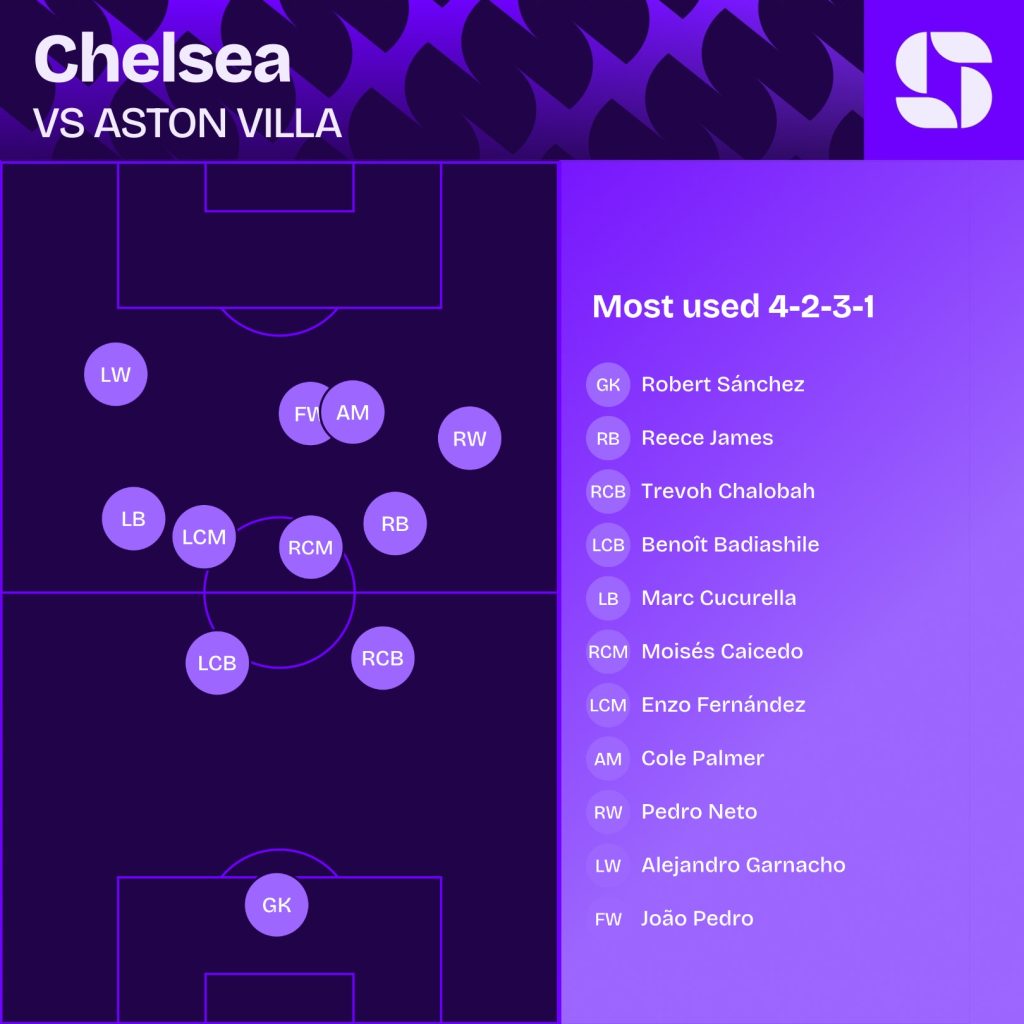
Cole Palmer ended up having a quiet night and spent most of the time positioning himself between the lines. But Chelsea were able to find him there and he looked to quickly turn as soon as he received the passes. They were firing on all cylinders and clicking in every single way they tried to attack.
Their only goal was an awkward mix-up inside the six-yard box in a corner kick, but a well deserved one. Considering all the Blues did in the first half, they probably deserved more heading into the break. Chelsea played and didn’t let Aston Villa play.
| First half stats | Chelsea | Aston Villa |
|---|---|---|
| Possession | 71% | 29% |
| Shots (on target) | 10 | 0 |
| Big chances | 2 | 0 |
| Touches in the opp box | 28 | 3 |
Unay Emery turns it around in the second half
It took him around 15 minutes to do so, but Unai Emery had a direct hand in everything going right for Villa in the final half hour.
He had already lined his side up in a surprising and attacking manner. For an away game against a team that likes to control possession, fans probably expected Lucas Digne and Amadou Onana in the starting XI.
And what won them the game was a seemingly “defensive” batch of substitutions. Like-for-like ones with Jadon Sancho replacing Emiliano Buendia and Ollie Watkins on for Donyell Malen, and Onana coming on for John McGinn.
Emery turned their usual 4-2-2-2 into a 4-2-3-1 with a midfield three of Rogers-Tielemans-Sancho behind Watkins.
This made Rogers much more participative, which is always a positive sign for them. Shortly after the substitutions, Watkins sent Kamara through on goal. Yet another example of the right ball at the wrong feet.
But it didn’t take long for them to find the equaliser. The first time Rogers received the ball in conditions to play a teammate through, he got Watkins one-on-one with Robert Sanchez and the Englishman made no mistake.
He then headed home beautifully in a well taken Tielemans corner kick to complete the comeback. That wasn’t even all, as they had another great chance with Maatsen three minutes after equalising. It was an avalanche that Emery created with three substitutions at a time.
Ollie Watkins may have scored both goals but it was very much a team effort. Chalobah and Badiashile couldn’t contain his pace and will to run in behind, but Malen has maybe even more pace and they didn’t find success this way.
| Second half stats | Chelsea | Aston Villa |
|---|---|---|
| Possession | 52% | 48% |
| Shots (on target) | 4 | 11 |
| Big chances | 0 | 4 |
| Touches in the opp box | 16 | 14 |
In the end, the team with the most points won from losing positions (Aston Villa, 18) came from behind to defeat the team with the most points dropped from winning positions in the Premier League (Chelsea, 13).