






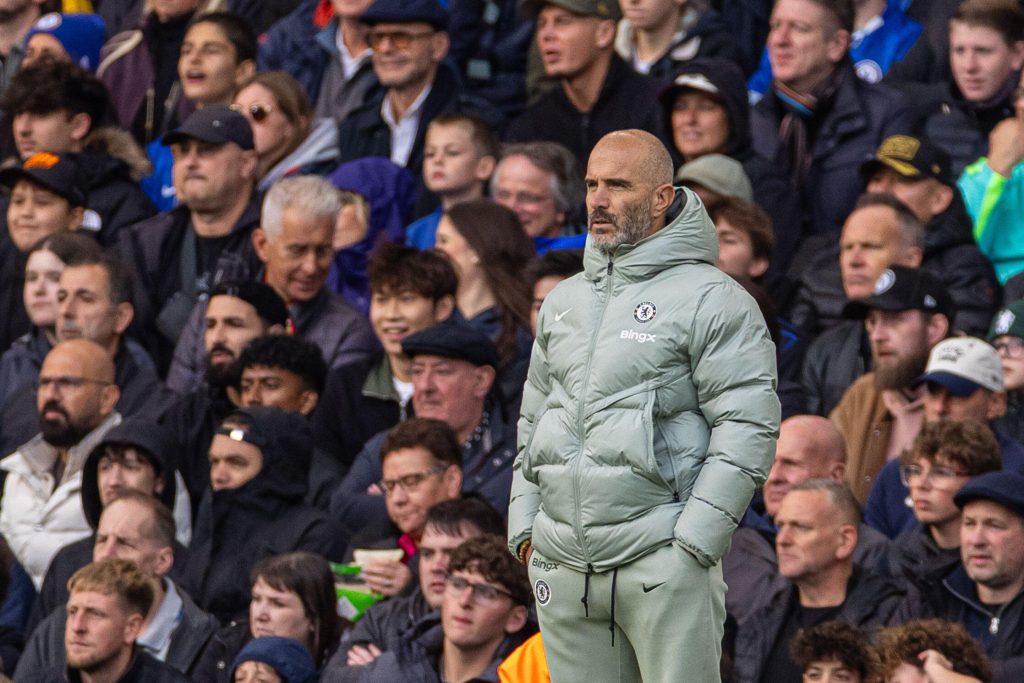
Despite a somewhat bumpy patch, Enzo Maresca’s Chelsea currently sit 5th in the Premier League, having won four times, drawn twice and lost twice.
Both of the Blues losses have come when being reduced to ten men, losing 2-1 to Manchester United and 3-1 to Brighton.
However, there have been plenty of positives to take already from the start of this season, including some of Maresca’s tactical tweaks as he looks to evolve his Chelsea side in his second season incharge.
In this article, we’ll cover
Key injuries
After winning the FIFA Club World Cup this summer, Chelsea have suffered a plague of injuries, including Cole Palmer, Levi Colwill, Dario Essugo and Liam Delap.
Along with these bigger injuries, Maresca is having to juggle a squad who aren’t 100% fit, with Moises Caicedo, Enzo Fernandez, Joao Pedro, Romeo Lavia and Wesley Fofana all having issues of their own.
Having to manage the workload of his squad, especially with the addition of Champions League football this year, is likely to be Maresca’s biggest challenge as a manager yet, but how is he adjusting to the task?
Dabble sign-up offer: Bet £10+ & Receive £10 In Free Bets
Not signed up to Dabble yet? Here's how to claim the Bet £10+ & Receive £10 In Free Bets welcome offer:
- Sign up to Dabble through this link
- Register your account with accurate personal details
- Place your first bet of £10 or more
- Receive your £10 in free bets when your qualifying bet has setted
- Use your Free Bet on any eligible sportsbook market within 7 days

#AD 18+ 7-day free bet expiry. Stake not returned. Promotional Terms Apply. GambleAware.org
Maresca’s 24-25 system
In his first season at the club, Maresca set an early precedent with how he was going to set his team up to play, shifting into a 3-2-5 shape on the ball, which can also be referred to as a 3-box-3.
In order to form this shape, Maresca’s usage of the full-backs were key, inverting one alongside Moises Caicedo in midfield, whilst the other joined the two central defenders in a back three on the ball.
Chelsea averaged 57.1% possession last season (joint third-highest in this metric), taking 15.7 shots per game (third-highest in this metric) and only conceding 10.5 shots per game (third-highest in this metric).
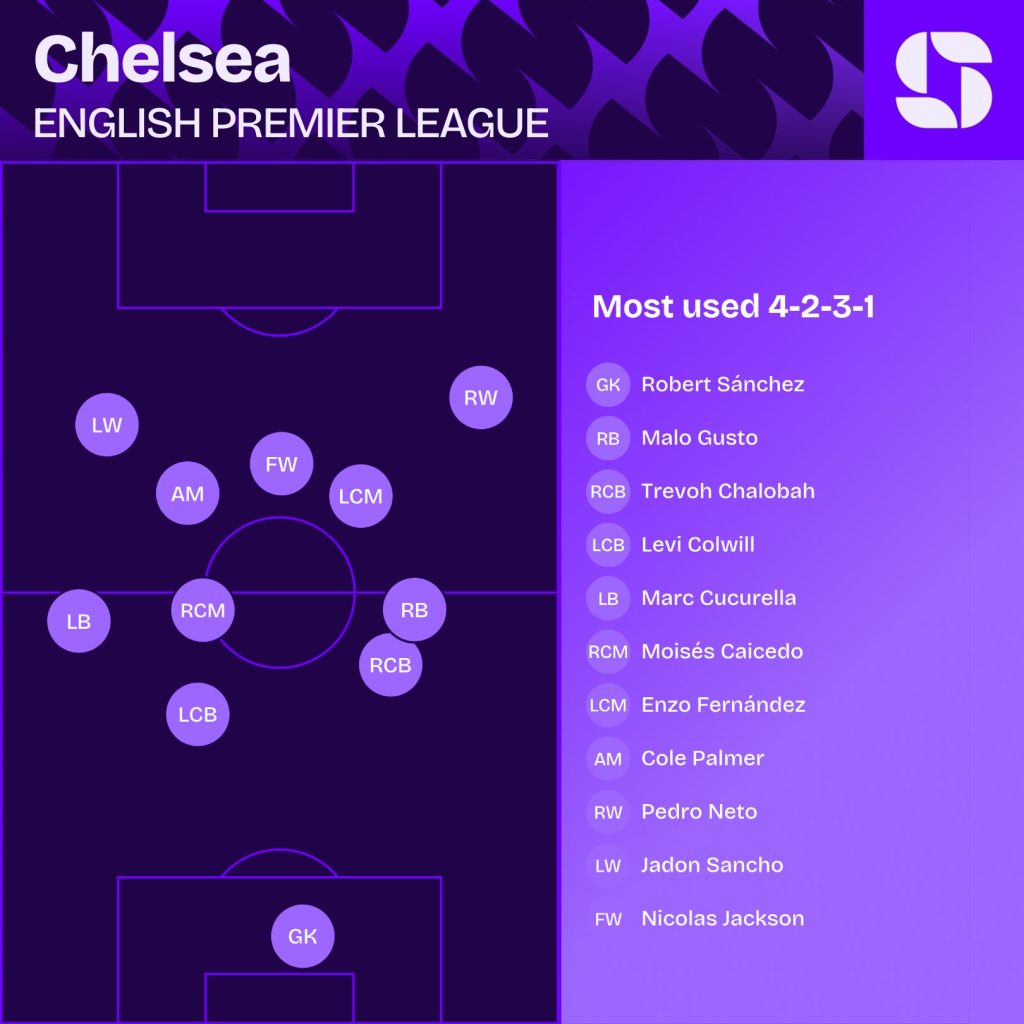
One of the main criticisms of Maresca’s side in his first season at the club was the rigidity on the ball, playing a slower paced brand of football, looking to control possession, move up the field as a unit and sustain pressure in the opposition half.
This often saw players sticking to their position, with more emphasis being placed on their positioning to defend transitions.
Whilst this helped Chelsea to control games and improve defensively, the ripple effect was teams being able to set up in a settled defensive block, making life difficult for Maresca’s men looking to break them down.
Maresca’s tweaks
Going into his second season, there was plenty of speculation on how Maresca could look to evolve his tactics after implementing a strong foundation in his first season and winning two trophies.
But key injuries in the squad have perhaps stopped us from seeing Maresca’s true ideas, as he has instead had to adapt his ideas to suit the personnel available.
With Colwill out injured and Tosin Adarabioyo unable to play every game, the Italian has shifted from a 3-2 base in build up to more of a 2-3 base, allowing the full-backs to adjust their position to aid the first phase of build up.
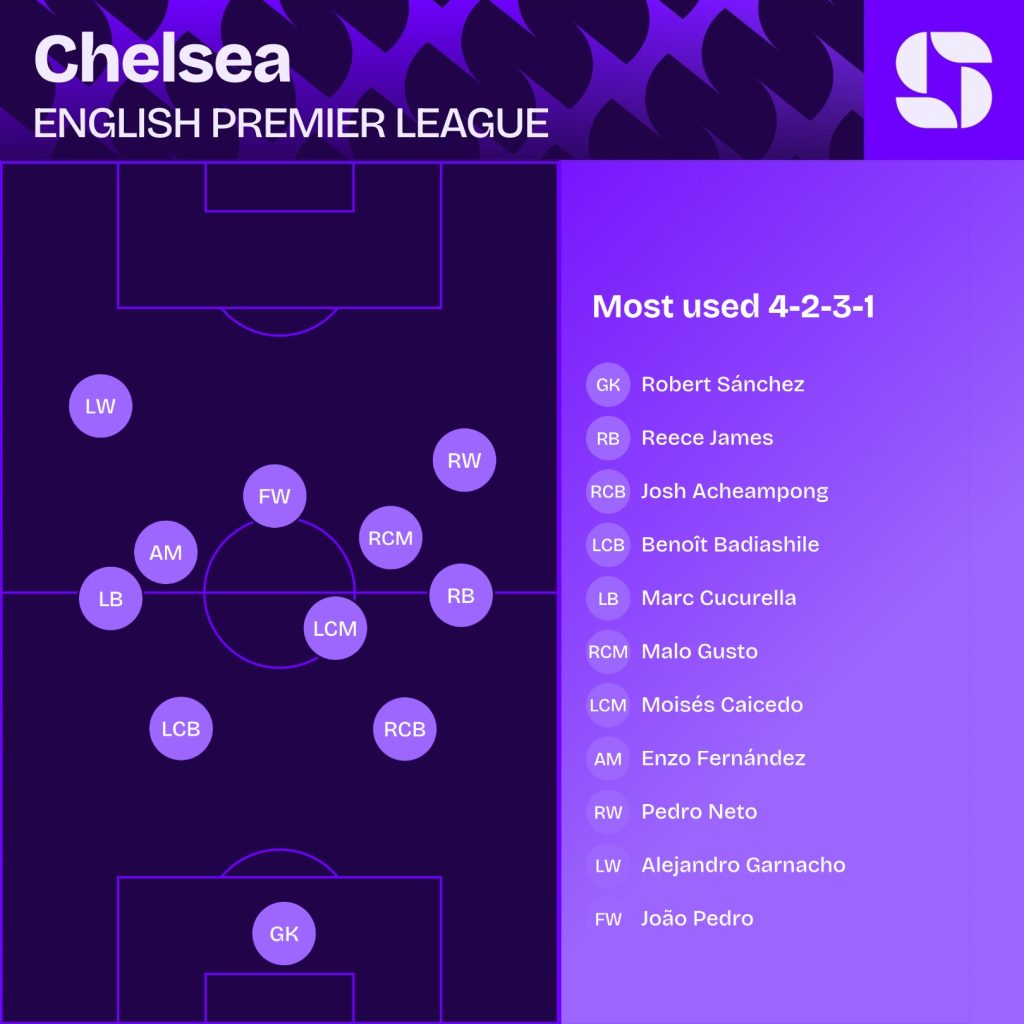
We have also seen Maresca experimenting with some players positionally, looking to utilise their skillset’s in different areas, even if it looks strange on paper.
One example of this is the usage of Malo Gusto in recent weeks, playing in midfield against Liverpool and Nottingham Forest.
The main reason for this is to utilise Gusto’s mobility and willingness to run off the ball, something that is needed when Joao Pedro starts as the striker, dropping deep to create space for others to run into.
What’s the direction?
Where Maresca goes next will be very telling, as the Blues are set to play every 3-4 days for the next few weeks, juggling multiple competitions and playing different types of sides, each needing tactical tweaks to take advantage.
Another big injury was confirmed after the international break, with Benoit Badiashile picking up another knock which will keep him out until around January.
Chelsea are now missing both of their natural left centre-backs, which causes some tactical problems for Maresca when looking to shape up in his new 2-3 base, as having two right-footed centre-back’s is far from ideal when it comes to angle bias playing out from the back.
Just as Josh Acheampong has been thrown in at the deep end in recent weeks, taking to it like a duck to water, Jorrel Hato may have to do the same, despite being just 19-years-old and playing left-back more recently for club and country.
As players return, Maresca may look to return to his favoured 3-box-3 system on the ball, utilising a back three in the build up to progress through the lines, but how he uses the squad at his disposal will be key, perhaps even making or breaking Chelsea’s season.